

Exclusive Interview with Professor Wei Daixu of Northwest University: Transforming PHA Synthesis Using Probiotics – The Core of Synthetic Biology Lies in Value Creation
He often uses “one, two, three” to summarize and organize his logic, making it easy to grasp the full scope of what he intends to convey. Moreover, throughout the conversation, we can sense his passion for scientific research and the translation of research findings into practical applications.
Exploring the N Possibilities of PHA in Healthcare
Originally present within microorganisms, PHA materials cannot be directly used in medical tissue engineering. They must undergo extraction, filtration, and purification processes to remove bacterial debris, toxic solutes, and pyrogenic components (such as endotoxins) before they can be applied in the human body.
From bacterial production to applications in cell growth, the manufacturing and utilization of PHA have undergone a remarkable transformation. Owing to its favorable biocompatibility, controllable biodegradability, absence of severe immune rejection, and lack of genotoxicity, PHA is widely employed in the medical field. Wei Daixu introduced that he is currently exploring the use of PHA inMedical Tissue Engineering, Medical Aesthetics, Drug Delivery, Functional Foodsapplications in the fields of medicine and healthcare.
Ongoing Transformation: Synthesizing PHA Materials with Probiotics
Synthetic biology endows microorganisms with novel traits, enabling their personalized customization to meet practical needs and thereby enhancing their competitiveness, targeting capability, sustained-release properties, and controllability. Escherichia coli serves as one of the prime examples.
In fact, Escherichia coli itself can neither synthesize nor degrade polyhydroxyalkanoates (PHAs). However, due to its well-characterized genetic background, ease of cultivation and manipulation, and the absence of endogenous enzymes capable of degrading PHAs, it has become a popular chassis organism for genetic engineering. Through a series of genetic modifications, E. coli is currently one of the most important hosts for PHA synthesis.
“Even so, E. coli poses significant challenges, as it contains substantial amounts of endotoxins and other toxic substances unacceptable for human use. ‘Although the cost of synthesizing PHA using E. coli is not high, the purification of the initial fermentation product is extremely expensive,’ said Wei Daixu.”
To minimize the waste of human and material resources, he chose an unconventional pathSynthesis of PHA Using Probiotics. In terms of safety, probiotics are not only non-toxic, non-genotoxic, and non-teratogenic to the human body, but also regulate human metabolism and immunity, thereby consolidating health. Therefore, Wei Daixu believes that,Theoretically, PHA synthesized by probiotics in the human body is harmless.。
However, this research is also highly challenging. The primary challenge lies in the synthesis of PHA materials by probioticsLarge-scale production has not yet commenced.Wei Daixu explained, “Over the past three to four decades, academic research has focused on synthesizing PHA using Escherichia coli or halophilic bacteria. Now, we have selected a new strain to repeat the process. This is a lengthy endeavor, but we are committed to seeing it through.”
The Core of Synthetic Biology: Creating Commercial Value
Looking back, Wei Daixu told Orange Bureau that his idea of achieving result transformation and entrepreneurship had been around for a long time.
Let’s turn the clock back to 2010. At that time, Wei Daixu, a second-year master’s student, was puzzled by the disconnect between scientific research and market demands. After consulting several senior peers and friends, his doubts remained unresolved. Therefore, after completing his master’s degree, he did not immediately apply for doctoral studies, but instead chose to enterShanghai National Engineering Research Center for Nanotechnology and ApplicationsThree years of work experience.
“At the research center, I learned to conduct research and development guided by market demands.” After accumulating sufficient “market-oriented experience,” Wei Daixu returned to academia. During his doctoral studies, he habitually approached scientific research from a market perspective and with an engineering mindset.Exploring cutting-edge scientific questions while contemplating the commercialization of research findings.
“The dragon appears in the field; it is advantageous to meet a great person.” These ideas were also encouraged by Professor Chen Guoqiang, Wei Daixu’s mentor.Professor Chen Guoqiang and Researcher Wu Qiong“He was both a mentor and a friend to me. My fellow doctoral students and I would often delve into research questions together late into the night, never tiring. Those days were precious and unforgettable.” Wei Daixu always speaks with deep gratitude for his advisor and peers when recalling his doctoral studies at Tsinghua University.
Even as Wei Daixu embarks on the next chapter of his story, he strives to impart knowledge and guide his students in accordance with the Tsinghua model. In addition to supervising his graduate students in their research, Wei has coached Northwest University’s iGEM (International Genetically Engineered Machine) team since 2019, leading them to win two gold and two silver medals. These achievements would not have been possible without the support of the leadership and faculty at the School of Life Sciences and Medicine at Northwest University.
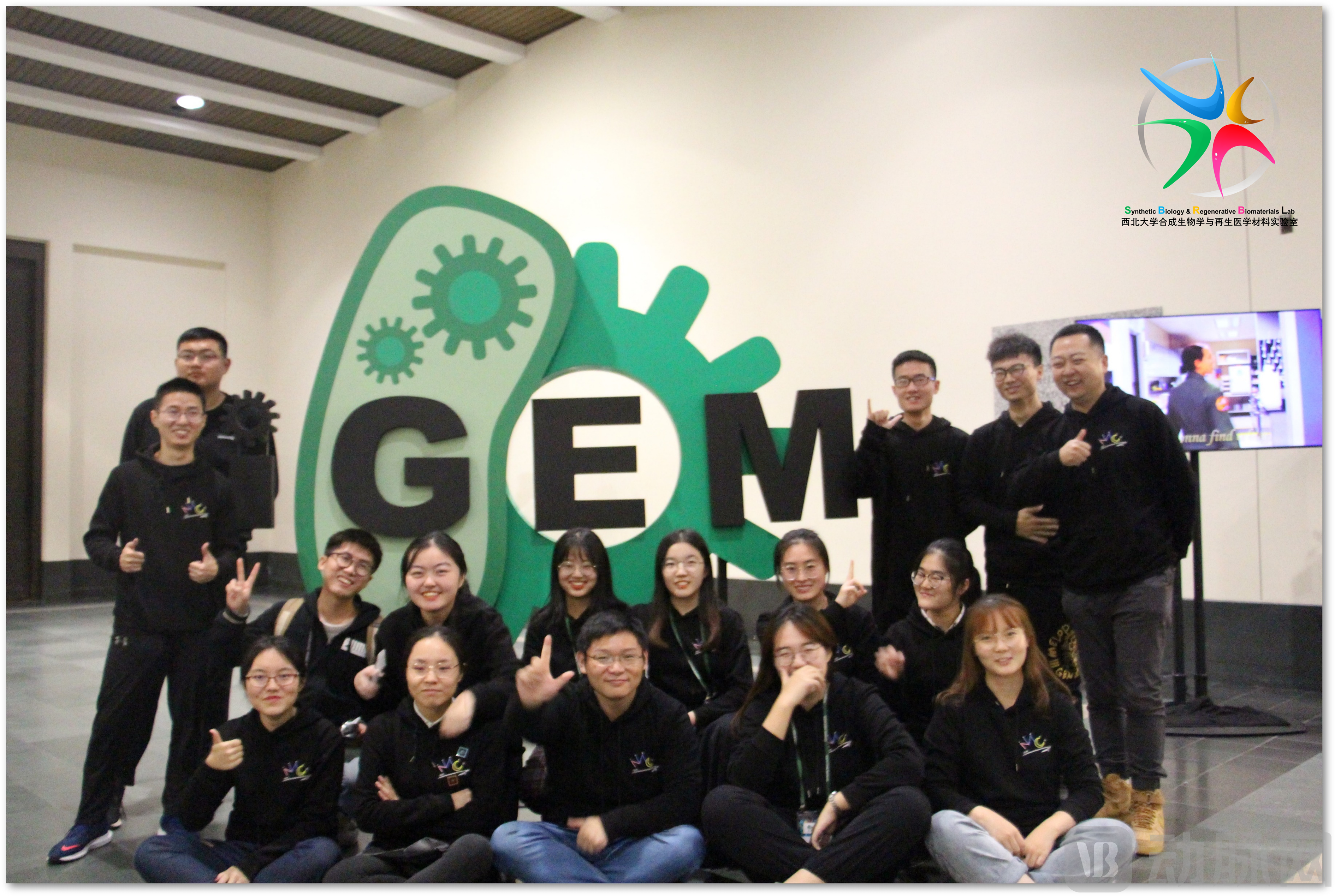
▲ Professor Wei Daixu Advises the Northwest University iGEM Team (Gold Medal)
“The core of synthetic biology is not just about publishing high-impact papers,”Leveraging technology to create commercial value is the ultimate destination for synthetic biology.“Synthetic biology has carried commercial attributes since its inception,” said Wei Daixu. In addition to gaining market R&D experience, he places particular emphasis on exchange and collaboration.
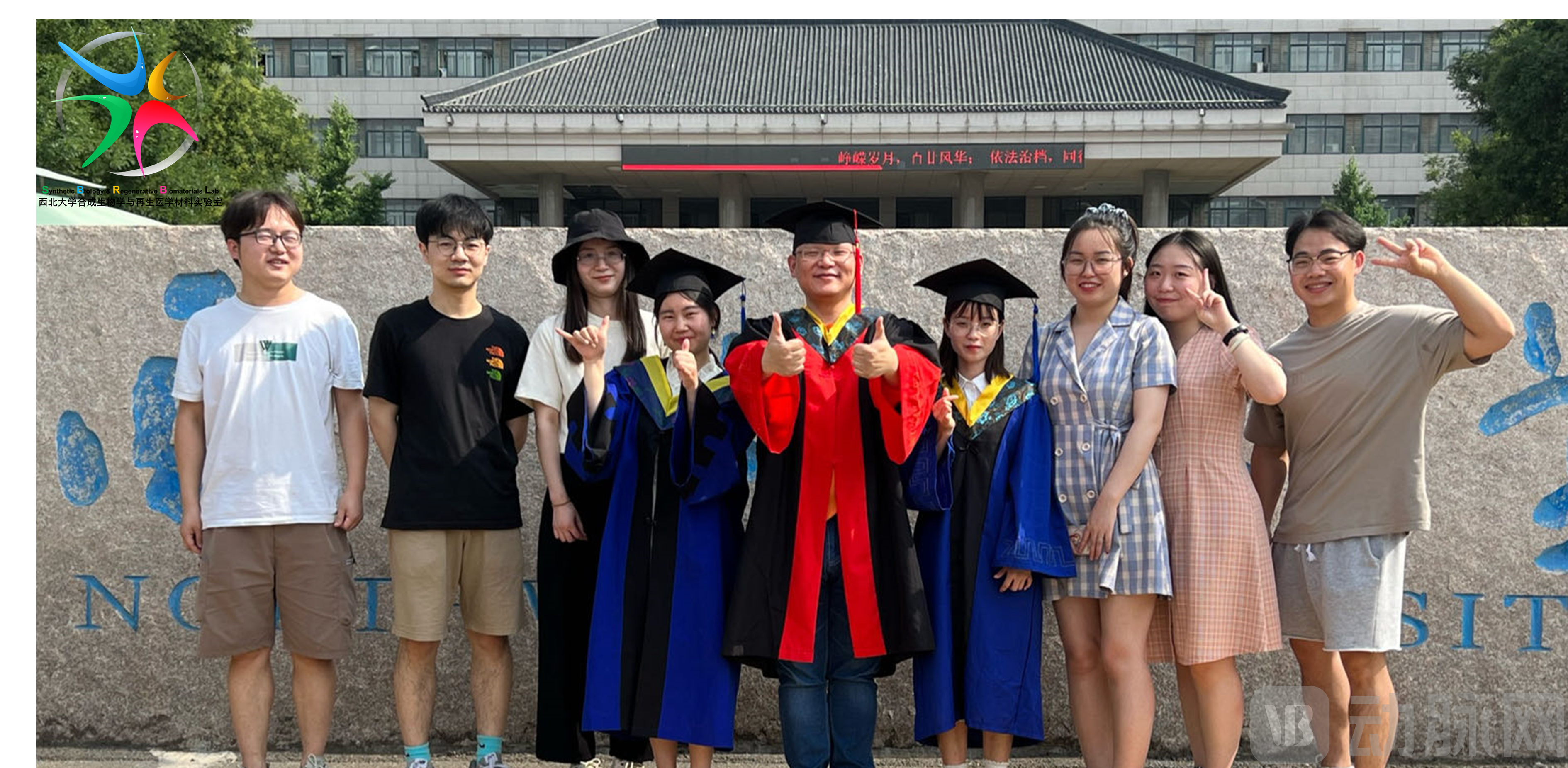
▲ Northwestern University Laboratory for Synthetic Biology and Regenerative Medicine Materials
In the summer of 2018, Wei Daixu was busy: he was occupied with completing his doctoral degree, securing a desirable job, and discussing his chosen “track” with entrepreneurs and investors.
“I aim to pursue both scientific research and translation.”It is essential to engage in frequent exchanges and communications with investors and experts in the industry..” Wei Daixu described his life during those months, noting that he spent most of his time proactively seeking guidance from industry veterans to explore his future research directions. During his tenure at Northwest University, Wei maintained uninterrupted ties with the industrial sector. He told VCBeat that the vast majority of his more than 5,000 WeChat contacts were peers in the scientific research community and industry experts with whom he had engaged in exchanges. With no weekends or holidays, scientific research and learning occupied nearly every aspect of his life.
Regarding scientific research and translation, as Wei Daixu stated, research is like a spear, focusing on one point and penetrating deeply; translational application, however, is like a shotgun, aiming in one direction but yielding results across multiple points. Every link in the industry chain must be understood and valued, which requires researchers to break free from traditional closed-minded thinking and engage with professionals from various industries.
1. Meet the requirements for postdoctoral researchers at Northwestern University;
2. Obtain a Ph.D. in relevant fields such as microbiology, bioengineering, biomaterials, pharmacy/pharmaceutics, chemistry, biomedical engineering, polymer science, orthopedics, sports rehabilitation, neurosurgery/neurology, or immunology;
3. Publish more than one SCI paper (IF ≥ 10) or more than two SCI papers (IF ≥ 8).
Interested parties may contact: 279005450@qq.com
Note: As our team has long-term collaborations with hospitals in Shanghai and Zigong, individuals interested in working in these cities are also welcome to contact me.