

ReCode Therapeutics Files for IPO: Pioneering Liver-Independent mRNA Delivery with SORT-LNP Platform

ReCode Therapeutics
Gene Drug Developer
In the 1960s, mRNA was successfully extracted for the first time. However, due to its inherent fragility, mRNA was long regarded by the industry as a “fringe technology.” Sixty years later, the COVID-19 pandemic propelled mRNA vaccines into the spotlight.
Among them, Pfizer’s COVID-19 vaccine, Comirnaty (BNT162b2), achieved remarkable success right from its debut—generating $36.78 billion in revenue in its first year on the market and surpassing Humira, the long-reigning “world’s best-selling drug.” As the second mRNA vaccine approved by the FDA, Moderna’s Spikevax (mRNA-1273) also performed strongly, securing $17.675 billion in revenue in 2021 and ranking third globally.
In fact, in addition to the well-known preventive vaccines, mRNA therapeutics also encompass therapeutic vaccines and therapeutic drugs; the fields covered by mRNA therapeutics extend beyond infectious diseases to include oncology and rare diseases.
ReCode Therapeutics, a U.S. pharmaceutical company founded in 2015, is also a player in the mRNA sector. On January 10, 2023, ReCode completed a $10 million financing round. To date, ReCode has completed five rounds of financing, totaling $422 million.
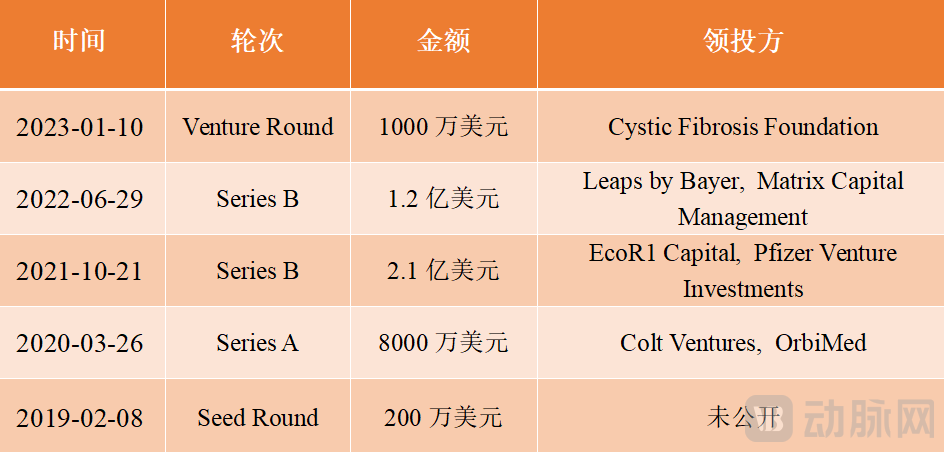
ReCode Therapeutics Funding History Data Source: Crunchbase
What Is It About This Startup That Keeps Attracting Capital?
mRNA therapeutics originated from a scientific hypothesis. Theoretically, mRNA has the potential to encode any type of protein. This implies that if mRNA is developed into a therapeutic agent, it provides the human body with a “blueprint” for establishing an in vivo drug production facility. Guided by this blueprint, mRNA can be translated into proteins within the cytoplasm without needing to enter the cell nucleus.
Therefore, compared with traditional small-molecule and antibody drugs, mRNA therapeutics can exert regulatory effects at the genetic level. Moreover, mRNA therapeutics offer unique advantages for targets with clearly defined pathogenic genes but whose corresponding proteins are difficult to drug.
Indeed, it is undeniable that mRNA therapeutics offer numerous advantages; however, it is equally indisputable that their development is exceedingly challenging, as each characteristic of mRNA gives rise to distinct technical hurdles.
First, the cell membrane surface carries a negative charge, and mRNA is also a long, single-stranded molecule with a negative charge. Therefore, due to electrostatic repulsion between like charges, naked mRNA struggles to directly cross the cell membrane. Second, as a single-stranded molecule, mRNA is susceptible to degradation by various enzymes in the body. Finally, due to endocytosis, most mRNA that enters cells accumulates in lysosomes and is degraded, with only a small fraction being released into the cytoplasm.
Therefore,A delivery system that can encapsulate mRNA to prevent its degradation and facilitate successful fusion with the cell membrane, ultimately enabling entry into the cytoplasm, is key to the druggability of mRNA therapeutics.
Lipid Nanoparticle (LNP) delivery systems have become the mainstream delivery platform due to their advantages, such as low toxicity and low immunogenicity. However, the target organs of most current LNP systems are limited to the liver. After intravenous injection, the vast majority of mRNA drugs are taken up by the liver. Therefore,Achieving extrahepatic targeted delivery of LNP systems following systemic administration is also an urgent issue that needs to be addressed.
The story of ReCode’s founding also stems from researchers’ work on LNP delivery systems.
Daniel J. Siegwart, Ph.D., Professor in the Department of Biochemistry at The University of Texas, and his team have been dedicated to research on gene therapies. They aimed to design a modular delivery platform to address the challenge of targeted mRNA delivery. In 2015, Dr. Siegwart partnered with Michael Torres and Philip Thomas to co-found ReCode Therapeutics.
Traditional LNP platforms typically contain four types of lipids: phospholipids, cholesterol, PEG-lipids, and ionizable lipids. Under the leadership of Dr. Siegwart, ReCode has developed a Selective Organ Targeting LNP platform (SORT-LNP). The SORT-LNP platform incorporates, in addition to the components of traditional LNP platforms,The Fifth Lipid Component, resulting in a unique lipid formulation design. Therefore,The SORT-LNP platform enables targeted delivery of mRNA or other genetic materials to specific tissues beyond the liver.
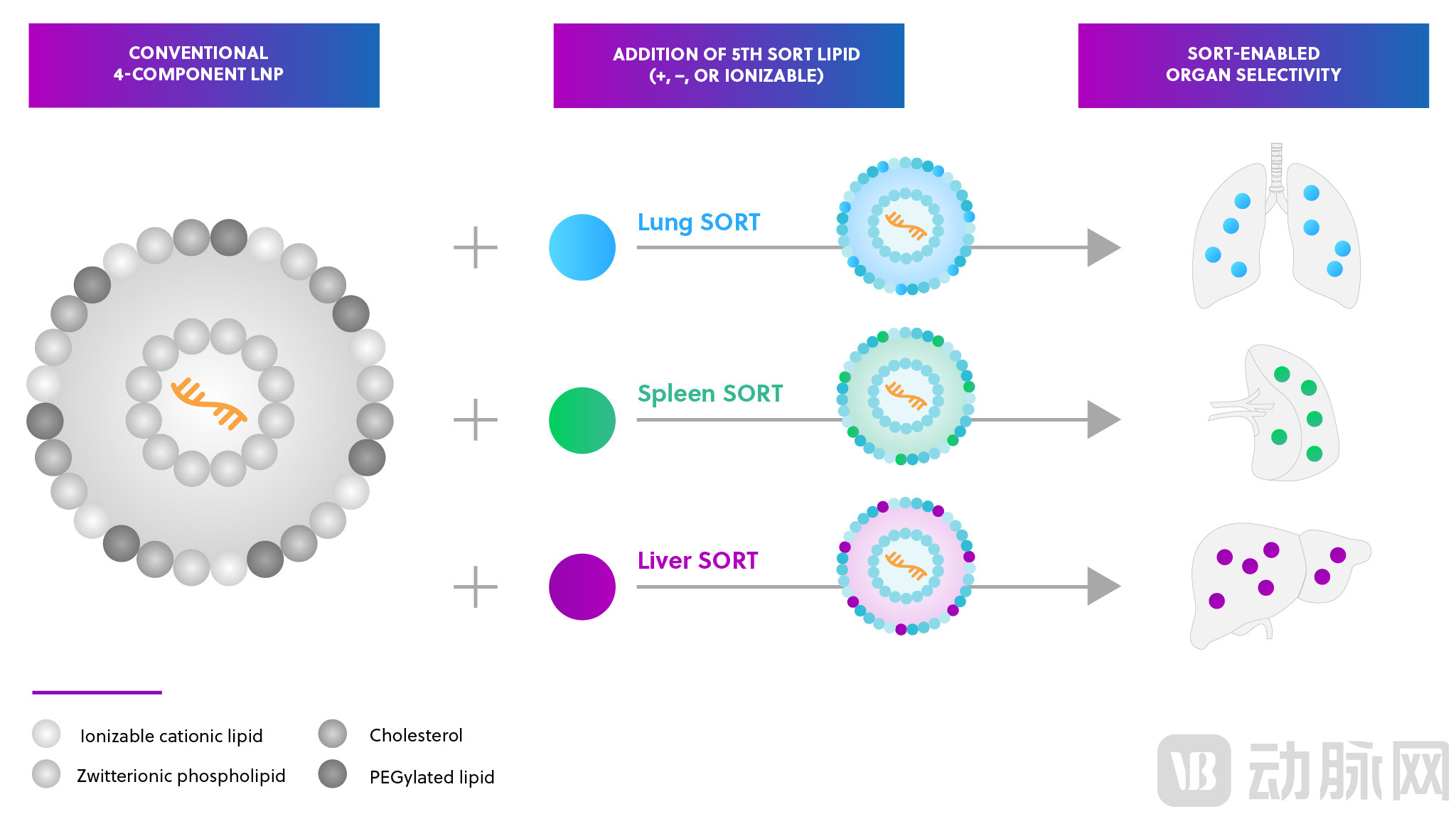
SORT-LNP Platform Image Source: ReCode Therapeutics Official Website
The platform offers the following advantages:
First, it enables improved delivery.. Specifically, the SORT-LNP platform features highly selective and predictable organ/cell targeting, enabling precise delivery to the liver and extrahepatic tissues (liver, lung, spleen).
Second, it can deliver various types of genetic material.The SORT-LNP platform supports the delivery of various genetic materials, including mRNA, siRNA, DNA, and mixed genetic payloads.
Third, it supports multiple routes of administration.The SORT-LNP platform supports multiple administration routes, including intravenous injection, inhalation, subcutaneous injection, intramuscular injection, and intrathecal administration.
In 2022, ReCode’s SORT-LNP platform was hailed by *Nature* as one of the “Seven Technologies to Watch in 2022.” That same year, ReCode was named one of the most promising biotech startups in Fierce Biotech’s “Fierce 15.”
Like many startups, ReCode Therapeutics also chose to focus on rare diseases to avoid homogeneous competition.
Primary Ciliary Dyskinesia (PCD) is a rare autosomal recessive genetic disorder. Patients exhibit abnormal ciliary structure and function due to genetic mutations. Cilia are "hair-like" organelles widely distributed in the human respiratory tract, brain ventricles, fallopian tubes, and other areas. Consequently, PCD patients commonly present with recurrent respiratory infections, otorrhea, rhinorrhea, cough, and sputum production. Currently, there is no specific treatment available to restore ciliary function in PCD. Symptomatic therapies, such as nebulized suctioning and antibiotics, address only the symptoms rather than the underlying cause.
To date, mutations in more than 40 genes have been identified as causes of primary ciliary dyskinesia (PCD), with DNAH5 and DNAI1 confirmed as the most common genetic mutations in PCD patients. DNAI1 is a gene that encodes a protein essential for ciliary motility, and ReCode Therapeutics’ core pipeline candidate, RCT1100, is being developed to treat PCD caused by DNAI1 mutations.
RCT1100 is delivered via ReCode’s SORT-LNP platform. Patients inhale the medication using the eFlow nebulizer system (PARI), which delivers the drug as an aerosol directly into the airways, enabling the production of the relevant protein in respiratory target cells and thereby promoting ciliary motion.
ReCode stated that the Phase I, double-blind, placebo-controlled clinical trial of RCT1100 is currently underway in New Zealand. The company expects to enroll 32 healthy adults, who will receive a single dose of either placebo or RCT1100. Additionally, ReCode plans to submit an Investigational New Drug (IND) application to the FDA in the second half of 2023 to initiate the Phase I clinical trial of RCT1100 in patients with PCD.
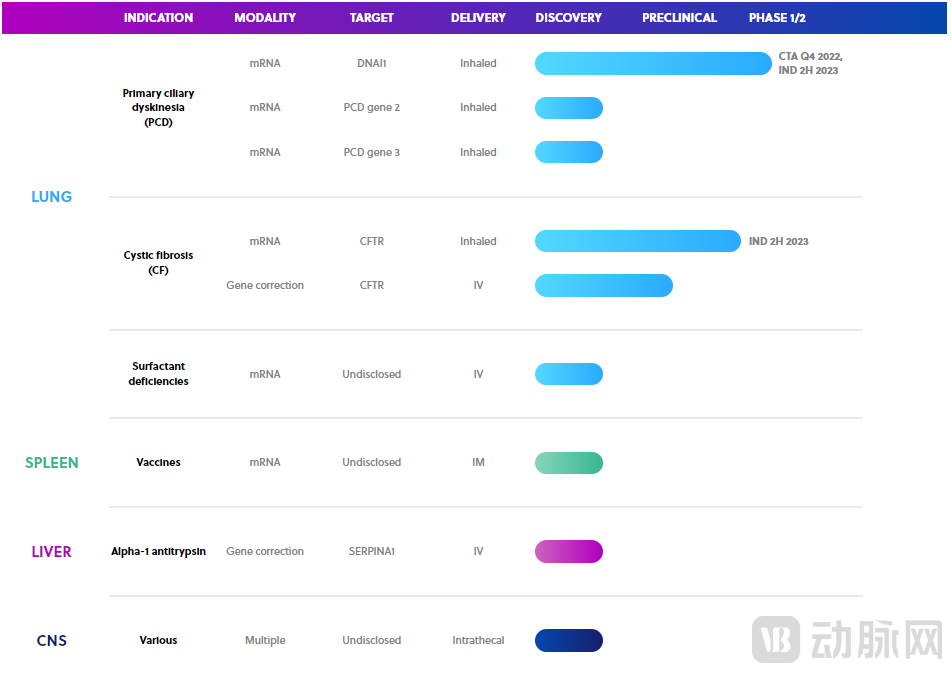
ReCode’s Pipeline in Development | Image source: ReCode Therapeutics official website
In addition to PCD, ReCode is also focused on research into mRNA therapeutics for cystic fibrosis (CF). Furthermore, ReCode plans to submit an Investigational New Drug (IND) application to the FDA in 2023 to initiate clinical trials of its mRNA drug for the treatment of cystic fibrosis. Additionally, ReCode has established a pipeline of mRNA and gene therapies targeting the spleen, liver, and central nervous system, with these candidates currently in the drug discovery phase.
Currently, the three most prominent mRNA pharmaceutical companies in the global biopharmaceutical industry are Moderna, CureVac, and BioNTech. In terms of therapeutic areas, Moderna has the most extensive portfolio in infectious disease vaccines, while BioNTech is deeply focused on oncology. Regarding pipeline progress, Moderna demonstrates the fastest R&D advancement.
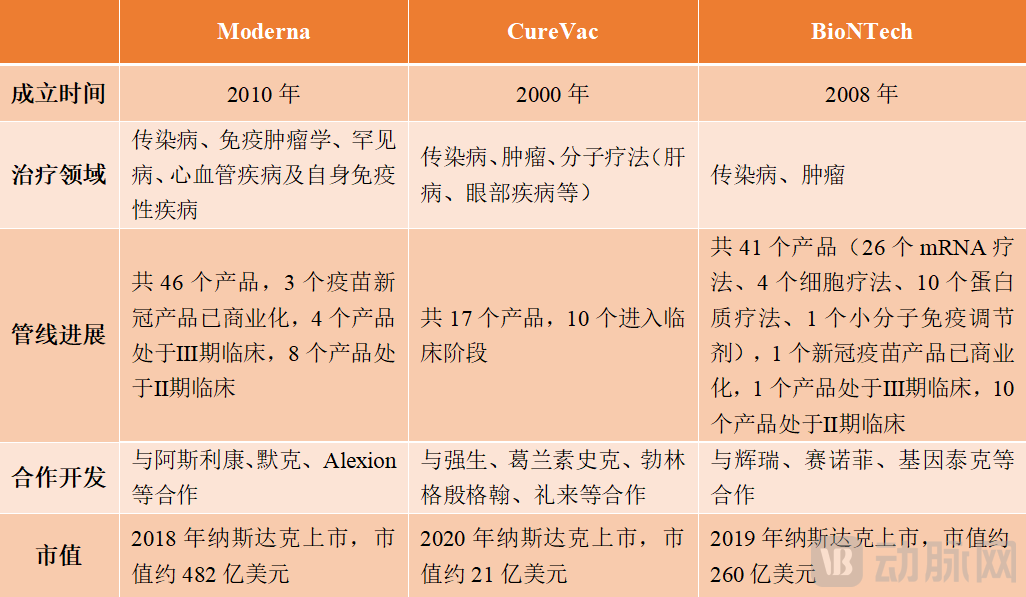
Moderna, CureVac, and BioNTech: Related Developments | Compiled by VCBeat
For mRNA drug development, possessing LNP patents with independent intellectual property rights can be considered the cornerstone of R&D. Due to the monopoly of LNP delivery system patents by a few companies in Canada and the United States, China lacks its own foundational LNP patents, leading to a "chokehold" problem in the domestic development of mRNA drugs.
Although starting later, Chinese biotech companies are also actively exploring. CSPC Pharmaceutical Group, Abogen Biosciences, Walvax Biotechnology, Stemirna Therapeutics, Liverna Therapeutics, Shensheng Biology, Jiachen Xihai, Bendao Gene, and Ruiji Biologics have all laid out their R&D efforts in LNP delivery technology and are advancing the development of related mRNA drugs.
In March 2023, the mRNA COVID-19 vaccine independently developed by CSPC Pharmaceutical Group was approved for emergency use in China. This is the first domestically produced mRNA COVID-19 vaccine to receive such approval. Relevant clinical trials have demonstrated its strong protective efficacy against variant strains (Omicron and Delta). Additionally, the mRNA COVID-19 vaccine jointly developed by Walvax Biotechnology, Abogen Biosciences, and the Academy of Military Medical Sciences, as well as the mRNA COVID-19 vaccine from StoneBio, have obtained emergency use authorization in Indonesia and Laos, respectively.
Globally, vaccines remain the mainstream R&D focus in the mRNA sector. Beyond this, increasingly mature mRNA technology is being applied to other therapeutic areas, such as cell therapy, protein replacement therapy, and antibody drugs. Some industry giants have taken the lead in actively positioning themselves in this direction, while numerous startups are following suit and entering the field.
An article published in Nature Reviews Drug Discovery in 2021 predicted that the mRNA drug market would begin to grow from 2028, reaching $7–10 billion by 2035. Preventive vaccines serve as the cornerstone, accounting for over 50% of the market share by 2035. Additionally, therapeutic cancer vaccines are expected to hold approximately 30% of the market share, while other therapeutic drugs will account for around 20%.
Overall, the scope of mRNA therapy applications is far broader than when this technology first emerged, yet it has still not reached its “ceiling.” The field of mRNA-based COVID-19 vaccines is now crowded with numerous players and has become increasingly saturated. Companies are actively exploring new directions, such as vaccines for other infectious diseases and therapeutic mRNA drugs. In the future, the mRNA therapeutics sector is poised to witness a transformed landscape.