

Generative AI and Healthcare Forum Explores the Future Potential of AI Technology to Usher in a Creative New World
On the afternoon of May 6, 2023, the Generative AI and Healthcare Forum, part of the 7th Future Healthcare Top 100 Conference, was successfully held at the Zhangjiang Science Hall in Shanghai. The event was hosted by VCBeat VB100 and co-hosted by Qiming Venture Partners.
The forum featured an impressive lineup of distinguished guests. Wang Caiyou, Chairman of the Information Professional Committee of the Chinese Hospital Association; Mao Shuo, Executive Director at Qiming Venture Partners; Zhang Peng, CEO of Beijing Zhipu Huazhang Technology Co., Ltd.; Ren Feng, Co-CEO and Chief Scientific Officer at Insilico Medicine; Zhou Kaibo, CTO of Fudong Musculoskeletal; and Liu Yanbin, Co-founder and CEO of Touche Future, attended the event and delivered insightful speeches.
Sun Weijie, Co-founder and CEO of DP Technology; Zhang Chao, CEO of Zuoshou Doctor; Su Tengrong, Co-founder and CTO of Zheng'an Technology; and Ye Yanyan, Senior Researcher at VCBeat Institute, attended the forum and participated in the in-depth discussion session.
Guests from various sectors engage in a comprehensive discussion on the future potential and industry opportunities of generative AI technology in the medical field.
Wang Caiyou: “Twenty Data Measures” Boost the Development of AI in the Healthcare Sector
Wang Caiyou, Chairman of the Information Professional Committee of the Chinese Hospital Association, started with the innovative policy “Twenty Data Measures” to explain how healthcare enterprises can leverage medical data to realize their value.
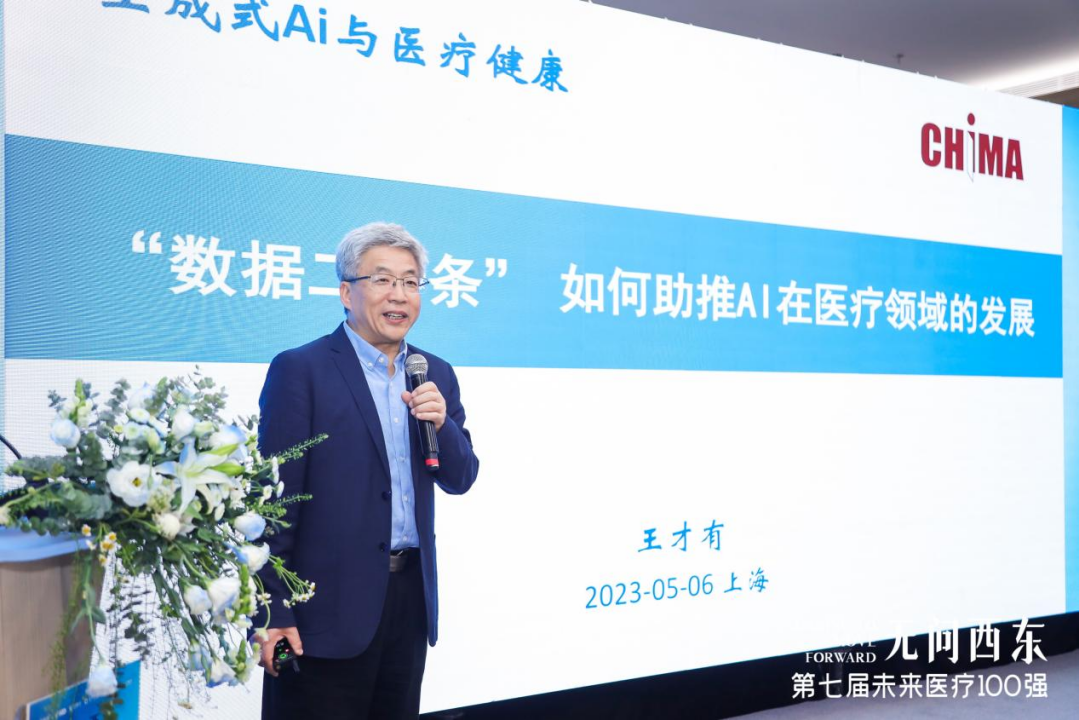
The national initiative to establish a foundational institutional framework for data, known as the “Twenty Data Measures,” has opened the door to unlocking the value of data. Healthcare is inherently dependent on data; advances in medicine signify a growing capacity to access medical information. The era of informatization and digitalization has made it possible to obtain data that was previously considered difficult to acquire. However, traditional systems fail to facilitate data flow or generate intrinsic momentum. The innovation of the “Twenty Data Measures” lies in sidestepping the pitfalls of data ownership by establishing an operational mechanism based on the separation of three rights: data holding rights, data processing and usage rights, and data product operation rights. By clarifying and authorizing these rights, the measures stimulate the intrinsic motivation for data sharing.
AI possesses unique capabilities in creating data value, but it also faces certain challenges: first, data accessibility; second, the need to avoid the risk of data “bias”; and third, causality represents a new scientific discipline.
Medical data and its underlying implications are context-specific and subject-oriented, making their interpretation inherently complex. The use of medical data also involves ethical considerations, patient privacy concerns, rights to informed consent, and issues related to information avoidance. Therefore, the sharing of medical data necessitates further refinement of regulations by industry authorities. By clarifying data ownership and authorization mechanisms, we can promote data liquidity on the basis of ensuring security, thereby unlocking the value of dormant data.
Medical AI is akin to the automobile in its infancy; although regulatory frameworks have yet to be fully established, early applications are already emerging in non-harmful domains. The key to leveraging data for saving lives lies in identifying innovative use cases.
Mao Shuo: The Business Ecosystem Driven by AI Technology Is Key
Mao Shuo, Executive Director of Qiming Venture Partners, shared insights on investment opportunities in generative AI within the healthcare sector from an investor’s perspective at the forum.
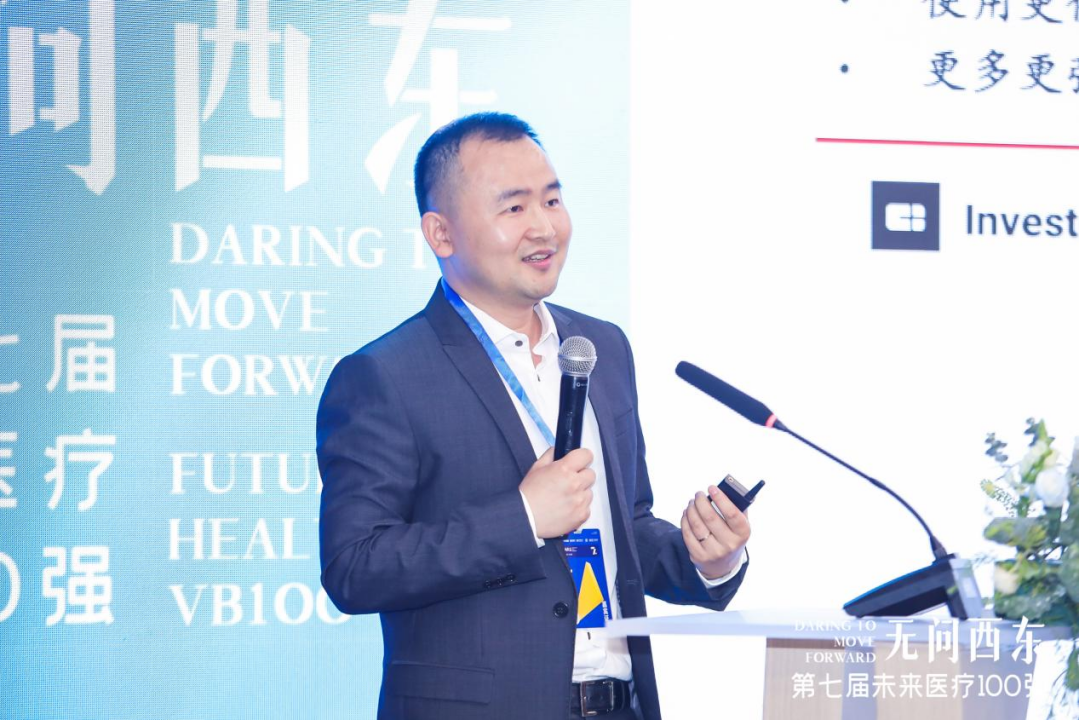
Mao Shuo believes that generative AI technologies, represented by large language models (LLMs), are indeed leading a new technological revolution. ChatGPT signifies the transition of AI from the 1.0 era of deep learning to the 2.0 era of large models. Compared with AI 1.0, it has four distinct characteristics: 1) greater intelligence; 2) multi-tasking capabilities; 3) more convenient and cost-effective usage; 4) more powerful capabilities emerging at a faster pace.
Generative AI is developing at a rapid pace and will become the cornerstone of the intelligent era. On this basis, enterprises in the future will compete to build related infrastructure. At that time, there will be two types of enterprises: the first type is "service providers" with foundational large models, such as tech giants like Google, Microsoft, and Baidu, or top AI startups like OpenAI and Zhipu AI; the second type is application-oriented enterprises in vertical industries, such as JASPER, which uses GPT-3 for advertising copy generation, and TYPEFACE, which uses GPT-3.5 combined with Stable Diffusion for marketing image generation... However, the adoption rate of new technologies in the healthcare sector remains relatively slow.
When adopting a new technology, one should not implement it for its own sake; rather, the priority is to identify problems first and then leverage the technology to solve them. Currently, many challenging and costly issues persist in areas such as drug discovery, clinical registration, clinical diagnosis, clinical treatment, and hospital operations. Generative AI models already possess capabilities in question answering, content generation, summarization, and dialogue. Integrating existing needs with these capabilities can create new opportunities, a key consideration for many entrepreneurs and investors.
AI and healthcare entrepreneurs in China should focus on their AI development capabilities, data acquisition capabilities, as well as product strength and commercial viability. Just like with the previous generation of the internet, those who ultimately survive are not necessarily the ones with the most advanced technology, but rather those whose business ecosystems or products gain the greatest user recognition.
Mao Shuo stated that Qiming Venture Partners prioritizes three core corporate capabilities: 1) Imagination: the ability to abstract and digitize medical issues; 2) Data acquisition capability: the ability to establish standards for data acquisition, data normalization, and data processing; 3) Product and commercial strength: keen insight into customer needs and the business ecosystem.
Zhang Peng: Leveraging Large Model Technology to Drive Intelligent Cost Reduction and Efficiency Enhancement Across Industries
Zhang Peng, CEO of Beijing Zhipu Huazhang Technology Co., Ltd., shared Zhipu AI’s current research at the forum, exploring whether pre-trained models can enhance efficiency for enterprises in the healthcare sector.
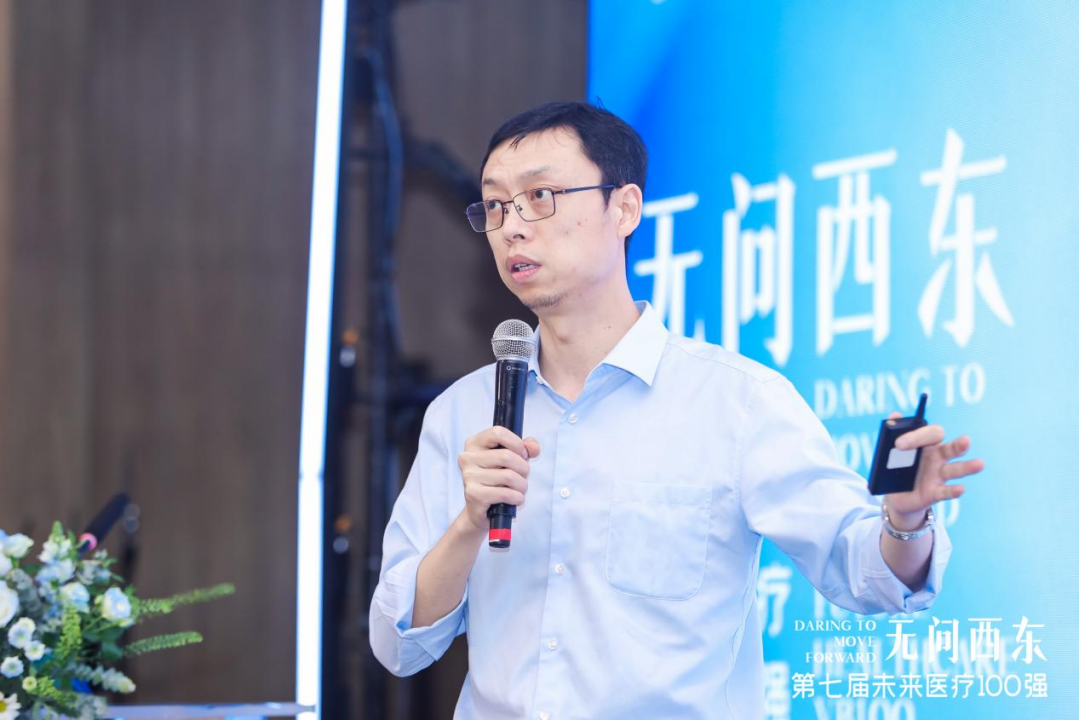
Zhang Peng first shared several perspectives. First, pre-trained models have evolved significantly since 2018, offering robust general-purpose generalization capabilities. They can handle multi-scenario tasks, reduce costs, and improve efficiency. These are critical features that enable them to serve as the infrastructure for next-generation AI applications. Second, the development of large model technology is itself a process of exploration and one in which quantitative changes lead to qualitative leaps; currently, the capabilities of large models are emerging and continuing to advance at a rapid pace. Third, given the high cost of training large models, it is essential for Zhipu AI, as a commercial enterprise, to address how various industries can adopt this technology at lower costs, thereby achieving broader technological accessibility.
Zhipu AI developed GLM-130B, a large language model with 130 billion parameters, as early as 2022, positioning it as a competitor to OpenAI’s GPT-3. Zhang Peng believes that hundred-billion-parameter models serve as the foundation of the generative AI era and that there is an urgent need to establish ultra-large-scale pre-trained models centered on the Chinese language. Machine intelligence exhibits scale effects; as the number of model parameters continues to grow, its capabilities continuously expand. For instance, models with fewer parameters can only perform simple language understanding tasks, whereas increasing the parameter count enables them to gradually handle reasoning-intensive mathematical problems. Although the model architecture itself remains unchanged, its capabilities improve significantly as the parameter size increases. This essence of quantitative change leading to qualitative change is referred to by the external community as the “emergence” phenomenon. Therefore, hundred-billion-parameter models demonstrate remarkable capabilities, while also helping enterprises strike a balance between commercial application and cost efficiency.
Pre-trained models represent the future direction of generative AI, but training a model with hundreds of billions of parameters faces numerous challenges, including high training costs, substantial human resource investment, and instability in the training process. However, innovation does not happen overnight. Zhipu AI does not intend to simply follow in others’ footsteps step by step; instead, it aims to pursue its own innovations within this field. For instance, by integrating the GPT and BERT training frameworks, we have developed the independently innovated GLM (General Language Model) multi-task pre-training framework, which simultaneously supports the requirements of both generative and fill-in-the-blank downstream tasks.
It is reported that Zhipu AI open-sourced its ChatGLM-6B model in March this year, making it currently the only domestic model capable of competing with mainstream international open-source models. Within two months of its release, the model garnered over 260,000 stars on GitHub, the world’s largest open-source software platform, surpassing Stanford University’s contemporaneous models in terms of attention and positive reception. To date, Zhipu AI’s open-source models have accumulated over 2 million downloads globally and received usage requests from more than 1,000 research institutions across over 70 countries, including Google, Microsoft, Facebook, MIT, UC Berkeley, Harvard, Princeton, Oxford, and Cambridge. The model has also topped the trending large-model rankings on Hugging Face, the world’s largest open-source large-model platform, for two consecutive weeks.The ChatGLM model places particular emphasis on collaboration with and support for domestic scientific research institutions as well as enterprises and public entities. Companies such as China Mobile, Meituan, 360, Lenovo, and Kingsoft WPS have already leveraged the ChatGLM model to develop domain-specific large models. Furthermore, Zhipu AI has partnered with organizations like Capital Window (Shoudu Zhichuang) to explore and deliver government-related large-model services. To date, the ChatGLM model has provided research support to multiple institutes under the Chinese Academy of Sciences, Zhejiang Lab, Shanghai Artificial Intelligence Laboratory, Beijing Academy of Artificial Intelligence (BAAI), as well as numerous renowned universities and enterprises.
Ren Feng: Generative AI Empowers Drug Discovery and Development
At the forum, Feng Ren, Co-CEO and Chief Scientific Officer of Insilico Medicine, shared his insights on generative AI from the perspective of biomedicine.
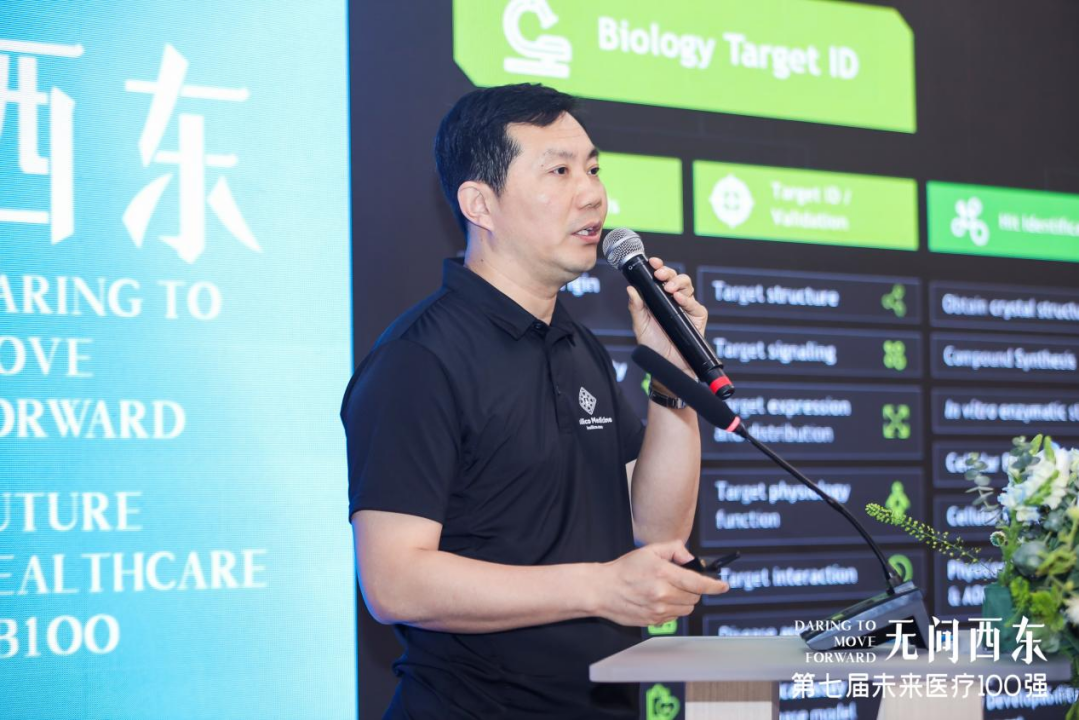
Traditional drug development faces challenges such as high R&D costs, low success rates, and lengthy development cycles. This is primarily due to three unresolved issues: the identification of effective targets, the generation of optimal molecules, and the design of robust clinical trial protocols. These are precisely the areas where AI can make a significant impact. Insilico Medicine has developed three AI platforms specifically designed to address these challenges.
Insilico Medicine is the world’s first company to apply generative AI to drug discovery, having successfully empowered the discovery and design of multiple anti-tumor drug candidates.
“Insilico Medicine’s AI platform is built on generative AI, encompassing the target discovery platform PandaOmics, the molecule generation platform Chemistry42, and the clinical trial outcome prediction platform inClinico. Additionally, we have two drug candidates that have advanced to the clinical stage, both originating from our generative AI platforms: one is a novel-mechanism candidate for the treatment of idiopathic pulmonary fibrosis, and the other is an oral small-molecule COVID-19 therapeutic targeting the main protease,” said Ren Feng.
For instance, Insilico Medicine’s multimodal generative reinforcement learning platform, Chemistry42, is built upon years of modeling and training on large-scale biological, chemical, and textual datasets. It comprises 42 generative AI models and over 500 predictive models for scoring, enabling researchers to leverage cutting-edge deep learning techniques to generate de novo molecules with desired properties through structure-based drug design (SBDD) and ligand-based drug design (LBDD) approaches.
According to Ren Feng, these 42 generative AI models encompass various algorithms capable of generating virtual molecular structures, including Generative Adversarial Networks (GANs), Transformer-based knowledge graphs, and large natural language models. Meanwhile, predictive models can assess whether the candidate molecules generated by each model meet the desired properties, such as drug-likeness, stability, target selectivity, and the potential for forming specific crystalline or salt forms.
“We also use reinforcement learning to penalize generative algorithms that produce molecular structures failing to meet standards, while rewarding those that do; this filtering mechanism eliminates inaccurate molecules. This follows the same principle as the Reinforcement Learning from Human Feedback (RLHF) model used in ChatGPT,” said Ren Feng.
Sun Weijie: AI for Science New Paradigm Drives Drug R&D
Sun Weijie, Co-founder and CEO of DP Technology, engaged in an in-depth dialogue with Mao Shuo at the forum, jointly exploring AI for Science-driven drug development.
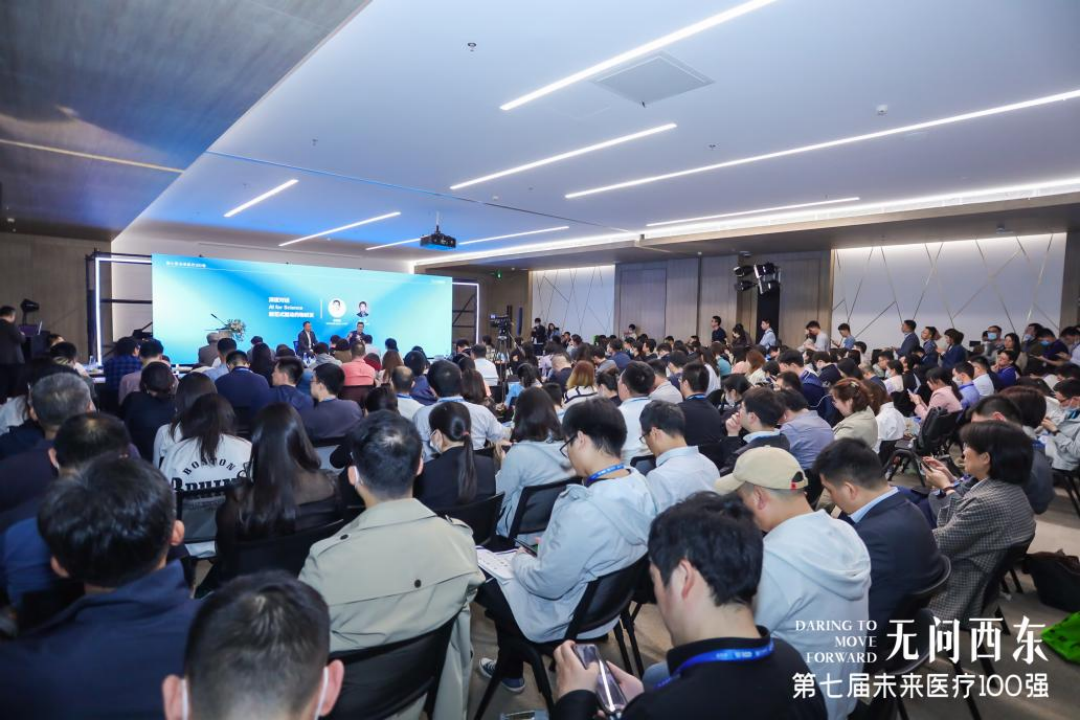
Sun Weijie believes that AI can enable new drug development to achieve what was previously unattainable. DP Technology is a benchmark enterprise in the field of AI for Science, having completed four consecutive rounds of financing within 18 months. The company pioneered a revolutionary new paradigm for scientific research based on “multi-scale modeling + machine learning + high-performance computing,” and launched microscale industrial design infrastructure platforms including the Bohrium® Microscale Scientific Computing Cloud Platform, the Hermite® Drug Computational Design Platform, the RiDYMO™ Enhanced Dynamics Platform, and the Battery Materials Computational Design Platform. These innovations have disrupted existing R&D models, establishing a new paradigm of “computation-guided experimentation and experiment-optimized design.”
AI for Science: In simple terms, it involves using AI to learn the fundamental scientific principles underlying the operation of various phenomena.
Sun Weijie stated, “AI for Science has also entered the era of pre-trained models. The current stage of the AI for Science industry is roughly equivalent to that of large language models (LLMs) around 2018. We can observe that pre-trained models in AI for Science significantly outperform smaller models tailored to any specific scientific subfield, indicating that the development of the entire field is increasingly being driven by pre-trained models.”
“For instance, some targets that were previously considered undruggable can now be developed. Taking DeepModeling’s RiDYMO™ platform as an example, it enables comprehensive sampling of protein dynamic conformations, explores novel hidden or allosteric pockets, and induces the formation of druggable pockets, thereby facilitating the rational development of challenging drug targets. In essence, this transforms a life science problem into a computational engineering problem,” said Sun Weijie.
Sun Weijie stated that if GPT is a generalist with a liberal arts background, AI for Science is a hardcore specialist with a science and engineering background. It can solve a series of complex physical equations and deduce the motion and changes of electrons, atoms, and molecules at the microscopic level, thereby assisting us in drug development and various other scenarios. Therefore, AI for Science can be regarded as a foundational AI pre-trained model for our study of the objective world.
Zhang Chao: Proactive AI Solutions Make High-Quality Healthcare Accessible
Zhang Chao, CEO of Zuoshou Doctor, and Sun Motao, an investor at Qiming Venture Partners, engaged in an in-depth dialogue at the forum, exploring the current state of proactive AI and solutions to prevailing pain points.
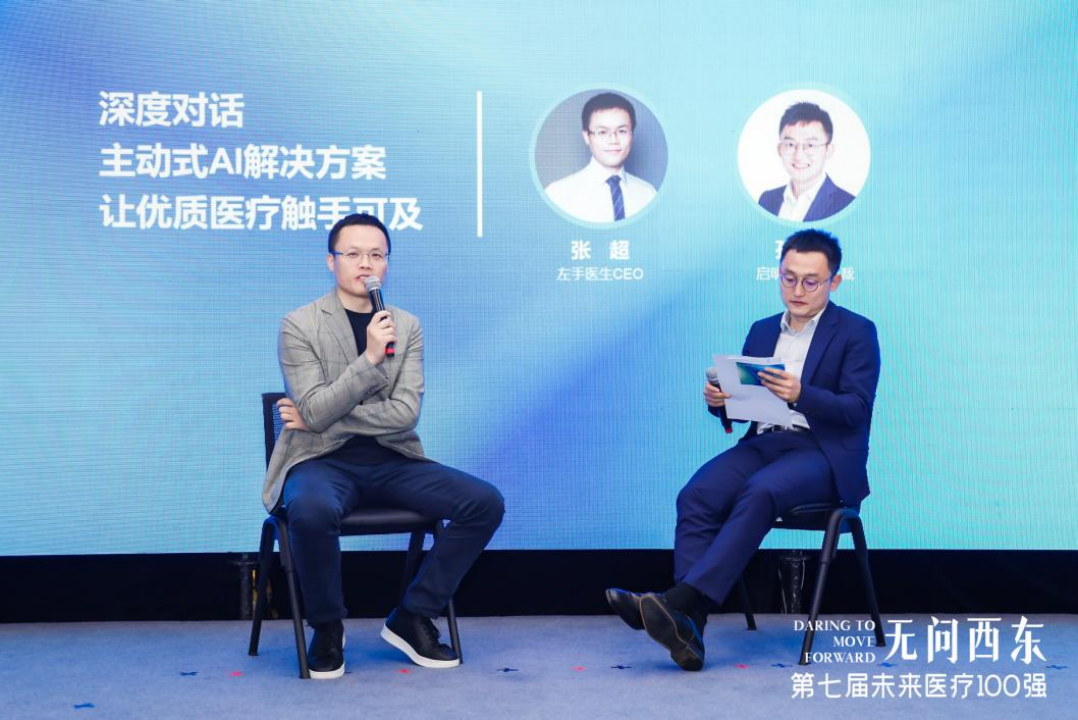
Zhang Chao shared that over the past seven years, Zuoshou Doctor has accumulated extensive medical data in areas such as knowledge graphs and intelligent clinical applications. Technologically, Zuoshou Doctor has been applying GPT technology to scenarios like medical chatbots since 2020. This April, the company began internal testing of a specialized medical GPT model and rapidly advanced its application to address physicians’ critical need for “writing medical records” in clinical practice.
Unlike general-purpose large language models that demonstrate capabilities such as question-answering, poetry composition, and problem-solving, Zhang Chao focused on showcasing the ability of GPT to generate medical records during the live demonstration. He stated that, benefiting from training on high-quality medical records, ZuoYi GPT outperforms OpenAI’s GPT-4.0 in medical record generation tasks. This is because medical records abroad tend to resemble summaries of doctor-patient communications, with extensive patient descriptions retained verbatim; whereas domestic medical records in China emphasize conciseness and clarity, requiring physicians to summarize patients’ accounts and rephrase them from a clinical perspective.
Returning to the healthcare context, Zhang Chao believes that the development of smart healthcare is inseparable from advancements in informatization, digitalization, and intelligence. Currently, digitalization represents a key bottleneck, as physicians struggle to complete high-quality diagnoses and documentation within brief consultation periods. Furthermore, in clinical decision support, intelligent systems should avoid making auxiliary decisions based solely on physician-entered documentation; instead, data collection should be shifted upstream. This is because if a physician suspects a patient has Disease A, the resulting medical record will strongly reflect Disease A, making it difficult for algorithms to identify the possibility of Disease B.
Finally, Zhang Chao pointed out that the Zuoyi GPT model and the speech-to-text translation robot are a pair of mutually reinforcing products. Improvements in the large language model’s performance can enable the speech-to-text translation robot to deliver more high-quality clinical support functions, while the successful application of the speech-to-text translation robot will provide higher-quality training data for the GPT model, thereby driving further development of the GPT model itself.
Generative AI has permeated the healthcare industry. At the event, Left Hand Doctor demonstrated live how its specialized medical GPT model generates clinical records, leading the future development of healthcare informatization, digitalization, and intelligence. Proactive AI solutions are making high-quality healthcare more accessible, benefiting patients while driving industry advancement.
Zhou Kaibo: Exploring the Application of Generative AI Models in Rehabilitation Therapy
Fudong Medical’s CTO, Zhou Kaibo, systematically elaborated on the company’s background and future outlook, using Fudong Medical’s product, YueXingDong®, as a case study to further analyze the application of generative AI in medical practice.
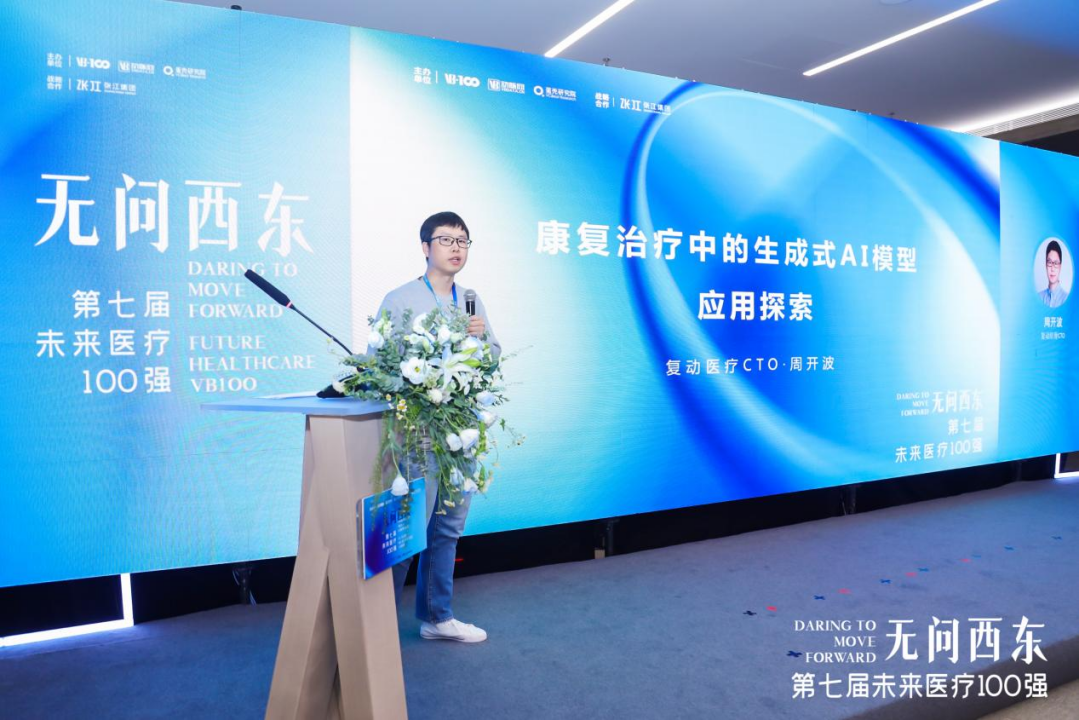
Founded in 2018, Fudong Medical is a research-driven, specialized medical innovation enterprise focused on musculoskeletal rehabilitation and orthopedics and sports medicine. The company deeply integrates multidisciplinary scientific research and clinical applications spanning clinical medicine, software and hardware development, artificial intelligence, and big data processing. Through its three core product lines—the JOYMOTION® digital therapeutics, the PhysioCloud™ Rehabilitation Cloud Service Platform, and Fudong Musculoskeletal Offline Rehabilitation Medical Centers—it provides integrated comprehensive solutions for musculoskeletal treatment.
As the first company in China to integrate rehabilitation therapy with generative AI, Fudong Medical’s Yue Xingdong® leverages AI technology to empower remote rehabilitation. Driven by considerations of medical value, commercial viability, and cost reduction with efficiency enhancement, it delivers high-quality, efficient, affordable, personalized, and customized rehabilitation treatments to patients.
The Yue Xingdong®️ patient-facing app helps users with assessment and diagnosis; the SaaS platform, designed for doctors and rehabilitation therapists, generates treatment plans in the backend system and, combined with self-developed wearable motion capture devices, enables remote guidance of patients through rehabilitation exercises; finally, data is recorded via an AI platform to extract value using artificial intelligence.
By leveraging Fudong’s self-developed MMGT (Multi-modal Generative Transformer) model, diverse embeddings enable the incorporation of multi-dimensional user data from various modalities into its generated solutions, while also integrating ChatGPT and domain experts for data augmentation.
Finally, Zhou Kaibo mentioned that Fudong Future will continuously expand the breadth and depth of its data, scale up models and optimize training processes to enhance model interpretability. In specific domains, it will develop more effective proprietary models for the rehabilitation vertical by building upon the knowledge capabilities of general large language models.
Su Tengrong: AI-Empowered Digital Therapeutics for Mental Health
Su Tengrong, Co-founder and CTO of Zheng'an Health, engaged in an in-depth dialogue with Ye Yanyan, Senior Researcher at VCBeat, at the forum, discussing digital therapeutics for mental health and corporate business in the era of AI.
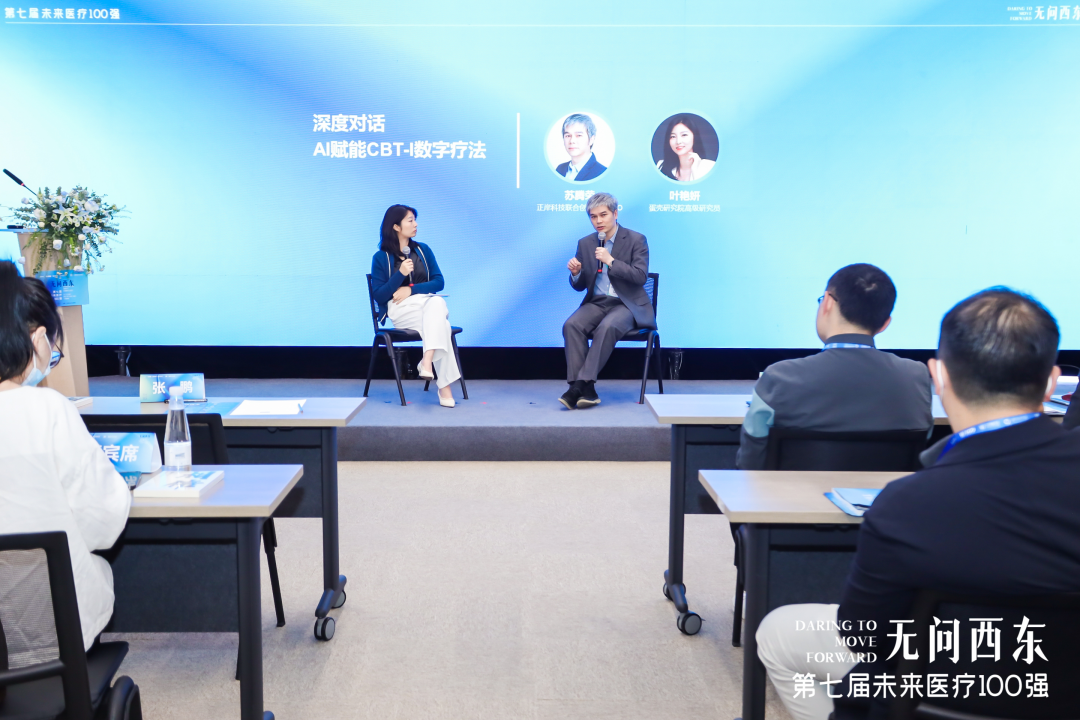
Su Tengrong believes that generative AI is not a new concept, but its current surge in popularity can be attributed to two factors. From the perspective of ordinary users, generative AI possesses robust knowledge and logical capabilities, significantly enhancing individual productivity. From an enterprise standpoint, the threshold for adopting AI capabilities across various industries has been substantially lowered.
Zheng’an Health is a startup focused on digital therapeutics in the field of mental health. It has built a digital therapeutics platform based on psychological theories and artificial intelligence technologies, and develops digital therapeutic products for mental health through this platform. Currently, Zheng’an Health has two products: “RuMian,” an intervention product for insomnia, which has entered the registration clinical trial phase; and “Jinri Qing,” a daily emotion management product for the general public, available for free download on major app stores.
Su Tengrong believes that traditional psychotherapy is conducted through dialogue between human therapists and patients, and its supply and accessibility are insufficient. Digital therapeutics products aim to address these shortcomings by leveraging the convenience of mobile internet in the form of software. In terms of product form, digital therapeutics products for mental health can be classified into at least two categories: conversational and non-conversational. Conversational digital therapeutics products for mental health attempt to simulate the dialogue experience between a human counselor and a patient.
However, the current application of AIGC in psychotherapy also faces certain challenges. Psychotherapy requires long-term treatment based on dialogue. Therefore, we hope that AIGC can remember the conversation history with patients and communicate with them based on past memories. However, even the most advanced AIGC models currently lack long-term memory capabilities due to their model structure design. Thus, it is necessary to design and implement a separate memory model tailored to specific business scenarios to assist the AIGC model in achieving long-term memory.
Su Tengrong believes that high-quality digital therapeutics products for mental health should not only offer humanized interactive experiences but also possess professional diagnostic and therapeutic capabilities, particularly the ability to provide continuous, personalized treatment tailored to individual patients. Regardless of the presence of large language models (LLMs), business acumen remains paramount. AI LLMs are intended to empower products rather than replace them; therefore, leveraging the strengths of LLMs in product design is critical. Furthermore, in the era of LLMs, proprietary data accumulated by digital therapeutics companies through their operations is equally vital. Such operational data can not only be used to continuously optimize smaller, task-specific models required for business operations but also, once scaled sufficiently, to develop vertical-domain models aligned with business needs, representing a significant future opportunity.
Liu Yanbin: AI-Empowered Smart Pathology
At the forum, Liu Yanbin, Co-Founder and CEO of Tousee Future, introduced the company’s current initiatives.
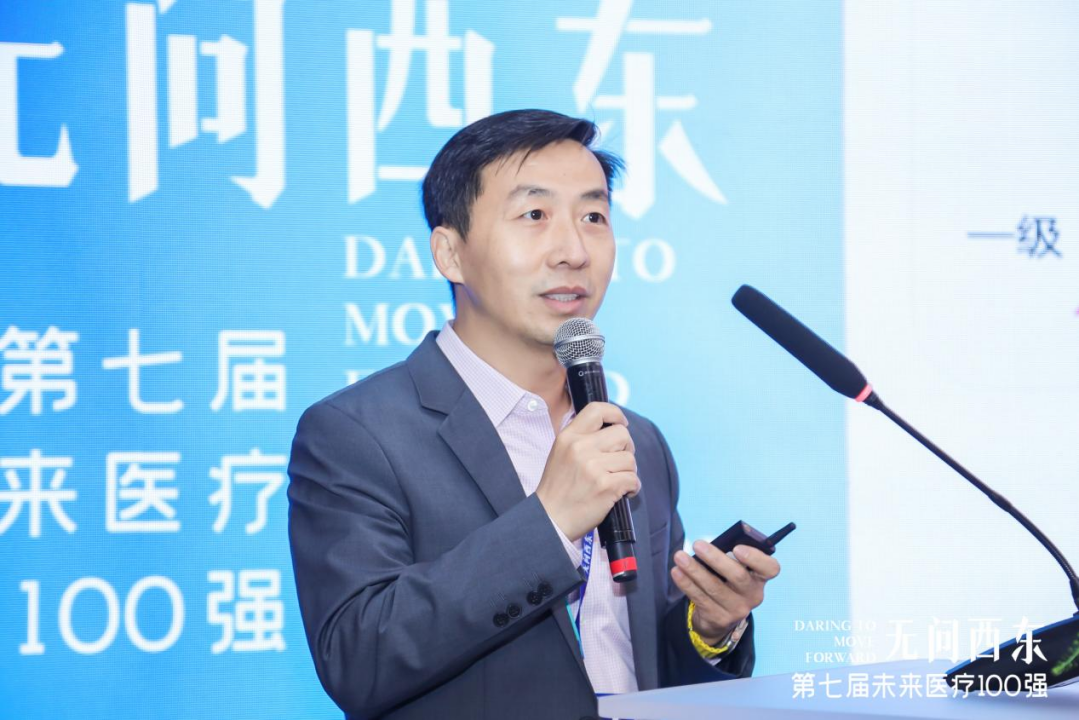
Liu Yanbin pointed out that in the field of diagnosis and treatment, pathological diagnosis is crucial for clinical therapy and is regarded as the “gold standard” of medical diagnosis, with pathologists often referred to as “the doctor’s doctor.” However, there is a severe global shortage of pathologists. In China, for instance, only slightly more than 10,000 registered pathologists are currently working on the front lines, which is nearly ten times fewer than the minimum of 100,000 recommended by the National Health Commission. Furthermore, the training cycle for pathologists is lengthy, typically requiring five to ten years. Therefore, leveraging technological innovation to transform the current state of pathological diagnosis has become an urgent priority.
The intelligent pathology diagnosis platform can significantly reduce physicians' workload and improve the efficiency of pathological diagnosis, thereby allowing pathologists to devote more time to the diagnosis and treatment of complex diseases and to research in frontier fields, thus promoting the development of medical technology. The future-oriented intelligent pathology diagnosis platform primarily features three key components: first, products and data as core assets; second, core algorithms; and third, implementation platforms.
Touche Future has currently accumulated 200 TB of precisely annotated digital pathology slides and real-world data from over 200,000 tumor patients. The company has performed numerous iterations based on deep learning algorithms, with its system having been in operation for nearly five years. The Touche Future Intelligent Pathology Diagnosis Platform currently performs GB-level image analysis in under 20 seconds, achieves a slide sensitivity close to 100%, has had no missed diagnoses, and fully meets the requirements for clinical application.
Looking ahead, Liu Yanbin stated that Touche Future is not merely an AI-assisted diagnostic provider; it also optimizes pathology department workflows through AI applications, which constitutes its current core value. In the future, leveraging pathological AI as an entry point, the company aims to correlate patient prognosis and drug targets through big data analytics, thereby serving human health.