

Half of China's VC Ecosystem Flocks to Chongqing: How Are They Investing in Healthcare?

SWS MEDICAL
Blood Purification Equipment R&D and Manufacturer
Recently, Chongqing established an industrial investment fund of funds with a total scale of up to RMB 200 billion, instantly becoming the focal point of the venture capital community.
Biomedicine is one of the key investment areas for this fund. According to the “14th Five-Year Plan” for Chongqing’s Biomedical Industry, the city aims to achieve a biomedical industry scale exceeding RMB 200 billion by the end of the 14th Five-Year Plan period.
Prior to this, Chongqing had already implemented multiple supportive policies, drawing increasing attention from innovative enterprises and investment institutions to its biopharmaceutical industry. Institutions such as Changling Capital, Shenzhen Capital Group, Huagai Capital, and Hillhouse Ventures have all invested in innovative projects in Chongqing.
Chongqing Has Become a Pivotal Player in Biopharma Venture Capital. What Is the Current State and Future Outlook of Its Industry? Which Subsectors Are Favorable to Investors, and What Investment Strategies Are Being Implemented in Chongqing? VCBeat Will Explore These Topics from Multiple Perspectives to Provide Insights for the Industry.
Chongqing’s pharmaceutical industry has long demonstrated considerable strength, with steady growth in total output value, revenue, and profits. According to official data, the total output value of large-scale enterprises in Chongqing’s pharmaceutical manufacturing sector increased from RMB 56.6 billion in 2017 to RMB 67.4 billion in 2021, accompanied by a corresponding rise in total profits.
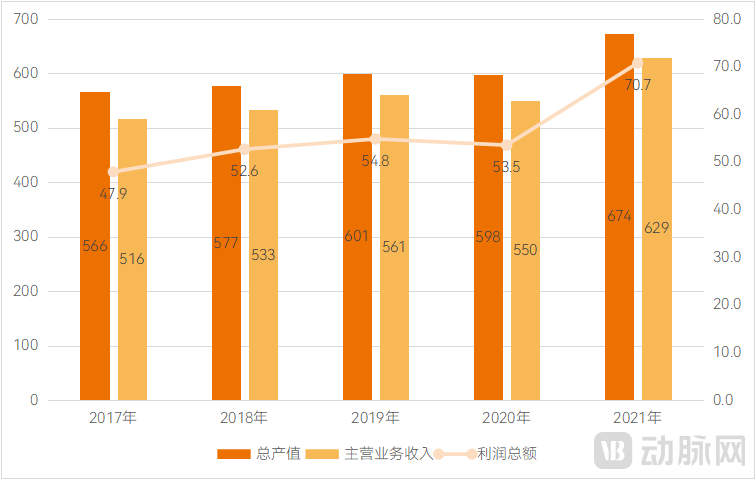
Growth of Industrial Enterprises Above Designated Size in the Pharmaceutical Manufacturing Sector; Data Source: Chongqing Statistical Yearbook (Various Years)
Currently, Chongqing has cultivated multiple industry-leading enterprises, with more than ten companies listed on the A-share market; furthermore, Xishan Technology is poised for its initial public offering, and Zhixiang Jintai has already passed the registration process for the STAR Market.
Among the leading enterprises, Zhifei Biological Products recorded an annual revenue of RMB 38.26 billion in 2022 and established entities in Chongqing such as Chen'an Biologics, Zhixiang Jintai, and Zhirui Biopharmaceutical Industrial Park. Porton Pharma Solutions established the Porton Biomedical Research Institute in Chongqing and opened a manufacturing facility in Changshou, Chongqing. These industry leaders have played a driving role in advancing local industrial R&D capabilities, talent development, and ecosystem construction.
Building on its established industrial foundation, Chongqing has also developed multiple biopharmaceutical industry clusters, including the Liangjiang New Area, the Chongqing High-Tech Zone of the Western Science City, Chongqing International Bio-City, and the Dadukou Biopharmaceutical Industrial Park.
Among them, the Chongqing International Bio-City in Banan District, Chongqing, is one of the first batches of national strategic emerging industry cluster development projects and has gathered 108 projects.
In terms of funding, Chongqing has established multiple guidance funds to leverage social capital for investment in emerging industries, including biopharmaceuticals. In addition to the recently launched fund of funds, the city had previously set up the Chongqing Scientific and Technological Achievement Transformation Fund and the Chongqing Liangjiang Science and Technology Innovation Fund.
In recent years, Chongqing has vigorously accelerated the development of its biopharmaceutical industry through intensive policy initiatives.
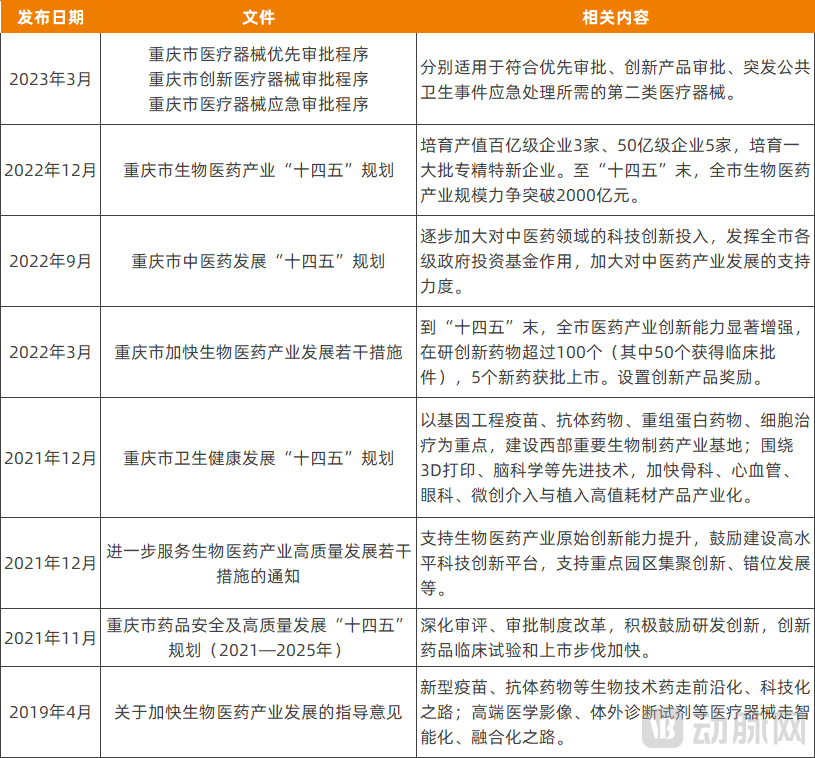
Relevant Policies on Biomedicine in Chongqing, Source: Government Websites
The "14th Five-Year Plan for the Biopharmaceutical Industry in Chongqing Municipality" proposes striving to have over 100 innovative drugs under research and development by 2025, with 50 of them obtaining clinical trial approvals; five new drug varieties approved for market launch, achieving a breakthrough from zero in therapeutic biologics; and establishing one national-level biopharmaceutical industry cluster and several specialized biopharmaceutical industrial parks.
To further stimulate innovation and accelerate product development, Chongqing has established financial rewards for projects and products. In 2022, the "Several Measures of Chongqing Municipality to Accelerate the Development of the Biopharmaceutical Industry" introduced incentive schemes for innovative products across various stages, including research and development, industrialization, and overseas market expansion. The policy provides a reward of RMB 10 million for each innovative drug and RMB 1 million for each Class III medical device.
In 2023, the Chongqing Municipal Medical Products Administration issued new approval procedures for medical devices, further optimizing the review and approval process and enhancing approval efficiency for Class II medical devices (including in vitro diagnostic reagents) that meet the eligibility criteria.
Chongqing has established unique advantages in the biopharmaceutical sector, both in terms of industrial foundation and policy support. With the recent establishment and operation of research institutions and universities such as the Chongqing International Institute of Immunology, Chongqing University of Traditional Chinese Medicine, and the Innovation Research Institute of China Pharmaceutical University in Chongqing, the city’s biopharmaceutical industry will benefit from enhanced scientific research capabilities and a more abundant supply of high-level talent.
According to Wang Yueyue, Managing Partner at Tianchao Capital, Chongqing offers more generous policy support for medical enterprises compared to coastal cities, enabling faster approval and market launch of medical products. With the medical industry experiencing significant growth, many of Tianchao Capital’s portfolio companies are considering relocating inland and establishing their presence in Chongqing. “To this end, we have established an office in Chongqing to serve as a hub connecting eastern and western China. On one hand, we maintain close communication with Liangjiang New Area, the High-Tech Zone, Yubei District, Banan District, and other regions to support local enterprises in scaling up and strengthening their competitiveness. On the other hand, we introduce high-quality resources from eastern China to better assist and serve local businesses.”
Recently, Chongqing established an industrial investment fund of funds with a total scale of RMB 200 billion, with biomedicine being one of the key investment sectors. The establishment of this fund of funds has attracted the attention of over 100 leading investment institutions, including Legend Capital, CICC Capital, Hillhouse, Sequoia China, Fortune Capital, Shenzhen Capital Group, IDG Capital, Huagai Capital, and Yida Capital. Some media outlets have remarked that “half of the venture capital community has come to Chongqing.”
In fact, Chongqing’s biopharmaceutical industry has been attracting increasing attention from investment institutions across the country. According to public announcements released by companies or organizations, in the past three years, Yongrenxin Medical, Mofang Precision, Xishan Technology, and Senmei Medical have successively secured investments from renowned firms.
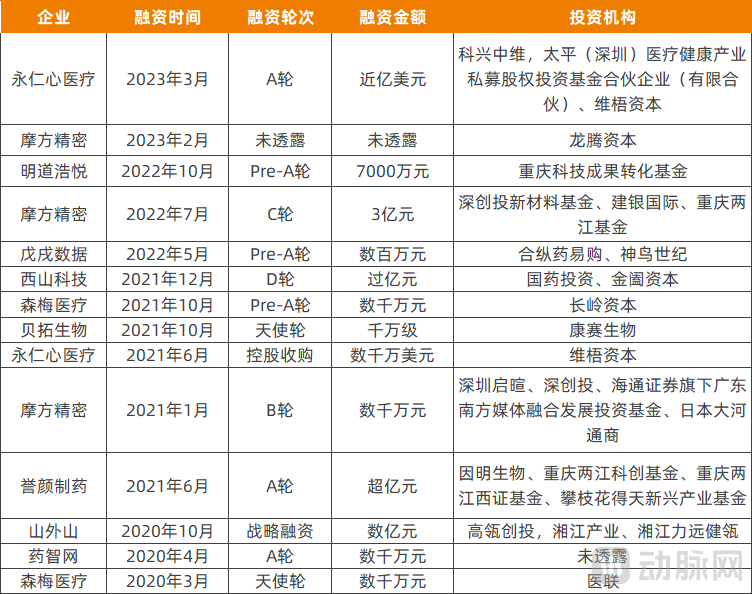
Financing Status of Selected Enterprises in Chongqing (Disclosed by Enterprises and Institutions), Data Source: Arterial Orange
Overall, medical devices with significant innovative value or those that have undergone long-term market validation are receiving heightened attention from investment institutions.
Prior to its initial public offering (IPO), SWS MEDICAL secured strategic investment in 2020, led by Hillhouse Ventures. As a leading enterprise in the hemodialysis industry, SWS MEDICAL has enhanced its core competitiveness through over two decades of technological innovation and service upgrades, thereby breaking the monopoly held by imported products. Xishan Technology, established earlier, has become a leader in the niche segment of minimally invasive surgical medical devices. Its product portfolio includes surgical power equipment and consumables for departments such as neurosurgery, otolaryngology, orthopedics, and breast surgery.
Younger companies such as Eternal Heart Medical and Mofang Precision, with significant innovations in their core products, have also attracted capital interest.
In 2019, the implantable left ventricular assist system EVAHEART, developed and manufactured by Everest Heart Medical, was approved for market launch through the Special Approval Procedure for Innovative Medical Devices. This product provides mechanical circulatory support for patients with advanced refractory left heart failure, serving as a bridge to transplantation or cardiac recovery, as well as for long-term therapy, and has been clinically applied in numerous top-tier hospitals across China. Following its acquisition by Vivo Capital in 2021, Everest Heart Medical secured nearly USD 100 million in financing in 2023, expanding from innovative products into a comprehensive health industry platform focused on the treatment of severe heart failure.
BMF’s core business is ultra-high-precision 3D printing, with applications in industries including medical devices. It is reported that BMF can produce industrialized 3D printing systems with a maximum precision of 2 μm. In the field of precision medical devices, BMF has independently developed biocompatible materials that exhibit excellent biocompatibility, mechanical properties, and aging resistance. The company has collaborated with well-known medical device enterprises to develop precise drug delivery systems, which can improve drug delivery efficiency and access human tissues and organs that were previously difficult to reach. As a result, BMF has received investments from prominent institutions such as Shenzhen Capital Group and CCB International.
Chongqing-based enterprises have also attracted the attention of strategic investors. For instance, Sinovac Zhongwei invested in Yongrenxin Medical, extending its reach from vaccines to the field of artificial hearts; additionally, Yinming Bio invested in Yuyan Pharmaceutical, and Kangsai Bio invested in Beituo Bio. For these companies, strategic investors bring not only capital but also business synergies.
In addition to the “officially announced” financing information, data from Qichacha shows that Zhixiang Jintai has received investments from Oriental Fortune Capital, Longma Peak Venture Capital, and others; Jinpai Biotechnology has received investment from Huadong Medicine. Overall, Chongqing has become an indispensable part of China’s biomedical investment landscape.
Amid a robust culture of innovation, the research and development of innovative drugs and medical devices in Chongqing is accelerating.
To date, Chongqing has seen more than 20 Class I innovative drugs approved for clinical trials, while multiple innovative medical devices have been included in the National Medical Products Administration’s special approval pathway or the Chongqing Municipal Medical Products Administration’s priority review procedure. These innovative products span all key stages from research and development to registration and market launch, demonstrating significant value.
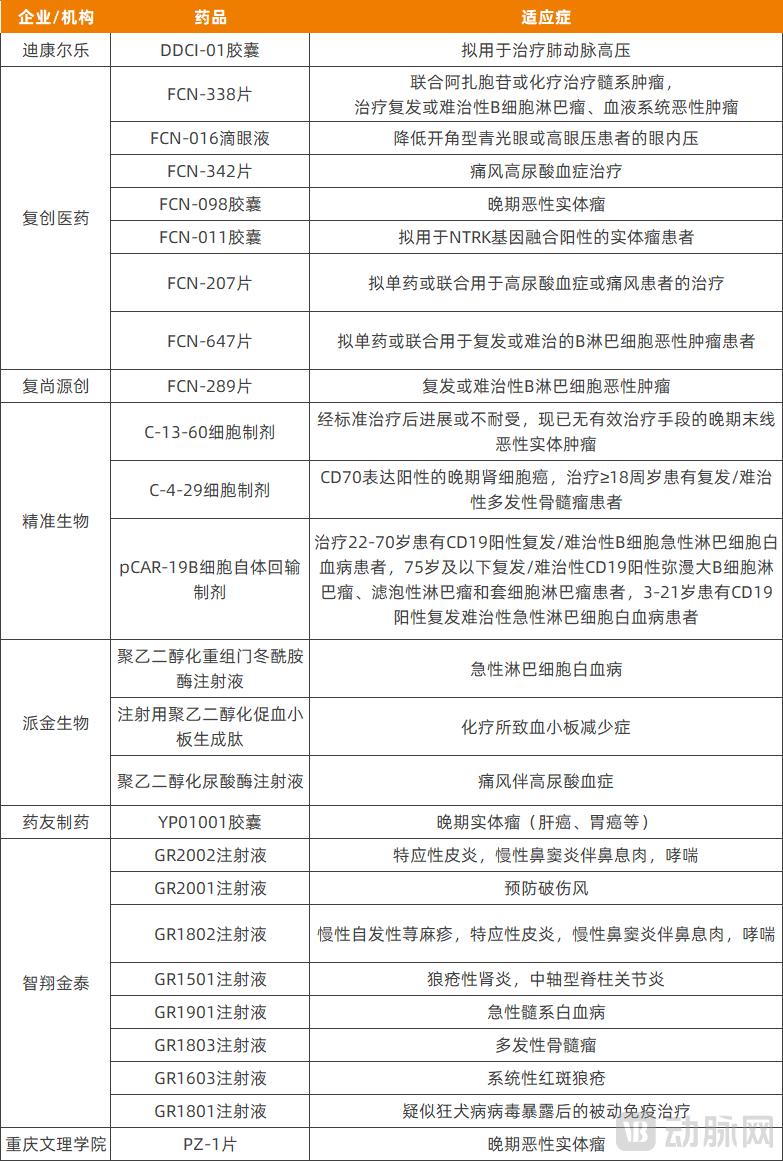
Part of Class 1 Innovative Drugs Approved for Clinical Trials in Chongqing, Source: Center for Drug Evaluation, National Medical Products Administration
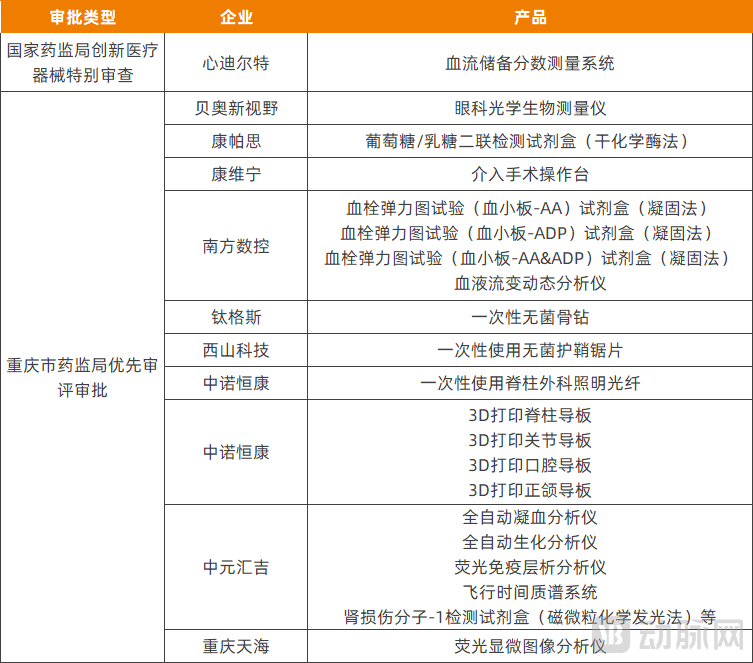
Medical Devices in Chongqing Included in the NMPA’s Special Approval or Municipal Priority Approval Since 2022, Source: National Medical Products Administration
Chongqing’s innovative products are increasingly emerging across various niche sectors, even securing top rankings.
According to the prospectus of Zhixiang Jintai, the company has developed GR1801, a recombinant fully human bispecific antibody injection targeting the rabies virus G protein. GR1801 is the world’s first bispecific antibody for passive immunization against rabies, simultaneously targeting epitopes I and III of the G protein. Its molecular design aligns with the World Health Organization’s (WHO) recommendations for the development of anti-rabies virus antibodies—namely, combining multiple monoclonal antibodies targeting different antigenic sites into a “cocktail” formulation to ensure efficacy against diverse viral strains or genotypes.
This is not only the world’s first bispecific antibody for passive immunization against rabies, but also the first anti-rabies virus G protein bispecific antibody developed by a Chinese enterprise to enter clinical trials. GR1801 can simultaneously target sites I and III of the G protein, and its molecular design meets the WHO recommendations for the development of anti-rabies virus antibodies.
In September 2022, Precision Biologics’ investigational product, the C-13-60 cellular preparation, received approval for clinical trials. This product is a carcinoembryonic antigen (CEA)-targeted chimeric antigen receptor T-cell (CAR-T) injection indicated for colorectal cancer, gastric cancer, esophageal cancer, and other malignancies. According to public information from Precision Biologics, the C-13-60 cellular preparation is the first CEA-targeted CAR-T product in China accepted by the Center for Drug Evaluation (CDE) of the National Medical Products Administration.
In terms of medical devices, the approved artificial heart from Yongrenxin Medical and the porous tantalum bone grafting material from Runze Pharmaceutical also demonstrate leading advantages.
Whether a product is “global first-in-class,” whether it ranks first or belongs to the top tier in its niche segment, and whether its R&D progress is substantial and significantly outpaces similar products are key criteria used by investment institutions to evaluate projects. By striving for leadership across various niche segments, Chongqing will offer greater investment value.
Corporate innovation is directed toward meeting clinical needs, keeping pace with cutting-edge trends, and demonstrating the value of domestic brands. Similar to the key focus areas for innovative drugs, Chongqing’s major Class 1 innovative drugs are primarily concentrated on malignant tumors and other refractory diseases. In the field of medical devices, R&D efforts are mainly focused on high-end medical devices with high technical barriers and products that have substantial market potential both domestically and overseas.
Furthermore,Frontier fields such as organoids are also a focus of innovative enterprises in Chongqing.In recent years, driven by a series of major initiatives by the FDA, organoids and organ-on-a-chip technologies have attracted significant industry attention. In Chongqing, Jiateng Pharma has established a comprehensive product and service portfolio covering tumor organoid drug sensitivity testing, organoid-assisted new drug development, and organoid culture media. Meanwhile, Probio owns technologies such as 3D in vitro tumor organoid culture, high-throughput screening of drug targets and small-molecule drugs, and preclinical drug evaluation, and is currently building the largest 3D tumor organoid bank in Southwest China.
Some innovative enterprises can leverage the technological, financial, and resource advantages of their investors.Regarding Class 1 innovative drugs approved for clinical trials, the vast majority of products were contributed by Fosun Pharma’s subsidiaries—Fosun Chuangyao, Foshang Yuanchuang, and Youyou Pharmaceutical—as well as Zhifei Biological Products’ subsidiary, Precision Biotech. The R&D capabilities of their parent companies provide strong support for new drug development, ensuring success in both research and subsequent commercialization.
“Going global” has become a buzzword in the industry in recent years. According to statistics from VCBeat, an analysis of the financial performance of medical device companies listed on China’s A-share market reveals that those with outstanding results share a common trait: overseas revenue accounts for more than 40% of their total income. As of now,Chongqing enterprises have also laid a certain foundation for overseas expansion.
In terms of overseas expansion of independent brands, Haifu Medical’s high-end large-scale medical device for focused ultrasound ablation surgery, the “Haifu Knife,” has been exported to more than 30 countries and regions worldwide. Meanwhile, Jinshan Technology’s capsule endoscopy products have been sold to over 80 countries and regions.
Overall, building on its existing manufacturing base, Chongqing is accelerating its R&D and innovation efforts, making the investment value of its enterprises increasingly apparent.
Job positions can directly reflect the characteristics of local industrial development.
In 2022, the “Report on Talent Demand and Development Environment in Biopharmaceuticals/Healthcare” released by Zhilian Research Institute showed that from January to April 2022, the year-on-year growth rate of biopharmaceutical/healthcare job positions in Chongqing reached 29.2%, leading the country. Additionally, publicly available data indicate that a research institution in Chongqing once offered an annual salary of over RMB 1 million for the position of project leader.
These figures indirectly reflect the determination and momentum behind the development of the biopharmaceutical industry. As the sector accelerates, which niche areas still hold significant growth potential?
Chongqing has long possessed a solid foundation for its vaccine industry. Huang Tao, founding partner of Yida Capital, stated that the firm will closely focus on biomedical sectors such as novel vaccines, antibody drugs, recombinant proteins and peptides, and gene and cell therapies, leveraging Chongqing’s strengths in biopharmaceutical clusters and talent.
The active pharmaceutical ingredient (API) industry is a key pillar of Chongqing’s pharmaceutical sector, boasting strong industrial foundations. Priority will be given to the API segment, with a focus on identifying high-quality projects that leverage the advantages of the local API industrial cluster.
“We will continue to focus on novel drugs and technologies with high clinical value, as well as frontier subfields of precision medicine such as synthetic biology, brain science, flexible digital medicine, regenerative medicine, nanobodies, novel adjuvants, and drug delivery systems,” said Huang Tao.
Liu Xi, Managing Director of Huagai Capital’s Healthcare Fund, stated that future investment strategies will focus on promoting industrial chain upgrades and addressing actual clinical needs. The fund will prioritize investments in innovative biotechnologies and major disease areas, including but not limited to antibodies, recombinant proteins, peptide drugs, novel vaccines, gene and cell therapies, and advanced drug formulations. “We aim to provide greater support and empowerment to biopharmaceutical companies with high-quality development potential. Our investment scope is not geographically restricted; it includes both local enterprises in Chongqing and the introduction and establishment of high-quality companies from other regions.”
Of course, the growth and development of the biopharmaceutical industry cannot be achieved overnight; it requires sustained and rational efforts from innovative enterprises, scientists, financial institutions, government departments, and other stakeholders. Liu Xi believes that building an ecosystem for the biopharmaceutical industry is a process characterized by high investment, high returns, and long cycles. In the future, Chongqing will need joint promotion and strengthening by the government, enterprises, and capital providers in terms of original innovation capability, industrial chain construction, and talent cultivation and attraction.