

Cash-Strapped Mustang Bio Halts Pipeline Programs Amid Strategic Refocus on Rare Disease Therapies
Mustang Bio
Developer of Novel Cancer Immunotherapy Products
In recent years, posts claiming “a single injection costing 1.2 million yuan clears cancer cells within two months” have frequently topped trending search lists. Although not yet covered by national medical insurance, the emergence of this “miracle anti-cancer drug” still serves as a lifeline for many cancer patients.
More precisely, this so-called “miracle anti-cancer drug” is not a drug at all, but a personalized cell-based immunotherapy known as Chimeric Antigen Receptor T-cell (CAR-T) therapy. Technicians first extract T cells from the patient, then use genetic engineering to modify these T cells by equipping them with chimeric antigen receptors (CARs) that can specifically recognize cancer cells. Subsequently, these CAR-T cells are extensively expanded in the laboratory. Finally, the amplified “enhanced” T cells are infused back into the patient’s body to achieve precise eradication of cancer cells.
To date, more than 1,000 clinical trials of CAR-T cell therapies have been registered on ClinicalTrials.gov. According to incomplete statistics, there were 28 financing events related to cell therapies in the first quarter of 2023, most of which were associated with CAR-T therapies. This underscores the intense interest and momentum in the CAR-T sector.
Mustang Bio (NASDAQ: MBIO), a U.S. company founded in 2015, is also betting on CAR-T therapies. Amid the severe homogenization of R&D targets for CAR-T therapies—with most products in development focusing on the CD19 and BCMA targets—Mustang has sought alternative breakthroughs by concentrating on the development of CAR-T therapies for rare hematologic malignancies and solid tumors, as well as gene therapies for rare genetic disorders.
Can Mustang Bio’s Unconventional Strategy Break Through the Encirclement?
In 1989, Cross G. and two other scientists first proposed the concept of “CAR.” In 2010, the United States reported its first successful case of treating leukemia with CAR-T therapy. In 2012, as the story of Emily, the “first CAR-T girl,” who was successfully treated became widely known, CAR-T therapy entered a period of explosive growth.
In terms of the number of approvals, six CAR-T therapy products have received FDA approval to date. Furthermore, the indications for all six products are hematologic malignancies. This indicates that hematologic malignancies represent the primary focus of current CAR-T therapy research and development.
In response, Mustang Bio has also developed two product pipelines targeting hematologic malignancies, both of which have currently entered Phase I/II clinical trials.
Among them, the Phase I/II clinical results of MB-106 showed that in patients with various hematologic malignancies, including Waldenström macroglobulinemia, the overall response rate (ORR) was 96% and the complete response rate (CR) was 75% among those treated with MB-106.
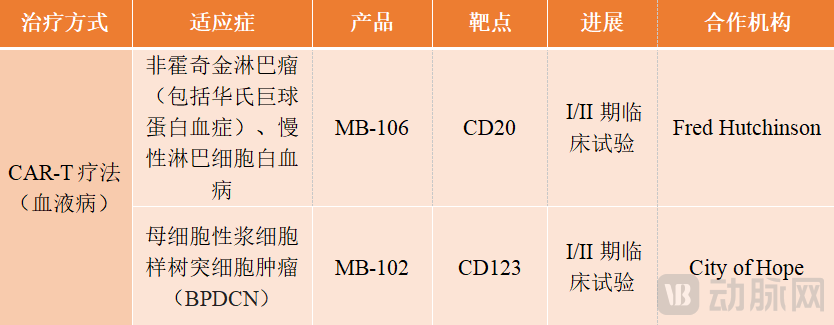
Mustang Bio’s Pipeline for Hematologic Malignancies | Compiled by VCBeat
Beyond hematologic malignancies, the application of CAR-T therapy in solid tumors has emerged as another mainstream research direction. However, its efficacy in solid tumors is constrained by factors such as the complex immunosuppressive tumor microenvironment and high tumor antigen heterogeneity, prompting the industry to actively seek breakthroughs.
Oncolytic viruses are one such example. A paper published in Science Translational Medicine in 2020 demonstrated that combining oncolytic viruses with CAR-T therapy can successfully target and eradicate solid tumors that are difficult to treat with CAR-T therapy alone. Furthermore, the study indicated that oncolytic viruses can help CAR-T cells overcome immunosuppressive barriers through multiple mechanisms, thereby enhancing therapeutic efficacy.
In addition to actively exploring CAR-T applications in hematologic and solid tumors, Mustang Bio has also initiated a clinical trial of CAR-T combined with oncolytic virus therapy for glioblastoma.
This treatment regimen, named MB-109, combines a CAR-T cell therapy targeting IL13Rα2 (MB-101) with the C134 oncolytic virus (MB-108) developed by Nationwide Children’s Hospital.
In simple terms, MB-109 utilizes oncolytic viruses to overcome the immunosuppressive tumor microenvironment, converting non-immunogenic “cold tumors” into immunogenic “hot tumors,” thereby enhancing the efficacy of CAR-T therapy. Specifically, the oncolytic virus MB-108 first infects tumor cells and subsequently remodels the tumor microenvironment by recruiting endogenous CD8+ effector T cells. This “inflamed” tumor microenvironment enables the CAR-T cells (MB-101) infused into and around the tumor to better penetrate throughout the entire tumor mass and exert their cytotoxic effects against tumor cells.
Mustang Bio plans to submit an Investigational New Drug (IND) application for MB-109 in 2023, for the treatment of IL13Rα2-positive recurrent or refractory glioblastoma and anaplastic astrocytoma.
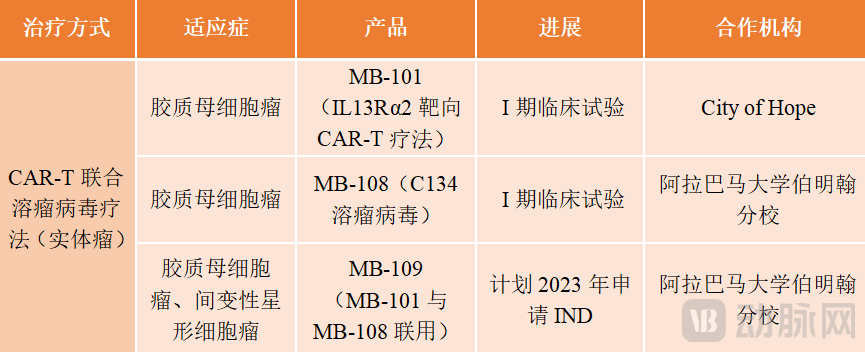
Mustang Bio’s Solid Tumor Pipeline – Compiled by VCBeat
“Bubble Boy” may sound cute, but bubbles burst at the slightest touch.
“Bubble boy disease” is an alternative name for X-linked severe combined immunodeficiency (XSCID). XSCID is a rare X-linked recessive genetic disorder, affecting almost exclusively males. Mutations in the IL2RG gene on the X chromosome result in the absence of T cells and natural killer (NK) cells, along with impaired B cell function.
Typically, patients with X-linked severe combined immunodeficiency (XSCID) develop severe, recurrent, and life-threatening infections within the first three months of life. Without timely treatment, most XSCID patients die during infancy.
Currently, allogeneic hematopoietic stem cell transplantation (HSCT) has been proven to be an effective treatment for X-linked severe combined immunodeficiency (XSCID). However, due to the lack of fully matched donors for most patients, immunological disparities between recipients and donors can lead to severe immune complications, resulting in persistent immune issues lasting for years in some transplant recipients.
However, gene therapy appears to offer hope for immunodeficiency disorders. For nearly two decades, researchers have been investigating ex vivo gene therapy for X-linked severe combined immunodeficiency (XSCID), aiming to establish it as an alternative to hematopoietic stem cell transplantation (HSCT) or as a second-line treatment for patients with suboptimal responses to HSCT.
Between 1990 and 2000, multiple cases of gene therapy using γ-retroviral vectors demonstrated favorable clinical outcomes, seemingly further validating the promise of gene therapy for patients with X-linked severe combined immunodeficiency (XSCID). However, this hope was short-lived. In a few cases, insertional mutagenesis occurred during transduction by the retroviral vectors, leading to the development of leukemia in affected patients. Consequently, due to the potential risk of insertional mutagenesis and oncogene activation, numerous studies worldwide employing retroviral vectors were temporarily halted.
Against this backdrop, Mustang Bio, in collaboration with St. Jude Children's Research Hospital and the National Institutes of Health, has developed aModified Lentiviral Vector (LV)and applied to gene therapy.
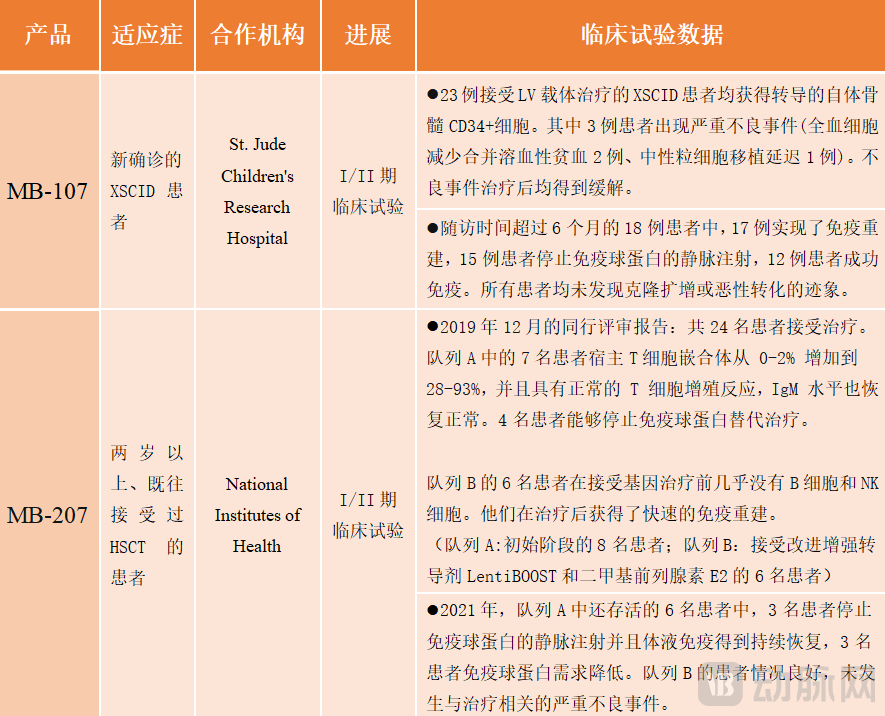
Clinical Trial Data for MB-107 and MB-207 | Compiled by VCBeat
Although Mustang Bio’s clinical trials for its two gene therapies have achieved initial progress, subsequent advancement has not been smooth sailing.
In 2021, the FDA approved Mustang Bio to initiate a non-randomized, multicenter Phase II clinical trial of MB-107. However, due to material-related issues in manufacturing, the relevant progress was suspended in 2022. Mustang Bio plans to strengthen collaboration with external suppliers and commence patient enrollment for the Phase II clinical trial as early as possible.
In early 2022, the FDA also issued a clinical hold on the clinical trial of MB-207 due to myeloid clonal expansion observed in 10% of patients receiving the gene therapy. However, to date, all patients treated with this therapy have remained clinically stable, with no significant hematological abnormalities and no signs of insertional mutagenesis or malignancy. Consequently, following FDA review, the agency agreed that Mustang Bio could proceed with the clinical trial after appropriately addressing these issues.
The triad of small patient populations, limited market demand, and high R&D costs encapsulates the hardships inherent in orphan drug development. To incentivize such efforts, the United States, the European Union, Japan, and China have each implemented corresponding supportive policies. Upon receiving orphan drug designation, pharmaceutical products become eligible for preferential treatments in areas such as taxation, marketing authorization, and market exclusivity.
In this context, some pharmaceutical companies have surged ahead in the rare disease market by leveraging orphan drugs. Gleevec, the drug that inspired the medication featured in the film *Dying to Survive*, was initially approved as an orphan drug. Within three years of its launch, its revenue exceeded $1 billion, making it Novartis’ first “blockbuster” drug to surpass the $1 billion mark.
In contrast, Mustang Bio’s MB-107, MB-207, and MB-106 have all received Orphan Drug Designation from the FDA. However, this does not mean that Mustang Bio can “leave competitors in the dust” in the orphan drug market.
From the perspective of pipeline progress, While Mustang Bio’s lead candidate MB-106 has made certain progress in early-stage clinical trials, further relevant studies are still required. As for the ex vivo gene therapies MB-107 and MB-207, although the company intends to enroll the first cohort of patients for their Phase II clinical trials as early as possible, progress has been hindered by material-related issues with one pipeline and myeloid clonal expansion concerns with the other.
Furthermore, although Mustang Bio has developed multiple pipelines targeting multiple myeloma, solid tumors (prostate cancer, pancreatic cancer, gastric cancer, and bladder cancer), and RAG-deficient severe combined immunodeficiency, and is actively seeking collaboration with the Mayo Clinic to develop in vivo CAR-T therapies, these pipelines remain in the conceptual exploration or preclinical stages, and their value remains to be validated.
andFrom a financial data perspective, as R&D expenses increase, Mustang’s operating expenses have also been rising year by year. With no drugs yet approved for market launch, Mustang, like many innovative pharmaceutical companies, remains in a phase of heavy investment in research and development. VCBeat has learned that although Mustang’s cash on hand decreased compared to the previous two years, standing at $75.656 million in 2022, its annual operating expenses reached $76.159 million.
This means that the company’s cash reserves are being rapidly depleted, reaching a stage where expenditures exceed revenues. Mustang Bio stated that there are significant doubts about whether its current cash flow can sustain operations over the next year. Therefore, given the current situation, the company will fund its operations through equity sales, loans, and financing on one hand, while also reducing operating expenses in 2023 on the other.
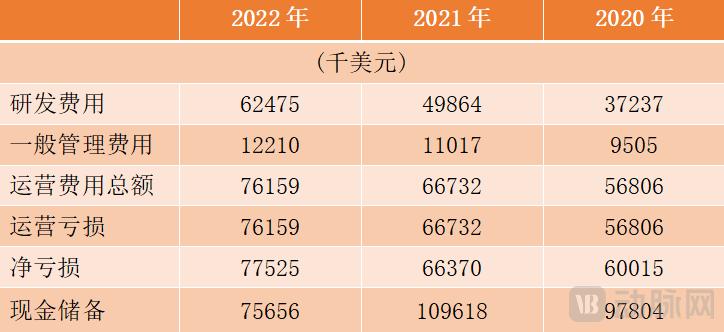
Mustang Bio’s Key Financial Data | Source: Mustang Bio Annual Report | Chart by VCBeat
From the perspective of the secondary market, MBIO’s stock price has remained sluggish since 2018, even falling below $1. Despite once boasting a market capitalization of over $300 million at its peak, MBIO’s current market cap stands at just $30 million.
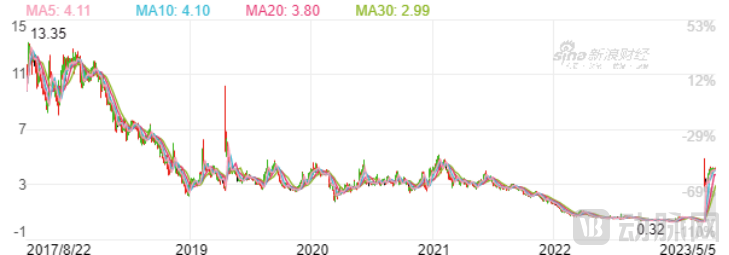
MBIO Stock Price Trend | Source: Sina Finance
As of now, the Q1 2023 earnings reports of multinational pharmaceutical companies have been largely released. For firms such as Novartis, Takeda, Roche, Pfizer, and AstraZeneca, the overarching theme remains “cost reduction and efficiency enhancement,” with several non-core pipelines discontinued. Well-capitalized large pharmaceutical companies have acted decisively to ensure resources are allocated where they yield the greatest impact. Innovative drug developers with “no products and no revenue” should give deeper consideration to their strategic direction.
If innovative pharmaceutical companies fail to establish their own differentiation and uniqueness, or if their pipeline progress is hindered, they will not only face bearish sentiment in the secondary market but may also struggle to secure investment in the primary market. Mustang Bio is currently facing such a predicament.
In response, Mustang Bio also opted for cost reduction.
Mustang’s recently released first-quarter report underscores its determination to cut costs—operating expenses were effectively controlled in Q1 2023, with R&D expenses down 14% year-over-year and general and administrative expenses down 31% year-over-year. Meanwhile, Mustang has begun “streamlining its pipeline,” deciding to halt the development of CAR-T therapies targeting CD123, HER2, CS1, and PSCA. These programs were either non-core assets or had been progressing slowly. Regarding the two programs placed on clinical hold by the FDA, Mustang stated that it would postpone the initiation of their clinical trials. Additionally, Mustang executed a reverse stock split in early April, aiming to attract more investors.
“We must concentrate on our priorities by delaying the initiation of the MB-107 and MB-207 trials and reducing our workforce to help Mustang extend its cash runway. This will enable Mustang to allocate more resources to advance its key clinical programs and potentially accelerate the achievement of related product milestones,” said Dr. Litchman, Chief Executive Officer of Mustang Bio.