

Digital Therapeutics Industry Innovation Practice Forum Successfully Held at the 7th Future Healthcare 100 Summit
The 7th Future Healthcare Top 100 Conference, hosted by VB100, VCBeat, and Eggshell Institute, with strategic partnership support from Shanghai Zhangjiang Group, was successfully held at the Shanghai Zhangjiang Science Hall from May 5 to 7, 2023.
On the first day of the conference, the “Digital Therapeutics Industry Innovation Practice Forum” attracted numerous industry professionals. Focusing on the direction of domestic policy development, technological innovation, and industrial transformation, the forum brought together many top experts and industry leaders. Leveraging their keen insights into the industry and continuous innovative practices, they jointly created a premier platform for industry exchange.
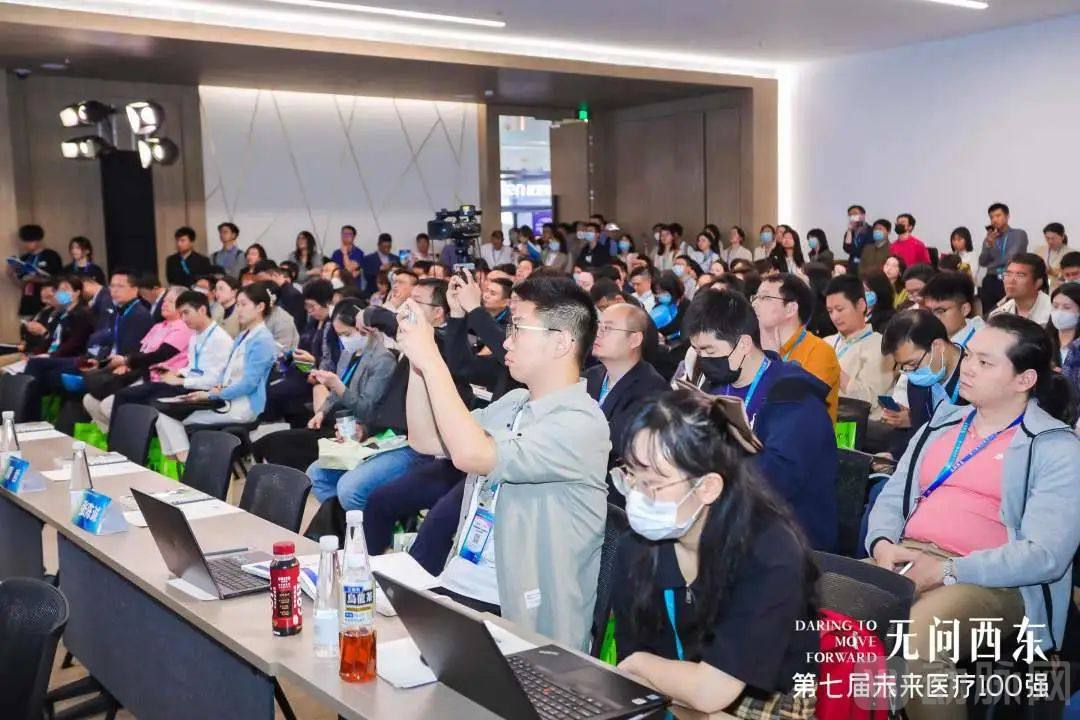
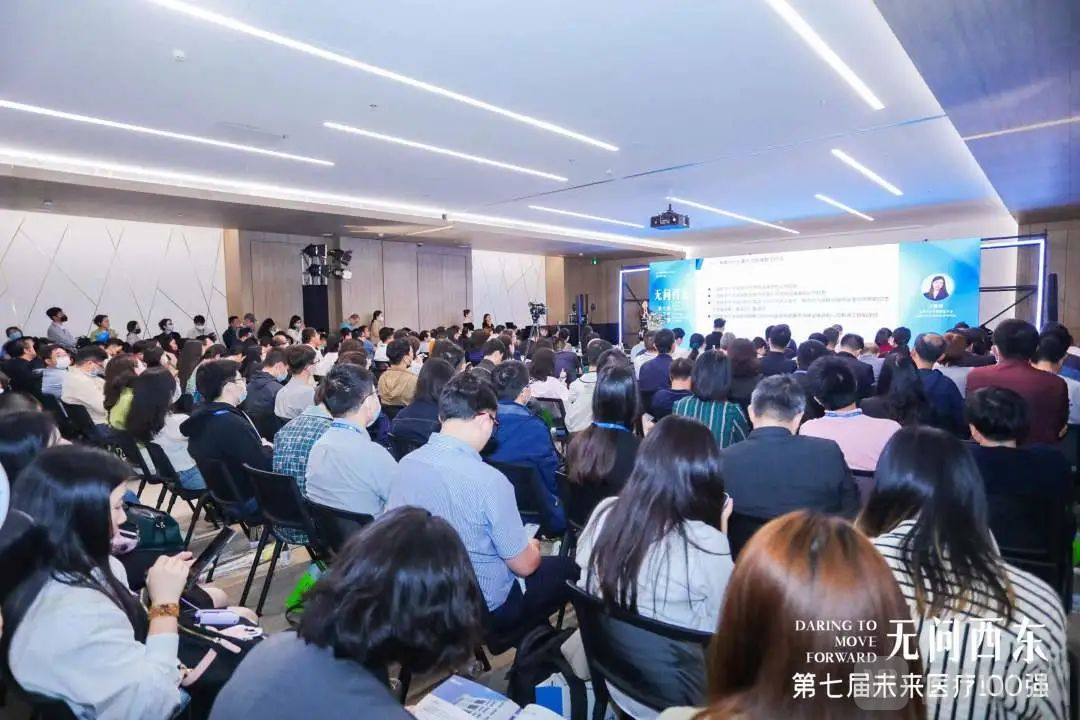
(Live photos from the bustling forum)
On that day, the forum was opened under the moderation of Wu Lili, CEO of Fosun Xingweilai Research Institute and Executive General Manager of Xingweilai Capital. The first speaker was Wang Yanfang, Director of the Health Industry and International Cooperation Bureau of the Hainan Provincial Health Commission. She provided an analysis of Hainan’s strategic considerations, work approach, progress, goals, and future prospects for developing digital therapeutics. She also introduced the “one core, two poles, and three zones” regional spatial layout of Hainan’s health industry and highlighted the province’s unique advantages in advancing digital therapeutics. Wang Yanfang focused on presenting Hainan’s full-cycle support policies for digital therapeutics, which include establishing a nationally leading clinical research demonstration base for digital therapeutics, accelerating product registration and approval processes, actively promoting the application of digital therapeutic products, encouraging exploration of diverse payment models, strengthening publicity and industrial cluster development, and standardizing development alongside other supportive measures.

(Wu Lili, CEO of Fosun Star Future Institute and Executive General Manager of Star Future Capital)

(Wang Yanfang, Director of the Health Industry and International Cooperation Bureau, Hainan Provincial Health Commission)
Subsequently, Liu Chongsheng, Secretary-General of the Digital Therapeutics Professional Committee of the China Association for Medical Device Industry (CAMDI), elaborated on the significance of digital therapeutics from the perspectives of social reach and technological reach. He pointed out that the National Medical Products Administration (NMPA) is currently researching regulatory policies for digital therapeutics. Furthermore, Mr. Liu introduced the preliminary plans for the committee’s annual activities at this stage, including standard-setting and industry exchanges, as well as the industrial research and enterprise services provided by the Shanghai Institute for Medical Device Testing.

(Liu Chongsheng, Secretary-General of the Digital Therapeutics Professional Committee of the China Association for Medical Device Industry)
Xie Chen, Deputy Director of the Strategic Development Department at the Institute for Global Health and Development, Peking University, began by presenting an overview of the market size and current status of digital therapeutics (DTx) both internationally and in China. Using Pear Therapeutics as a case study, he analyzed the challenges facing the DTx industry. In response to these issues, Xie proposed five strategies for high-quality industrial development, drawing on specific examples: prioritizing non-disease health conditions with the highest disease burden in the early stages; generating high-quality clinical evidence; optimizing user experience to improve patient adherence; establishing an AI-driven “continuous evidence-based governance system”; and conducting health economic evaluations to provide evidence of value advantage.

(Xie Chen, Deputy Director of the Strategic Development Department at the Institute for Global Health and Development, Peking University)
Gao Yunlong, CEO of Zhilan Health, highlighted the key elements for successful digital therapeutics (DTx) development, covering indication selection, product design, clinical trials, registration and certification, business models, and team composition. He emphasized the critical importance of clinical trials and the current challenges in registering DTx products. Addressing these pain points, Gao Yunlong drew on Zhilan Health’s corporate background, incubation model, service ecosystem, and achievements—including securing China’s first DTx certification, conducting the largest real-world study in the DTx field, and publishing 16 high-impact academic papers domestically and internationally—to summarize the experience of building DTx solutions from scratch (0 to 1). He further introduced Zhilan Health’s full-process CDMO services for digital therapeutics and highlighted the company’s active participation in establishing industry standards and promoting their practical implementation.

(Gao Yunlong, CEO of Zhilan Health)
Subsequently, Wang Jiejun, Founder and Chief Scientist of Botong Medical, cited specific data to highlight the vast size of China’s current pain management market. He pointed out that pain management is a critical component of oncology care, particularly during anti-tumor treatment, yet a significant unmet need remains. Addressing these pain points, Wang introduced Botong Medical’s pioneering digital health-enabled comprehensive pain management solution, with a particular focus on the BTS Pain Assessment System, which covers both in-hospital and out-of-hospital settings, and the upcoming BTX Shutong Multidimensional Relief Device.

(Wang Jiejun, Founder and Chief Scientist of Botong Medical)
Rami Horesh, CEO of Raylo Tech, began by comparing traditional ADHD treatment protocols with Raylo Tech’s innovative approach, elaborating on the core of its innovation: an AI- and neuroscience-based assistive diagnostic technology for ADHD. This technology enables objective and quantitative assessment of attention in both children and adults through gamified testing and evaluation. Mr. Horesh also introduced the company’s two current innovative products: the SeeMe Attention Assessment System, designed for home and school settings, and the MOXO d-CPT, an assistive diagnostic software for ADHD tailored to clinical environments. These technologies and products have been validated by numerous global studies, demonstrating their high efficiency, accuracy, and reliability in ADHD diagnosis.
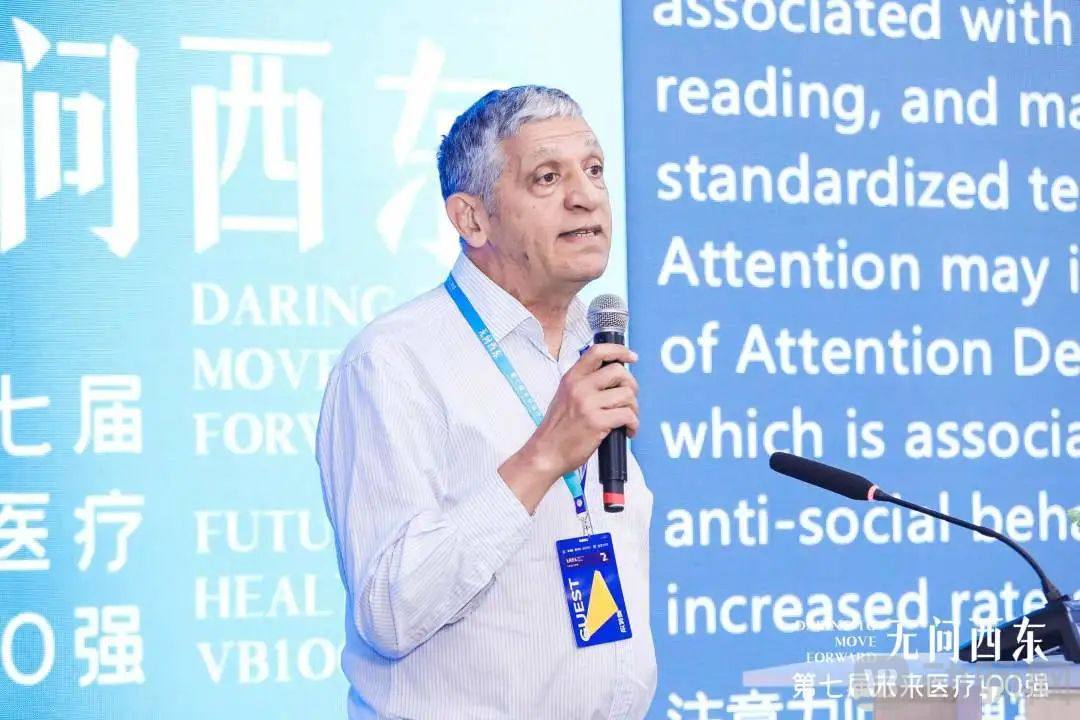
(Rami Horesh, CEO of Ruiluo Technology)
The session concluded with a roundtable discussion moderated by Kang Cheng, Chairman and CEO of Hangzhou Xuzhishi Technology Co., Ltd. Wang Yanfang, Director of the Health Industry and External Cooperation Bureau of the Hainan Provincial Health Commission; Zhao Gang, Partner at SoftBank China Capital; Gu Qing, Head of Takeda China’s Digital Technology Team; Wang Jiejun, Founder and Chief Scientist of Botong Medical; and Shen Ye, Founder of Langye Medical, engaged in an insightful exchange on “Technological Innovation and Market Demand: A Two-Step Approach to Digital Therapeutics,” offering valuable perspectives on fostering the healthy development of digital therapeutics.
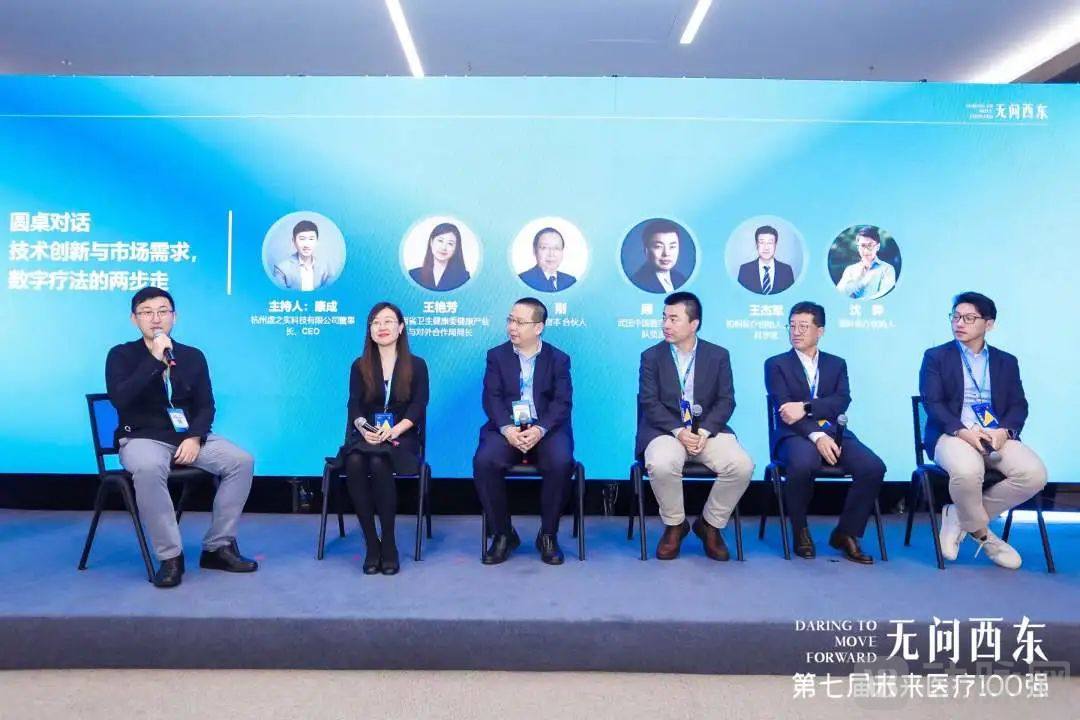
(Roundtable discussion panel; from left to right: Kang Cheng, Chairman and CEO of Hangzhou Xuzhishi Technology Co., Ltd.; Wang Yanfang, Director of the Health Industry and External Cooperation Bureau of the Hainan Provincial Health Commission; Zhao Gang, Partner at SoftBank China Capital; Gu Qing, Head of Digital Technology Team at Takeda China; Wang Jiejun, Founder and Chief Scientist of Botong Medical; Shen Ye, Founder of Langye Medical)
Wang Yanfang, Director of the Health Industry and International Cooperation Bureau of the Hainan Provincial Health Commission, stated that the absence of international precedents for innovation is not necessarily a disadvantage. In terms of digital therapeutics policy, Hainan took the lead in introducing the first regulatory framework in China, and indeed the first globally, which has practically assisted digital therapeutics companies in enhancing their innovation and implementation. Meanwhile, she expressed hope that all stakeholders in the digital therapeutics sector will remain true to their original mission, focusing on safeguarding public health and prioritizing patient value to drive the robust development of the industry.
Zhao Gang, a partner at SoftBank China Capital, believes that innovation in the healthcare sector does not necessarily require an international perspective, as the medical environment is closely tied to a country’s culture and society. We should strive toward the ultimate value proposition that aligns the needs of the three key stakeholders: the payers (including social security systems and national priorities), the providers (such as physicians and other practitioners), and the beneficiaries (the patients).
Gu Qing, Head of the Digital Technology Team at Takeda China, stated that in 2021, Takeda China launched an innovation incubation initiative known as TakedaSpark. Through this incubator program, we aim to foster extensive collaborations with domestic innovative enterprises, particularly in the areas of early screening and diagnosis, digital therapeutics, and smart services. Takeda remains open to all cooperative opportunities and possibilities in these fields. Advancing the development of the digital therapeutics industry cannot rely solely on Takeda or any single company; it requires multi-party collaboration and win-win cooperation across the industry.
Wang Jiejun, Founder and Chief Scientist of Botong Medical, stated from the perspectives of both a physician and an entrepreneur that he hopes more companies will recognize the importance of supporting reimbursement for digital therapeutics. This is crucial for hospitals, patients, and digital therapeutics enterprises alike. He also expressed hope that more policies similar to those implemented in Hainan will be introduced nationwide, thereby fostering the robust development of China’s digital healthcare sector.
Shen Ye, founder of Langye Medical, believes that the issue of trust within China’s healthcare system is a significant challenge, encompassing both the trust between doctors and patients and the trust between experts and enterprises. In the process of commercializing digital therapeutics, it is urgent to address the need for multi-party trust in these solutions; only by establishing such trust can the digital therapeutics industry realize its future potential.
After half a day of sharing insights and interactive exchanges, industry attendees expressed greater confidence and hope for the future of the digital therapeutics sector. They pledged to jointly support the core innovators in the field during this critical phase by facilitating the transition from concept to commercial operations, from research to production incubation, and by establishing market access pathways for products, thereby exploring the fundamental origins of digital therapeutics development.