

Bridging Interdisciplinary Innovation in MedTech: Clinical Translation Forum Successfully Concludes with Industry-Wide Acclaim
China’s industrial capabilities and innovation capacity still lag significantly behind those of developed countries, and key technological barriers must be continuously overcome. The rapid development of the medical device sector hinges on the construction of an innovation ecosystem, characterized by active participation from universities, enterprises, R&D institutions, and healthcare facilities. By fostering interdisciplinary collaboration between medicine and engineering, this approach promotes deep integration of production, education, research, and application in the medical device industry, thereby providing the necessary technological reserves and innovative vitality for industrial growth.
On May 5, 2023, the Forum on Clinical Application of Interdisciplinary Technologies in Medical Devices, co-hosted by the 7th Future Healthcare Top 100 Conference and Bessemer Venture Partners (BVP), was successfully held at the Zhangjiang Science Hall in Shanghai. The event attracted numerous industry professionals, received unanimous acclaim, and provided attendees with a premier platform for industrial exchange.
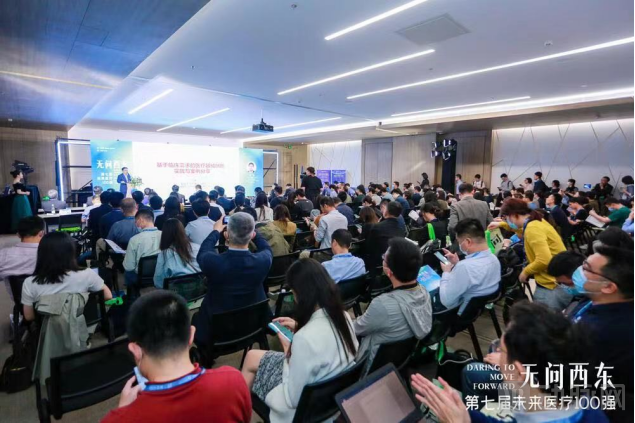
(Pictures of the bustling forum scene)
The forum was kicked off under the moderation of Sun Shanshan, Executive Director at Proxima Ventures. The keynote speech was delivered by Sun Xiaolu, Partner at Proxima Ventures, who shared insights on “Multi-Party Collaboration to Bring Global Innovations into Clinical Practice in China.” He emphasized that early-stage investment and incubation of medical innovative technologies are meaningful, valuable, and challenging endeavors, requiring adherence to six principles: prioritizing innovation, talent-centric approach, collaborative progress, global cooperation, long-term vision, and continuous innovation. Over the past few years, Proxima Ventures has supported more than 50 first-in-the-world products, assisted portfolio companies in recruiting over 300 executives and medical professionals, established clinical translation centers, and explored various collaboration models. Looking ahead, the firm hopes to join forces with more investment capital and limited partners to drive the development of medical innovative technologies.
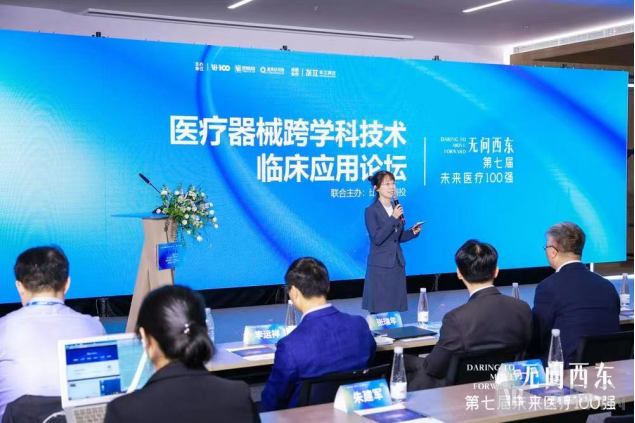
(Sun Shanshan, Executive Director of Proxima Ventures)
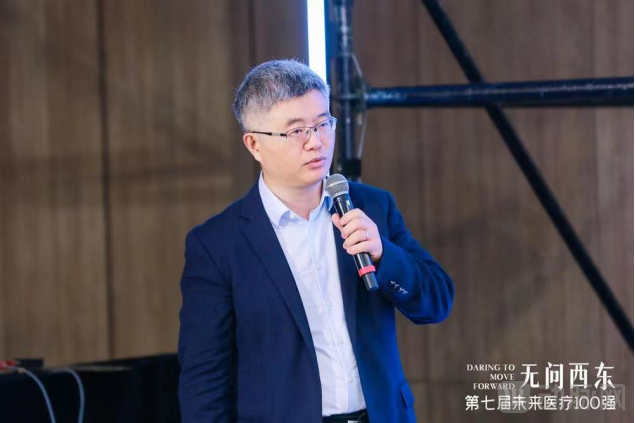
(Sun Xiaolu, Partner at Linxing Venture Capital)
Subsequently, Dr. Shen Li, Chief Physician of the Department of Cardiology at Zhongshan Hospital, Fudan University, and Director of the Office of the National Clinical Research Center for Interventional Medicine, delivered a lecture titled “Innovative Practices Based on Clinical Needs.” Speaking from a physician’s perspective, he emphasized that innovation serves as both the driving force and ultimate goal of the medical device industry. He categorized innovation into three levels: updating, creating, and transforming, highlighting the need for multi-stakeholder collaboration among physicians, engineers, and investors. Such efforts should be grounded in clinical needs, enabled by technological implementation, and ultimately aimed at benefiting patients. Through various domestic and international case studies, he illustrated the process and value of innovation, as well as the critical role physicians play within it. He also introduced the establishment and operations of the China Cardiovascular Physicians Innovation Club, detailing its contributions to education and training, technological research and development, and clinical translation.
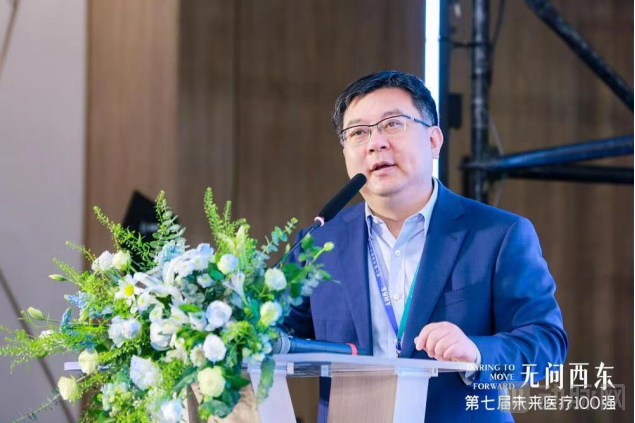
(Shen Li, Chief Physician of the Department of Cardiology at Zhongshan Hospital Affiliated to Fudan University and Director of the Office of the National Clinical Research Center for Radiology and Interventional Medicine)
Mao Hua, Partner and Managing Director at Frost & Sullivan, delivered a presentation titled “Exploring the Development Path of Innovative Medical Devices in China.” He analyzed the foundations, current status, and trends of China’s innovative medical device industry, and elaborated on the driving forces and advantages, as well as the challenges and opportunities, from the perspectives of policy, investment and financing, talent, and collaboration models. Using cardiovascular devices, medical imaging, and robotics as examples, he examined their characteristics and development directions. Finally, he offered four recommendations: fostering synergistic development between innovation and manufacturing; leveraging policy support and capital assistance; addressing clinical pain points while integrating digital technologies; and prioritizing supply chain completeness and the strategic layout of core components.
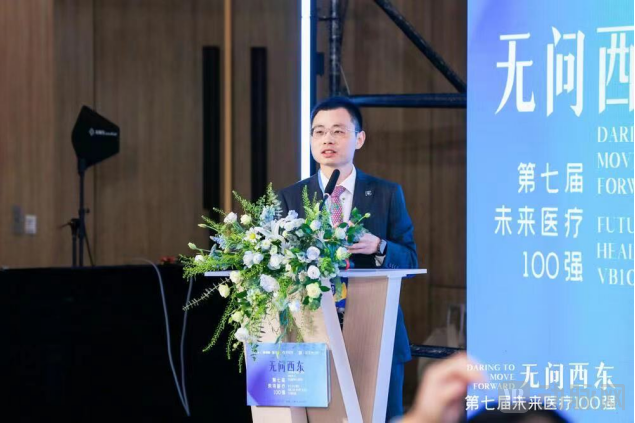
(Mao Hua, Partner and Managing Director at Frost & Sullivan)
The first roundtable session, moderated by Li Zhe, Partner at Proxima Ventures, featured a dynamic exchange of ideas and discussion among Chen Zulin, General Manager of Lifeshield Medical China; Wang Yongsheng, General Manager of Venustech Medical; Zhang Ruinian, Deputy General Manager of Jian Shi Technology; He Yuping, Founder of Dunbo Medical; Li Yunxiang, Founder of NanoVision Imaging; and Le Bin, Founder of Yichao Medical. The panel centered on the theme “Leading Innovative Technologies to Build Diagnostic and Therapeutic Platforms for Major Diseases.”
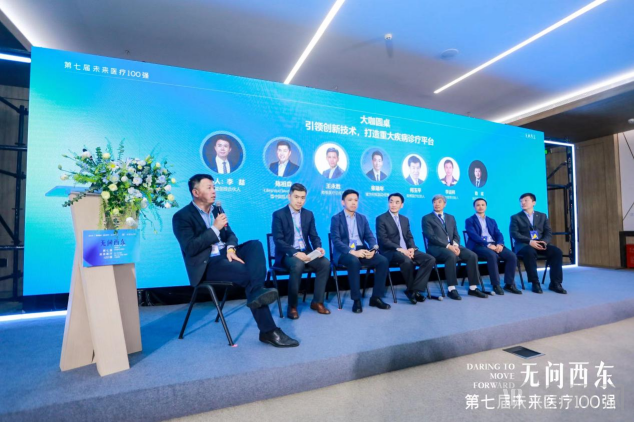
(Roundtable Discussion Session, from left to right: Li Zhe, Partner at Linxing Ventures; Chen Zulin, General Manager of Lifeshield Medical China Region; Wang Yongsheng, General Manager of Weiqiang Medical; Zhang Ruinian, Deputy General Manager of Jian Shi Technology; He Yuping, Founder of Dunbo Medical; Li Yunxiang, Founder of NanoVision Imaging; Le Bin, Founder of Yichao Medical)
Chen Zulin, General Manager of Lifeshield Medical in China, shared insights into the company’s technological background, team management, product implementation, and future roadmap. Drawing from his personal experience, he discussed how the company partnered with the German Heart Institute to introduce technologies for three types of blood pumps, applying them to life support areas such as ECMO (Extracorporeal Membrane Oxygenation) and CO₂ removal. He provided an in-depth analysis of how to leverage the respective strengths of Chinese and German partners for collaborative R&D, manufacturing, and commercialization, as well as how to implement project-based management and drive product iteration.
Wang Yongsheng, General Manager of Weiqiang Medical, shared insights on selecting and maintaining collaborative relationships with clinicians, drawing from his own experience in the medical device industry. He proposed several criteria for choosing clinical partners, including their experience, innovative mindset, and level of commitment. Wang emphasized that close communication and collaboration with clinicians can only be achieved through professional teams, rapid execution, and project-based management. He highlighted that alignment of goals and mutual respect form the foundation of successful partnerships, and demonstrated how to leverage SWOT analysis for problem-solving and developing solutions.
Zhang Ruinian, Deputy General Manager of Jian Shi Technology, introduced the company’s innovative products and technologies in the field of heart disease, as well as its close collaboration with clinicians. He emphasized the company’s years of dedicated expertise and profound understanding of cardiac diseases, highlighting how it has addressed the critical clinical challenge of tricuspid regurgitation by developing a globally first-of-its-kind product based on the concept of partial replacement for the treatment of mitral regurgitation. He also outlined the company’s progress in domestic and international clinical trials and regulatory registrations, including its Breakthrough Device Designation from the U.S. FDA.
He Yuping, founder of Dunbo Medical, shared the company’s breakthroughs and advantages in chip technology for cardiac pacemakers, highlighting product miniaturization, domestic production, and competitiveness in both domestic and international markets. He also discussed the R&D challenges overcome in chip technology and how the company achieved world-leading capabilities in areas where China’s overall foundation was previously weak. Finally, he stated that Dunbo Medical has an ambitious goal: to take on the most difficult tasks, shouldering the greatest challenges and hardships itself.
Li Yunxiang, founder of NanoVision Imaging, summarized the company’s static CT technology roadmap and product market prospects. He reviewed the development history of static CT, analyzed the limitations of traditional mechanical rotation methods, and discussed the advantages and challenges of static CT. He highlighted NanoVision Imaging’s independent research and breakthroughs in detector chips and X-ray tubes, demonstrating the company’s innovation capabilities and leading edge. He also announced that the first prototype has been completed and has entered the clinical phase, making the future commercialization of static CT highly promising.
Le Bin, founder of Yichao Medical, introduced the company’s 5G ultrasound technology and products, highlighting their distinctions from and advantages over conventional color Doppler ultrasound systems. He also stated that Yichao Medical aims to disrupt the entire ultrasound industry and break the monopoly held by foreign brands through its novel tissue stiffness imaging technology.
The second roundtable session, moderated by Zhu Jun, CEO of Kangfeng Bio, featured in-depth discussions on multiple topics among Chen Shixing, Co-founder of Chaoguangwei Medical; Xu Tianrui, Founder of Lingchuang MedValley; Wang Zhengbin, Director of Puluo Medical; Xu Yingrui, CFO of Ruidi Bio; and Pan Zhen, Founder of Ruining Bio. The dialogue centered on “Promoting Interdisciplinary Integration to Facilitate the Clinical Application of Technological Innovations.”
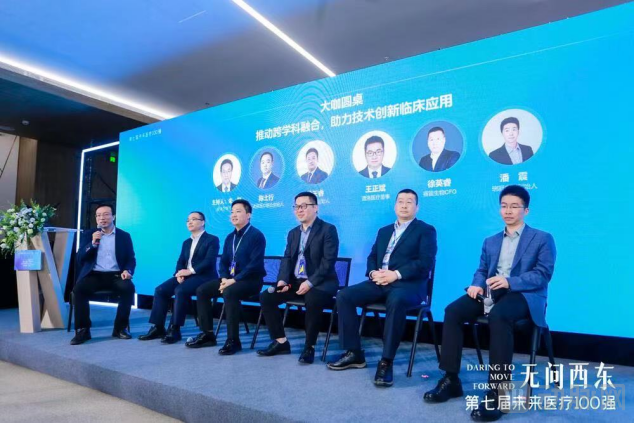
(Roundtable discussion panel, from left to right: Zhu Jun, CEO of Kangfeng Bio; Chen Shixing, Co-founder of Chaoguangwei Medical; Xu Tianrui, Founder of Lingchuang Med Valley; Wang Zhengbin, Director of Puluo Medical; Xu Yingrui, CFO of Ruidi Bio; Pan Zhen, Founder of Ruining Bio)
Zhu Jun, CEO of Kangfeng Bio, stated that the company focuses on the research, development, and promotion of a cryogenic liquid nitrogen minimally invasive treatment platform, with key deployments in gene-related cardiovascular, respiratory, and gastrointestinal fields. Currently, it has 23 products, of which 8 have obtained regulatory approval, 4 have been granted fast-track status, and 1 has received the U.S. FDA Breakthrough Device designation. Its core technology is balloon-based cryoablation, which enables precise ablation of diseased tissue, offering advantages of safety, minimal invasiveness, and high efficiency. It achieved an international first in cryoablation of extra-bronchial nerves for asthma. Adhering to the principles of innovation and minimally invasive therapy, the company aims to build a globally leading cryogenic liquid nitrogen minimally invasive treatment platform.
Chen Shixing, Co-founder of UltraLight MicroMed, stated that UltraLight MicroMed is an innovative enterprise focused on diagnostic and therapeutic devices for brain science-related diseases. The company possesses a foundational technology system integrating multiple disciplines, including optics, polymer materials science, and robotics. Currently, it has laid out three product lines: a laser ablation therapy system for intracranial tumors and epilepsy, a neurovascular interventional system for cerebrovascular diseases, and an electroencephalogram (EEG) monitoring system for traumatic brain injury. He believes that volume-based procurement is an unstoppable trend, presenting both pressure and opportunities for enterprises. To break the monopoly of foreign brands in the market, companies must continuously innovate and develop more competitive products.
Xu Tianrui, founder of LinkCare MedTech, introduced that as a company specializing in high-value implantable consumables related to neuromodulation, LinkCare has developed China’s first wireless spinal cord stimulation (SCS) system. This innovation addresses the challenges associated with traditional products, including surgical complexity, patient comfort, power supply, and cost. Furthermore, the product meets the needs of patients, physicians, and commercial stakeholders, while aligning with national policy directions. From R&D to product development, the company is driven by clinical pain points, continuously refining and optimizing its offerings through the establishment of a cross-disciplinary, multidisciplinary R&D team.
Wang Zhengbin, a director at Puluo Medical, shared that Puluo Medical is a high-tech enterprise specializing in transcatheter ultrasound therapy. The company boasts eight innovative products covering diseases in the fields of cardiovascular, respiratory, and digestive health, such as subacute thrombosis and early-stage cancer treated via respiratory interventional procedures. Puluo has a strong R&D and management team with extensive engineering and entrepreneurial experience, as well as close clinical collaborations. By leveraging the thermal and cavitation effects of ultrasound, the company has achieved efficient, safe, and minimally invasive treatment solutions, providing better options for doctors and patients. Puluo is committed to becoming a globally leading platform for transcatheter ultrasound therapy.
Xu Yingrui, CFO of Ruidi Bio, stated that Ruidi Bio is a high-tech enterprise specializing in nanosecond pulse technology. The company has three product pipelines covering oncology, cardiovascular diseases, and brain-computer interfaces. Its technology is characterized by tissue selectivity, enabling it to overcome the contraindications associated with tumor ablation, protect blood vessels and nerves, and deliver highly efficient, safe, and minimally invasive treatment solutions. Ruidi boasts a strong technical team and collaborative partnerships between medical professionals and engineers, holds over 100 invention patents, and is committed to becoming a globally leading, independently innovative platform for next-generation pulsed field technologies.
Pan Zhen, founder of Ruining Biologics, introduced the company as a platform-oriented enterprise specializing in the research and development of biomedical materials. With two core product lines—medical-grade hydrogels and biodegradable microspheres—the company focuses on oncology therapeutics, backed by a strong technical team and collaborative partnerships between medical and engineering experts. Ruining Biologics pioneered radiation-protective hydrogels for radiotherapy, launching the world’s first product designed to protect against radiation-induced damage in cervical cancer treatment, as well as the world’s first ready-to-use radioprotective hydrogel. Leveraging its advanced technology platform, the company tailors product performance and functionality to different tumor types and therapeutic needs, delivering highly efficient, safe, and minimally invasive oncology treatment solutions.
The final roundtable discussion, moderated by Wang Zhengbin, Managing Director of Proxima Ventures, featured in-depth dialogue and industry insights on the theme “Accelerating Intelligent Automation to Empower a New Future for Life and Health.” Participants included He Dan, CMO of HanZanDi; Chen Liang, CEO and Co-founder of Bay Area Biology; Zhou Yu, CEO of DaXiang Tech; Zhu Jianjun, AI R&D Director at HengLe Tech; and Wang Zhen, Founder of ShiTong Medical.
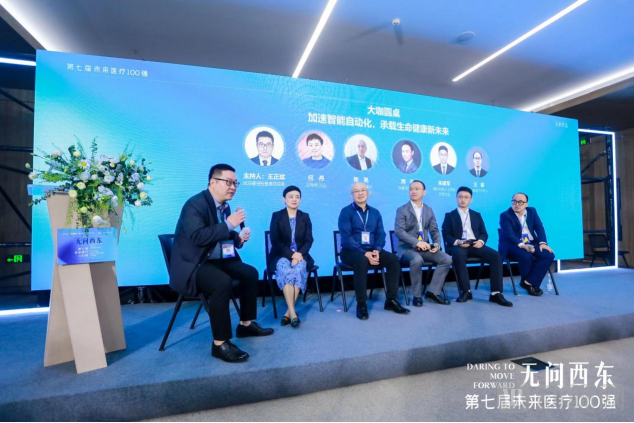
(Roundtable Discussion Session, from left to right: Wang Zhengbin, Managing Director of Proxima Ventures; He Dan, CMO of HanZanDi; Chen Liang, CEO and Co-founder of Greater Bay Bio; Zhou Yu, CEO of DaXiang Tech; Zhu Jianjun, AI R&D Director at HengLe Tech; Wang Zhen, Founder of ShiTong Medical)
He Dan, CMO of HanZanDi, shared her insights on how automation empowers life sciences. Drawing from HanZanDi’s development history, product features, and her own professional experience in the life sciences sector, she argued that automation can enhance experimental efficiency and data quality, laying the foundation for intelligence-driven innovation. She also discussed the impact and challenges of intelligence on the life sciences industry, as well as strategies for identifying and resolving issues at various scales. Finally, she encouraged everyone to maintain a reverence for the unknown and for life itself, while actively embracing new technologies and methodologies.
Chen Liang, CEO and Co-founder of Bay Area Bio, described the company as a biotechnology firm that leverages artificial intelligence to accelerate drug development and reduce costs. In 2019, he recognized that AI could explore the unknown biological world through multidimensional computational methods, prompting him to embark on the entrepreneurial journey of founding Bay Area Bio. The company operates not only as a technology enterprise but also as a commercial entity, packaging its AI technologies into commercially viable products or platforms applicable to biopharmaceuticals, synthetic biology, vaccines, and other fields. They have also discovered that the organic integration of intelligence and automation can create new business models, such as unmanned laboratories, thereby enhancing efficiency and quality.
Zhou Yu, CEO of Daxiang Technology, stated that the company is an organ-on-a-chip enterprise leveraging highly biomimetic models to serve innovative pharmaceutical companies and cancer patients. He highlighted Daxiang’s application cases in both B2B and B2C sectors, as well as its exploration and practices in automation and intelligence. He believes that organ-on-a-chip technology is a promising field that requires continuous standardization and technological maturation to better empower life sciences.
Zhu Jianjun, AI R&D Director at Hengle Technology, stated that Hengle Technology is a company focused on interventional surgical robots, aiming to simplify complex surgeries and automate simple ones. The company’s product portfolio covers technical areas such as percutaneous puncture intervention and vascular intervention, primarily targeting the treatment of abdominal liver tumors. Founded in 2020, the company has a team predominantly composed of R&D engineers, and its first product has completed development and finalization. Hengle Technology has made strategic investments in robotic artificial intelligence, leveraging multi-source data and imaging analysis to provide intraoperative decision support for physicians, thereby reducing interventional surgery time and minimizing radiation exposure for medical staff.
Wang Zhen, founder of Viatom Medical, stated that Viatom Medical is a young flexible robotics company focused on the productization of platform-based technologies. It provides specialized flexible robotic products tailored to different medical departments, enabling non-invasive, efficient, and safe treatments while reducing surgical costs and complications. Viatom Medical’s products feature cutting-edge technology, compact portability, and low cost, meeting the diverse needs and preferences of physicians across multiple specialties. The company’s vision is to disrupt traditional robotic surgery models by delivering customized services and solutions for various medical departments, thereby leading the future development of the flexible robotics field.
Hereby, the “Interdisciplinary Clinical Application Forum on Medical Device Technologies” came to a successful conclusion. Industry participants expressed their hope for enhanced collaboration across the sector to effectively support technological innovation in the medical device field, thereby facilitating resource and technology sharing, driving new breakthroughs in medical device technologies, and creating new value.