

Ophthalmic Industry Innovation Forum Successfully Concludes, Showcasing Cutting-Edge Technologies and Future Trends
As eye health becomes a key component of the "Healthy China" initiative, and with the deepening of healthcare reforms and increased support for ophthalmology, China’s ophthalmic market is exhibiting a trend of “significant growth within a niche sector.”
On May 7, 2023, the Ophthalmology Industry Innovation Forum, hosted by the 7th Future Healthcare Top 100 Conference and supported by Boyuan Capital, was successfully held at the Zhangjiang Science Hall in Shanghai. The event attracted numerous industry professionals who engaged in in-depth discussions on promoting frontier innovation and future exploration in China’s ophthalmology sector, as well as advancing the digital future of eye care, creating a prestigious feast of industrial thought.
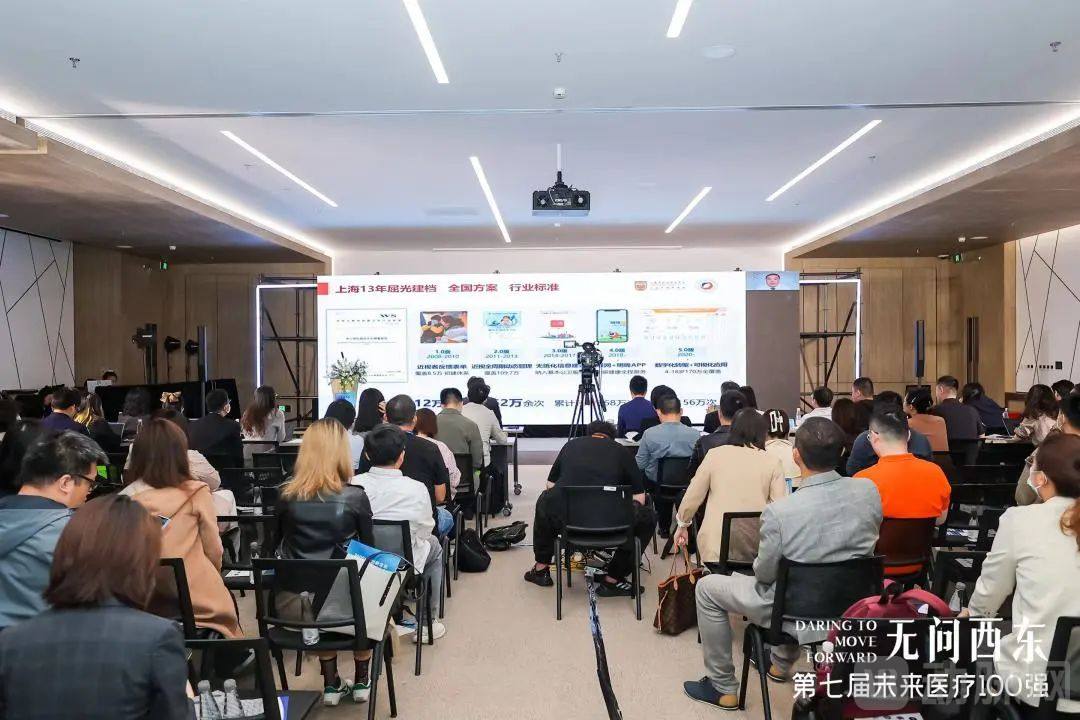

(On-site at the Forum)
The forum commenced under the moderation of Ms. Xu Yingying, Senior Investor Relations Manager at Boyuan Capital. First, Professor Xu Xun, Director of the National Clinical Research Center for Ocular Diseases, delivered a presentation on “The Application of Axial Length Measurement in Myopia Prevention and Control.” He discussed national strategies for myopia prevention and control among children, healthcare mandates outlined in documents issued by eight ministries and commissions, Shanghai’s 13-year initiative in establishing refractive health records, and the evolving demands for myopia management from past to present. Furthermore, he elaborated on the critical role of axial length measurement in myopia prevention and control, highlighting three key applications: the use of the axial length/corneal curvature radius ratio as a screening indicator, the refractive changes associated with each 1 mm increase in axial length, and the utility of axial length in predicting myopia risk and assessing the progression of myopia.
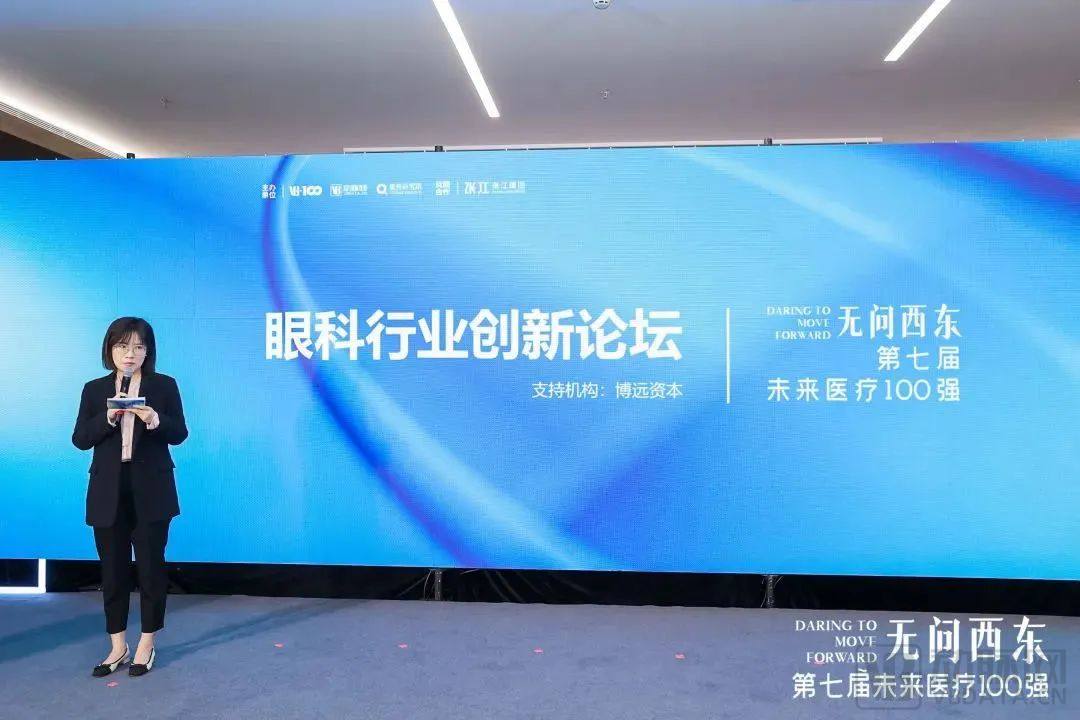
(Xu Yingying, Senior IR Manager at Boyuan Capital)
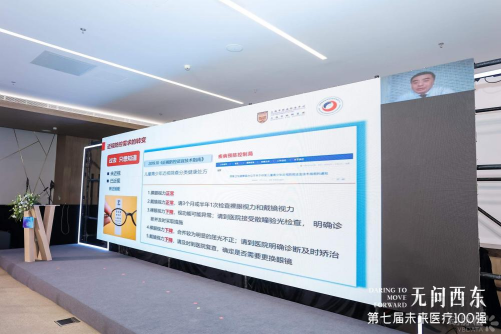
(Xu Xun, Director of the National Clinical Research Center for Ocular Diseases)
Subsequently, Liu Kai, Managing Director of Boyuan Capital, pointed out in his presentation “Market Analysis and Outlook for the Ophthalmology Industry” that the current treatment penetration rate for ophthalmic diseases remains low. The market for ophthalmic medical devices is large and growing rapidly, with a clear trend toward domestic substitution of high-value consumables. Although China’s ophthalmic pharmaceutical market started later, it is developing at an even faster pace. In terms of ophthalmic services, private ophthalmology providers have become a key growth driver, with a pronounced leading-player effect. Regarding more specific disease segments, Liu noted that cataracts and refractive errors represent the largest markets, while glaucoma holds significant potential. He also highlighted the prevailing technological trends for each of these sub-segments. Finally, drawing on newly FDA-approved ophthalmic products in 2021, unmet clinical needs in the ophthalmology sector, key logic points for medical innovation, and hot technological trends, Liu stated that the investment thesis and trends in ophthalmology are defined by rigid demand, strong payment capacity, and new technologies. He also presented Boyuan Capital’s strategic layout in the ophthalmology field.
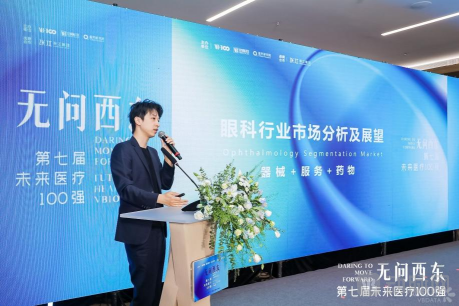
(Liu Kai, Managing Director of Boyuan Capital)
Dr. Li Bing, Co-founder and CEO of Perfect Imaging, shared insights on “Whole-Eye Digital Reconstruction,” detailing the company’s technological innovation journey from ophthalmic OCT products to a comprehensive whole-eye digitalization platform, as well as its future development direction. Dr. Li pointed out that whole-eye digital reconstruction should integrate 3D digital reconstruction, optical digital reconstruction, and blood flow digital reconstruction. The Ruyi Whole-Eye OCT system by Perfect Imaging is capable of fulfilling the reconstruction requirements for whole-eye anatomy, optics, and blood flow within a single device, and has already gained widespread recognition across the industry. Furthermore, leveraging this core technology alongside advanced AI algorithms and big data capabilities, Perfect Imaging is continuing to advance in empowering whole-eye digitalization. The company will soon launch high-end ophthalmic products covering diagnosis and treatment in areas such as fundus diseases, cataracts, glaucoma, corneal diseases, and refractive errors.
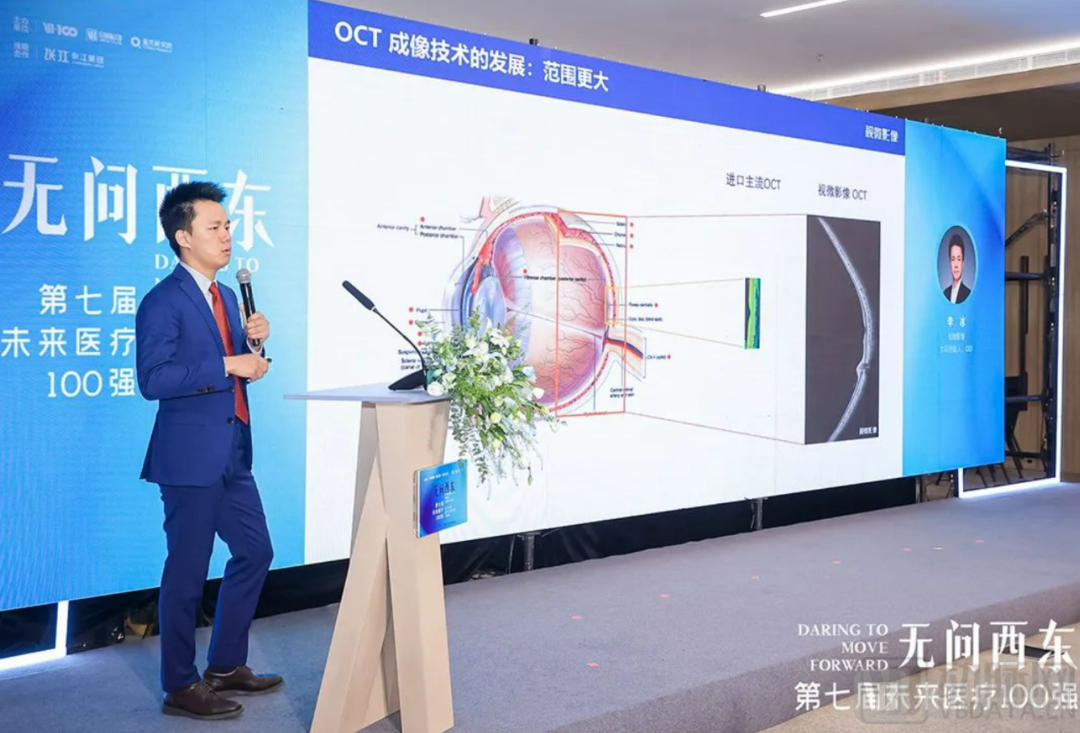
(Li Bing, Co-founder and CEO of Vieworks Imaging)
Guo Shuguang, Deputy General Manager of Moptim Medical, delivered a presentation titled “An Analysis of Axial Length Measurement Methods,” beginning with a review of the historical development of axial length measurement techniques. He highlighted that in recent years, optical biometers have been applied to myopia control research as monitoring devices for axial length, yielding significant academic achievements. In 2021, Moptim launched the Columbus Optical Biometer, an optical biometer based on dual-path spectral-domain OCT (SD-OCT) technology, marking the world’s first spectral-domain optical biometer. Mr. Guo also introduced the fundus OCT imaging capability and the myopia control management platform integrated into the Moptim Columbus Optical Biometer. According to Mr. Guo, the Columbus Optical Biometer achieved single-product sales exceeding RMB 40 million in 2022, representing a 106% year-on-year increase, and became the second-largest revenue-generating category within Moptim Medical’s OCT product line.
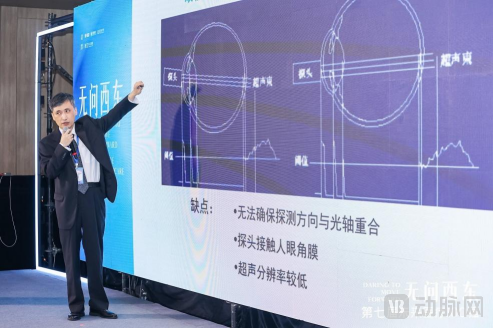
(Guo Shuguang, Deputy General Manager of Mopton Medical)
In her article titled "Operational Management of the Development of Hong Kong-Listed Ophthalmology Chains," Li Xiaoting, Executive President of C-MER International Eye Care Group, stated that C-MER Eye Care is currently in an exploratory phase of its chain model, gradually transitioning from a regional to a nationwide layout, with the aim of establishing itself as a leading national ophthalmology chain brand. The core competitive advantages of C-MER’s chain development include the strength of its Hong Kong brand, expert medical teams, specialized clinical services, distinctive Hong Kong-style medical care, talent development systems, integration of clinical practice, education, and research, technological innovation, digital information systems, and lean management. Future trends for ophthalmology chain institutions will focus on: high regional concentration, continued emphasis on chain expansion, and creating market differentiation.

(Li Xiaoting, Executive President of Hong Kong C-MER International Eye Care Group)
Chen Xinjian, founder of Bigway Medical, delivered a presentation on “AI-Assisted Diagnosis in Ophthalmic OCT Imaging.” Ophthalmic diseases are highly prevalent yet difficult to detect early, and there is currently a severe shortage of highly skilled ophthalmologists. Consequently, optical coherence tomography (OCT) has become the standard and future direction for ophthalmic diagnosis and screening. Chen also presented his team’s research achievements in AI-based ophthalmic OCT diagnosis, covering areas such as retinal OCT image denoising, retinal layer segmentation, lesion segmentation, and multi-modal/multi-time-point image analysis. Subsequently, Chen introduced Bigway Medical’s product, the new-generation fully automated AI-powered OCT system—BV1000—which features fully independent intellectual property rights for its integrated hardware and software AI-OCT platform. Using illustrations and text, he comprehensively highlighted the technical advantages and various application scenarios of the BV1000, noting that the development and application of automated AI technologies are expected to facilitate the widespread adoption of OCT in primary care hospitals.
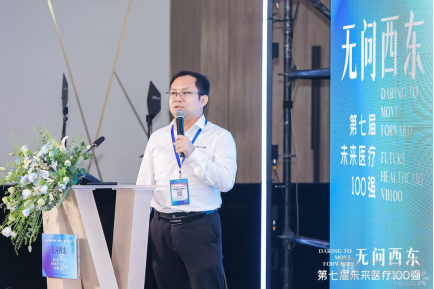
(Chen Xinjian, Founder of Bigway Medical)
In the final segment of the keynote address, Guo Shuhua, Chairman of Suzhou Pulukang Pharmaceutical Technology Co., Ltd., delivered a presentation titled “Development of Novel Drugs for Immune-Mediated Ocular Diseases.” He discussed the anatomical structure of the eye, characteristics of the ocular immune microenvironment, and immune-mediated ocular diseases, with a particular focus on thyroid-associated ophthalmopathy (TAO) and its pathogenesis. Regarding the treatment of TAO, PHP1003, an innovative high-concentration subcutaneous injection developed by Pulukang, offers unique advantages in controlling blood glucose elevation. Its high-concentration formulation exhibits excellent stability, and the subcutaneous administration regimen is simple and convenient, enabling self-injection at home. This significantly improves patient compliance and clinical safety while reducing healthcare costs. The drug has entered Phase I clinical trials in China, holds full independent intellectual property rights, and presents substantial potential for expansion into overseas markets.
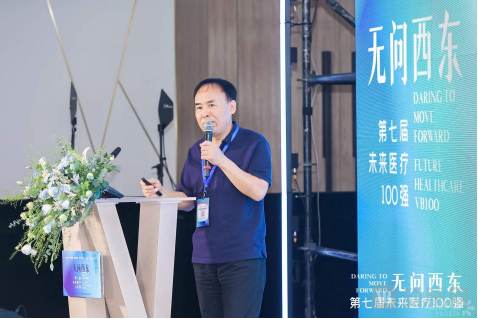
(Guo Shuhua, Chairman of Suzhou Pulekang Pharmaceutical Technology Co., Ltd.)
During the roundtable session, moderated by Liu Kai, Managing Director at Boyuan Capital, Wang Su, Co-founder and Vice President of Fitland Medical; Zhao Peng, Founder, Chairman, and General Manager of Hisight; and Li Bing, Co-founder and CEO of Shuowei Imaging, jointly participated in a dynamic discussion on “Innovation Directions and Trends in Ophthalmology.”

(Roundtable discussion panel, from left to right: Liu Kai, Managing Director at Boyuan Capital; Wang Su, Co-founder and Vice President of Fitland Medical; Zhao Peng, Founder, Chairman, and General Manager of Hiside; Li Bing, Co-founder and CEO of Visionary Imaging)
Wang Su, Co-founder and Vice President of Feitelan Medical, shared that the ophthalmology industry is facing both opportunities and challenges brought by centralized volume-based procurement (VBP). We need to continuously enhance our product quality and innovation capabilities to adapt to market changes. VBP is a measure adopted by the national government to standardize distribution channels, increase market penetration, and enable more patients to access medical services. In the two niche segments of cataract treatment and myopia prevention and control, Feitelan Medical has deployed a variety of products and solutions to meet the needs of different patients. We are also actively expanding into international markets to boost our competitiveness and influence. We believe that through VBP, we can better serve ophthalmic patients and fulfill our corporate mission and vision.
Zhao Peng, Founder, Chairman, and General Manager of Haisigade, stated that the company has remained dedicated to providing minimally invasive and comfortable solutions and related products for glaucoma, bringing vision protection and improved quality of life to tens of millions of patients worldwide. Its product portfolio includes Glokos and Zine, minimally invasive surgical solutions validated and certified in European and American markets. These solutions effectively lower intraocular pressure, reduce reliance on medications and the risks associated with traditional surgeries, and enhance surgical efficiency and safety. They are suitable for various types of glaucoma patients, including those with open-angle and angle-closure glaucoma, meeting treatment needs at different disease stages. Backed by a strong technical team and a professional service team, the company provides physicians with a rapid learning curve and high-quality after-sales support. Looking ahead, the company aims to enable more Chinese patients to benefit from minimally invasive surgical solutions, narrow the gap between domestic and international standards, align with national policies and social needs, and contribute to the cause of public health.
Li Bing, Co-founder and CEO of Perfect Vision Medical, stated that Perfect Vision Medical is a swept-source OCT ophthalmic equipment company that returned from Silicon Valley to China. The company boasts a cutting-edge R&D team composed of elites from prestigious universities worldwide, with over 20 years of engineering expertise from Silicon Valley. Its self-developed Ruyi Whole-Eye OCT product integrates anterior and posterior segment OCT/OCTA with full axial length visualization biometry. Compared to similar domestic and international products, it delivers “whole-eye” imaging with higher speed, wider coverage, and greater depth. The product has garnered attention and recognition in both domestic and international markets, achieving high penetration in benchmark hospitals and leading ophthalmology centers across various provinces in China, thereby successfully disrupting the domestic high-end ophthalmic equipment market. Additionally, academic collaborations have been established with the ophthalmology centers of seven renowned U.S. hospitals. Looking ahead, the company will continue to expand its comprehensive ophthalmic product portfolio and steadily enter the high-end markets in Europe and the United States, aiming to position Perfect Vision Medical as China’s representative in the global high-end ophthalmic device market.