

Promoting Integration of Medical Care and Public Health: Building a New-Era Health Security System through Grassroots Health Management and Disease Prevention
On the morning of May 6, the sub-forum [Primary Care Medical-Prevention Integration and Health Insurance Payment Forum] of the 7th Future Healthcare 100 Conference, co-hosted by Yunqueyi and VCBeat, concluded successfully.
The integration of medical care and prevention is a key direction for deepening healthcare reform and the core objective of primary-level healthcare reform. This forum facilitated exchanges on critical issues, including the development of primary healthcare services, innovation in health insurance, and the construction of a modern health security system, from three perspectives: trend insights, technological empowerment, and ecological integration.
Distinguished guests attending this forum include: leaders from the National Healthcare Security Administration; Mr. Zhan Jifu, the first Director of the Fujian Provincial Healthcare Security Administration, former Chairman of the Standing Committee of the Sanming Municipal People’s Congress, and Vice President of the Fujian Medical Reform Research Association; Mr. Chen Wanqing, Director of the Office for Early Diagnosis and Treatment of Cancer at the National Cancer Center and Cancer Hospital, Chinese Academy of Medical Sciences; Mr. Xu Xian, Chair of the Department of Risk Management and Insurance at Fudan University and Director of the China Insurance and Social Security Research Center; Ms. Liu Na, Executive Director and CEO of Yunqueyi; Mr. Qian Jinwen, COO & CTO of Yunqueyi; Mr. Bi Hong, General Manager of the Insurance Business Division at Yunqueyi; Mr. Liu Yuqing, Marketing Director of China Pacific Life Insurance Co., Ltd.; and Dr. Qin Nan, CEO of RayGene Biotechnology.
Deeply Empowering Primary Healthcare to Promote the Integration of Medical Care and Prevention at the Grassroots Level
“From the perspectives of both healthcare reform and the multi-tiered medical security system, primary care remains a key focus and a persistent challenge in our reforms.”"Leaders from the National Healthcare Security Administration stated at the meeting."
The "Statistical Communiqué on National Economic and Social Development in 2022," released by the National Bureau of Statistics, shows that China currently has 980,000 primary healthcare institutions, among which nearly 600,000 village clinics form the capillary network of the primary healthcare system. Primary healthcare institutions, accounting for 95% of the total number of medical institutions nationwide, provide more than half of all clinical consultations across China. The "14th Five-Year Plan for National Health" lists "prevention first and strengthening primary care" as one of its fundamental principles. Against the backdrop of integrating medical care with disease prevention, primary healthcare institutions will become the main practitioners of preventive-first approaches, offering residents full life-cycle services including health management, preventive interventions, initial diagnosis, referral, chronic disease management, rehabilitation, and health education.
However, due to deficiencies in health awareness, diagnostic and treatment capabilities, testing services and equipment, and payment coverage, the effectiveness of health management and preventive interventions at the primary care level has fallen short of expectations. Meanwhile, as population aging intensifies, cancer incidence and mortality rates in China continue to rise year by year. It is imperative to urgently enhance the integration of medical care and prevention at the primary care level.
In this context, Yunqueyi, as a digital service platform for primary healthcare, has actively engaged with grassroots communities, connecting over 2.8 million primary care physicians and hosting more than 450,000 primary healthcare institutions on its platform.
Qian Jinwen, COO & CTO of Yunqueyi, introduced at the conference: “By connecting government entities, tertiary hospitals, upstream enterprises, and insurance companies, we empower primary healthcare institutions from multiple dimensions, enabling them to deliver standardized services.Specifically, this involves: strengthening the diagnostic and treatment capabilities of primary care physicians through chronic disease management courses, training in appropriate Traditional Chinese Medicine (TCM) techniques, and peer-to-peer medical consultations, thereby linking medical institutions at different levels to empower tiered diagnosis and treatment; deploying pharmaceutical and medical device testing, assisted diagnosis, and other products and services to grassroots levels to unlock the service potential of primary healthcare institutions and achieve product empowerment; and collaborating with commercial health insurance products such as Huiminbao and million-yuan medical insurance to provide payment coverage for both healthy individuals and those with pre-existing conditions, thereby incentivizing primary healthcare institutions to offer health management and preventive early screening services to residents, achieving payment empowerment.
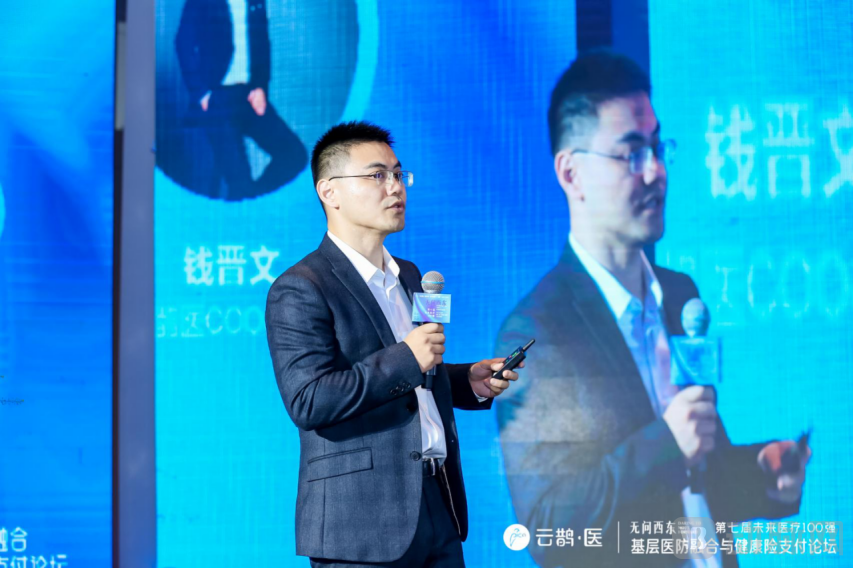
Qian Jinwen, COO & CTO of Yunqueyi, Delivers Speech
Through comprehensive and in-depth empowerment, the service capacity, efficiency, and quality of primary healthcare institutions have been significantly improved.
In village clinics in Inner Mongolia, remote consultations enable village doctors to connect patients with chief physicians in the Department of Dermatology at Beijing Third Affiliated Hospital, making it possible to “consult renowned specialists right at your doorstep.”
At Xi’an Community Health Service Centers, residents can access high-quality health screening services—including 12-lead ambulatory ECG monitoring, fundus photography, and early screening for gastrointestinal cancers—as part of the free public health examination program.
Residents enrolled in Huiminbao, million-yuan medical insurance, and disease-specific insurance programs in more than 20 regions, including Shandong, Lanzhou, and Kunming, are able to tangibly benefit from health management and disease prevention services provided by primary healthcare institutions, thanks to payment coverage. These services include early screening for major diseases such as cancer, allergy and immunity testing, and chronic monitoring of cardiovascular and cerebrovascular conditions.
Chen Wanqing, Director of the Office for Early Diagnosis and Treatment of Cancer at the National Cancer Center and the Cancer Hospital of the Chinese Academy of Medical Sciences, stated:“For primary and secondary cancer prevention, the future direction will undoubtedly lie at the grassroots level.”In the practical implementation of cancer prevention, Yunqueyi has designed a tiered management strategy for populations categorized into high, medium, and low risk groups. This approach identifies potential high-risk individuals through initial screening, followed by secondary screening using technologies such as tumor DNA methylation. For high-risk individuals, Yunqueyi provides a comprehensive closed-loop testing service, which includes coverage for subsequent follow-up examination costs.
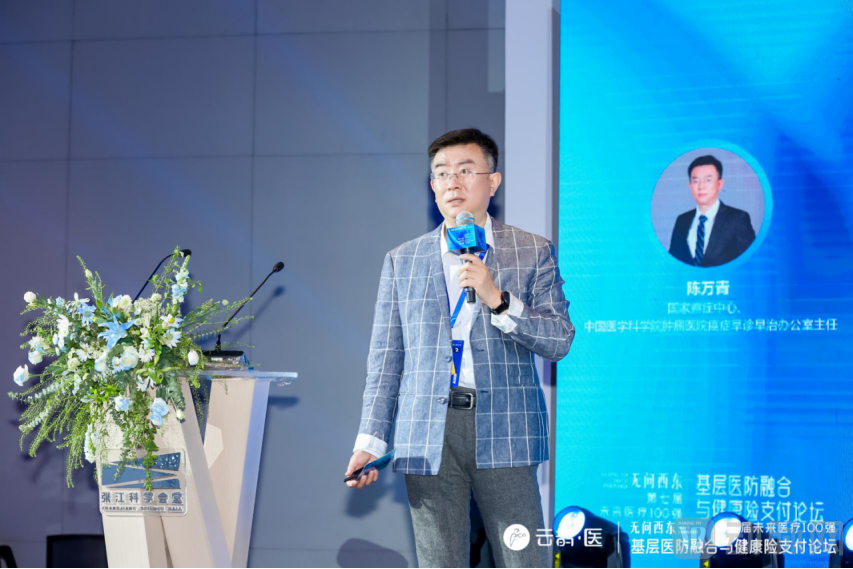
Director Chen Wanqing of the Cancer Early Diagnosis and Treatment Office, National Cancer Center/Cancer Hospital Chinese Academy of Medical Sciences, Delivers a Speech
Among the 200,000 tests provided by Yunqueyi, the detection rates for colorectal, gastric, and liver cancers at the primary care level were approximately 3–4%, helping nearly 10,000 residents identify their cancer risks. By reducing incidence through daily health management and health education, primary and secondary cancer prevention have been effectively implemented at the grassroots level.
Currently, Yunqueyi has activated 50% of China’s administrative districts and counties, establishing a grassroots service network that radiates across the country and penetrates into counties, townships, and villages, making its services accessible to 1 billion people nationwide.“As more and more services and grassroots institutions connect to this network, the future of primary healthcare is brimming with vitality, already demonstrating its service potential in fields such as traditional Chinese medicine, elderly care, rehabilitation, and palliative care.”Qian Jinwen, COO & CTO of Yunqueyi, stated.
Shifting from Payment for Treatment to Payment for Prevention: Building a New-Era Health Security System
While emerging industry players such as Yunqueyi are increasingly investing in primary healthcare, it is undeniable that there remains a substantial unmet need for disease prevention and control at the grassroots level, particularly for chronic conditions like hypertension and diabetes, as well as for disease prevention and control among the elderly population. However, under the current framework, health insurance coverage is primarily focused on disease treatment. Constrained by its own fundraising capacity and ability to control healthcare costs, health insurance cannot adequately cover preventive services for the entire population. Therefore, promoting the integration of medical care and prevention, shifting from payment for treatment to payment for prevention, and implementing comprehensive health management for all citizens have become the second major topic of this forum.
In the current health services market, there is a wide array of ready-made products and services that can be applied to health management, such as chronic disease management solutions, cardiovascular and cerebrovascular disease prevention programs, and early cancer screening technologies. However, these products require a supporting medical service system to be effectively implemented. In light of this, integrating a portion of medical resources—particularly primary care resources—into the medical service system not only significantly optimizes the allocation of medical resources but also maximizes broad coverage for the insured population.
“Only by reaching the grassroots level can early cancer screening technologies truly achieve universal accessibility and fulfill their role in preventive care.”Dr. Qin Nan, CEO of RayGene Biotechnology, stated that RayGene has established a deep strategic partnership with Yunqueyi. By integrating user-friendly and highly accessible colorectal cancer detection products, and leveraging Yunqueyi’s mature primary healthcare service platform to penetrate county and township markets, early screening technology for colorectal cancer is being made available to a broader base of primary care users. To date, the Changyishu® early detection program has covered 144 cities across China and 861 primary healthcare institutions, delivering significant social and economic benefits.
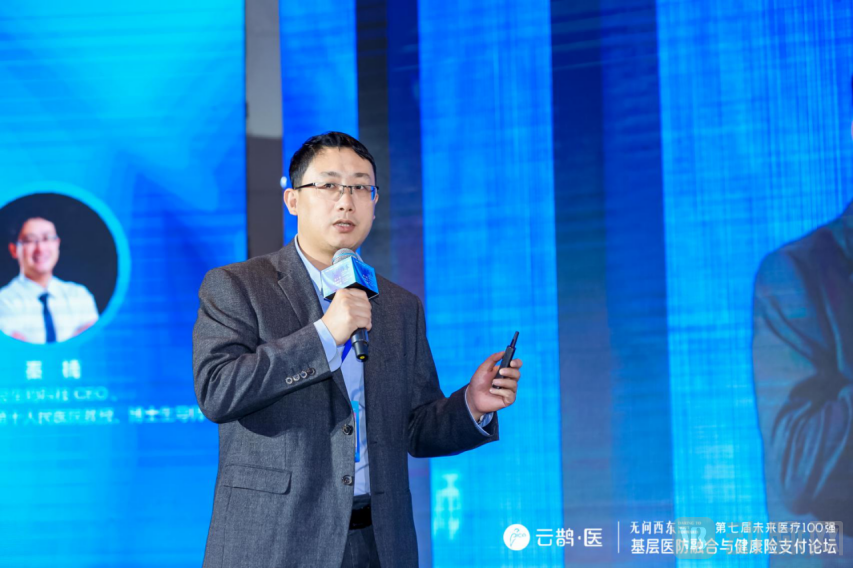
Dr. Qin Nan, CEO of RayBiotech, Delivers Speech
Currently, Yunqueyi is gradually establishing this service system. Since its inception in 2016, the company has been committed to enhancing primary healthcare services by supporting physician education, pharmaceutical and medical device supply, tiered diagnosis and treatment, and the deployment of early screening products to grassroots levels. Meanwhile, it emphasizes integrating the industry chain and building industrial synergy capabilities. At present, the platform’s supply chain covers multiple areas, including preventive services for major cardiovascular and cerebrovascular diseases, preventive services for major oncological conditions, allergy and immune testing services, and monitoring services for attention-deficit/hyperactivity disorder (ADHD), autism, and sleep disorders.
However, having a service system alone is insufficient; it is also necessary to integrate coverage from both basic medical insurance and commercial health insurance. This ensures that there are clear payers and implementers for health management and disease prevention services, thereby providing a tangible focal point for the “integration of medical care and prevention.” As Director Zhan Jifu, the inaugural Director of the Fujian Provincial Healthcare Security Administration, former Chairman of the Standing Committee of the Sanming Municipal People’s Congress, and Vice President of the Fujian Medical Reform Research Association, stated at the conference,““Against the backdrop of integrating medical care with disease prevention, whole-lifecycle services must inherently include preventive care. Future medical insurance will no longer be solely about cost containment as in the past; rather, it will focus on the scientific and efficient utilization of medical insurance funds to achieve optimal health outcomes.”
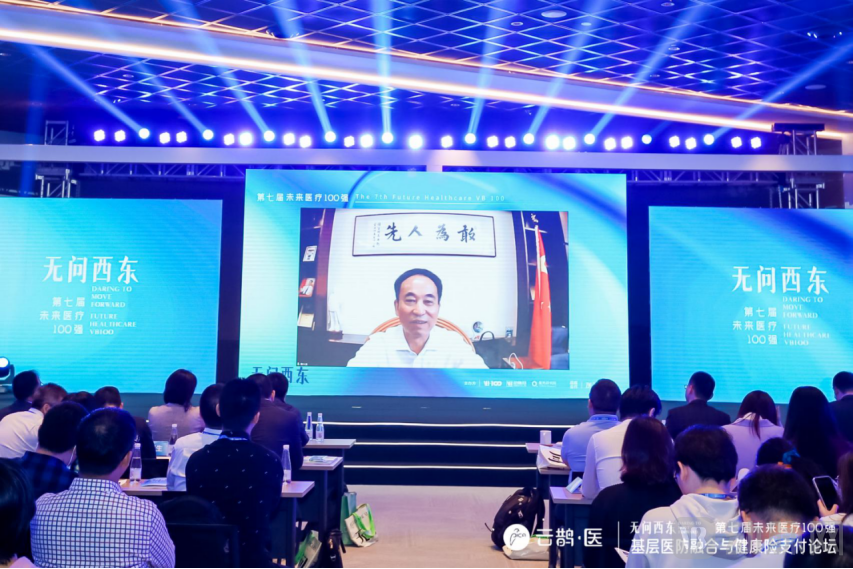
Director Zhan Jifu, the inaugural Director of the Fujian Provincial Healthcare Security Administration, former Chairman of the Standing Committee of the Sanming Municipal People's Congress, and Vice President of the Fujian Medical Reform Research Association, delivered a speech.
Relying solely on social health insurance makes it difficult to achieve population-wide health management, as the latter focuses primarily on disease prevention. Therefore, commercial health insurance is naturally suited to assume the role of organizer in health management. Furthermore, if commercial health insurance products represented by “Hui Min Bao” (city-specific supplementary medical insurance) can gradually focus on health management and disease prevention, they will serve as an effective complement to social health insurance.
“When we shift from paying for treatment to paying for prevention, we will find that behind this service, we can create a sense of value for all customers after they purchase health insurance products.”"Shifting from treatment-based payment to prevention-based payment embodies the core function of health insurance products in mitigating risks and losses, and represents a breakthrough for the sustainable development of insurance companies, particularly in the health insurance sector."Liu Yuqing, Marketing Director of China Pacific Life Insurance Co., Ltd., stated.
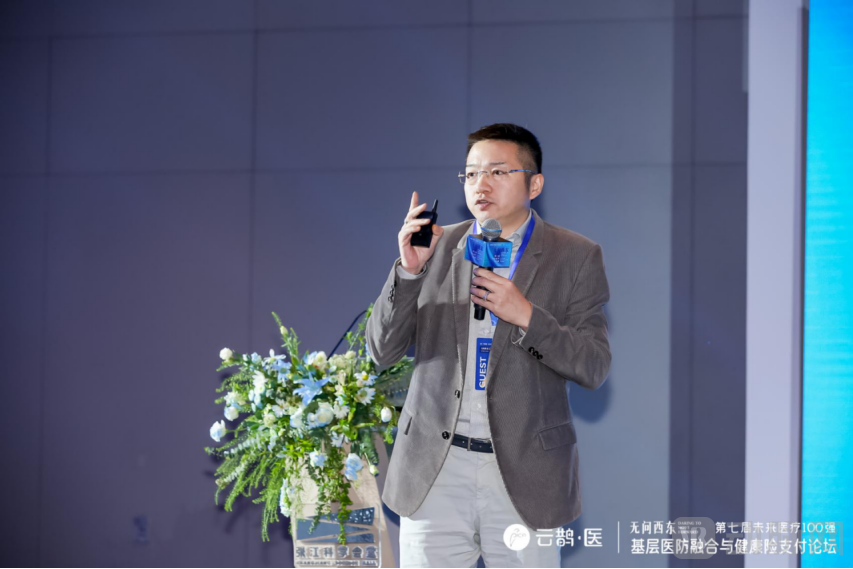
Liu Yuqing, Marketing Director of China Pacific Life Insurance Co., Ltd., Delivers a Speech
Xu Xian, Director of the Department of Risk Management and Insurance at Fudan University and Director of the China Research Center for Insurance and Social Security, also emphasized this point:“Combining disease prevention with Huiminbao insurance can address the lack of perceived value among policyholders, making Huiminbao truly more beneficial to the public.”
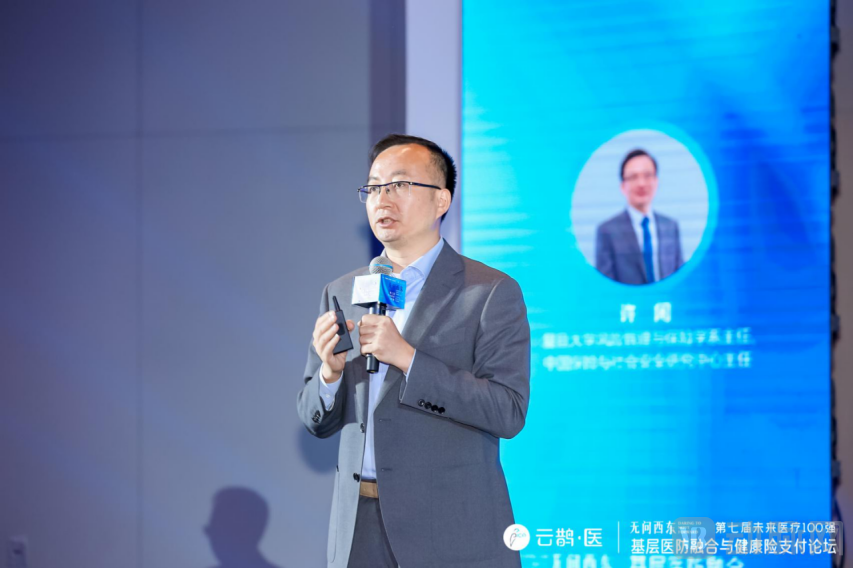
Xu Xian, Director of the Department of Risk Management and Insurance at Fudan University and Director of the China Research Center for Insurance and Social Security, Delivered a Speech
This imposes higher design requirements on products such as Huiminbao, which hold value for population-wide health management. As Mr. Li Chengzhi, Director of the Benefits Security Division of the Shanghai Municipal Healthcare Security Administration, mentioned in his speech,Digital transformation spans the entire value chain, from product design to underwriting, claims processing, and co-insurance. To develop insurance products, it is essential to clarify the underlying data logic and engage deeply with the entire healthcare services industry.
In this regard, Bi Hong, General Manager of the Insurance Business Division at Yunqueyi, shares the same view: “The most critical step in addressing this issue is to identify an appropriate payer. Once identified, Yunqueyi will be responsible for bundling its supply chain capabilities, primary care service capabilities, and operational expertise into service products for external delivery.”
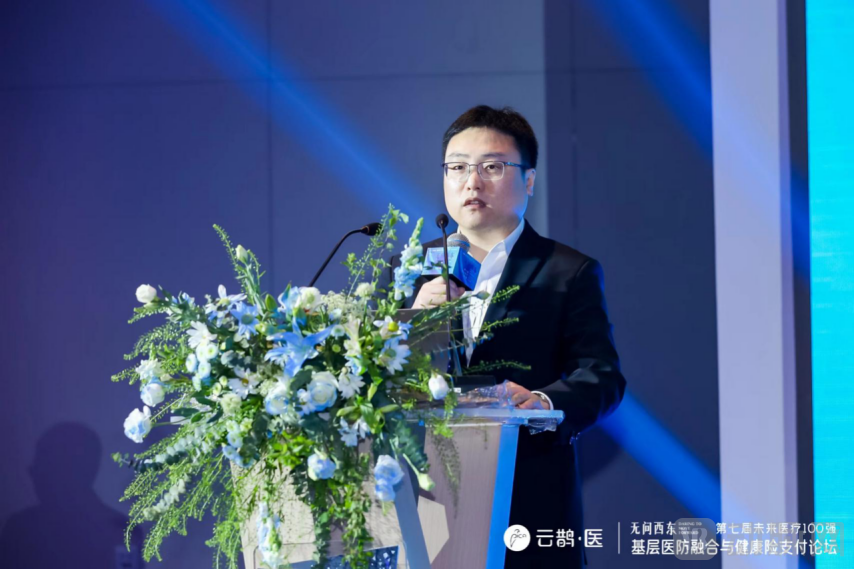
Bi Hong, General Manager of the Insurance Division at Yunqueyi, Delivers a Speech
Through the thematic forum on the integration of primary healthcare and prevention with health insurance payment, hosted by Yunqueyi, it is not difficult to observe thatIn the new era, the healthcare security system prioritizes safeguarding “health,” ensuring that health services are tangible and accessible to the public, rather than merely covering “disease treatment.”。Yunqueyi fosters collaboration among upstream and downstream players in the healthcare industry, basic medical insurance, commercial health insurance, and policymakers to promote the integration of medical care and disease prevention. By enabling basic medical insurance to cover clinical treatment while empowering commercial health insurance to play a significant role in disease prevention, Yunqueyi helps build a comprehensive health security system spanning from “prevention” to “treatment,” thereby safeguarding public health.