

Internet Hospitals and Smart Hospitals Innovation Development Forum: Exploring New Pathways for Smart Hospital Advancement
The deep integration of internet information technology with the healthcare industry, premised on healthcare informatization, deeply interconnects key elements such as medical care, pharmaceuticals, health management, and insurance. By leveraging the internet’s advantage in transcending time and space constraints, this approach aims to facilitate doctor-patient interaction and the sharing of medical information. In doing so, it seeks to effectively reduce healthcare costs—addressing the issue of “high medical expenses”—while also helping to alleviate the problem of “difficulty in accessing medical care” caused by the unequal distribution of medical resources.
During the 7th Future Healthcare 100 Conference by VCBeat VB100, a special session was heldForum on the Innovative Development of Internet Hospitals and Smart Hospitals, inviting industry experts and professionals to discuss hot topics in the sector, jointly explore new development paths, address emerging challenges, establish new mechanisms, and develop new models, thereby building a comprehensive, full-cycle medical and health service model to further promote high-quality hospital development.
The Evolution from Digitalization to Intelligence: Reflections and Practices on the High-Quality Development of Public Hospitals
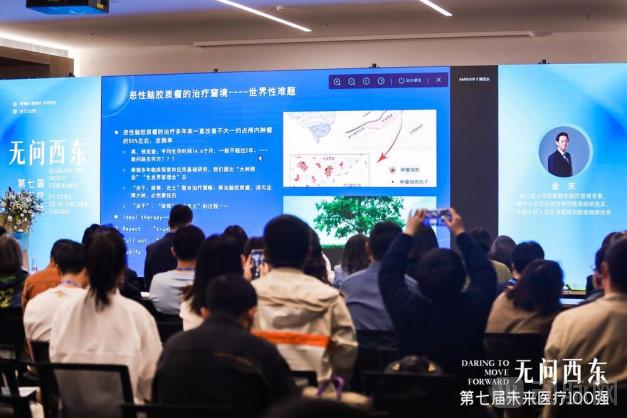
Jin Dong | Chief Expert in Digital Medicine, Zhejiang Provincial People's Hospital; Senior Research Fellow, Institute of Livelihood Economics, Tsinghua University; Senior Research Fellow, Blockchain Research Institute, Renmin University of China
“Smart Hospital” has been a concept for 13 years since its proposal, with major hospitals worldwide conducting explorations to varying degrees and in different directions. In China, the practical construction of “Smart Hospitals” has been gradually implemented at the national strategic level since 2013, applying technologies such as the internet and artificial intelligence to various fields including hospital management and medical services.
“Progressing from informatization to digitalization is an advancement, while evolving from digitalization to intelligence represents a transformation. People’s Hospital stands at the forefront, embraces the spirit of the times, and moves toward the future through high-quality development,” said Professor Jin Dong at the forum, where he shared his insights and practices on the high-quality development of public hospitals amid the transformation from digitalization to intelligence.
Jin Dong pointed out that the construction of data centers, decision support systems, and artificial intelligence infrastructure in public hospitals is flourishing. The transition from digitalization to intelligence is driving transformations in at least ten areas for public hospitals, including AI-powered multi-disease clinical decision support systems, intelligent real-time management systems for multi-campus operations, and AI-based quality control systems for medical imaging. With its powerful “creative” capabilities in automatically generating text, code, images, and speech, AIGC will pioneer new models, forms, and paradigms in healthcare. It is foreseeable that AIGC will further transform smart healthcare, smart management, and smart services.
From Concept to Implementation: How Multimodal Big Data Technology Unlocks the Future of Hospitals
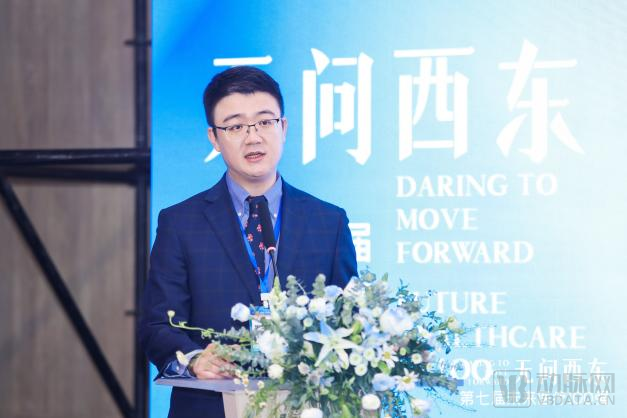
Gong Mengchun | Senior Vice President and Chief Medical Information Officer at Shenzhou Medical
In recent years, the increasing adoption and implementation of digital health products have accelerated the rapid development of smart hospitals at an unprecedented pace. Meanwhile, critical challenges such as standardizing hospital management systems and building digital medical platforms warrant multi-stakeholder discussion and collaborative solutions. From concept to implementation, how can multimodal big data technology unlock the future of hospitals?
“Reviewing the development of biomedical informatics and the direction of medical research, China has rapidly achieved healthcare digitalization, giving rise to a multitude of new technologies for clinical phenotyping. We have not only implemented foundational health IT infrastructure in hospitals but also developed many forward-looking initiatives, which provide a crucial foundation for the integrated development of informatics and clinical medicine,” stated Mr. Gong Mengchun.
How to Be an Effective Practitioner of “Internet + Healthcare”
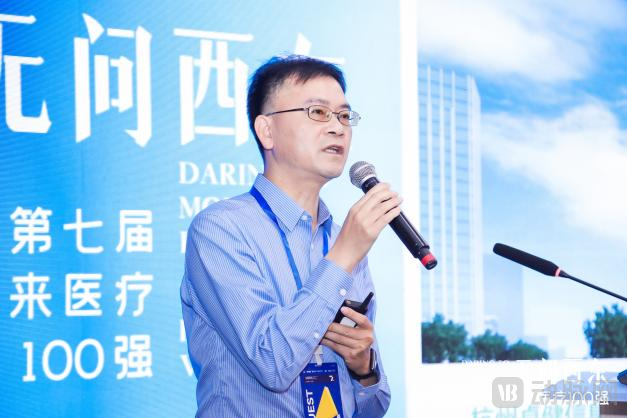
Yang Jie | Vice President of Zhuojian Technology
After more than a decade of evolution, the internet healthcare industry has transitioned from disordered exploration to orderly, standardized development, entering a new phase of high-quality growth. As industry standards mature and practices deepen, it is worth further exploring and discussing which scenarios and domains the future of internet healthcare will continue to expand into. Mr. Yang Jie believes, “We typically consider ‘Internet + Healthcare’ as a solution to meet the needs of patients, doctors, or hospitals. However, ‘Internet + Healthcare’ can also address the educational needs of physicians, thereby better serving overall healthcare demands. The most critical component of high-quality medical resources is physician talent. Given the long training cycle and high difficulty involved in physician development, leveraging informatization to enhance the quality and efficiency of medical education can significantly improve the healthcare environment.”
Internet Healthcare Builds a Full-Link Ecosystem for Pharmaceutical Companies

Qu Yi | Chairman and CEO of Naiterui
Digitalization and artificial intelligence technologies are evolving at a rapid pace, exerting disruptive impacts on numerous industries. Advanced healthcare institutions in China must inevitably adapt to and gradually lead the latest technological frontiers, deeply integrating these advancements with their core operations to create more efficient and effective healthcare service models. This approach not only enhances patient experience but also drives sustained corporate performance growth. Digital transformation is accelerating, increasingly permeating pharmaceutical R&D, production, marketing, and service processes. “Digitalization” and “intelligentization” are no longer mere ideals but have become urgent necessities.
“At present, an increasing number of pharmaceutical companies, chain pharmacies, healthcare institutions, biotechnology firms, and brick-and-mortar hospitals are beginning to build digital healthcare solutions,” said Mr. Qu Yi. “As policies governing internet-based healthcare gradually open up, such services are no longer a scarce commodity. It has become an overarching trend for the entire industry chain to transition from traditional physical operations to digitalization. Against the backdrop of digital transformation in the traditional healthcare and wellness sector, we provide enterprises with an open ecosystem, enable technological empowerment, reshape medical services, and construct an integrated online-offline digital healthcare model.”
A Practical Manual for Internet Healthcare Operations: Six Years in the Making

Chen Jingbo | Co-founder of Taozi Health, Vice President of Dolphin Digital Medical Industrial Park, Senior Partner at Taohua Capital
How Integrated Industry Service Providers Empower the Internet Healthcare Sector by Developing Their Own Operational Playbooks. Ms. Chen Jingbo stated in her presentation, “For internet hospitals, the greatest challenge lies in operations. Healthcare is an industry that demands intensive, long-term, and robust operational efforts. Operating an internet hospital tests one’s ability to create and integrate resources.”
From a micro-level perspective of industrial development, the early-stage construction of internet hospitals relies heavily on capabilities such as technical development, patient-physician operations, and pharmaceutical supply. Building these capability resources requires substantial industrial investment. As the first internet hospital in Chengdu, Taozi Internet Hospital, under Taozi Health, has identified common operational costs and opened up its industrial resources to provide enterprises with intensive, empowering services. “Taozi Health’s original mission as a comprehensive service provider for the digital healthcare industry is to open up industrial resources, help enterprises amplify their strengths and shore up their weaknesses, truly address operational pain points and bottlenecks, and provide standardized guidance to promote the healthy and substantive development of the industry,” said Ms. Chen.
The “Six Meridian Divine Sword” of Building a New-Generation Smart Management Platform for Hospitals

Chen Chong | Founder and CEO of XiRuan Technology
As a provider of healthcare services, hospitals need to implement lean operational management, strengthen control across four dimensions—personnel, finances, materials, and operations—integrate data generated during hospital operations, improve business practices, and provide robust data support for relevant managerial decision-making.
“During the period of high-quality development in hospitals, the multi-format and multi-campus expansion of regional medical centers and urban medical groups is thriving, and management information systems must support the realization of hospital development strategies. In the era of DRG (Diagnosis-Related Groups) and DIP (Big Data Diagnosis-Intervention Packet), comprehensive business integration centered on patients is the core of smart hospital management, with digital intelligence enabling lean operations in healthcare institutions. The essence of smart hospital management is value-based healthcare, which can be summarized as the ‘Six Divine Swords’—platformization, digitalization, integration, group-based management, mobilization, and intelligentization,” said Mr. Chen Chong, sharing his insights on smart hospital management and the construction of next-generation smart platforms.
Regional Medical Development Pathways Under the Guidance of the “Comprehensive Performance Assessment” Policy
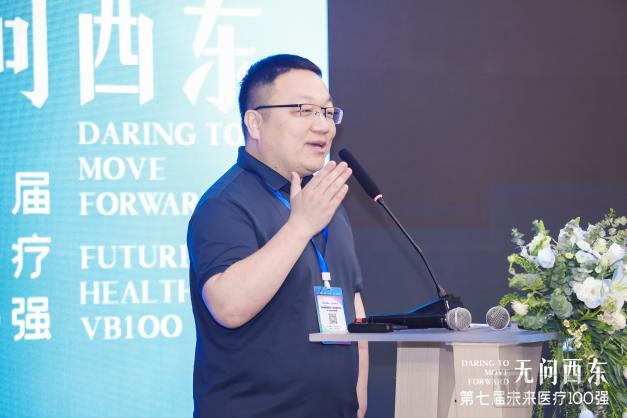
Liu Yan | Deputy General Manager, Guanxin Software Co., Ltd.
Refined and intelligent management also aligns with the major trend of performance evaluation in public healthcare in recent years. Through performance assessments using this unified national benchmark, it is evident that hospitals at all levels have achieved significant improvements in medical quality, service capacity, and management standards, with ongoing transformations and enhancements in their development models and management approaches.
Building a SaaS service platform for primary healthcare institutions could effectively address the challenges of scarce professional talent, insufficient funding for informatization, and lack of data interoperability. However, the development of such SaaS platforms also imposes extremely high requirements on the technical sophistication and maturity of the information technology products.
What development path should regional healthcare follow under the “comprehensive performance assessment” policy? Liu Yan stated, “The healthcare industry has many unique characteristics, with the core principle being to safeguard people’s lives and health as the bottom line. First and foremost, it is essential to align with the inherent developmental trajectory of healthcare and return to its substantive needs, while information technology serves an auxiliary and efficiency-enhancing role.” Second, promote overall internal quality improvement through practically implemented applications and coordinated mechanisms across different levels. Third, leverage external forces from a series of performance assessments to refine and optimize internal functions.
Liu Yan introduced the performance evaluation systems for primary healthcare, medical consortiums, and public hospitals, with a focus on basic public health services. Liu Yan noted that the successive issuance of performance evaluation indicators has established standards for informatization construction, covering aspects such as the development of an orderly healthcare-seeking pattern, the utilization of medical and health resources and capabilities at the county level, and the use of medical insurance funds.
Software Empowers the Development of Digital and Intelligent Healthcare

Guan Xuwanyu | Consulting Director, Healthcare Management Business Division, Neusoft Group
Digital intelligence is the new engine for high-quality development in the healthcare sector. How do innovation and application of software technologies empower the industry?
Guan Xuwanyu believes that “with socio-economic development and improvements in people’s living standards, healthcare demands are becoming increasingly diversified. The healthcare sector is placing greater emphasis on substantive development, service models are prioritizing systematic continuity, and management approaches are focusing more on scientific governance. Technology will gradually transform future healthcare models through diverse means; the transformation of the future healthcare industry will be intelligent and digital, leading to smarter public health institutions, more intelligently and efficiently operated hospitals, more precise medical service capabilities, more attentive and considerate patient experiences, and more intelligent and timely personal health awareness. As a carrier, software deeply connects governments, hospitals, enterprises, and every individual. Ubiquitous software will empower the sustainable development of future healthcare.”