

Abmaxis Achieves Breakthrough with mRNA Vaccine and Strengthens Comprehensive Pipeline Portfolio

AIM Vaccine
Vaccine Research, Production, and Sales
As the entire society strives to seek “iterative upgrades” for COVID-19 vaccines, on June 1, 2023, AIM Vaccine (06660), a leading domestic vaccine enterprise and frontrunner in mRNA vaccines, announced its latest significant achievements regarding the Omicron BA.5 mRNA COVID-19 vaccine.
The announcement indicated that the interim analysis of key data from an investigator-initiated clinical study on protective efficacy and safety conducted in China has been completed, yielding primary results. The vaccine demonstrated a peak protective efficacy of 80.68%. This study aimed to evaluate the protective efficacy, safety, and immunogenicity of a single booster dose of this vaccine in individuals aged 18 years and older. The results showed that the vaccine’s protective efficacy against COVID-19 disease was 73.16%, with the lower and upper bounds of the 95% confidence interval being 54.24% and 85.00%, respectively. This result significantly exceeds the international standards for COVID-19 vaccine protective efficacy (i.e., protective efficacy ≥50% and the lower bound of the 95% confidence interval ≥30%).
During the period after late April, when the XBB variant was predominantly circulating, the vaccine demonstrated a calculated protective efficacy of 80.68% (95% CI: 55.98%–92.74%) based on reported cases. This result further indicates that the vaccine exhibits higher protective efficacy against the XBB variant.
This impressive data has raised high market expectations for AIM Vaccine’s candidate vaccine under development and its entire mRNA technology platform.
As recently as May 1 of this year, Cao Yunlong, an associate researcher at the Beijing Advanced Innovation Center for Genomics (ICG) of Peking University, and his team made further discoveries:When neoantigen vaccines become available, we should discontinue the use of components derived from the original strain.This is because when the antigenic difference between “older vaccines” and currently circulating strains is too great, vaccine efficacy may no longer alleviate symptoms or shorten the course of disease, and one must even be wary of the potential negative effects of immune imprinting.
Furthermore, the demand for vaccines against new variants is far greater than we realize. So, how can we rapidly develop safe and effective COVID-19 vaccines in response to shifts in circulating strains? From a technical standpoint, mRNA vaccines are the preferred option.
mRNA vaccines have a relatively short research, development, and production cycle, enabling the rapid development of novel candidate vaccines at a speed far surpassing that of vaccines based on traditional technological platforms. Compared with other vaccine technologies, mRNA vaccines can more durably activate specific immunity and provide more effective protection against variant strains. Meanwhile, as they are based on viral genetic sequences and do not contain live virus, they pose no risk of infection. Furthermore, the production of mRNA vaccines does not require adjuvants, which reduces side effects associated with other substances and facilitates rapid scale-up for mass production.
mRNA vaccines can rapidly respond to sudden, fast-mutating, and large-scale epidemics while ensuring efficacy and safety.
In addition to the vaccine pipeline in which AIM Vaccine has recently achieved breakthrough progress, there are currently approximately 15 mRNA COVID-19 vaccine pipelines under development in China, most of which have already entered clinical trial stages.In a comprehensive comparison, AIM Vaccine not only presented outstanding clinical data for its candidate vaccines that closely match currently circulating strains, but its series of mRNA-based COVID-19 vaccine development efforts also demonstrated the advantages of AIM’s independently innovated mRNA platform: favorable product safety, rapid response to viral mutations, and a relatively mature technology platform.
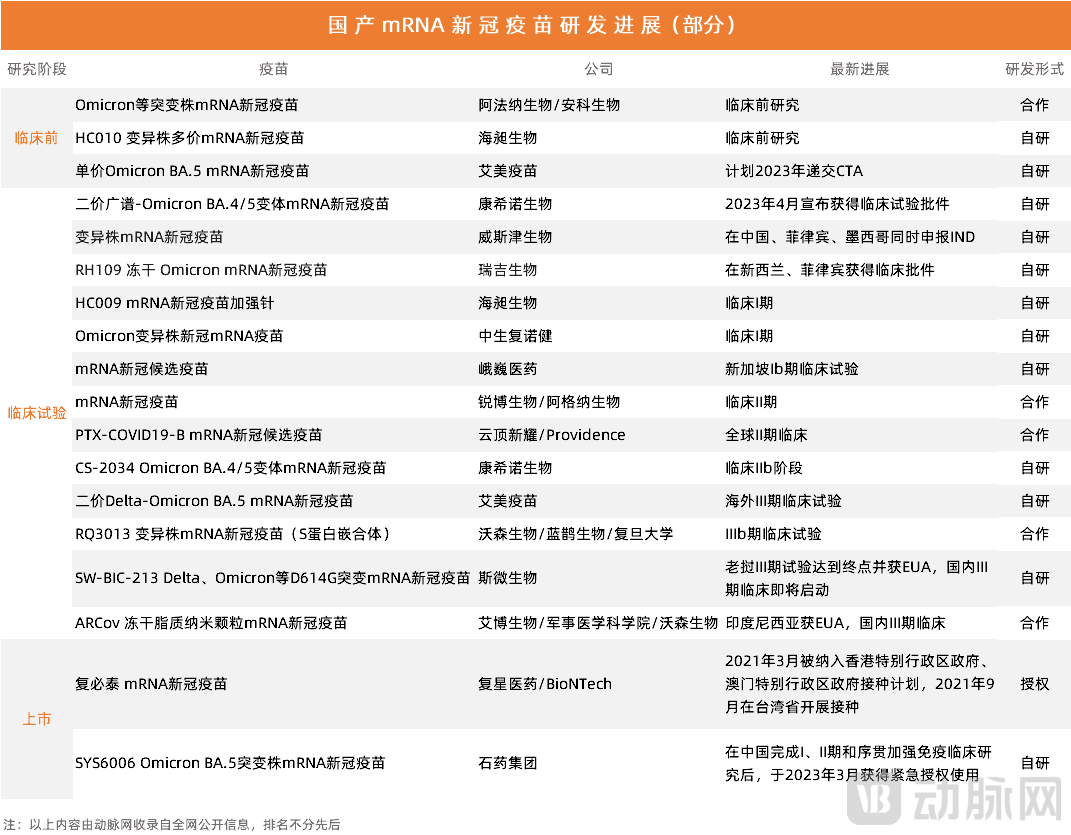 Progress in the Development of Domestically Produced mRNA COVID-19 Vaccines (Data Source: Compiled from Publicly Available Data Across the Internet)
As can be seen from the above table,Over 70% of China’s mRNA COVID-19 vaccine pipelines are in clinical trialsFour mRNA COVID-19 vaccine pipelines, led by AIM Vaccine, Walvax Biotechnology/Lanque Biotechnology, SWmRNA, and Abogen Biosciences, have advanced to Phase III clinical trials. As the peak of infections approaches under the new round of epidemic prevention and control policies, competitive variant-specific vaccines may look forward to a “two-way rush” involving both clinical trials and emergency approval.
It is understood that the Phase III clinical trial of AIM Vaccine’s bivalent Delta-Omicron BA.5 mRNA COVID-19 vaccine in Pakistan is now more than halfway complete. Industry analysts have therefore suggested thatAIM Vaccine’s mRNA-based COVID-19 vaccine series is poised for simultaneous commercialization in both domestic and international markets, and is expected to become the company’s next blockbuster star product, driven by urgent market demand for mRNA vaccines targeting variant strains.。
So, is AIM Vaccine's next "trump card" an mRNA COVID-19 vaccine?
Far from it.
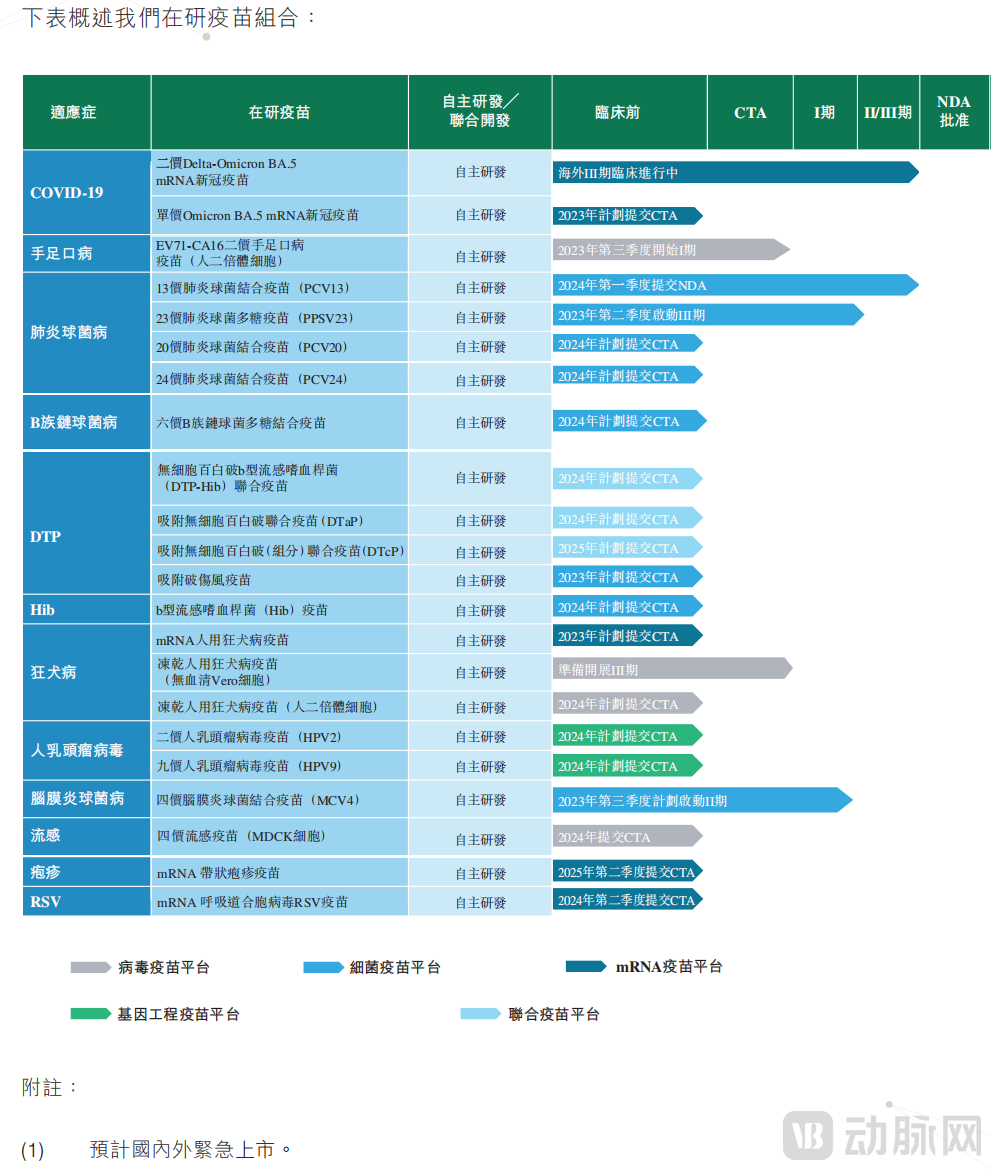
Progress of AIM Vaccine’s R&D Pipeline (Image Source: AIM Vaccine 2022 Annual Report)
Leveraging its proprietary viral vaccine, bacterial vaccine, mRNA vaccine, genetic engineering vaccine, and combination vaccine platforms, the company has established a pipeline of 22 vaccine candidates targeting 14 disease areas, with nine products having obtained a total of 13 clinical trial approvals.
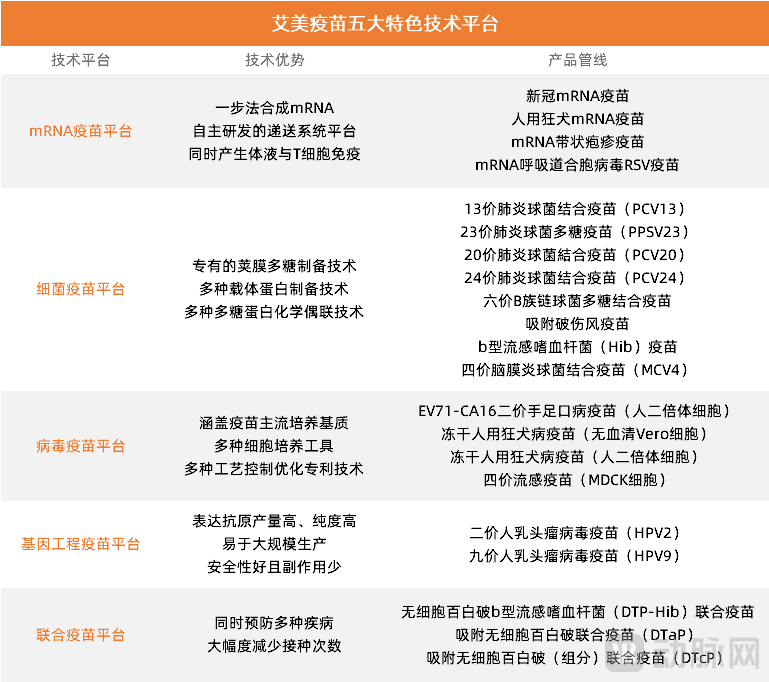
AIM Vaccine'sEach technology platform can generate substantial revenue for the company.. It is also worth noting that companies may develop vaccines of the same type through different technological pathways, such as its flagship product, the human rabies vaccine, alsoContinuously update and iterate the vaccine pipeline for the same disease., such as pneumococcal vaccines and HPV vaccines. Such pipeline planning and layout can also be seen in top global pharmaceutical companies like Pfizer and Merck & Co.
It is worth noting that,AIM Vaccine has a highly comprehensive pipeline layout in the respiratory system sector., is currently one of the few companies in China that demonstrates absolute advantages in both its technological platform and disease coverage. Both the international and domestic markets are eagerly awaiting its emerging RSV vaccine as well as its high-difficulty multivalent pneumococcal vaccine.
Data from Xiangcai Securities shows that the market size of China’s pneumonia vaccine market, measured by sales revenue, was approximately RMB 8.6 billion in 2021, with a compound annual growth rate (CAGR) of 35% from 2015 to 2021. As greater emphasis is placed on immune protection for infants and young children, China’s pneumonia vaccine market is expected to maintain robust growth, potentially reaching a market size of RMB 19.2 billion by 2025, representing a CAGR of approximately 22% from 2021 to 2025, indicating substantial remaining market potential.
The most representative is AIM Vaccine's 13-valent pneumococcal conjugate vaccine (PCV13), primarily targeting pneumococcus, known as the “health killer” of infants and young children. Before the COVID-19 pandemic, PCV13 was hailed as the global “king of vaccines.” In China, currently only three PCV13 products (from Pfizer, Walvax Biotechnology, and Minhai Biotechnology) are approved for children under six years of age. However, according to statistics from AIM Vaccine, the penetration rate of PCV13 among the age group approved for vaccination was only around 11% in 2021. This indicates that the market is still in an early stage of development, and AIM Vaccine has ample opportunity to leverage its strengths in commercialization and market expansion to make its PCV13 pipeline its next star revenue-generating product.
An analysis of the product pipeline reveals that AIM Vaccine has a clear strategy for its series of pneumococcal conjugate vaccines: Phase III clinical trials for its 13-valent pneumococcal conjugate vaccine are nearing completion, with market launch scheduled for next year, while the 20-valent pneumococcal conjugate vaccine is simultaneously entering clinical trial applications to follow closely behind. Based on publicly available information, although Walvax and Kangtai have already launched their 13-valent pneumococcal vaccines in China, neither company has an upgraded 20-valent pneumococcal conjugate vaccine in its pipeline. Market analysts believe that AIM Vaccine is betting on the 20-valent pneumococcal conjugate vaccine to gain a competitive edge. As market competition intensifies in the future, this blockbuster product could potentially surge ahead and break through the pack.
On the other hand, AIM Vaccine is also developingThe World’s First Bivalent EV71-CA16 Hand, Foot and Mouth Disease VaccineEnterovirus 71 (EV71) and Coxsackievirus A16 (CA16) are two pathogens responsible for hand, foot, and mouth disease (HFMD) in children, each accounting for 60–70% of cases and carrying a certain risk of severe complications and mortality. To date, all commercially available HFMD vaccines worldwide are monovalent, providing protection only against EV71 strains. Consequently, while EV71-related HFMD cases have declined significantly in recent years, CA16-induced cases remain substantial. The EV71-CA16 bivalent vaccine targets both EV71 and CA16 pathogens simultaneously. As the first candidate in the industry to obtain clinical trial approval, its market launch has been highly anticipated.
Quadrivalent Meningococcal Conjugate Vaccine (MCV4)This product pipeline was also developed by AIM Vaccine in response to stable market demand. According to data from the Chinese Center for Disease Control and Prevention, the overall vaccination rate of meningococcal vaccines among newborns in China is approximately 99.7%, as these vaccines have long been included in the National Immunization Program. Currently, while meningococcal polysaccharide vaccines (MPSV) have been replaced by meningococcal conjugate vaccines (MCV) in developed countries, MPSV remains the most commonly used type in China. This is primarily because the MCV4 market is currently dominated by imported vaccines from companies such as Pfizer and Sanofi, with CanSino Biologics being the only domestic player at present. Therefore, the potential market for domestically produced MCV4 is considerable. AIM Vaccine’s MCV4 officially commenced clinical trials on May 29, 2023, marking a key achievement for the company in entering another segment of the domestic vaccine market with import-substitution potential. On the same day, the company’s stock price rose by 15.75%.
Overall, by leveraging the advantages of its diversified R&D technology platforms, AIM Vaccine has built a broad pipeline covering a wide range of disease areas and employing diverse technological approaches. By capitalizing on the unique strengths of each pipeline within its respective vertical sector, AIM Vaccine will gradually enhance its market optionality as it advances its portfolio comprehensively, thereby building momentum for long-term sustainable growth.
A comprehensive review of AIM Vaccine’s business layout reveals that its full-spectrum, multi-highlight pipeline strategy—aimed at enhancing risk resilience and strengthening market optionality—has gradually taken shape.
AIM Vaccine’s product iteration roadmap is now clearly defined. For instance, its rabies vaccine portfolio has undergone progressive upgrades, evolving from serum-free Vero cell freeze-dried human rabies vaccines and human diploid cell rabies vaccines to mRNA-based rabies vaccines. Similarly, its pneumococcal vaccine series is set for stepwise optimization and advancement, progressing from PCV13 to PCV20 and then to PCV24.
In AIM Vaccine’s R&D pipeline, the bivalent Delta-Omicron BA.5 mRNA COVID-19 vaccine, 13-valent pneumococcal conjugate vaccine, 23-valent pneumococcal polysaccharide vaccine, and freeze-dried human rabies vaccine (serum-free Vero cell) are among the fastest-moving candidates and represent highly anticipated blockbuster products in the market.
In the second half of 2023 and during 2024–2025, AIM Vaccine also plans to launch at least four products, increasing its portfolio of commercialized products to double digits. Meanwhile, products such as the bivalent hand, foot and mouth disease vaccine, freeze-dried human rabies vaccine (human diploid cell), quadrivalent conjugate influenza vaccine, and tetanus vaccine are expected to be marketed within five years. These launches are anticipated to deliver substantial returns to the company.
In fact, for the domestic vaccine industry, the slow growth and losses in overall financial data in 2022 served as a wake-up call for all vaccine companies.
An analysis of the annual reports from companies such as CanSino Biologics, Chengda Bio, Zhifei Biological Products, Hualan Vaccine, and Walvax Biotechnology reveals that the rapid shift in market demand is directly reflected in the revenue figures of some enterprises. As reliance on a single vaccine is no longer sufficient to drive corporate performance growth, CanSino Biologics, Zhifei Biological Products, and Kangtai Biological Products all experienced declines in their 2022 performance.
It is evident that, compared to other sectors within the healthcare industry, changes in market demand have a more direct, rapid, and pronounced impact on vaccine sales. Therefore, for vaccine enterprises seeking to mitigate and delay the impact of market demand fluctuations on their revenue, the only viable strategy is to rely on a robust product pipeline and continuously upgraded iterative innovation capabilities, which constitute the core competency for flexibly responding to market demands.
As a leading domestic vaccine enterprise integrating pipeline development, R&D, manufacturing, and sales, AIM Vaccine has already achieved significant value scarcity. Based on its current development roadmap, the next 3–5 years will witness explosive growth for AIM Vaccine, with expectations that it will further leverage its prominence as a top-tier vaccine company.