

Affordable $15 MMA Screening Kit Enables Early Detection of Methylmalonic Acidemia, Moves Toward Commercialization with IPO Filing
According to the latest release"Research Report on the Definition of Rare Diseases in China 2021", China's definition of rare diseases isDiseases with a neonatal incidence rate of less than 1 in 10,000, a prevalence rate of less than 1 in 10,000, and fewer than 140,000 affected individuals. Against the vast backdrop of a total population of 1.4 billion, such minuscule figures are akin to a pebble in the ocean, going largely unnoticed. Consequently, whether in pharmaceutical R&D or social security, the rare disease community appears prone to being overlooked.
As society progresses, an increasing number of people are beginning to pay attention to rare diseases,Professor Zhao Yan, Shandong First Medical University (Shandong Academy of Medical Sciences)is one of them. Professor Zhao has been engaged in rare disease research for many years. Her clinical experience tells her that if some rare diseases can be diagnosed early and measures taken, the treatment effect will be better, and even allow patients to achieve a normal life state.
In recent years, Professor Zhao has been engaged inMethylmalonic Acidemia (MMA-cblC, hereinafter referred to as: MMA)Research. MMA is an autosomal recessive genetic disorder in which gene defects lead to metabolic abnormalities, causing the accumulation of acidic metabolites such as methylmalonic acid in the body. This results in multi-organ damage affecting the brain, liver, kidneys, bone marrow, and heart, leading to its common moniker, "lemon babies."
Professor Zhao discovered that current MMA diagnostic methods on the market still suffer from issues such as excessive cost, high false-positive rates, and operational complexity, making it difficult for many hospitals below the Grade A tertiary level to accurately diagnose MMA. In light of these prevailing pain points in the current market, she believes that developing aCost-Effective, Accurate, and User-Friendly MMA Testing ProductsIt is what the market demands.
4.68% Disease Carrier Rate Remains a Cause for Concern
A few years ago, Professor Zhao maintained long-term collaborative relationships withJinan Neonatal Disease Screening CenterA screening survey for methylmalonic acidemia (MMA) was conducted among newborns citywide. The Center utilized tandem mass spectrometry to analyze infants born between May 2011 and May 2021.6,800 casesNewborns underwent genetic screening. The results showed that over a ten-year period, a total of3 casesThe child patient was diagnosed with MMA, and318 casesThe patient carries pathogenic variants associated with methylmalonic acidemia, with a total carrier rate of4.68%。
Based on the data, the incidence of MMA does not appear to be high; however, we must not abandon research into the treatment of MMA. In addition to causing discomfort to patients, MMA also"Causing various sequelae, severe cases can even be life-threatening."Methylmalonic acidemia (MMA) patients typically present with feeding difficulties, vomiting, diarrhea, and lethargy during infancy and early childhood; severe cases may precipitate encephalopathy and nephropathy. Some MMA patients exhibit symptoms after the age of four, primarily characterized by failure to thrive and growth retardation, accompanied by anemia, hypotonia, and epilepsy. Additionally, a minority of patients may develop hemolytic uremic syndrome, diffuse alveolar hemorrhage syndrome, pulmonary hypertension, retinopathy, and maculopathy.
Due to the misleading clinical manifestations of MMA, many pediatric patients who are not diagnosed with MMA often experience complications during treatment.“Treat the head when it hurts, and the foot when it hurts.”...the situation, making it impossible to administer targeted treatment. This not only imposes financial burdens and psychological stress on families but also prevents patients from achieving optimal therapeutic outcomes.
Therefore, from both a health economics perspective and in terms of the quality of life for patients and their families, early screening for MMA is valuable.
Currently, there are three main methods for MMA screening:Urine Gas Chromatography-Mass Spectrometry, Tandem Mass SpectrometryandSanger Sequencing Genetic Testing.However, all three approaches still have limitations in clinical practice.
Urine gas chromatography-mass spectrometry (GC-MS) testing requires urine sample collection, which poses significant challenges for infants and young children with poor self-control. Additionally, other medical conditions may elevate the levels of screened substances in urine, leading to misdiagnosis. Although tandem mass spectrometry (MS/MS) is operationally convenient, it has a high false-positive rate in initial screening, thereby inadvertently increasing screening costs. Currently, Sanger sequencing-based genetic testing is the most accurate screening method; however, its high equipment costs make it unaffordable for many families.
Professor Zhao’s developed kit for detecting high-frequency mutations in the MMACHC gene using melting curve analysis (hereinafter referred to as the “MMACHC Detection Kit”) may well address these issues.
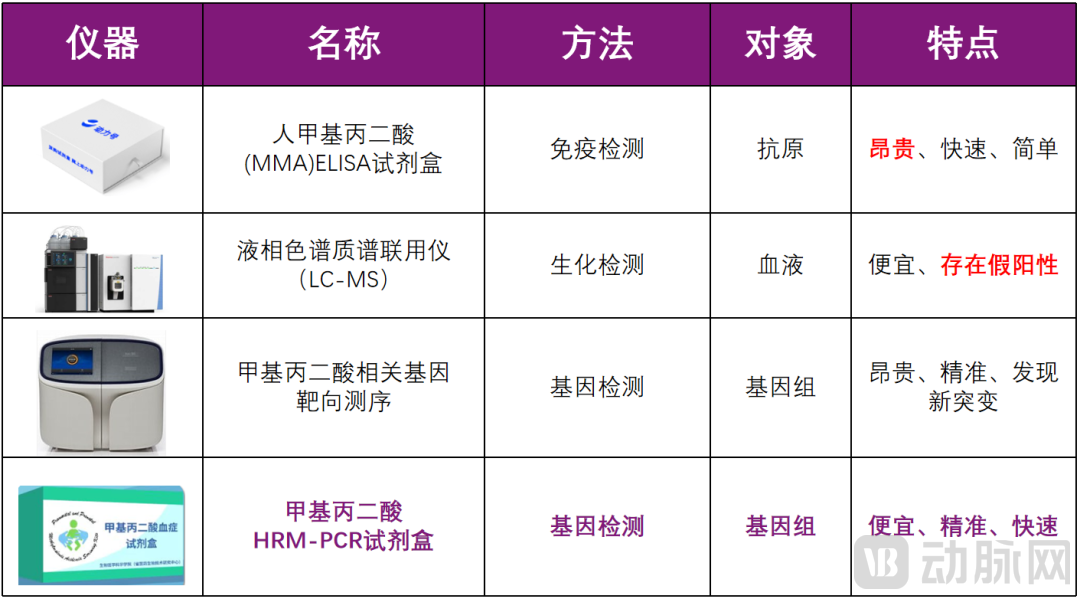
New Trends in MMA Testing: Accurate, Convenient, and Cost-Effective
In Professor Zhao’s view, a testing method can only be deemed “successful” if it first ensures high accuracy. Therefore, when designing the MMACHC detection kit, Professor Zhao chose to start with the higher-accuracyGenetic Testing MethodStart with.
The MMACHC detection kit designed by Professor Zhao's team is primarily based onHigh-Resolution Melting Curve Analysis (HRM)By utilizing real-time PCR technology to demonstrate changes in fluorescence signal values during the melting process of double-stranded nucleic acids, and finally employing specialized analysis software to perform gene analysis or classification of the test population based on distinct melting curve shapes, this method accurately detects the MMACHC gene, thereby achieving effective screening for patients with methylmalonic acidemia (MMA).
Currently, high-resolution melting curve analysis has been widely applied in research areas such as nucleic acid mutation scanning, genotyping, methylation detection, short tandem repeat (STR) analysis, sequence matching, and RNA editing. It has already been adopted in nucleic acid molecular laboratories both domestically and internationally.Achieved Mature Application and Validation. Several related application products have already been launched, creating a favorable foundation for the design of Professor Zhao’s team’s MMACHC detection kit.
Professor Zhao told VCBeat: “Screening in this manner can even differentiate between distinct mutation types, with a resolution accuracy of up to”Single Nucleotide Difference. Compared with other high-throughput sequencing methods, it has a lower probability of false positives.”
In addition to accuracy, the MMACHC test kit also differs from other testing methods in thatOperationSimple, Fast, and Cost-Effectiveadvantages.
During the procedure, the operator only needs to place the collected samples into the test kit; all subsequent steps, including gene analysis and classification based on melting curve profiles of various shapes, are automatically performed by specialized analysis software. Current experimental results indicate that the entire process, from sample processing to result generation, requires only2 hours, which not only saves labor costs but also reduces time consumption.
Furthermore, the MMACHC detection kit is more cost-effective in terms of both consumable and analytical costs. For consumables, Professor Zhao’s team employs an HRM-PCR kit for methylmalonic acidemia, oriented toward DNA detection; its production line is well-established, with costs amounting to only a few hundred yuan. On the analytical end, the detection method used by Professor Zhao’s team can cover80%pathogenic gene mutation sites, thereby avoiding unnecessary repetitive costs for patients due to repeated testing.
From the perspective of health economics, the cost of disease detection is often directly proportional to the effectiveness of disease prevention and control. Only by making testing accessible and affordable for everyone can further progress be made in disease prevention and control efforts.
Starlight Illuminates the Isolated Island
Currently, the MMACHC detection kit has enteredClinical Stage, currently activelySeeking Partner Companies for Reagent Collaboration, with the aim of further advancing the project. Meanwhile, Professor Zhao’s team has also established pilot application collaborations with numerous renowned hospitals across China, enabling them to obtain first-hand clinical feedback and provide targeted recommendations for further optimization of the test kit.
To ensure that rare diseases are no longer “orphaned,” Professor Zhao has actively promoted awareness, prevention, and treatment initiatives for rare diseases alongside his research endeavors.
She has actively promoted collaborations with major hospitals, leveraging the close relationships between hospitals and expectant mothers to raise awareness among newborn families about the importance of rare disease screening and to popularize knowledge on the prevention and control of rare diseases. Based in Jinan, a region in China with high incidence and carrier rates of methylmalonic acidemia (MMA), Professor Zhao is also committed to advancing newborn genetic screening as a critical complement to newborn biochemical screening. She recommends comprehensive carrier screening for MMA-related pathogenic genes among couples of childbearing age and students entering kindergartens and schools in the local area, striving to achieve early detection and early treatment.
If rare diseases are likened to isolated islands, then physicians like Professor Zhao, who dedicate their attention to these conditions, are twinkling stars whose faint light helps bring these islands into greater public view. With the state’s encouragement of rare disease drug development and reforms to the medical security system, it is believed that in the near future, patients with rare diseases"Difficult Diagnosis, Challenging Treatment, and High Costs"The difficult problem will definitely be solved.