

IN8bio Accelerates Gamma Delta T-cell Therapy Development to Address Key Challenges in Cell Therapy

IN8bio
Cancer Treatment Drug Developer
In April 2023, IN8bio announced updated data from the Phase I clinical trial of one of its lead product candidates, INB-100, at the 49th Annual Meeting of the European Society for Blood and Marrow Transplantation (EBMT).Trial data indicate that evaluable patients treated with INB-100 remain in complete remission (CR). The top three high-risk acute myeloid leukemia (AML) patients with complex cytogenetics are currently alive and relapse-free, with one patient having survived for up to 3 years.
At the AACR Annual Meeting in April, IN8bio also presented preclinical data on its novel non-signaling CAR (nsCAR) platform and announced a new program, INB-330, targeting CD33 for acute myeloid leukemia.
IN8bio (Nasdaq: INAB) is a clinical-stage biopharmaceutical company, asγδT Cell Therapy (Gamma Delta T Cells Therapy)A “star” company in this field. After IN8bio announced the trial results, its stock price surged by nearly 200% at one point.
Currently, the γδ T cell therapy sector remains in the early stages of clinical research.However, many candidate products have frequently achieved clinical progress.TC BioPharm, the frontrunner in progress, already has a product in Phase 2b/3 trials.
IN8bio’s positive results have not only driven a sharp surge in its stock price but will undoubtedly also send shockwaves through the field of γδ T cell therapy.
IN8bio was founded in 2016 and focuses on developing γδ T cell products for the treatment of solid and hematologic tumors. The company is headquartered in New York City, with its primary research operations located in Birmingham, Alabama.
IN8bio is currently led by its founder and CEO, William Ho. Mr. Ho holds an MBA from the University of Notre Dame and a Bachelor’s degree in Biochemistry from McMaster University. With over 20 years of comprehensive industry experience spanning biotechnology, healthcare finance, and investment management, he is the founder of AlephPoint Capital, a private healthcare investment fund, and previously served as a Senior Equity Research Analyst at Bank of America.
Lawrence Lamb, Founder and Chief Scientific Officer, is a pioneer in the field of γδ T cell biology.He is a Professor of Medicine at the University of Alabama at Birmingham, specializing in transplant immunology, and serves as the Director of the UAB Cell Therapy Laboratory within the Department of Bone Marrow Transplantation and Cellular Therapy. He has conducted a series of foundational studies in the field of γδ T cells, establishing their potential anti-leukemia effects and their association with improved overall survival rates.
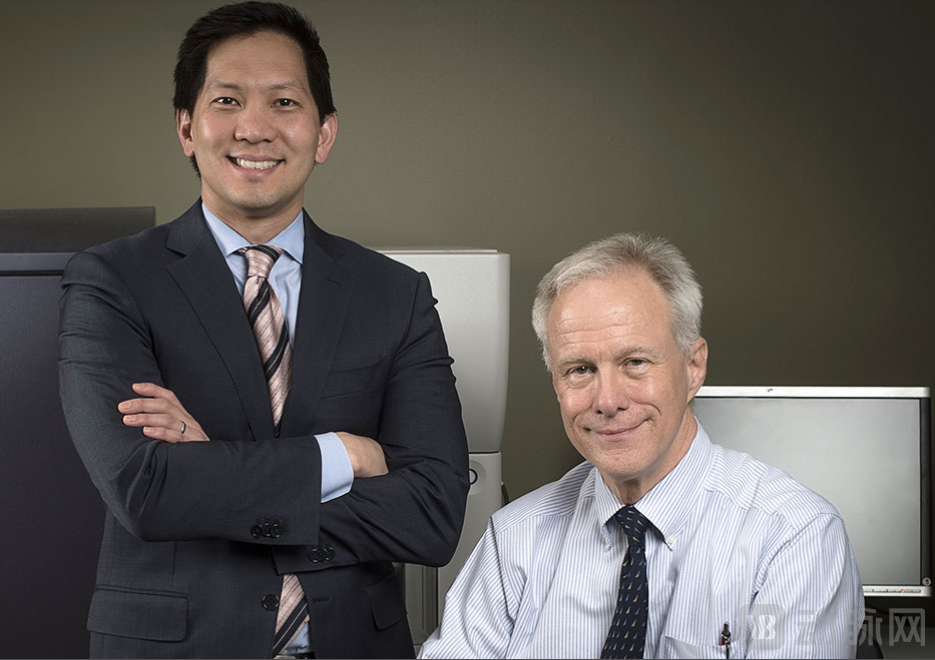
IN8bio Founder William Ho and Chief Scientific Officer Lawrence Lamb
Image source: IN8bio official website
CAR-T cell therapy previously sparked a massive surge of interest.However, the ability of CAR-T cells to target solid tumors is limited. In contrast, γ-δ T cells hold potential for treating both solid and hematologic malignancies.
γδ T cells account for only 5% of all T cells in the human body. In recognizing tumor cells, γδ T cells exert their anticancer effects by releasing perforin and granzymes. As naturally occurring immune cells possessing characteristics of both the innate and adaptive immune systems, γδ T cells can intrinsically distinguish between healthy and diseased tissues. These cells serve as a functional bridge between innate and adaptive immunity, contributing to direct tumor killing as well as the recruitment and activation of other immune cells to drive more profound immune responses.
Lawrence Lamb leveraged his expertise to lead IN8bio’s specialized scientific team, guiding the development of IN8bio’s technology and its DeltEx platform.Among them, IN8bio’s DeltEx platform employs allogeneic, autologous, and gene-modified approaches to develop cell therapies, aiming to effectively identify and eradicate tumor cells.
Furthermore, while chemotherapy is a cornerstone of solid tumor treatment, it depletes and damages immune cells, limiting their ability to locate and kill tumors. IN8bio leverages its proprietary gene-modification technology to protect γδ T cells from chemotherapy-induced damage.When tumors undergo maximal chemotherapy-induced stress, γδ T cells can recognize and eliminate residual tumor cells. IN8bio refers to this approach as “DeltEx Resistance-Targeted Immunotherapy.”
Based on the DeltEx platform, IN8bio has developed six pipelines, including INB-100, INB-200, INB-300, INB-400, INB-410, and INB-500.
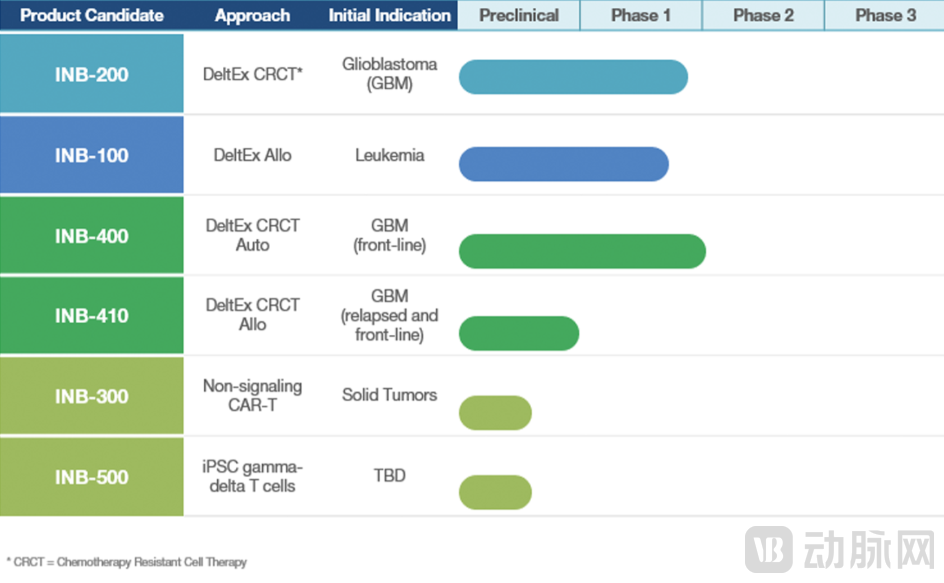
IN8bio's Pipeline in Development
Image source: IN8bio official website
1INB-100, Targeting the Patient Population with Acute Leukemia
Hematopoietic stem cell transplantation (HSCT) procedures have increased over the past two decades. According to statistics from the U.S. Health Resources and Services Administration, 4,160 related bone marrow and umbilical cord blood transplantation procedures were performed in the United States in 2020. Lawrence Lamb, the scientific founder of IN8bio, was the first to describe the survival benefit associated with naturally elevated levels of γ-δ T cells in HSCT patients.
INB-100 is designed to translate Lawrence Lamb’s observation into a therapeutic regimen by providing patients with donor-derived allogeneic γδ T cells following hematopoietic stem cell transplantation (HSCT).IN8bio is conducting a Phase I dose-escalation clinical trial of INB-100 at the University of Kansas Cancer Center. This is the first clinical trial of an allogeneic γδ T-cell immunotherapy designed to expand and activate these cells.
2INB-200: Promising to Enhance Anti-Tumor Response in GBM
INB-200 is a genetically engineered autologous γδ T cell candidate product for the treatment of solid tumors, with an initial indication of newly diagnosed glioblastoma (GBM).
Since 2005, the standard of care for glioblastoma (GBM) has been surgical resection followed by radiotherapy and chemotherapy, known as the Stupp protocol. However, most patients experience recurrence within one year, and few survive beyond five years.IN8bio has engineered INB-200 to confer resistance to alkylating chemotherapy, enabling its use as an adjuvant alongside the current standard of care to enhance anti-tumor responses. The Phase 1 repeat-dose escalation clinical trial of INB-200 is being conducted at the O’Neal Comprehensive Cancer Center at the University of Alabama at Birmingham.
3INB-300: Combining γδ T Cell Therapy with CAR-T Cell Therapy
INB-300 combines γδ T cells with a novel chimeric antigen receptor (CAR) targeting chlorotoxin. Chlorotoxin binds to glioblastoma (GBM) tumor cells, serving as a tumor-targeting moiety. Furthermore, chlorotoxin can bind to other solid tumors, including lung cancer, breast cancer, and prostate cancer.
The following video demonstrates the cytotoxicity of INB-300 cells (transparent) against green fluorescent protein (GFP)-expressing glioblastoma (GBM) cells (green) in vitro. Preclinical trial results indicate that INB-300 can effectively aggregate, attack, and eradicate tumor cells.
Cytotoxicity of INB-300 Cells
Video source: IN8bio official website
4INB-400: A Potential Treatment for Ovarian Cancer
High-Grade Serous Ovarian Cancer (HGSOC) is the most common and most lethal form of ovarian cancer, accounting for approximately 70%–80% of ovarian cancer-related deaths. Although poly(ADP-ribose) polymerase (PARP) inhibitors have improved patient prognosis, recurrence of HGSOC remains a significant challenge and an unmet medical need.
INB-400 is a chemotherapy-resistant γδ T cell product capable of recognizing and killing cancer cells.In May 2023, data from IN8bio’s preclinical studies on INB-400 demonstrated that INB-400 has the ability to target and kill multiple ovarian cancer cell lines.
Furthermore, IN8bio has submitted an Investigational New Drug (IND) application to the FDA for the Phase 1b clinical trial of INB-410, which is expected to be used in the first half of 2023 for the treatment of recurrent and newly diagnosed GBM. INB-500 is currently in the preclinical discovery stage.
Currently, companies in the γδ T cell sector are primarily investing in the research and development of three therapeutic approaches: bispecific γδ T cell-engaging antibody therapies, allogeneic γδ T cell transplantation therapies, and γδ CAR-T cell therapies. IN8bio’s product portfolio encompasses the latter two modalities.
IN8bio’s INB-300 pipeline utilizes γδ CAR-T cell therapy. This approach leverages the innate properties of γδ T cells as the backbone for chimeric antigen receptors (CARs) to enhance the efficacy of CAR-T cells while mitigating their side effects.
Unlike IN8bio, which is developing two therapies simultaneously, GammaDelta Therapeutics (hereinafter referred to as “GDT”) focuses on the development of allogeneic γδ T cell transplantation therapy.
Research at GDT is led by Professor Adrian Hayday and Dr. Oliver Nussbaumer of King’s College London. GDT has developed proprietary technology based on Vδ1 γδ T cells to generate allogeneic immunotherapies from blood and tissue sources for the treatment of hematologic malignancies and solid tumors. In October 2021, through its acquisition of GDT, Takeda Pharmaceutical Company obtained GDT’s allogeneic Vδ1 γδ T cell therapy platform, including the blood-derived platform, tissue-derived platform, and early-stage cell therapy programs.This therapy has demonstrated cellular activity and tumor cell-killing capability in preclinical models.
To date, Lava Therapeutics (hereinafter referred to as “Lava”) is the only company developing bispecific γδ T-cell-engaging antibody therapies for the treatment of cancer.
Lava’s Gammabody platform is designed to produce bispecific γ-δ T cell engagers. These specific engagers can activate a unique and relatively abundant subset of effector γ-δ T cells, known as Vγ9Vδ2 (Vgamma9-Vdelta2) T cells. This approach aims to complement natural tumor recognition by directing Vγ9Vδ2 T cells toward tumors, selectively killing cancer cells and triggering an immune cascade. Its lead candidate, LAVA-051, targets the tumor-specific antigen CD1d, which is overexpressed in various tumor types such as multiple myeloma, chronic lymphocytic leukemia, and acute myeloid leukemia.Currently, enrollment for the Phase 1/2a clinical trial of LAVA-051 is open.
VBInsight has observed that allogeneic γδ T-cell transplantation therapy is the most prominent approach in the γδ T-cell sector.
This is because γδ T cells exert their biological functions in a manner that is not restricted by the major histocompatibility complex.This means that, compared with many other immune cell therapies, the use of allogeneic cells as a therapeutic approach significantly reduces the likelihood of graft-versus-host-mediated rejection. Furthermore, this allogeneic therapy offers the advantage of being more “drug-like” and entails lower product costs.Commercially available cell therapies are typically either autologous or allogeneic. Autologous products are derived from a donor for treatment of the same individual, whereas allogeneic products are generally sourced from a donor and used to treat a large number of different patients. Consequently, allogeneic products offer greater reproducibility compared with autologous ones.
A number of Chinese companies have also entered the γδ T cell arena, with firms such as Boshengji, Shanghai Cell Therapy Group, Ruichuang Biotechnology, and Senlang Biotechnology having already established pipelines in γδ T cell therapies. Most of these programs remain in the preclinical development stage.
Notably, due to the scarcity of γδ T cells and their predominant presence in mucosal tissues such as the skin, intestine, lungs, and uterus, this therapy inevitably entails drawbacks including high costs, manufacturing challenges, and the need for specialized equipment. The validation of γδ T cell therapies awaits future product development.