

ROBO Medical Secures Tens of Millions in Series A Funding as World’s First Digestive Endoscopy Surgical Robot Nears Clinical Completion

ROBO Medical
Medical Robot Developer
VCBeat has learned that Shenzhen ROBO Medical Technology Co., Ltd. (“ROBO Medical”) has recently completed a Series A financing round worth tens of millions of yuan, led by Taikun Fund. The funds raised will be used for clinical trials of ROBO Medical’s digestive endoscopy surgical robot and the research and development of new products.

ROBO Medical is a pioneer in surgical robots for the digestive field, dedicated to overcoming technical challenges in flexible endoscopic surgical robots. It is currently the first company globally in this sector to reach the industrialization stage, standing at the forefront alongside its American counterparts.
To date, ROBO Medical’s self-developed digestive endoscopic surgical assistance robotic system has been undergoing clinical trials at multiple centers, including Qilu Hospital of Shandong University and Shanghai Changhai Hospital, with over 100 procedures performed. Patient enrollment for the clinical trials is now nearing completion.
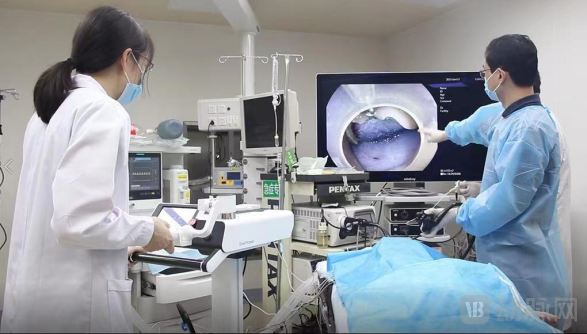
According to relevant statistics from the WHO, the global incidence and mortality of gastrointestinal tumors are on the rise, with nearly half of all patients located in China. There are over 1.36 million new cases annually in China, accounting for approximately 30% of all newly diagnosed cancers. Gastrointestinal tumors have become the most common type of cancer in China.
In recent years, with the promotion of the concept of “early screening, early diagnosis, and early treatment,” endoscopic submucosal dissection (ESD) has become the preferred treatment for early-stage gastrointestinal cancers.
However, relevant statistical data show that the coverage of physicians capable of performing endoscopic submucosal dissection (ESD) in China is only 19 per million population, compared with 181 per million in Japan—nearly ten times that of China. The primary reason is that traditional ESD procedures are technically demanding and involve a steep learning curve for physicians, which has hindered the widespread adoption of ESD.
ROBO Medical has keenly identified the clinical needs and market gaps in this field.
In 2017, ROBO Medical partnered with Qilu Hospital of Shandong University to co-develop a digestive endoscopic surgical robot, and undertook the “Key R&D Program of the Ministry of Science and Technology: Key Technologies and Systems for Minimally Invasive Digestive Endoscopic Surgical Robots,” committing to the application of surgical robot technology in the field of gastroenterology.
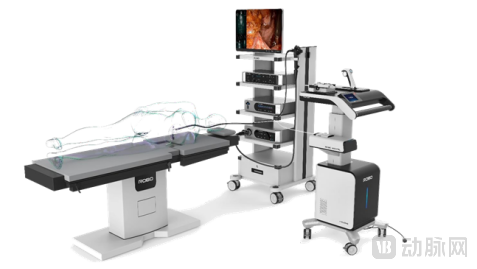
ROBO Medical Digestive Endoscopic Surgery Assistance System
According to reports, ROBO Medical has adopted a leading micro-continuum flexible robotic arm solution, with a diameter of less than 3mm. This system achieves precise master-slave control while enabling six degrees of freedom (6-DOF) motion. By replacing the traditional movement of gastroscopes with robotic arm manipulation, the procedure aligns more closely with surgeons’ intuitive operations during digestive endoscopic surgeries. This approach helps shorten operative time, reduce intraoperative complications, and expand the scope of surgical procedures.
About Tai Kun Fund
Taikun Fund is a biomedical industry fund jointly initiated by Tigermed, Hangzhou Capital, and Hanggao Sci-Tech Innovation, with assets under management of RMB 20 billion. Leveraging Tigermed’s industrial layout in clinical CRO services and aligning with the strategic development of Hangzhou’s pharmaceutical industry, the fund operates on market-oriented principles. Focusing on the life and health industry, it prioritizes investments in innovative medical devices, biopharmaceuticals, healthcare services, healthcare informatics, digital therapeutics, intelligent manufacturing, and nutritional health enterprises. The fund is committed to building a value investment platform for the biomedical industry that remains dedicated to science and resilient across economic cycles.