

Dingjing Biotech's Human SLCO1B1 and ApoE Gene Detection Kit (PCR-Fluorescent Probe Assay) Receives Class III Medical Device Approval
Recently, Dingjing Biotechnology’s self-developed and manufactured human SLCO1B1 and ApoE gene detection kit (PCR-fluorescent probe method) has received approval as a Class III medical device (National Medical Device Registration No. 20233400685).
This product marks the company’s first Class III medical device registration certificate, enabling medication guidance for patients with dyslipidemia. The successful acquisition of this certification represents another major breakthrough for Dingjing Bio in the field of precision medicine, further empowering the company’s mission to “safeguard human health.”
Epidemiology and Prevention Status of Dyslipidemia in China, and Clinical Pain Points
Dyslipidemia is one of the major risk factors for cardiovascular disease. The overall prevalence of dyslipidemia among Chinese adults is as high as 40.4%, and the prevalence of hypercholesterolemia in children and adolescents in China is also on the rise. To achieve lipid-lowering targets, clinical guidelines recommend statins as the first-line lipid-modifying therapy (Class I recommendation).

Statins are currently the most widely used lipid-modifying agents; however, their clinical efficacy and adverse reactions exhibit interindividual variability. Some patients show an insignificant lipid-lowering response to statin therapy and experience adverse events such as rhabdomyolysis. Therefore, pharmacogenetic testing should be conducted prior to initiating statin therapy.
Personalized medication guidance for statins primarily involves testing two genes: ApoE genotyping to predict statin efficacy, and SLCO1B1 genotyping to predict statin toxicity. Currently, most personalized diagnostic kits for statins on the market test only one gene, enabling prediction of either efficacy or toxicity, but not both. The product recently approved for Dingjing Biotechnology can simultaneously detect both ApoE and SLCO1B1 genes, providing safer and more effective medication guidance for patients with hyperlipidemia.
SLCO1B1 and Statins
Organic Anion Transporting Polypeptide (OATP1B1) is responsible for transporting statins from the bloodstream into the liver, where they exert their therapeutic effects directly or indirectly, and is closely associated with muscle safety during statin metabolism.
SLCO1B1 is located on chromosome 12 and exhibits significant genetic polymorphism. Among these, 388A>G and 521T>C are two common single nucleotide polymorphisms (SNPs) that form four haplotypes: SLCO1B1*1a (388A-521T), SLCO1B1*1b (388G-521T), SLCO1B1*5 (388A-521C), and SLCO1B1*15 (388G-521C). Mutations in the SLCO1B1 gene lead to reduced activity of the encoded transporter protein, decreased hepatic drug uptake, elevated plasma concentrations of statins, and consequently, an increased risk of rhabdomyolysis or myopathy.
Ø ApoE and Statins
Apolipoprotein E (ApoE) is closely associated with the efficacy and prognosis of statin therapy. It participates in the regulation of lipid metabolism through multiple pathways and serves as a significant intrinsic factor influencing blood lipid levels.
The ApoE gene is located on chromosome 19 and exhibits significant genetic polymorphism. Among these, 526C>T and 388T>C are two common single-nucleotide polymorphisms (SNPs) that form three haplotypes: ApoE2 (388T-526T), ApoE3 (388T-526C), and ApoE4 (388C-526C). Carriers of the ApoE4 allele have a 40% higher risk of developing coronary heart disease. Statin therapy often shows reduced or no efficacy in ApoE4 carriers, whereas it exerts the strongest lipid-lowering effect in ApoE2 carriers.
Dingjing Solution
This kit is based on quantitative fluorescence PCR detection technology and employs the UDG-dUTP anti-contamination system to qualitatively detect polymorphisms at the SLCO1B1*1b and SLCO1B1*5 loci of the SLCO1B1 gene, as well as the ApoE2 and ApoE4 loci of the ApoE gene, in whole blood samples. It covers the loci required by the latest CPIC guidelines and can be used to guide the rational use of statins, thereby promoting medication safety for patients.
There are nearly 400 million patients with dyslipidemia in China, with approximately 5 million new cases annually. Lifelong medication is required after diagnosis. Statins are the mainstream lipid-lowering drugs in China. According to relevant research reports, there is significant demand for genotype-based precision medication guidance in the future, representing an annual market size on the order of billions of RMB.
Product Features
1. Comprehensive Locus Coverage—Based on the latest authoritative clinical guidelines and other resources, this test detects statin-related genetic loci to enable more precise medication guidance.
2. High Specificity—Utilizes PEP (Primer Enchant Probe) patented technology to effectively enhance detection specificity.
3. Simple interpretation—uses a single Ct method for determination, eliminating the need to calculate ΔCt.
4. High detection sensitivity—can accurately detect DNA samples at 0.5 ng/µL.
5. Accurate Results – The detection process utilizes a closed-tube reaction system with strong anti-interference capabilities. Internal controls, along with positive and negative controls, provide quality assurance for the system, thereby eliminating false-negative and false-positive results.
6. Strong Contamination Resistance—Equipped with a proprietary contamination prevention system, it effectively prevents laboratory contamination.
ApoE Polymorphism and the Risk of Alzheimer's Disease

As the most prevalent form of dementia in the elderly, Alzheimer’s disease is a neurodegenerative disorder with an as-yet-unclear etiology. It is characterized by cognitive impairments—such as memory loss, aphasia, disorganized thinking, and impaired judgment—as well as changes in personality and behavior. There are approximately 10 million individuals aged 60 years and older in China living with Alzheimer’s disease.
Evidence from clinical and pathological studies indicates a close association between APOE genotypes and multiple protein pathways, including amyloid-β, tau, α-synuclein, and TDP-43. These protein biomarkers have been extensively investigated in the field of Alzheimer’s disease in recent years, with some already approved by the FDA and NMPA for the early auxiliary diagnosis of AD.
A study published by the Mayo Clinic in Nature Reviews Neurology in 2019 revealed that ApoE is the primary risk factor for late-onset Alzheimer’s disease (AD) occurring after age 65, with ApoE2 exerting a protective effect against AD and ApoE4 increasing the risk of developing the disease. The specific ApoE genotype also influences the probability of developing AD; for instance, carrying one ApoE4 allele increases the risk by 3- to 4-fold, whereas carrying two ApoE4 alleles raises the risk by 9- to 15-fold.
When APOE genotyping results are ε3/ε4 or ε4/ε4, it indicates an increased risk of developing Alzheimer’s disease (AD). Based on clinical guideline recommendations, for high-risk populations—particularly those in the preclinical stage of AD who have not yet exhibited significant clinical symptoms or cognitive impairment—the focus should be on implementing comprehensive preventive measures. These primarily include targeting AD-related risk factors, lifestyle modifications, cognitive training, and aerobic exercise, with the aim of delaying onset or reducing the incidence of AD. Recent population-based studies have shown that adhering to a healthy lifestyle, including a balanced diet, regular physical activity, and abstaining from smoking and alcohol consumption, can reduce the risk of memory decline in APOE ε4 carriers. Therefore, early awareness of AD risk facilitates timely intervention and early benefits.
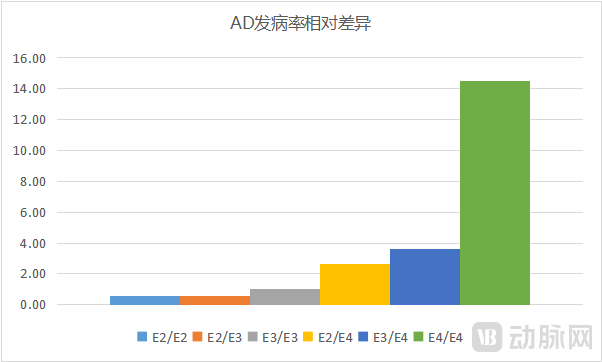
Relationship Between ApoE Genotype and Relative Difference in AD Incidence
Dingjing Biology’s approved human SLCO1B1 and ApoE gene detection kits enable precise genotyping of the ApoE E2/E3/E4 alleles, assisting clinicians in assessing the risk of onset and progression of Alzheimer’s disease and related dementias.
● For high-risk populations, assist clinicians in comprehensively assessing the risk of developing Alzheimer’s disease (AD) and related dementias by integrating APOE genotyping and other multiple indicators, to facilitate early prevention and intervention;
● Accurate APOE genotyping to facilitate scientific research. Both the "Guidelines for Diagnosis and Treatment of Alzheimer's Disease Dementia in China" released in 2021 and the "Chinese Expert Consensus on Diagnosis and Treatment of Alzheimer's Disease-Related Mild Cognitive Impairment" published in 2022 explicitly recommend APOE genotyping for predictive testing of the risk of AD onset and progression.
On Capital Market Listing
Mr. Shen Weiqiang, Chairman and CEO of the Company, stated that the acquisition of the aforementioned SLCO1B1 and ApoE genetic testing kits has laid a solid foundation for the Company’s subsequent listing in the capital markets. The future expansion of indications for these products to include Alzheimer’s disease, coupled with their qualification as Class III medical devices, will establish a robust basis for a listing under Chapter 18A of the Hong Kong Stock Exchange. Furthermore, the substantial revenue generated by these kits will bolster the Company’s current hundreds-of-millions revenue stream, paving the way for a main board listing in Hong Kong. Additionally, the high operating margins associated with IVD products will help safeguard the valuation for a potential A-share listing in China. In summary, the Company is fully prepared for the commercial launch of the SLCO1B1 and ApoE products, as well as for its overall corporate public offering.
References:
1. Joint Committee for the Revision of the Guidelines for the Prevention and Treatment of Dyslipidemia in Chinese Adults. Guidelines for the Prevention and Treatment of Dyslipidemia in Chinese Adults (2016 Revised Edition). Chinese Circulation Journal, October 2016, Vol. 31, No. 10 (Serial No. 220)
2. Niemi M , Pasanen M K , Neuvonen P J . Organic Anion Transporting Polypeptide 1B1: a Genetically Polymorphic Transporter of Major Importance for Hepatic Drug Uptake [J]. Pharmacological Reviews, 2011, 63(1):157-181.
3. Thompson J F , Hyde C L , Wood L S , et al. Comprehensive Whole-Genome and Candidate Gene Analysis for Response to Statin Therapy in the Treating to New Targets (TNT) Cohort[J]. Circulation: Cardiovascular Genetics, 2009, 2(2):173-181.
4. The Clinical Pharmacogenetics Implementation Consortium (CPIC) guideline for SLCO1B1, ABCG2, and CYP2C9 and statin-associated musculoskeletal symptoms[J]. Clinical Pharmacology & Therapeutics, 2022.
5. Yamazaki, Y., Zhao, N., Caulfield, T.R. et al. Apolipoprotein E and Alzheimer disease: pathobiology and targeting strategies. Nat Rev Neurol 15, 501–518 (2019).