

Gene Editing: Overhyped or Unstoppable Tide? Insights from 8 Leading Companies

Life Edit Therapeutics
Gene Editing Therapy Developer

Prime
--
Verve Therapeutics
Gene Drug Developer

Beam Therapeutics
Gene Technology Developer
It has been ten years since CRISPR technology caused a sensation as a potential therapeutic approach,The First CRISPR/Cas9 Gene-Editing Product Is Set for ApprovalVertex and CRISPR Therapeutics have submitted applications to regulatory authorities,The regulatory agency’s preliminary ruling may be issued later this year.
Accompanying the rapid development is skepticism over whether gene editing can become mainstream.Early gene editing involved cumbersome and unpleasant ex vivo procedures—first extracting the patient’s cells, then administering a chemotherapy-based preconditioning regimen to deplete the patient’s residual stem cells before infusing the edited cells—a method that was also highly expensive.
To address at least some of these issues,Some companies are working on more manageable projects, namely in vivo cell editing.However, this has raised concerns about allowing gene-editing tools to operate within patients’ bodies and the potential unintended consequences.
Last November, the FDA placed a clinical hold on Verve Therapeutics’ Verve-101 therapy, which is based on an adenine base editor. Although Verve-101 still has a long way to go before formal approval and market launch, this development nonetheless peaked concerns regarding in vivo gene-editing programs.
This year, the rapid approval of clinical trials for Intellia’s in vivo gene-editing therapy, NTLA-2002, in the United States has alleviated some public anxiety. Nevertheless, many people remain skeptical about gene editing, particularly regarding treatments that have already been approved despite being imperfect.
Recently, Evaluate Vantage released a latest report on the gene editing sector, interviewing companies in the field.This includes companies dedicated to CRISPR/Cas9 and the next major breakthroughs, such as base editing and prime editing. Additionally, some teams are developing new delivery methods, a field that is garnering increasing attention.
Despite the evident caution displayed by regulatory authorities, the optimism within this group is foreseeable.
Elevatebio CEO David Halla stated, “It is not a question of whether this will happen, but rather when this model will become the dominant paradigm that changes the world.” Life Edit Therapeutics, a subsidiary of Elevatebio, signed an agreement with Moderna in February this year.
He pointed out that monoclonal antibodies were initially met with skepticism as well, “but now they are the dominant model in biotechnology and even among large pharmaceutical companies.” Hallal believes that failure is both surmountable and necessary, as it allows for “learning from mistakes made during the process.”
Keith Gottesdiener, CEO of Prime, stated, “I believe that some of the challenges we are currently facing are merely growing pains.” Although 2022 was the worst year in recent times for financing among companies with potential IPO plans, Prime still completed a $175 million initial public offering (IPO). “We continue to observe significant excitement around gene editing.”
Aera’s Chief Scientific Officer, Akin Akinc, struck a more cautious note: “I am very confident that we will continue to move forward, but the path may not be smooth—that is the reality of hard science.” The team was established in February this year, securing $193 million in venture capital funding and access to a novel delivery technology based on research by CRISPR pioneer Feng Zhang.
Companies interviewed tended to believe that, given the nature of the technologies involved,The FDA’s caution is justified.
An Intellia spokesperson described the FDA’s standards as “appropriately high.” However, Intellia does not agree that the FDA is stricter than other regulatory agencies, such as the EMA: “In our experience, there is no significant difference between the FDA’s requirements and those of other regulatory authorities.”
Prime’s Gottesdiener said, “I think gene editing is an area that regulators need to carefully consider, because it involves permanent edits to your genome.” He also emphasized that a permanent cure offers “incredible advantages.”
Metagenomi’s Chief Investment Officer, Simon Harnest, concurred: “We aim to proceed with caution, as we do not wish to act hastily and create significant downstream challenges.”
In general,These companies do not believe that regulatory agencies will review in vivo gene editing more stringently than ex vivo gene editing.
John Evans, CEO of Beam Therapeutics, which focuses on base editing, stated, “This is an entirely new technology.” He highlighted the prior regulatory framework for gene therapies, such as Vertex and CRISPR’s exa-cel program involving ex vivo editing. “The issue is that when new technologies emerge, the FDA doesn’t know exactly what to ask for, because they don’t fully understand the underlying science.”
Although some predict that in vivo editing technologies will overshadow ex vivo editing, most of the companies interviewed believe that both approaches have room for development.Ensoma is an exception, as it is a private company focused on editing hematopoietic stem cells in vivo.
““I believe the field of gene editing is shifting from ex vivo to in vivo applications,”Chief Executive Officer Emile Nuwaysir stated, “In vitro testing has taken an extraordinary step forward; it has taught us a great deal—but it has also shown us that it is impractical.”
“If in vivo editing truly becomes mainstream, its impact on the healthcare industry could be as profound as that of mobile phones on the telecommunications sector,” said Gilmore O’Neill, CEO of Editas.
To achieve this transition, new delivery technologies will be crucial. Current in vivo therapies primarily utilize lipid nanoparticles (LNPs), which often target the liver, thereby limiting treatment to liver-mediated diseases.
Adeno-associated virus vectors have been used in gene therapy, providing an alternative for treatments outside the liver. However, they have drawbacks such as immunogenicity and long-term effects.
New delivery methods are definitely on investors’ radar.Prime’s Gottesdiener said, “In our first year, everyone was eager for us to deliver new editing technologies.” That year, we convinced people that we had achieved precise editing technology, and immediately afterward, they began pressing us hard on the development of delivery technologies.
New editing technologies and delivery methods seem to be emerging constantly, but in the coming years, as this field gradually becomes clearer, we may see a trend of consolidation. If such a trend emerges, it will indicate that the field is moving toward success.
As some cutting-edge therapies enter the market, issues related to pricing and intellectual property may become more prominent. However, for now, simply advancing a portion of these projects into clinical trials represents significant progress.
VBInsight has translated the full report, as follows:
The world of gene editing is fraught with formidable challenges, but Verve Therapeutics faces the most daunting task of all: convincing regulators and physicians that the world needs a base-editing therapy to compete with PCSK9 inhibitors.
Verve CEO Sekar Kathiresan is accustomed to the skepticism that often surrounds Verve’s mission. He told Evaluate Vantage, “I don’t think people realize how much unmet need there is in this area.” He pointed out that among all patients with heterozygous familial hypercholesterolemia worldwide, only about 2% achieve their target low-density lipoprotein cholesterol (LDL-C) levels.
“Chronic disease management models require patients to take pills or receive injections for life, which is simply not feasible.” When asked about concerns regarding the permanence of gene editing, he likened it to surgical procedures that are equally irreversible.
He insists that,If Verve can demonstrate that the benefits of its Verve-101 program outweigh the risks,“Many people will be willing to undergo gene editing.”
Verve-101 is currently undergoing the Phase 1 HEART-1 clinical trial, which is enrolling patients in New Zealand and the United Kingdom. However, clinical development in the United States has been stalled since the FDA imposed a clinical hold on the company’s Investigational New Drug (IND) application in November.
Kathiresan declined to speculate on when this requirement might be lifted, noting that the company is still in negotiations with regulators. However, he does not believe the FDA’s caution stems from concerns about base editing itself. “I don’t think it’s a technical issue; I think it has to do with delivery,” he said.
Verve-101 utilizes base editing technology licensed from Beam Therapeutics and is delivered via lipid nanoparticles (LNPs). Intellia’s NTLA-2002 was recently approved for clinical trials in the United States; although this program is based on CRISPR/Cas9 editing, it also employs LNPs as the delivery vehicle.
Intellia has obtained human data for NTLA-2002 from trials conducted outside the United States, which may help pave the way for clinical trials in the U.S. However, John Evans, CEO of Beam Therapeutics, downplayed the significance of these results. “The FDA may not be interested in the outcomes demonstrated by Phase I clinical trial data.”
“We have not seen any difference in the FDA’s review of base editing versus nuclease-based editing, such as CRISPR/Cas9,” he said. “If there is any distinction to be made, it is that in certain cases we may have a more straightforward approach, as we do not need to create double-strand breaks.”
There are concerns that double-strand breaks, a hallmark of CRISPR editing, may lead to chromosomal abnormalities, including translocations, thereby causing cancer. In contrast, base editing merely modifies individual nucleotides without cutting the DNA. Compared to the “scissors” of CRISPR, it is referred to as a “pencil.”
It is hoped that this precision will make base editing safer, although the FDA remains cautious and requires more data on off-target risks associated with gene-editing therapies such as VERVE-101.
In addition to providing preclinical data to the FDA, Verve also hopes to submit available results from the Heart-1 clinical trial concurrently.Meanwhile, once all four dose groups are completed, investors will see the data from this study in the second half of this year.
Safety is the primary endpoint; therefore, Verve also measured levels of PCSK9 and LDL-C, with the ultimate goal of observing reductions of 60% and 40%, respectively, to meet the benchmark set by Novartis’s long-acting product, Leqvio. “We aim to achieve this target by the end of Phase 3 clinical trials. Whether we can reach this goal in Phase 1, in the inaugural study applying this novel gene-editing technology for the first time, remains to be seen,” he said.
"In Phase 1 clinical trials, 'we just wanted to demonstrate that we could edit and deliver.'"
While Verve is fully focused on in vivo editing, Beam remains open-minded. CEO Evans stated, “I do believe there is a place for ex vivo editing.” “You can do things to ex vivo cells that you may never be able to do (in vivo).” For example,“Through its allogeneic CAR-T program, Beam aims to perform ‘four, five, or six edits. I don’t think this will happen in vivo.’”
Beam Therapeutics’ lead program is an ex vivo gene-editing therapy targeting sickle cell disease and β-thalassemia. Vertex and CRISPR Therapeutics’ exa-cel also targets this indication. The competitive landscape appeared crowded until February, when Intellia/Novartis, Graphite Bio, and Sangamo each discontinued their respective programs; intense competition seems to have been a likely factor in their decisions to abandon these three projects.
Although the market already has exa-cel and Bluebird’s sickle cell gene therapy, lovo-cel,But Evans is not concerned about the prospect of Beam’s ex vivo editing therapy hitting the market later than expected.
“Assets stripped of priority rights are not performing well; there is definitely room for better products in this sector. We believe that through base editing, we will deliver a higher level of editing,” he said.
This, in turn, may lead to elevated fetal hemoglobin levels; exa-cel and BEAM-101, along with various other sickle cell disease programs, aim to activate this form of hemoglobin to compensate for the effects of sickle hemoglobin. Exa-cel achieves this by reducing the expression of the transcription factor BCL11A. BEAM-101 mimics the single-nucleotide polymorphisms found in individuals with hereditary persistence of fetal hemoglobin, who appear to be protected from sickle cell disease, thereby increasing γ-globin levels.
Trials have shown that exa-cel increases fetal hemoglobin levels to approximately 45% of total hemoglobin. Beam’s recent corporate report, based on animal studies, suggests the possibility of achieving fetal hemoglobin levels of 65%. Evans describes this as a “realistic” goal, which will be tested in Beacon’s Phase 1 or Phase 2 clinical trials next year.
Like other ex vivo experimental programs, BEAM-101 involves chemotherapy conditioning, but Beam is seeking a less toxic regimen to deplete stem cells.
Beam’s next wave, an ex vivo sickle cell disease program called Escape, will combine antibody-mediated conditioning with modified cells to perform two edits: one therapeutic and the other to help cells evade antibodies. Evans explained, “The antibodies will clear out old cells, just as they do with other cells, but they will not affect our graft.”
Beam also has a pipeline of in vivo editing programs, primarily delivered via lipid nanoparticles (LNPs), initially targeting the liver due to the tendency of LNPs to accumulate there. Ultimately, Beam aims to develop an in vivo program for sickle cell disease, which will require targeting the bone marrow.
Beam has LNPs targeting different organs, referred to as “barcodes,” and remains open to early-stage work on delivery as well as novel viral and virus-like particles (efforts from other companies will be discussed later).
Beam also has other editing tools. Although it is known as a base editing company, it has also reached an agreement with Prime Medicine, granting it exclusive rights to develop base editing for sickle cell disease.
These two companies are closely linked: Liu Ruqian is the co-founder of both.As part of the transaction, Beam Therapeutics has granted Prime interim leadership. Evans noted that the two technologies share a “similar feel,” as both are built around CRISPR/Cas9 and target host DNA. In both programs, the CRISPR protein is engineered to create nicks rather than double-strand DNA breaks.
“The editors used in these two techniques are different,” Evans explained. “In the case of base editing, it is a deaminase. In the case of prime editing, it is a reverse transcriptase.” (The mechanism of prime editing will be described in detail later).
This transaction appears to be a way to ensure that Beam is not surpassed by prime editing as the focal point in the therapeutic field. Evans said, “It pushes Prime Medicine in other directions where we currently have no research underway. If we want to use it, we will also conduct prime editing over time.” This gives Beam more opportunities to achieve its goals.
It is understandable that Beam does not want Prime to develop in its field. Keith Gottesdiener, CEO of Prime, stated,Prime editing can achieve what other editing technologies cannot, with limited off-target risk.
However, the company still has a long way to go to demonstrate this in humans. Although it went public last year,However, Prime will not submit its first Investigational New Drug (IND) application before 2024—the first IND application is likely to be for an ex vivo program targeting chronic granulomatous disease.
Gottesdiener believes that the company has made rapid progress, given that Prime was only founded in 2020. Although investor support helped Prime become the fourth-largest IPO in 2022, investors clearly remain cautious as the company is still in its early stages.
The CEO stated that lagging behind other gene-editing companies may not be entirely a bad thing. “I would be delighted if we could initiate clinical trials at this stage. However, the advantage of being behind is that we can observe what other companies have done. This extends beyond regulatory perspectives; we can also examine some of their scientific approaches.”
Nevertheless, Prime still hopes to ultimately stand out from the competition. The company claims that,Prime editing is the only modality capable of performing edits, corrections, insertions, and deletions.
Crucially, it avoids the double-strand breaks caused by CRISPR/Cas9 editing. “Double-strand breaks are an emergency signal for chromosomes; one could say that double-strand breaks constitute damage to the chromosome, and the cellular repair mechanisms simply do their best to fill in the gap,” said Gottesdiener.
“If you want to inactivate a gene, that’s fine—it’s what CRISPR does best. But it is an uncontrolled process.”
“Base editing also avoids double-strand breaks, but prime editing can do ‘many, many things,’ says Gottesdiener. ‘In terms of sequence correction, base editing can fix 4 out of the 12 possible nucleotide mismatches; we can not only perform the same corrections as base editing but also repair the other 8 possible mismatched nucleotides.’ Prime editing can also insert and delete DNA sequences.”
He pointed out that early efforts focused on “cycling out” large amounts of DNA, which could help treat repeat expansion disorders such as Huntington’s disease. In contrast, inserting large amounts of DNA is currently a major goal in the field of gene editing.
According to Gottesdiener, precision will be key for prime editing when it comes to insertion. “People can already insert large amounts of DNA into the genome—that’s what lentiviruses do. The difference is whether you can place it at a very specific location.”
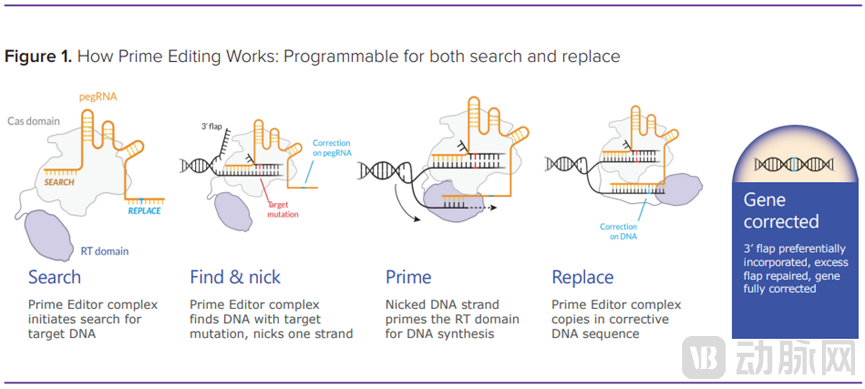
This specificity stems from the three stages of prime editing. “It’s like a door with three locks: you can’t enter the house unless all three locks are opened. Editing only begins after all three matches have occurred, making it highly unlikely that these three matching events will take place at an off-target site.”
A prime editor comprises a modified CRISPR/Cas domain (typically Cas9) and a reverse transcriptase domain. The former targets and cleaves the host DNA, while the latter writes new DNA sequences into the host genome using the template provided by a third component, the pegRNA.
This pegRNA contains a “search” and “replace” sequence; the search sequence is the first “key.” Once it matches the DNA target, CRISPR/Cas9 cleaves the host DNA, generating a single-stranded DNA fragment.
This inversion, when combined with a region of the replacement sequence—the second “key”—triggers reverse transcriptase to write the new, corrected code into the host’s genome.
Gottesdiener said, “When we are done, we need to be able to match a third site to put everything back together.”
Prime is pursuing both in vitro and in vivo programs, with delivery via LNPs and AAVs. Gottesdiener stated that the latter should only be used when “there are no other options.” For example, “you can use AAVs to target specific brain structures. We will not wait for a perfect solution to emerge; we will work with AAVs until better delivery methods become available.”
Prime currently has 18 projects in development, although they are still at a very early stage. “Given the potential of prime editing, there are many other possible applications. We may have nearly 100 indications under serious consideration.”
“The company itself cannot support 100 indications,” Gottesdiener said, adding that the company is “talking to partners almost every day.”
He acknowledged that Prime has much to prove, but he was clearly excited: “I joked that I’m very upbeat about this. I really, truly believe it will succeed. But I’ll feel better once we can show people the data supporting it.”
Prime is not the only company attempting to push the boundaries of gene editing.Elevatebio, through its subsidiary Life Edit Therapeutics, boldly claims to enable “any edit, anywhere.”
However, the team’s progress appears to be significantly behind schedule. David Hallal, CEO of ElevateBio, stated that it is too early to predict when the team might advance an editing program into clinical trials, or even to specify which indication will be targeted.
Hallal stated that although companies such as Intellia, Beam Therapeutics, and Prime are primarily focused on one gene-editing technology,However, Life Edit Therapeutics is researching various modalities with the aim of providing a “comprehensive gene editing system.”
Clare Murray, Senior Vice President of Corporate Development and Operations at Life Edit Therapeutics, stated that this approach is supported by “a truly diverse set” of RNA-guided nucleases. She added that the company’s portfolio of nearly 100 nucleases is derived from “microbial proprietary nucleases” developed by AgBiome, a crop protection company spun off from Life Edit Therapeutics in 2020.
She also emphasized a series of PAM motifs, short sequences that are critical for targeting the gene-editing machinery. Overall, this “allows us to go anywhere in the DNA we want to make the edits we desire,” she said.
In addition to nucleases, Life Edit is also exploring deaminases for base editing and reverse transcriptases for editing approaches similar to prime editing.
In February this year, Life Edit Therapeutics gained recognition through a deal with Moderna, although the financial terms were not disclosed. Moderna described base editing as an area of particular interest to them. “While we have not disclosed the specific therapeutic areas or disease targets they emphasized, as you can imagine with mRNA and LNPs, they are keen on using our combined technology to target the liver,” said Hallal.
Life Edit Therapeutics is developing in vivo and ex vivo therapies and plans to leverage its parent company’s cell therapy technologies. Murray believes there is significant room for further collaboration. “We believe we can build a robust internal pipeline between Life Edit and Elevatebio, while still pursuing numerous collaborative opportunities.”
As for delivery, Life Edit is exploring both viral and non-viral approaches. “Just as with editing methods, we want as many delivery options as possible,” said Murray.
The company is also developing compact nucleases, which may be particularly important for delivery via adeno-associated virus (AAV) vectors due to the limited cargo capacity of these vectors.
Life Edit Therapeutics is not the only company adopting a broad research approach. Another is Metagenomi, which has partnered with Moderna since late 2021 and also entered into an agreement with Ionis last year.
Metagenomi shares other similarities with Life Edit: it also possesses a large library of gene-editing systems and a diverse set of PAM sequences.However, Metagenomi is taking the lead with an in vivo project developed in collaboration with Moderna, which utilizes nuclease-based editing to treat liver diseases of unknown etiology.The clinical trials for this project will be conducted in 2024.
Metagenomi’s partnership with Moderna is not affected by the agreement reached between Moderna and Life Edit Therapeutics. He stated, “I believe our collaboration with Moderna is prudent, as we do not wish to limit our objectives to a narrow scope; therefore, it is natural for Moderna to collaborate with other companies.”
“But Moderna is also developing its Moderna Genomics platform, and I think they are doing so because they are excited about what they have seen from us,” he said.
Nevertheless, the design of the mysterious Metagenomi-Moderna clinical trial program was actually intended only for proof-of-concept, Harnest said: “This is actually an exception; the other technologies we are researching do not cause double-strand breaks.”
In addition to nucleases,Metagenomi is also developing clinical assets for base editing, prime editing, and CRISPR-associated transposases (CASTs).The last two can achieve large-scale gene correction. Although prime editing relies on RNA as a template, CASTs can insert large segments of DNA, which Harnett calls the “holy grail.”
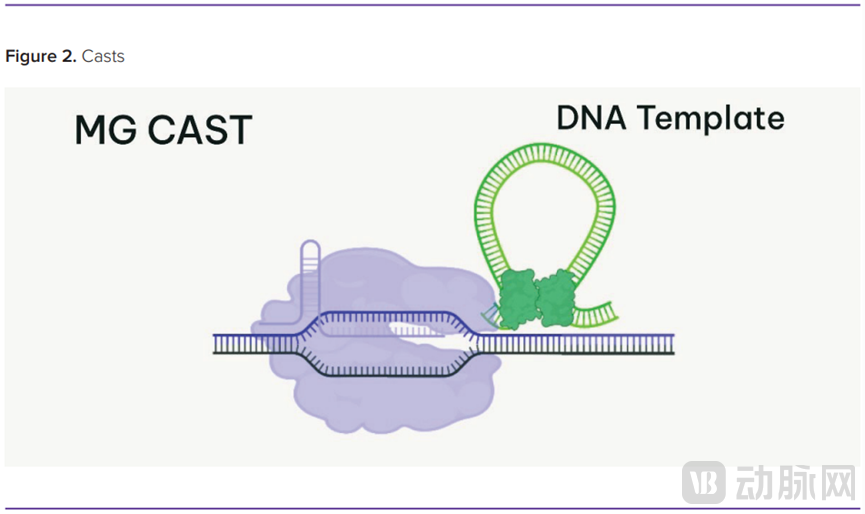
Harnest stated that, much like CRISPR nucleases, CASTs occur naturally in bacteria, and the key to this technology lies in enabling them to function within human cells. Regarding intellectual property, Metagenomi began actively filing IP applications last year.
The executive kept the company’s ongoing Casts project confidential but indicated that this approach may hold promise for diseases involving large genes, such as hemophilia A and cystic fibrosis.
Metagenomi discovered its gene-editing tool by using artificial intelligence to analyze soil samples. Harnest declined to provide further comment on the company’s resources. Through this work, they have identified approximately 20,000 potential editing systems. “We have curated around 100 of them,” he said, emphasizing that the team does not use any technologies invented by others.
Metagenomi plans to advance only nucleases that are equivalent or superior to Cas9. But what does this mean in practice? According to Harnest, the broad search for targetable nucleases is key to the company’s efforts. “CRISPR/Cas9 has a PAM sequence, and we believe that this PAM sequence, as a targeting mechanism, is not the optimal choice for all gene targets.”
PAM is critical for guiding the gene editor back to the target region within the genome. Harnest stated, “If there is only one PAM sequence, the further you move away from the PAM sequence to locate the target, the higher the potential for off-target effects.”
Conversely, “if you have a panel of nucleases with different PAM sequences, you can select a nuclease whose PAM sequence is closer to the target site. We believe this approach can achieve higher editing efficiency and fewer off-target effects.”
He stated, “I believe that"People are beginning to accept the fact that gene editing is not a screwdriver or a hammer, but rather requires a complete toolkit."
Even if he is right, Metagenomi lags far behind the leaders in gene editing. Like Prime’s Gottesdiener, Harnest does not view this as a disadvantage. “Sometimes it is advantageous not to be first, particularly when it comes to regulatory issues surrounding a completely new technology. By the time we enter clinical trials in 2024, we will have accumulated more knowledge, allowing us to leverage these blueprints and follow up rapidly.”
In addition to its editing technology, Metagenomi is also committed to non-viral delivery technologies beyond LNPs, although Harnest declined to provide specific details. One question is whether Metagenomi has spread its research efforts too thinly given the multitude of ongoing studies—a point he acknowledges. “We are trying to structure our projects in a way that allows us to stack them so that we don’t have to do everything ourselves,” he said.
Investors do not appear to be overly concerned in this regard. In January of this year, Metagenomi completed a $100 million extension of its Series B financing round, bringing its total funding to $275 million.
Aera Therapeutics, which was founded in February and secured $193 million in venture capital funding, has greater leverage in addressing vector delivery challenges. The substantial funding is not the only reason Aera has made waves—the company lists CRISPR pioneer Feng Zhang as a founder and leverages technologies based on his research.
Aera CEO Akin Akinc stated that investors are drawn to the prospects of improving delivery systems for advanced therapies, a topic that has only recently come to the forefront.“Perhaps ten years ago, people focused too much on effective vectors, while delivery was an aspect that did not receive sufficient attention; people assumed you could solve this problem.”
“This former Alnylam executive pointed out that from RNAi to gene therapy, and now to gene editing, people have developed ‘surprising modalities.’ But the reality is that delivery technology has lagged behind. If you look at today’s pipeline landscape, many in vitro and in vivo technologies are still focused on the liver. People are realizing that we really need new delivery methods so that we can unlock the full potential these modalities offer.”
Aera’s technology is based on so-called protein nanoparticles (PNPs): endogenous human proteins.“This protein has an ancient evolutionary origin from retroelements, such as retroviruses. Although our bodies have co-opted them to perform different functions, this means they still retain the ability to form capsid-like structures that encapsulate and transfer nucleic acids,” said Akinc.
He stated that using human proteins may offer advantages over virus-based delivery systems, including a reduced risk of immunogenicity. This could enhance safety and enable re-administration.
According to Akin Akinc, there are approximately 85 such proteins in the human body, which can form structures of varying sizes. He stated, “Some of these proteins have different packaging constraints. Our vectors can carry large payloads, such as gene-editing cargo, but we may also utilize other smaller molecules that are better suited, such as siRNA or antisense oligonucleotides. Therefore, I believe this approach offers considerable flexibility.”
Thus, Aera’s technology can be applied to a broader range of advanced therapies beyond just gene editing, raising questions about how the company will prioritize its work. “We cannot do everything on our own. I believe partnerships are our future,” said Akinc, noting that although Aera has raised substantial funding, it is not in a hurry to strike deals.
The company is also developing its own gene-editing technology, which is based on a new family of editing enzymes known as IscB proteins.“They appear to be ancestors of Cas9—they possess all the functional attributes of Cas9, yet they are only about one-third its size,” he said. This suggests that they may be easier to package and deliver, much like other compact editing systems, such as those developed by companies including Mammoth Biosciences.
Although IscBs themselves also induce double-strand breaks, they can also serve as platforms for base or prime editing systems, much like Cas9 is used as a building block.
“Ultimately, we aim to become a gene therapy company that not only advances our own drugs and pipeline but also supports the development of other companies,” said Akinc.
As for Aera’s focus, it is still too early to provide specific details: “We are truly interested in targets beyond the liver. Or whether we can translate our current in vitro applications to in vivo settings,” he said. In other words: “Where do we solve the problem?”
He acknowledged that the company’s work in gene editing and delivery is still in its early stages, but he noted that investors recognize this. “(People) understand how difficult this problem is. It cannot be solved quickly with limited resources alone.”
Another company, Ensoma, is taking a different approach. The company claims to be the first to apply in vivo editing technology to hematopoietic stem cells, using virus-like particles.
Current in vivo therapies are limited to liver-mediated diseases, while blood disorders, such as sickle cell disease, can currently only be treated through ex vivo methods. Emile Nuwaysir, CEO of Ensoma, stated that ex vivo therapies are “impractical” due to their prohibitive costs.
He stated that targeting hematopoietic stem cells in vivo is the answer. “They are the source of your entire blood and immune systems. Moreover, the blood system comes into contact with every organ and cell in your body at every moment of your life. So, if you want to deliver therapeutics, what better way is there than via the blood system?”
In addition to genetic diseases, the company is also targeting cancer, such as by engineering patients’ own T cells to attack tumors. The group also signed an agreement with Takeda in early 2021 covering up to five unspecified rare diseases. However, the future of this work appears uncertain, as a Japanese research team announced in April that it would halt early-stage research on AAV vector-based gene therapies and rare hematologic conditions. Nuwaysir stated that Ensoma is still assessing how this news will impact its projects.
Ensoma’s delivery technology is based on virus-like particles with the viral genome completely removed to help minimize patients’ immune responses to viral vectors.
The company stated that the system also features an effective vector capacity of 35 kb, more than seven times the limit of AAVs. Nuwaysir noted that this is particularly useful for inserting large vectors, such as CAR constructs used in oncology.
As for how the vector targets hematopoietic stem cells, he explained that this is achieved by “engineering the capsid using different serotypes of adenovirus and then introducing point mutations to enhance its specificity for hematopoietic stem cells.”
Like Aera, Ensoma aims to provide a range of effective vectors.One of them comes from Twelve Bio, which was acquired by the group in January and has developed a CRISPR/Cas12a-based nuclease.
Cas12a is smaller and more specific than Cas9, and Twelve Bio’s technology is designed to perform multiple edits simultaneously. “The Cas12a we use is unique,” said Nuwaysir. “This is much harder to achieve with Cas9.” This multiplexed editing capability gives Ensoma a competitive edge in its CAR-T projects, as Cas12a editing aims to enhance functionality by improving expansion, stemness, persistence, and resistance to exhaustion.
According to Ensoma, its technology features a unique capability: by leveraging a transposase mechanism to encode virus-like particles (VLPs), it can make the effects of gene editing either transient or permanent, or any state in between. He stated, “By altering the position of the transposase recognition sites within the construct—which instructs the transposase on which DNA segments to capture and insert—we can control which fragments of the construct are permanently integrated into the DNA and which are only transiently expressed.”
“Most other vectors are ‘either transient or permanent,’” he said. “AAVs are ‘basically transient,’ meaning they exist as independent entities outside the host genome and are therefore short-lived, whereas lentiviruses integrate into the genome as a whole and are thus permanent.”
Of course, Ensoma still has much to prove, and since Nuwaysir did not specify when this technology might enter clinical trials, there is still a long road ahead to demonstrate its viability.
Editas is a gene-editing company that has gone through a tough period, but it still believes it has something to offer. Earlier this year, the company abandoned its disappointing in vivo editing program for a rare eye disease and sold its induced pluripotent stem cell-derived natural killer cell program to Shoreline Biosciences.
Editas has seen several CEO changes in recent years and is currently led by Gilmore O’Neill, with its primary focus on EDIT-301, an ex vivo gene-editing program for sickle cell disease and beta-thalassemia.
Early-stage in vivo trials are also underway, and Edita aims to target hematopoietic stem cells as well. O’Neill stated that the team is investigating “several” potential delivery vehicles, including lipid nanoparticles.
He declined to disclose further details on how these drugs work. He stated, “From a target perspective, we need to continue researching some of the elements within these technologies.”
Editas’ lead in vivo research program is also intended for sickle cell disease and thalassemia, but O’Neill would not disclose when the program might enter clinical trials. In addition, Editas is pursuing other projects, including both hepatic and non-hepatic indications, but these remain top secret.
In addition to targeting hematopoietic stem cells, Editas shares another commonality with Ensoma: both utilize CRISPR/Cas12. O’Neill stated that while the enzyme designs of the two companies differ, he is pleased that Ensoma recognizes the potential of this approach.
O’Neill pointed out that Cas12a enhances accuracy and efficacy, and he believes there should be a correlation between EDIT-301 and Cas12a—although its development lags far behind that of exa-cel by CRISPR Therapeutics and Vertex.
He also believes that Editas has a better approach to targeting the promoter region of the γ-globin gene to mimic the effects of hereditary persistence of fetal hemoglobin.
Exa-cel enhances fetal hemoglobin by reducing the expression of the transcription factor BCL11A. O’Neill believes that editing gamma-globin is more beneficial to red blood cell health than editing BCL11A. “We hope this approach can lead to better therapeutic outcomes for patients, but this needs to be demonstrated clinically.”
To date, Editas has disclosed fetal hemoglobin data for one patient, which are consistent with the results observed for exa-cel. Additional data from the Ruby trial of EDIT-301 are expected to be available by mid-year, although it remains unclear how many patients will be included in this update.
Although Bluebird’s gene therapy, lovo-cel, has already entered the market, O’Neill is not concerned about entering too late, pointing to the potential for differentiation. He also believes that “the vast majority of patients will continue to wait for new therapies even after we obtain approval,” due to adjustments in the business model and payer hesitation.
He cited the recent example of CAR-T, which also developed slowly in its early stages.
He is also not concerned about the competitive prospects from Beam, which, as previously mentioned, is also targeting gamma-globin with its Beam-101. He stated, “I will be pleased to see their data when they present it.”
Finally, O’Neill stated that greater choice benefits patients. However, in vivo therapies for sickle cell disease could change this dynamic, significantly diminishing the appeal of ex vivo treatments. Editas hopes it will not once again be left behind by the industry.
*Original article link: GENE EDITING: Overhyped or Unstoppable Tide?
https://www.evaluate.com/vantage/articles/analysis/spotlight/gene-editing-overhyped-or-unstoppable-tide