

Agilis Robotics' Endoscopic Surgical Robot Wins Award at Geneva Inventions Exhibition: Third-Generation Prototype Undergoes Testing, Paving the Way for Clinical Trials

Agilis Robotics
Surgical Robot Developer
The surgical robot developed by Guangzhou Qiaojieli Medical Robot Co., Ltd. (abbreviated as “Qiaojieli”) participated in the International Exhibition of Inventions Geneva and won an award. Recently, the company further received funding from the Technology Start-up Support Scheme for Universities (TSSSU@HKU) to support clinical testing research on its product prototype. It is reported that the third-generation prototype of this surgical robot has commenced a new round of testing.
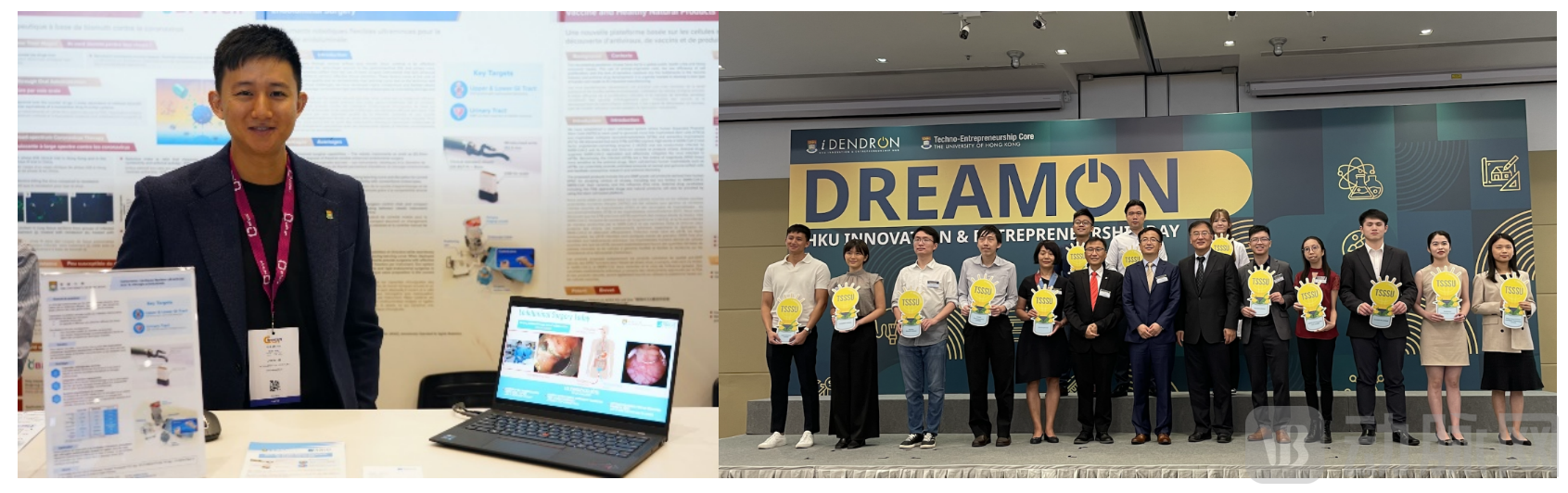
Qiaojieli at the Geneva Inventions Exhibition (left); Award Ceremony of the University Technology Start-up Funding Scheme (right)
Incorporating physicians’ feedback on the use of the previous two prototype generations, the new-generation prototype has undergone multiple improvements and optimizations:
1. Streamlined appearance with a more refined design
Compared with the previous generation, the device features optimized weight and volume (reduced by 20%), resulting in a smaller footprint and enhanced mobility, thereby adapting to a wider variety of operating room scenarios.
2. Improvement of Surgical Tool Utilization Efficiency
This experiment tested longer and sharper mechanical forceps, enhancing their gripping strength to make it easier for physicians to target tumors.
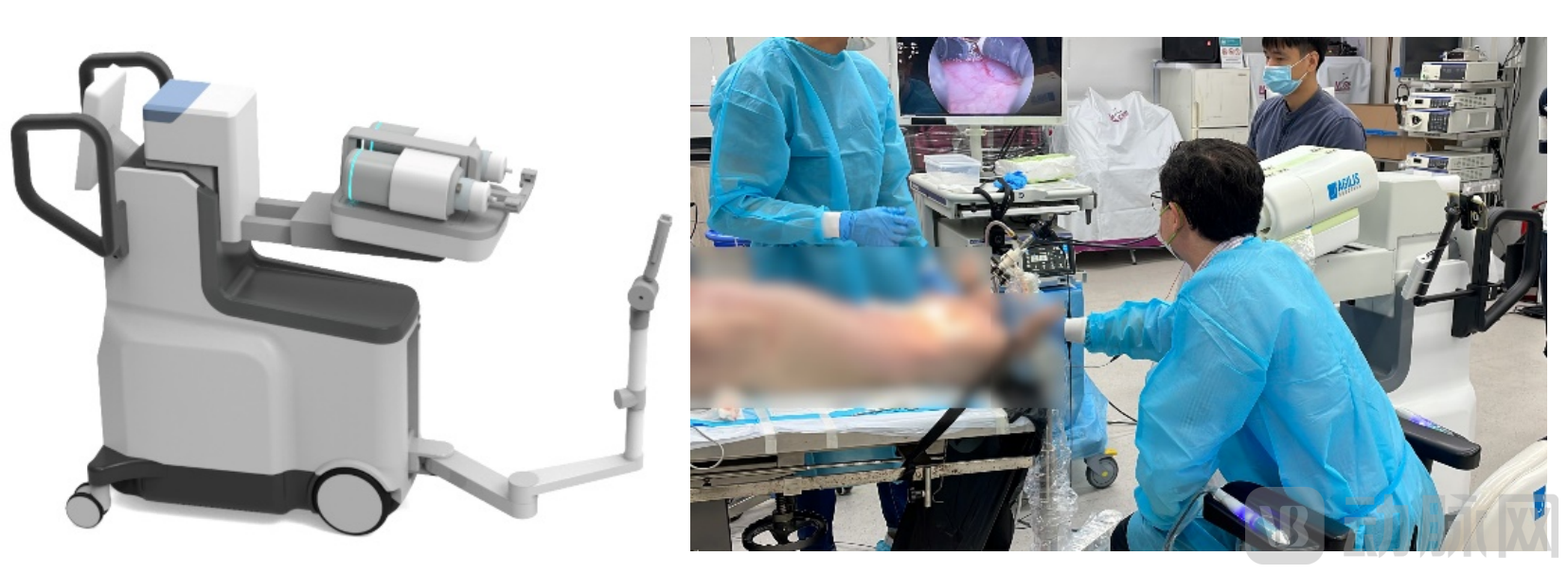
Dr. Chen Yingquan Conducts Live Animal (Porcine) Testing on the System
This test was conducted by Dr. Chen Yingquan, co-founder of Qiaojieli, who successfully resected an entire artificial tumor in a live pig model, completing the en bloc transurethral resection of bladder tumor (ERBT) in just 27 minutes. Compared with the current manual ERBT procedure, the surgical time was reduced by 50%, demonstrating the practicality of this surgical robot system in urological applications.
Qiaojieli’s surgical robot system (hereinafter referred to as the “System”) has a low acquisition threshold, making it accessible to more hospitals and clinics. Additionally, its disposable surgical instruments better prevent cross-infection and enhance procedural safety. Clinical adoption of this system can effectively reduce operative time, improve medical efficiency, and benefit a larger number of patients.
Furthermore, the system features a highly user-centric design philosophy for its robotic arm control, offering an intuitive and straightforward operational interface. In the first two rounds of testing, it demonstrated ideal clinical application outcomes in both urological and gastrointestinal surgical procedures. In addition to shortening operative time, the system significantly reduces the technical difficulty of endoscopic surgeries, cutting surgeon training time by 70%. Looking ahead, if this system achieves widespread adoption within healthcare institutions, robot-assisted surgery will no longer be the exclusive domain of senior surgeons. Younger physicians will be able to master surgical techniques through a shorter learning curve, enabling them to serve patients more rapidly and ensuring that early-stage cancer patients receive more efficient treatment at an earlier stage.
The highly flexible structure of Qiaojieli’s robotic arm can easily adapt to the multiple bends and varying channel diameters found within natural orifices. The main unit features a universal design compatible with multiple surgical procedures; by simply configuring different types of instrumental consumables, it can be applied across various surgical modalities. With the aging population and rising cancer incidence, the demand for Natural Orifice Surgery is growing, offering broad application prospects.
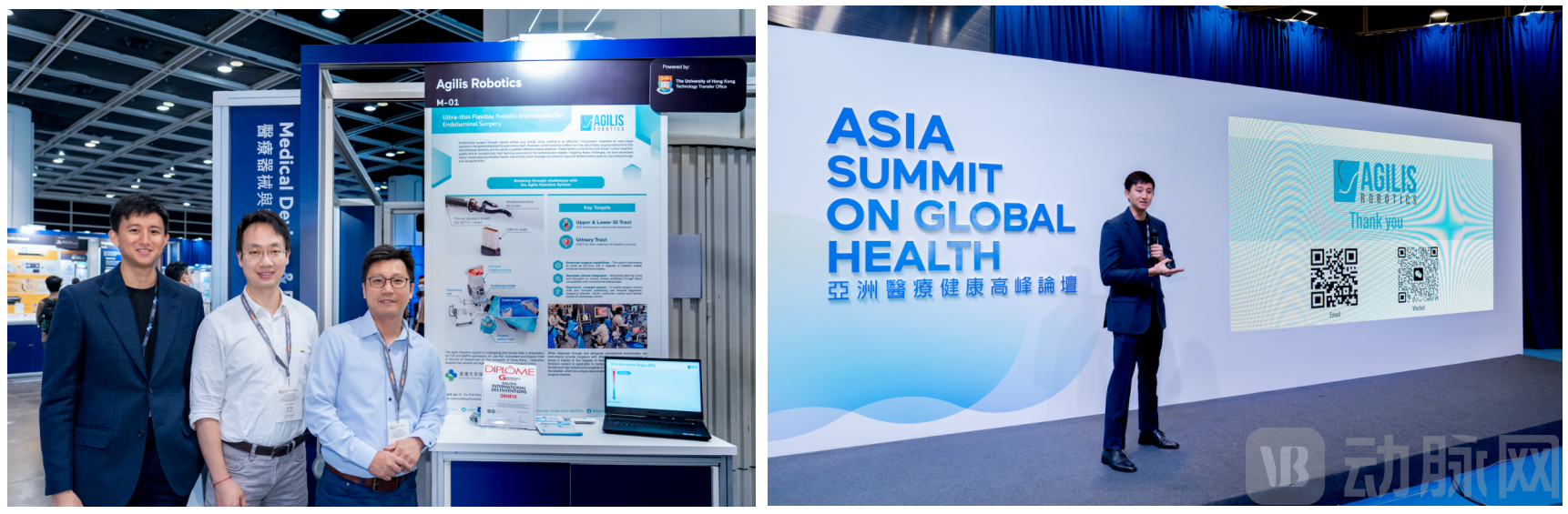
Qiaojieli Co-founders He Dilang, Xu Jiaming, and Guo Jiawei (from left to right); Qiaojieli Co-founders Delivering a Roadshow at the Asia Healthcare Summit
Qiaojieli is now fully prepared for next year’s clinical trials and applications for FDA and NMPA certifications. Meanwhile, the company remains active in various medical exhibitions. Following its appearances at the Asia Healthcare Summit and the Hong Kong International Medical & Healthcare Expo held in mid-May, Qiaojieli will successively showcase its research achievements at medical exhibitions in both mainland China and Hong Kong. Qiaojieli will participate in the 2023 Shenzhen International High-Performance Medical Device Exhibition, scheduled for June 8–10, jointly with Shenzhen Hospital of Hong Kong University. During the event, the team and its clinical research partners will conduct demonstrations of their robotic system, publicly presenting their research outcomes to the medical device industry. Through these exhibitions, Qiaojieli aims to promote the translation of medical research achievements from healthcare institutions in Shenzhen, facilitating the practical application of scientific innovations to benefit patients.