

SRS President Professor Vipul Patel Hails Ronovo's Modular Carina™ Surgical Robot During Exclusive Visit to China
Seven years later, on June 5, 2023, Professor Vipul Patel, President of the Society of Robotic Surgery (SRS), returned to China for a dedicated visit to RaynoBot. Additionally, in his capacity as an Adjunct Visiting Professor at Fudan University Shanghai Cancer Center, Professor Patel delivered lectures at the “Glimpses of the Prostate through the Robotic Lens | 2023 Advanced Workshop on Robotic Surgery for Prostate Cancer,” which was hosted by the Shanghai Urologic Oncology Institute and organized by RaynoBot.
Professor Patel is the founder and president of SRS, as well as the Medical Director of the AdventHealth Global Robotics Institute at AdventHealth in the United States.
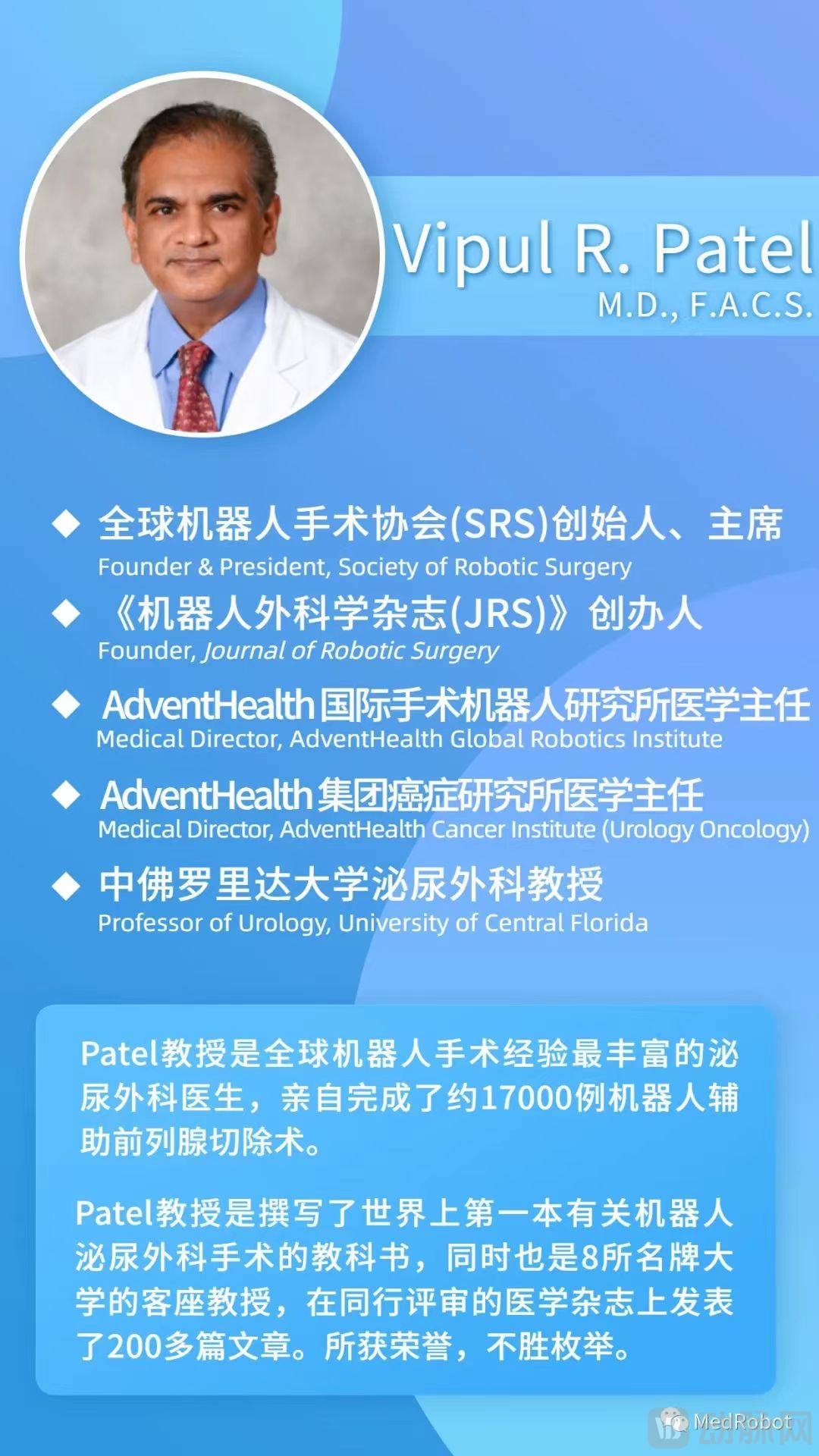
Professor Patel is renowned worldwide for his outstanding achievements in the field of robot-assisted surgery. Having personally performed approximately 17,000 robot-assisted prostatectomies, he is the most distinguished urologic robotic surgeon globally and has published more than 200 articles in peer-reviewed medical journals.
This marks a rare instance in which Professor Patel granted an exclusive interview to a Chinese domestic surgical robotics company for the purposes of industry and academic exchange. As Chairman of the Society of Robotic Surgery (SRS), Professor Patel has consistently monitored and supported innovative technologies within the global surgical robotics industry. At the 2022 SRS Annual Meeting, Professor Patel learned about Raylion Nuofu, a Chinese company specializing in modular surgical robots. He was deeply impressed by its strong founding team and remarkable pace of development.
Recalling his first encounter with Ronovo, Professor Patel stated: “I first met Ronovo at the SRS meeting last year, and they were the only Chinese company there. I spent some time there with the company and talked about where they're going. I was very impressed by their philosophy and the amount of innovation that they had.”
In early 2023, Professor Patel extended a special invitation to Dr. John Ma, Founder and CEO of Ruilong Nuofu, to visit the AdventHealth Robotic Center in Florida, USA, for an in-depth discussion on emerging trends in surgical robotics and new prospects for international medical-engineering collaboration. This exclusive interview with Ruilong Nuofu by Professor Patel aimed to witness firsthand the latest advancements of this Chinese company, which has developed fully autonomous, innovative modular surgical robots.
Trial Run of Haishan Yi™: Professor Patel Highly Affirms Modular Innovation
On June 5, Professor Patel visited the Shanghai headquarters of Ruilong Nuofu, touring the facility under the accompaniment of Dr. John Ma, CEO, and Dr. Mao Ying, CTO/COO. Subsequently, Professor Patel engaged in discussions with the Ruilong Nuofu clinical team to finalize the animal trial protocol for the Haishan Yi™ surgical robot. During this trial run, supported by the Ruilong Nuofu clinical team, Professor Patel performed a partial nephrectomy on the left kidney and a vesicourethral anastomosis in live animals.
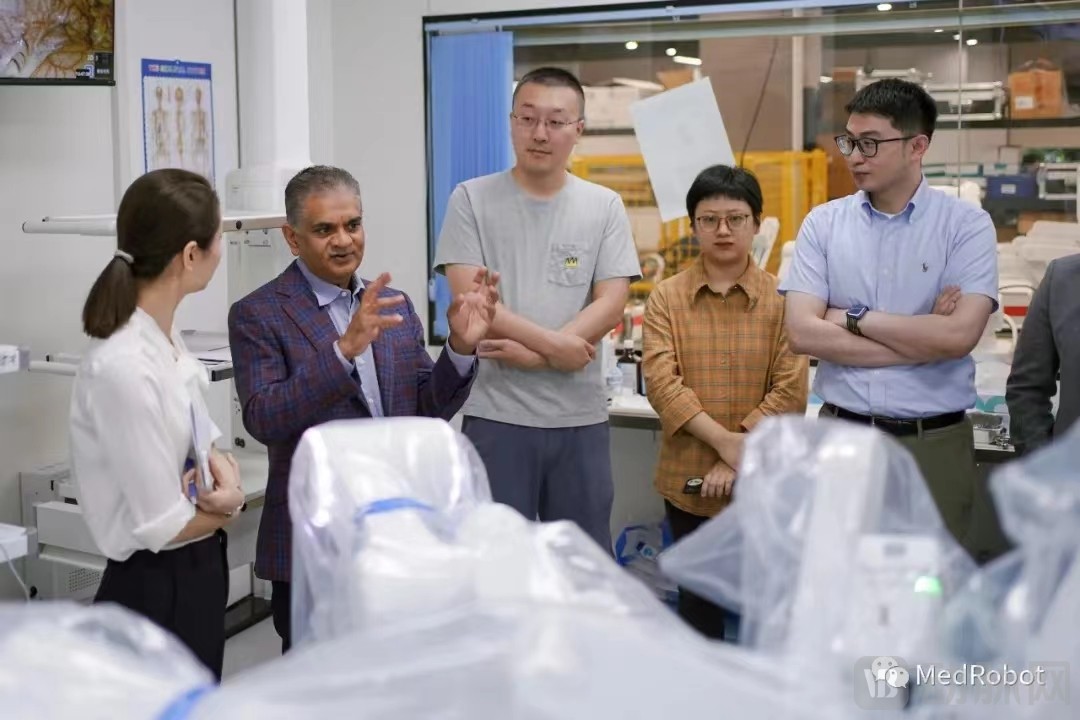
▲ Communication between Professor Patel and the Ruilong Nuofu clinical team
Following the completion of preoperative preparations, Professor Patel took his seat at the Haishan Yi™ surgeon console. The ergonomically designed console, paired with dexterous manual controllers, facilitated a rapid learning curve. Although it was his first time operating the Haishan Yi™ surgical robot, Professor Patel quickly adapted to the system.
In the first half, Professor Patel performed a left partial nephrectomy on a live animal. The surgical field was clearly visualized through a 3D high-definition vision system, revealing tissue details with exceptional clarity. He skillfully carried out delicate maneuvers such as tissue cutting, dissection, electrocoagulation, and suturing using the surgical instruments. The master-slave control responded rapidly, and the successful execution of these high-difficulty tasks demonstrated the excellent grasping force of the Haishan Yi™ surgical instruments as well as the outstanding stability of the system.
In the second half, Professor Patel confidently proceeded with vesicourethral anastomosis, performing anastomotic reconstruction after urethral transection to simulate the vesicourethral anastomosis step in prostatectomy. Subsequently, he performed cystotomy and suturing, successfully closing the bladder incision using a double-armed suture. Leveraging his extensive expertise in robotic surgery, Professor Patel demonstrated exceptional proficiency, maximizing the performance capabilities of the Haishan Yi™ system.
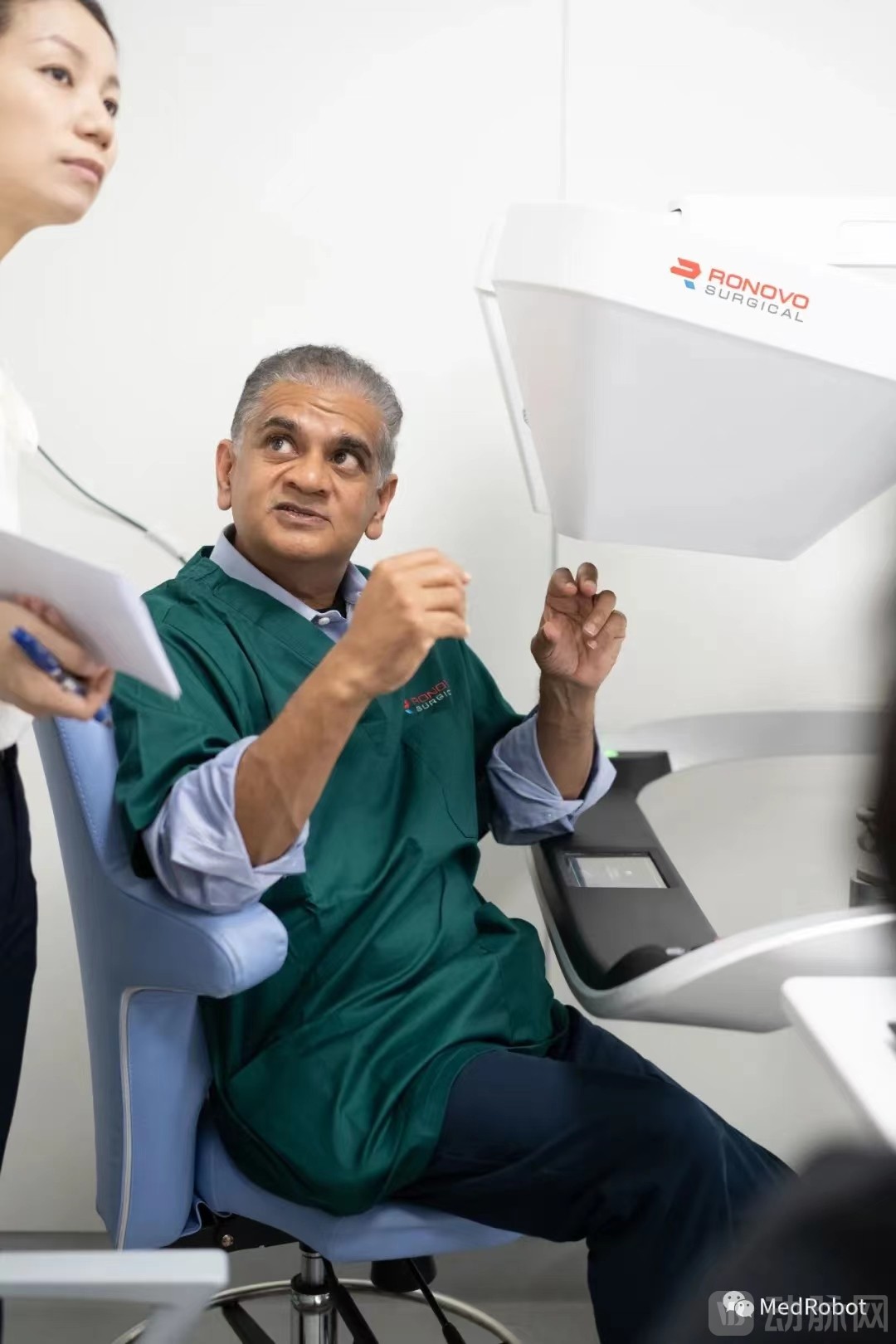
Postoperatively, Professor Patel commented: “Today I was able to try the Carina system. I had never used it before and did not have any specific expectations. I was very impressed and did not perceive a significant learning curve. I was able to suture and dissect freely, and use energy devices as needed without any issues. The modular design is advantageous, as it allows you to choose whether to use two, three, four, or more arms. I believe this feature definitely offers practical utility and merit. I think the system is ready for clinical trials.”
Medical-Engineering Integration Accelerates the Rapid Iteration of the Haishan Yi™ Surgical Robot
It took Ruilong Nuofu just over two years, from the initiation of R&D for Haishan-1™ to the completion of type testing and GLP animal studies. This achievement was driven not only by a highly executive team but also by the rapid response to clinical needs through the integration of medicine and engineering.
As the expert with the most extensive clinical experience in robotic surgery, Professor Patel strongly affirms the value of integrating medicine and engineering in the research and development of surgical robots—a core motivation behind his establishment of SRS. Following the trial run, Professor Patel engaged in in-depth discussions with Dr. John Ma, Founder and CEO of RaynoRobotics, and Professor Ye Dingwei, Chief Urological Consultant at RaynoRobotics and Vice President of Fudan University Shanghai Cancer Center, on the positive role played by the integration of medicine and engineering in the R&D of surgical robots.
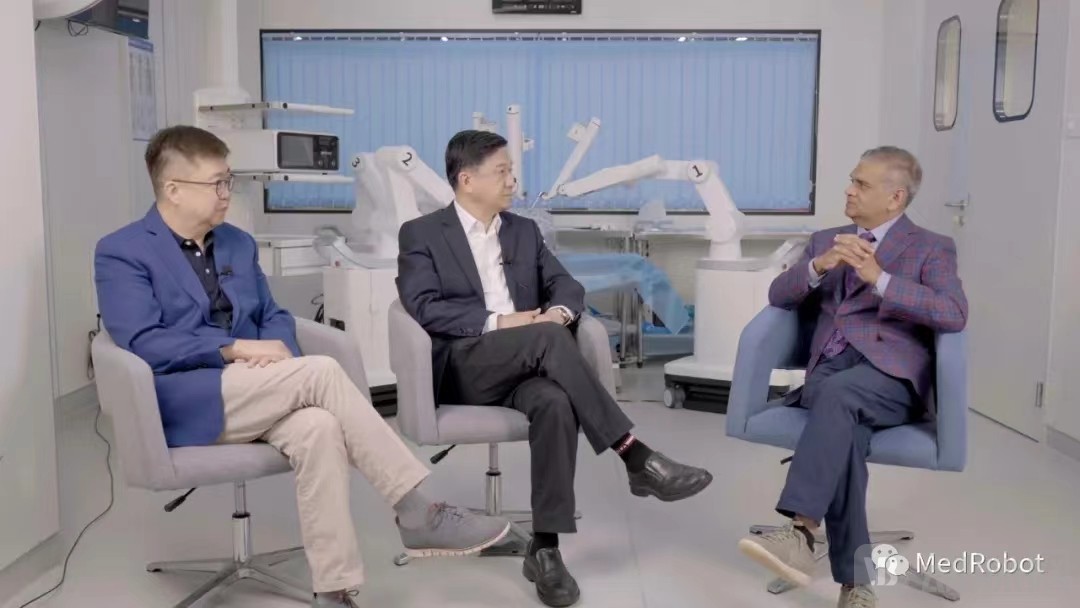
(From left to right: Dr. John Ma, Founder and CEO of Raylion Robot; Professor Ye Dingwei, Deputy Director of Fudan University Shanghai Cancer Center; Professor Patel, President of the Global Society of Robotic Surgery)
Professor Patel, President of the Global Robotic Surgery Association, asked, “How did RaynoRobotics achieve such rapid development, completing system construction within just two years and adopting this innovative modular design?”
Dr. John Ma, Founder and CEO of RaynoMed, responded, “This is entirely attributable to our team. First, our team possesses extensive experience in the R&D processes and regulatory compliance of medical devices. Second, we have deep multidisciplinary and cross-functional technical expertise, strong teamwork, and excellent execution capabilities. Third, we emphasize the deep involvement of clinical experts to facilitate rapid product iteration.”
Professor Ye Dingwei, Vice President of Fudan University Shanghai Cancer Center, added, “The modular design of HaiShanYi™ can meet the requirements of a wider range of surgical procedures, be applied in more clinical departments, and help promote the adoption of robotic surgery. Furthermore, the modular design also meets the Chinese market’s demand for the ‘cost-effectiveness’ of surgical robots.”
The integration of medicine and engineering is crucial for driving innovation and advancement in surgical robot technology. Through close collaboration between R&D teams and clinical experts, various challenges encountered in robotic surgery practice are jointly addressed, thereby continuously refining and improving the robotic systems. This ultimately leads to the development of surgical robots that meet the operational needs of clinical departments, align with surgeons’ procedural habits, and enhance patient outcomes.
The modular design of the Haishan Yi™ surgical robot was developed under an innovation model that integrates medicine and engineering. It not only meets the practical needs of clinical use but also addresses the commercialization challenges hindering the widespread adoption of surgical robots in China. RaynoBot has found the optimal solution in balancing the clinical performance and cost-effectiveness of surgical robots.
Indigenous Innovation, Global Promotion. Rooted in China, Ruilong Nuofu is dedicated to advancing the global adoption of surgical robots across various medical specialties, enabling more patients to benefit from technological advancements. International expansion is a core long-term strategy for Ruilong Nuofu; with close collaboration and support from clinical expert advisors both domestically and abroad, the company will expand from its home market into the international arena.
At the conclusion of his visit to China, Professor Patel warmly invited Ruilong Nuofu to participate in international academic conferences such as SRS, showcasing Chinese innovative surgical robots to clinical experts worldwide.