

ZykVision Advances R&D and Commercialization with Significant Progress on Low-Concentration Atropine for Myopia Control

Zhaoke
Ophthalmic Drug Developer
Over the past three years, the pandemic has eroded confidence in the pharmaceutical industry like accumulated snow in frigid zones, leading to a widespread downturn. However, the ophthalmic healthcare sector has demonstrated a counter-trend resilience.
This April, the ophthalmic healthcare sector has seen a steady stream of positive developments: the Ministry of Education issued the "Key Work Plan for the Comprehensive Prevention and Control of Myopia in Children and Adolescents Across China in 2023"; Shenyang Xingqi Pharmaceutical’s atropine eye drops application for market approval was accepted; shares of Huaxia Eye Hospital, Xingqi Pharmaceutical, He’s Eye Hospital, and Purui Eye Hospital rose; and publicly listed ophthalmic companies generally achieved revenue growth of over 5% in the first quarter of 2023.
Zhaoke Ophthalmology (6622.HK, hereinafter referred to as “Zhaoke”) has quickly ridden the wave of industry recovery. In March 2023, Zhaoke announced its Annual Results for 2022, reporting full-year R&D expenses of RMB 296 million in 2022, representing an increase of RMB 76 million compared with 2021. As of December 31, 2022, the company’s cash reserves stood at RMB 1.7 billion.
Backed by ample cash reserves and substantial R&D investment, Zhaoke has also delivered an impressive performance.
Recently, Vyluma, a partner of Zhaoke Ophthalmology, announced thatThe U.S. Food and Drug Administration (“FDA”) has accepted the New Drug Application (“NDA”) for NVK002 (0.01% low-dose atropine) and will review this potential treatment for childhood myopia.
Phase III clinical trial data for BRIMOCHOL PF, another topical eye drop for the treatment of presbyopia, demonstrated statistically significant improvements in both distance and near visual acuity in both eyes at various time points, with efficacy lasting up to 8 hours and strong tolerability.
Why Is Zhaoke Defying the Headwinds? In an in-depth interview with Zhaoke, VCBeat found that this success stems from the company’s sustained investment and core competencies built in R&D and commercialization.
China's ophthalmology market is a high-growth segment within the healthcare sector.
According to an analysis by VCBeat, China’s ophthalmology market has maintained a high double-digit growth rate since 2014, reaching a total market size of RMB 210 billion by 2021. Concurrently, the number of ophthalmology companies in China has grown rapidly; over the ten-year period from 2011 to 2020, the number of registered ophthalmology enterprises surged from 1,066 to more than 10,300, representing a tens-fold increase.
In terms of market size by sub-sector, although ophthalmic drugs started later and currently account for the smallest share, they are experiencing the most rapid growth, with a growth rate of approximately 15%, ranking first among all sub-sectors.Ophthalmic drug portfolios typically cover both anterior and posterior segment conditions, encompassing a wide range of indications such as myopia, presbyopia, glaucoma, conjunctivitis, dry eye disease, postoperative inflammation, optic neuritis, and macular degeneration.
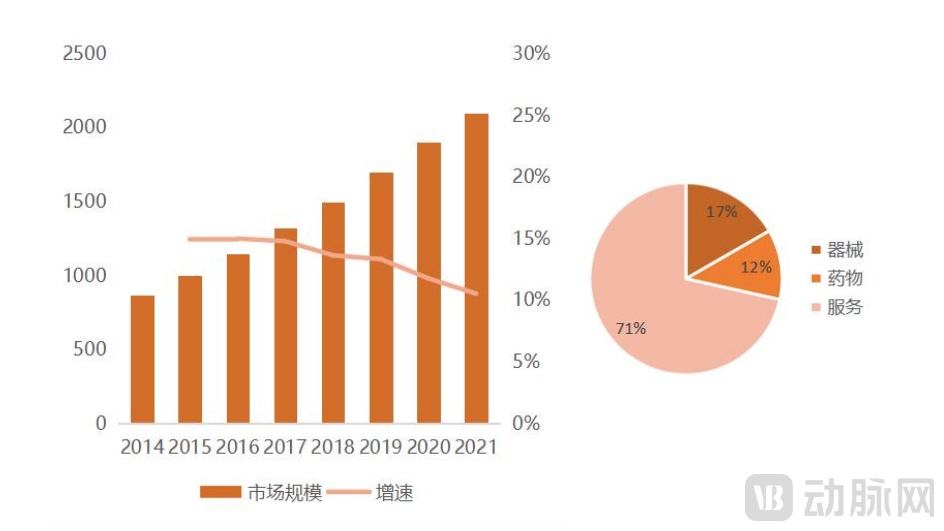
Domestic Ophthalmology Market Size (in RMB 100 Million) and Proportion of Each Sub-sector in the Domestic Ophthalmology Market
Source: VCBeat
As the only biotech company in China with a comprehensive R&D pipeline covering diseases of both the anterior and posterior segments of the eye,Zhaoke’s pipeline of innovative and generic drugs focuses on five major ophthalmic indications affecting the anterior and posterior segments of the eye, including dry eye disease, myopia, presbyopia, wet age-related macular degeneration, and corneal epithelial defects.
By conducting R&D across multiple ophthalmic disease areas, Zhaoke has reached diverse patient populations and market opportunities.
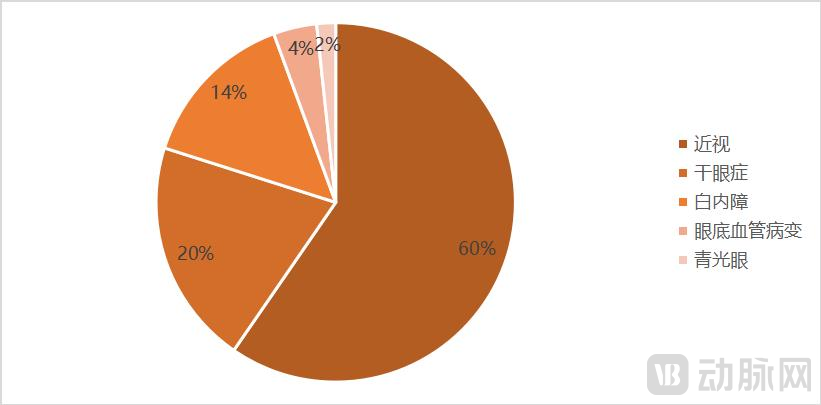
Proportion of Patients with Major Ophthalmic Diseases in China, 2020
Source: VCBeat
Among them,Dry eye disease has the largest affected population, with approximately 200 million people in China impacted by the condition.According to statistics from the “Chinese Expert Consensus on Dry Eye (2020),” the prevalence of dry eye disease in China can be as high as 21%–30%. Currently, in addition to using traditional artificial tears to alleviate symptoms of dry eye disease, the only product available on the Chinese market is Shenyang Xingqi Pharmaceutical’s cyclosporine eye drops.Zhaoke's cyclosporine A ophthalmic gel, developed for dry eye disease, still has significant room for market penetration.
Meanwhile, with the Ministry of Education’s recently released “Key Work Plan for Comprehensive Prevention and Control of Myopia in Children and Adolescents Nationwide in 2023” incorporating the overall myopia rate among children and adolescents into government performance evaluations, the market for myopia medications has surged.
Currently, the primary pharmacological treatment for myopia is low-concentration atropine eye drops.The only listed companies in China that have developed low-concentration atropine eye drops and entered Phase III clinical trials are Xingqi Eye Medicine, Ocumension Therapeutics, Hengrui Medicine, and Zhaoke.According to data from the National Health Commission of China, the overall myopia rate among adolescents in China reached 52.7% in 2020, an increase of 2.5 percentage points compared with 2019. Among them, the myopia rates for junior high school and senior high school students were 71.1% and 80.5%, respectively. This roughly corresponds to a myopic population of 110 million among those aged 6–18 years in 2020.This means that once the drug is approved, Zhaoke will tap into a market worth over RMB 100 million.
Beyond the objective market prospects, variations in patient populations and treatment needs across different ophthalmic diseases enable Zhaoke’s multi-disease pipeline strategy to offer patients more comprehensive and personalized therapeutic options.
For Zhaoke, meeting the comprehensive and individualized needs of patients is far from mere lip service; its R&D investment of up to RMB 296 million in 2022 was truly money well spent.
On one hand, Zhaoke has developed over 26 drug pipelines targeting different indications, including a generic drug pipeline comprising 12 generics, an innovative drug pipeline consisting of 14 novel drugs, and three potential first-in-class innovative drugs at different clinical stages.
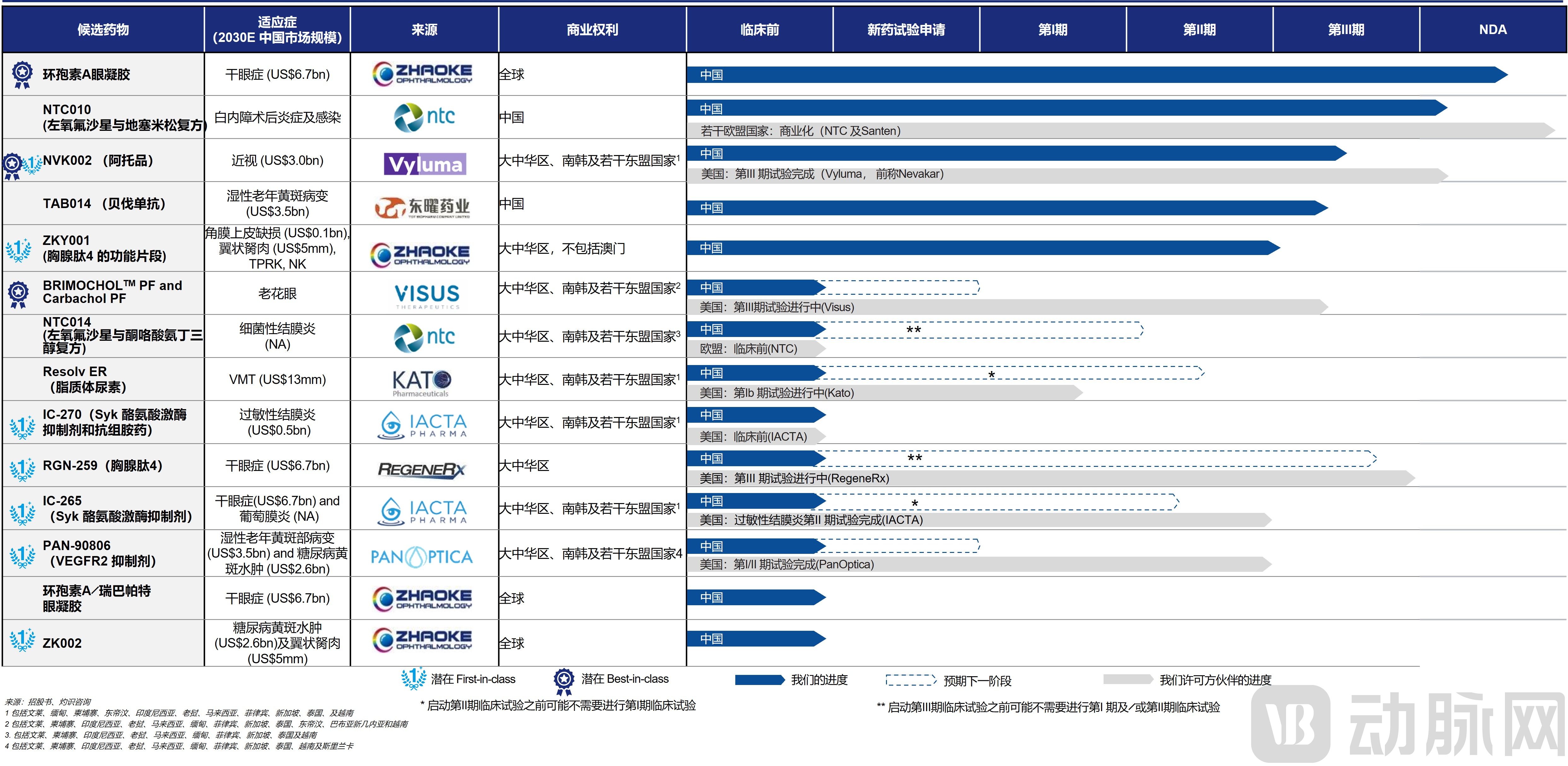
Zhaoke Pipeline Image
Image source: Zhaoke
Among these, given that no low-concentration atropine eye drops for the treatment of myopia have yet been approved for marketing in China, NVK002, one of Zhaoke’s core products and a potential first-in-class innovative drug, is poised to become one of the first atropine eye drop products in the country.
Previously, myopia was typically treated with convex lenses or laser refractive surgery to help focus light onto the retina, thereby improving vision. According to the White Paper on Myopia Management, 0.01% low-concentration atropine eye drops can slow the progression of myopia in children and adolescents by an average of 60%–80%, demonstrating significant efficacy in myopia prevention and control.
Zhaoke’s innovative therapy, NVK002, features a patented formulation that addresses the instability of low-concentration atropine and is expected to have a shelf life exceeding 24 months without preservatives.
Recently, Vyluma, a partner of Zhaoke Ophthalmology, announced that its new atropine drug NVK002 for the treatment of myopia progression in children has been accepted by the FDA, marking another milestone in the management of childhood myopia progression.The new drug application for NVK002 is supported by positive results from the three-year, placebo-controlled, international Phase III “CHAMP” clinical study, which evaluated the safety and efficacy of NVK002 in nearly 600 pediatric patients.
Meanwhile, the NVK002 clinical trial in China is progressing smoothly, with Zhaoke expecting to complete the final patient’s exit from the “mini-CHAMP” study by the end of July this year. The findings from these two studies will provide strong support for Zhaoke Ophthalmology’s submission of a New Drug Application (NDA) for NVK002 to Chinese regulatory authorities.

Dr. Li Xiaoyi, Chairman of the Board, Executive Director and Chief Executive Officer of Zhaoke Ophthalmology, in the laboratory
Image source: Zhaoke
On the other hand, given that ophthalmic diseases typically involve complex pathogenic mechanisms and diverse therapeutic requirements, comprehensive treatment regimens are better suited to address patients’ multifaceted needs. Therefore,In addition to its differentiated R&D portfolio covering multiple symptoms, Zhaoke also employs a “funnel” strategy leveraging a diversified product mix.
Taking dry eye disease as an example, Zhaoke has developed a product portfolio tailored to different patient populations with dry eye disease, featuring its innovative drug Cyclosporine A Ophthalmic Gel as the flagship product and supported by the medical device Baodeshi® Warm Compress Eye Mask.
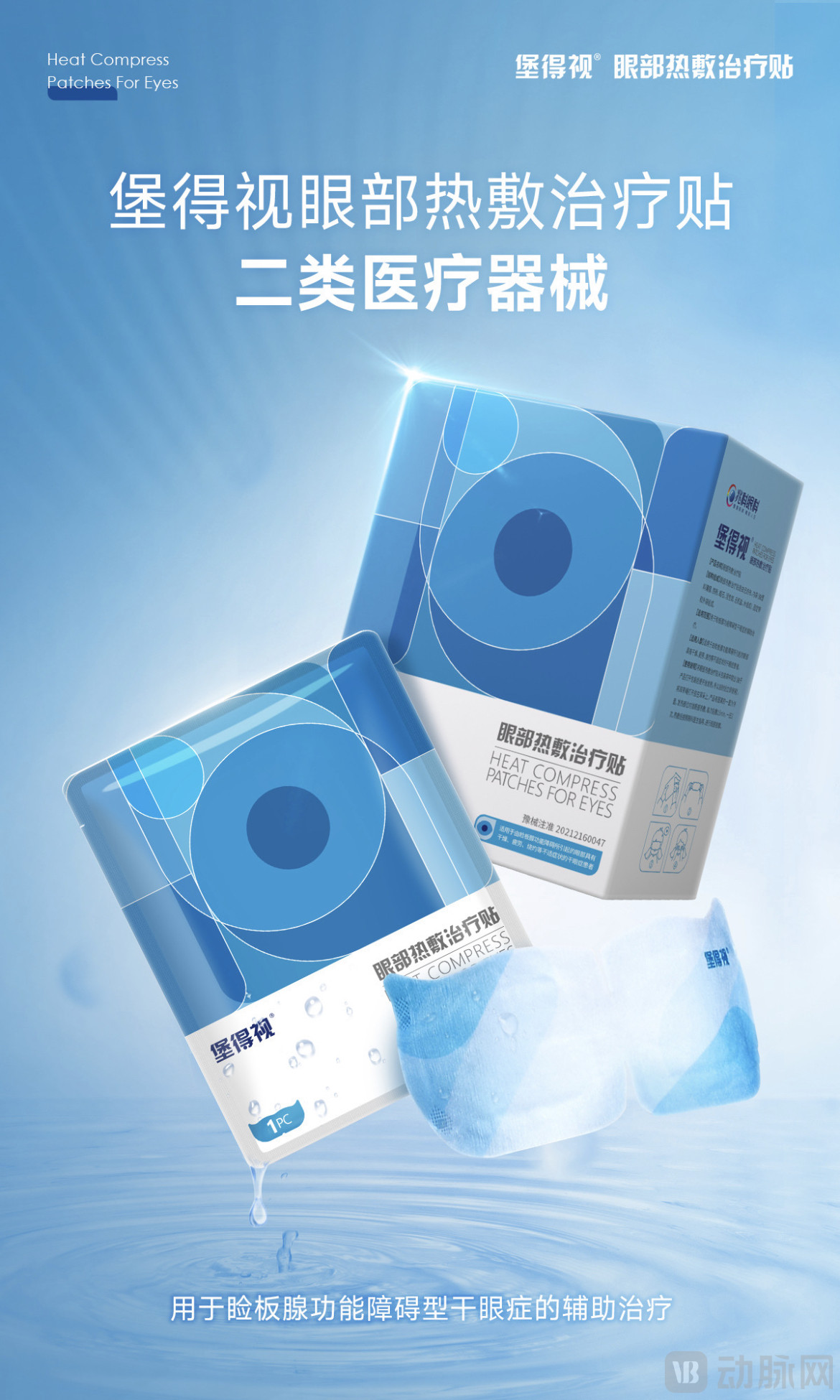
Baodeshi® Hot Compress Eye Mask
Image source: Zhaoke
Ms. Feng Xinyan (Lisa), Chief Business Officer and Chief Financial Officer of Zhaoke, revealed that this approach aims to meet the needs of dry eye disease patients across varying severity levels, from mild to severe: “If we envision the patient population as a funnel, there are over 100 million dry eye disease patients in China. Those with severe cases who truly require cyclosporine-based products are likely at the bottom of the funnel, while patients using dry eye masks are at the top. This significantly broadens the applicability of our pharmaceutical products.”
Zhaoke’s differentiated pipeline strategy and “funnel-style” approach enable the company to develop customized solutions for different patients, meet the needs of specific patient populations, and thereby provide more precise and personalized treatment options.
Lisa described Zhaoke’s commercialization strategy as a long-term plan that has already been implemented, stating, “We aim to first build brand awareness and establish trust and long-term engagement with our audience.”
Offline, Zhaoke has assembled a professional sales team to strengthen ties with hospitals, physicians, and global partners, thereby advancing product promotion and sales initiatives.As of March 25, 2023, Zhaoke had covered 647 hospitals across 26 provinces in China.In addition, Zhaoke is actively recruiting more sales representatives and expanding its coverage in hospitals and other relevant offline channels, such as optometry centers.
Online, Zhaoke has launched the Baodeshi Tmall Flagship Store and established a digital presence to enhance brand awareness. Through platforms such as the Tmall Flagship Store, Douyin, and Xiaohongshu, Zhaoke is able to engage with physicians and patients. This provides Zhaoke with opportunities to promptly understand market demands and gather product feedback, enabling the company to deliver customized support and services based on actual conditions.Zhaoke’s “2022 Full-Year Results” report shows that in February 2023, Baodeshi eye masks had achieved a 36% market share among eye patch brands on Tmall Medical Devices.
Zhaoke has also actively expanded into other online channels, such as establishing the WeChat Official Accounts “Zhaoke Boshi” and “Zhaoke Eye Care Planet.”“Zhaoke Boshi” is positioned to target young physicians, establishing and reinforcing Zhaoke Ophthalmology’s status as a professional and trustworthy partner while enhancing its industry leadership; “Zhaoke Eye Care Planet” is geared toward general consumers and potential audiences, focusing on science popularization and fostering two-way interaction with consumers.
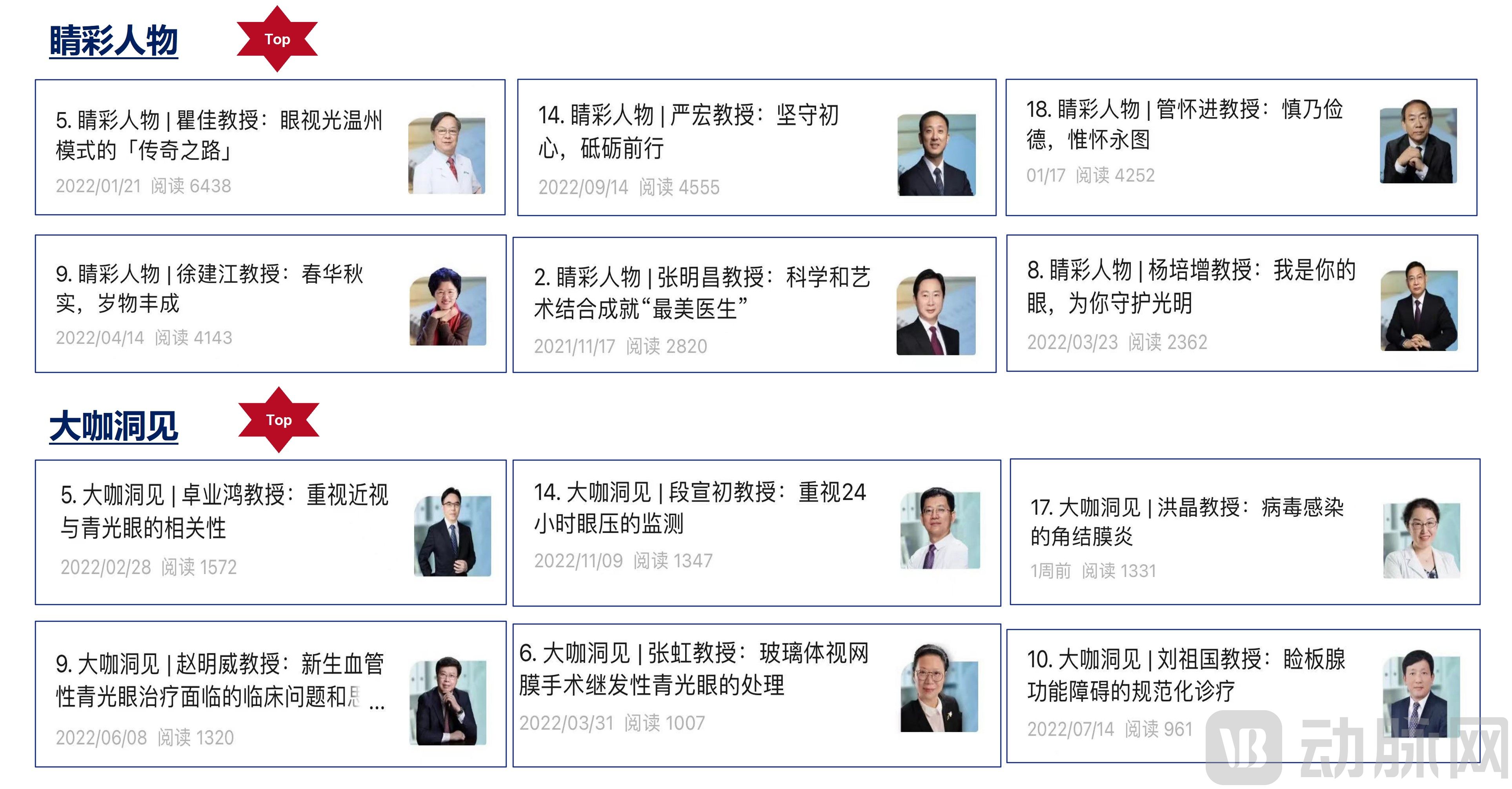
“Zhaoke Boshi”’s “Brilliant Figures” and “Expert Insights” Columns
Image source: Zhaoke
Zhaoke has launched “Zhaoke Boshì,” a content-driven platform on WeChat, which invites top key opinion leaders (KOLs) and industry experts in ophthalmology to share their insights.As of March 2023, “Zhaoke Boshi” had amassed over 11,000 followers, with more than 60 top-tier KOLs and ophthalmologists having contributed content or participated in live-streamed discussions.This helps to foster extensive discussion within the Chinese ophthalmology community. Furthermore, through close collaboration with physicians, Zhaoke has established trust based on professional expertise, which also drives the adoption and use of its offline products.
Zhaoke launched the WeChat official account “Zhaoke Eye Care Planet” with a greater emphasis on public welfare. “First, there are very few companies in China that specialize exclusively in ophthalmology; second, the general public in China lacks basic knowledge about eye health. Therefore, our operation of the ‘Eye Care Planet’ official account is not solely driven by the pursuit of return on investment. We recognize our social responsibility and aim to leverage our limited resources to undertake educational and public-welfare initiatives.”