

Role Reversal at BiG IMPACT: A Scripted Simulation on Biotech Cost-Cutting and Revenue Generation
On May 19, 2023, a novel live-action role-playing (LARP) game was held at the 9th BiG IMPACT Annual Conference. Investors and founders from the real world swapped roles in the game, engaging in fierce debates round after round as they each advocated from their respective character perspectives and industry standpoints while confronting a company on the brink of collapse.
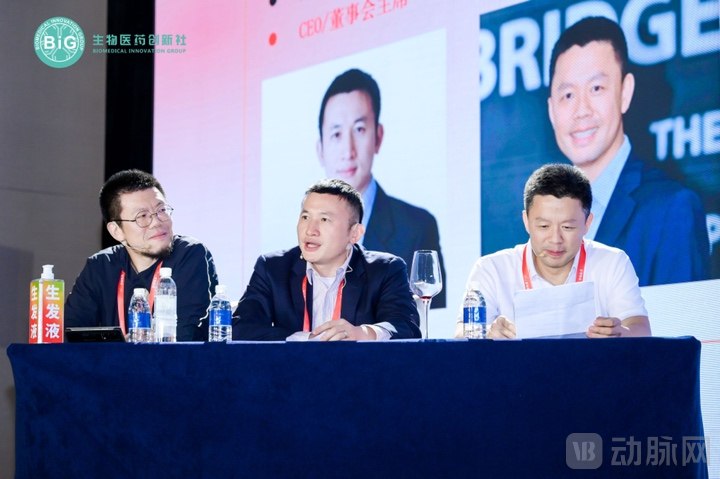
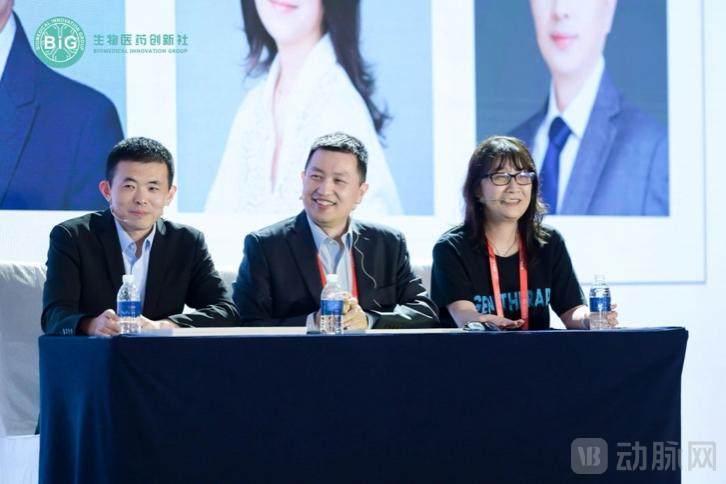
Guest Speakers: (from left to right)
Shu Xiao: Managing Partner of Shengding Equity Investment Fund
Yu Zhiyun: Partner at Matrix Partners China
Zhu Zhongyuan: CEO of Duality Biologics, Former Investment Partner
Wang Kuifeng: Founder/CEO of QinHao Pharma
Feng Yan: CEO of Lingtai Bio
Xu Yuhong: Founder/CEO of Gaotian Biology
Note: The companies, identities, and plotlines described herein are fictional and contain dramatic elements; any resemblance to actual persons or events is purely coincidental. The views expressed do not represent the positions of the author or their company, nor do they constitute investment advice. They are provided solely for industry reference and exchange.
Plot Background
I am the founder and CEO of a biotech company (pseudonym: Lieyao), established in February 2017. The company introduced government shareholders in its Series A financing round and strategic industrial investors in its Series B. In June 2021, we completed our Series C financing, led by a large, market-oriented US-dollar fund, achieving a post-money valuation of USD 400 million. The company currently employs 200 people. Our most advanced program is undergoing Phase II clinical trials with simultaneous IND filings in both China and the United States, ranking among the top three domestically in terms of development progress. Additionally, we have two other projects in Phase I clinical trials and four in preclinical development. Furthermore, we have built and operationalized a process development and pilot-scale manufacturing (CMC) base in the Yangtze River Delta region.
The current financing environment is exceptionally cold; we have failed to secure any funding over the past six months, and our cash reserves are now sufficient to sustain operations for only another six months. I led my team in convening a board meeting of critical importance to the company’s survival. The agenda focused on discussing measures to cut costs and increase revenue, with the goal of extending the company’s runway by at least one year.
1Topic 1: How to cut costs without new capital inflows? Layoffs/pipeline cuts
CEO:I am delighted that we can finally hold an in-person board meeting today; however, there has been a surge of unfavorable news recently. Over the past six months, I have met with 200 investors. I had anticipated that investor confidence would significantly rebound following the easing of pandemic restrictions. Contrary to expectations, while many agreed to meet with me, few were willing to “pull the trigger”—in fact, none did. As this half-year period draws to a close, and considering that clinical-stage product development remains highly capital-intensive, I have drafted an initial cost-cutting plan to help us weather this capital winter cycle:
Pipeline: Of the three clinical-stage projects, two will be retained. Of the four preclinical products, two will be discontinued and two retained, as eliminating all of them is not feasible. Personnel: The R&D team, having undergone six years of collaboration, is highly efficient and will largely remain intact. Headcount will be reduced from 200 to 150 employees.
This would extend the runway by three months, but there would still be a nine-month gap. We would like to hear the Board’s views.
Shareholders (Series C Institutional Funds):From our perspective, we offer the following recommendations: First, cost-cutting measures have been insufficient; currently, they only extend the runway to three months, indicating that the reductions are not thorough enough. While cutting costs, it is also essential to pursue revenue generation. To achieve this with maximum efficiency, consider the following example: terminate all preclinical products and retain only the most advanced clinical-stage asset. With limited resources, aim to reach investor-recognized milestones for your optimal pipeline in the shortest possible time. Cost-cutting requires decisive action; hesitation to eliminate non-essential items will be detrimental. If the current cash reserves cannot sustain operations for more than six months, there is no viable future.
Regarding staffing, further assess the actual personnel needs after product optimization, and retain only those who are a good fit for the project. If the headcount is reduced from 200 to 150, what levels do the optimized-out employees belong to, and how much budget can be saved? With so few projects currently in the pipeline, does the R&D team really need to maintain such a large workforce?
If the company retains only one clinical-stage product with a finalized protocol, Lieyao may no longer require a CMO, saving the company $1 million annually.
CMO:Layoffs are acceptable, but do not target our R&D team. A Chief Medical Officer (CMO) is critical for advancing clinical assets; a part-time consultant cannot devote the necessary commitment.
R&D is the lifeblood of our company; without it, there is no future. The entire R&D framework was built precisely according to your requirements as investors. Now you demand immediate cuts. You were the ones who authorized the hiring back then, and now you are the ones ordering the layoffs.
Moreover, building such a high-caliber R&D team is both time-consuming and labor-intensive. A wholesale layoff would destabilize morale across the entire organization. We have spent six years cultivating so many talented employees; laying them all off now would essentially turn Lie Yao into a talent training ground, merely benefiting our competitor next door.
As for the retention or departure of our CMO, we will certainly defer to our CEO’s decision; while we fully respect the opinions of all board members, I would like to raise two points. First: when providing guidance on our operations and work processes in the future, please exercise careful consideration and prudence. Second: if all R&D personnel are laid off, and it is discovered a year or so later that external parties have copied Lieyao’s technology platform, we cannot be held responsible.
Shareholders (Series C institutional funds):Rather than eliminating everything, we should prioritize our pipeline development to achieve optimal resource allocation. During the business development (BD) process, we need to identify which products multinational corporations (MNCs) are most interested in. Discontinue those that attract no interest and retain the promising ones. Then, determine the required headcount based on the optimized product portfolio. If there are no projects left but staff remain, the team will perceive a lack of work, leading to attrition and diminished morale.
CEO:The configuration is incomplete; without even a Chief Medical Officer (CMO), how can we secure financing?
From a business development perspective, many multinational corporations (MNCs) in the United States are facing product pipeline depletion and patent expirations, creating a market gap valued at hundreds of billions of dollars. There is an urgent need for high-quality biotech companies like ours to provide premium assets, and some MNCs have expressed strong interest in our clinical data. We are approximately six months away from obtaining data close to proof-of-concept (POC). We seek greater time and patience from our investors; otherwise, hastily discontinuing our product pipeline would be counterproductive and result in significant losses for such a promising company.
Cost-cutting is also necessary, but if we rashly discontinue certain products, how long and at what cost would it take to rebuild such scale in the future? Lie Yao is not only our company, but also yours.
Shareholder (Series B Industrial Fund):Accelerate the lead pipeline as quickly as possible; survival during the industry winter is paramount. Do you believe maintaining such a large number of pipelines enhances corporate value? No—they would be worthless in the event of bankruptcy and liquidation. The correct strategy is to divest these pipelines and redirect capital to priority programs as soon as possible. Moreover, the layoffs have targeted only rank-and-file employees, while not a single executive with an annual compensation package of one million US dollars has been affected.
CEO:Running a company is no easy feat; it’s not something investors can sweep away with mere words. Our senior executive team is highly effective and has worked together seamlessly for years. It would be difficult to find another group with such a strong configuration if they were to leave.
Shareholder (Series A Government Fund):Let me say a few words: As the government’s seed funding, back when you first arrived, you promised to achieve an IPO within five years and bring your first First-in-Class (FIC) product to market. We spared no effort in supporting you—providing capital, land, and policy incentives.
We hope you will take into account the government’s difficulties. As our leading enterprise, you play a key role in driving economic growth. First and foremost, it is advisable to avoid layoffs; otherwise, what will become of the numerous jobs at stake? If workforce reductions are absolutely necessary, affected employees should be retained locally rather than allowed to migrate to other cities. Secondly, consider repurposing idle factories for contract development and manufacturing organization (CDMO) operations to secure additional orders. Furthermore, explore project collaborations by leveraging Lieyao’s existing corporate resources to generate internal revenue streams through product development and investment activities.
2Topic 2: How to Open Source? Selling Factories / Fundraising / BD
COO/CFO:Let’s now turn to the topic of open-source strategies: whether to pivot to a CDMO model or sell the manufacturing facility, as well as matters related to financing and license-out deals. Given that many peers have recently sold their plants—with one transaction reaching RMB 146 million—and our facility is comparable in scale, we regretfully missed the optimal window for divestment. With no attractive buyers currently available, we estimate that our plant may need to be sold at a discount, likely fetching around RMB 100 million. However, the timing for such a transaction remains uncertain.
Furthermore, we believe that selling the factory would be a somewhat short-sighted move, akin to drinking poison to quench one’s thirst, as it would entail prohibitively high commercialization costs for us in the future. At the same time, we must under no circumstances allow the buyers to become aware of our severe liquidity constraints; otherwise, they will drive the price down aggressively. We would like to hear the opinions of the board members.
Shareholder (Series A Government Fund):Selling is fine, but don’t leave me with a mess if you can’t find a buyer! If you’re not selling the factory, could you consider leasing your facilities to a major international pharmaceutical company?
Shareholders (Series C Institutional Funds):You should strive to explore a wide range of alternative open-source pathways, such as optimizing capacity utilization and pursuing collaborative pipeline development. Beyond support from the local government, have you sought additional backing from other regional governments, bank loans, or existing shareholders?
The CEO met with 200 investment institutions over six months, yet none pulled the trigger. This is, to some extent, related to valuation. Are your valuation expectations too high? Have you discussed licensing out your pipeline assets? How far have those discussions progressed? What offers have you received?
COO/CFO:We have conducted valuations indicating that our clinical-stage products are valued at $1 billion. We have also engaged with renowned investment banks, which suggest that upon listing, the company could achieve a valuation of 4–6 times this amount, potentially reaching a market capitalization of $5–6 billion. Therefore, we are currently experiencing a temporary period of difficulty. Regarding business development (BD): We have held discussions with well-known multinational corporations (MNCs), including top-tier vaccine companies. The upfront payments offered range from $100–200 million, although they require additional data and time.
Shareholders (Series B Industrial Fund):We are interested in licensing the China rights to your leading assets.
CEO:How much can you pay for the down payment?
Shareholder (Series B Industrial Fund):$5 million.
CEO:Our Business Development team is close to finalizing a license-out deal with a top-tier overseas COVID-19 vaccine manufacturer. The multinational corporation’s upfront payment stands at $200 million, representing a significant gap.
Shareholders (Series A Government Fund):"Has the money reached your pockets yet? Is it in your accounts?"
CEO:You are among our earliest investors. Trust us, and give us another six months; the down payment can increase from $5 million to $200 million.
Shareholder (Series B Industrial Fund):“If it runs out, you won’t even have 5 million; that ‘5’ could well turn into a ‘1.’”
CEO:In addition to BD, we have received an offer from a local government to invest RMB 50 million in us, contingent upon our headquarters relocating there.
Shareholders (Series A Government Fund):We do not consent to your relocation. Do not forget that it was our early investment that enabled your current success. You should learn to be grateful.
Shareholders (Series B Industrial Fund):What’s the point of relocating? The company’s primary objective is survival. We are prepared to invest USD 5 million; if you agree immediately, we will sign the contract and transfer the funds right away.
COO/CFO:We have sold you the Chinese rights to our headliner pipeline, leaving our company with no viable path to an IPO. We could offer you the overseas rights, but you will need to present a more competitive price than the offer from that overseas COVID-19 vaccine manufacturer.
CEO:In addition to the aforementioned proposals, I believe there is another path that you seem reluctant to discuss: existing shareholders should inject additional capital to help the company weather this current round.
Shareholders (Series C Institutional Funds):As the lead investor in Series C and the largest institutional shareholder, we can step in to save the situation, but we have a few suggestions:
First: Can the entire management team uniformly accept a 50% salary reduction? If such commitment is demonstrated, we are willing to invest an additional RMB 50 million at 80% of the previous valuation, provided that the management and senior-middle management teams collectively contribute RMB 20 million on a pro-rata basis.
Second: Have you considered engaging your downstream clients, such as CROs, to support you? They could also serve as lead investors to attract other follow-on investors, given that the biggest challenge in current fundraising is securing a lead investor rather than finding follow-on participants.
Third: Continue to expedite the closure of the aforementioned $200 million license-out deal, and devote full efforts to advancing more key projects toward their next milestones.
Shareholder (Series B Industrial Fund):Don’t complain about the hardship; remember the 25,000-li Long March! We are willing to provide $5 million in venture debt, but if your fundraising is successful, simply repay us three times the amount ($15 million).
CEO:We are certainly very willing to consider the proposal previously put forward by the shareholders; however, specific figures—namely, your contribution amount and our corresponding capital injection—will be discussed further after this meeting. We will present a concrete plan to you as soon as possible at the next Board of Directors meeting.
Founding Team:As founders in this scenario, if you find yourself at a critical juncture of survival, you must make tough choices: be willing to cut losses decisively, but never resort to short-sighted measures that offer temporary relief at the cost of long-term viability. While cost-cutting is necessary, it should not be so severe as to drive the company into extinction. We do not believe that a company with only one product in development can guarantee a specific amount of funding in the market. Given the inherent risks in our product R&D, failure of this single product would effectively reduce the company’s value to zero.
The only way to navigate this capital winter is for all of us to pull together. As long as we believe in this team and the company’s products, and pool all our resources, we will usher in a springtime of renewal and growth.
Shareholder Team:As an investor in the “script murder” game, I’ll offer my final remarks: The deep freeze of the capital winter is already beginning to thaw. Investors have capital on hand, so this year we will certainly be “pulling the trigger” repeatedly and frequently. In this broader environment, investing in companies is akin to investing in ourselves; only when the ecosystem thrives can enterprises flourish, and only then will investors have opportunities.
The biomedical industry we are in is undoubtedly a sunrise sector. Regardless of how harsh the capital winter may be or how significant the challenges we face, unmet clinical needs will always persist. Let us therefore strive together to further improve this ecosystem. Thank you all!