

Guoke Kangcheng Completes Pre-A Financing to Accelerate Integrated Intelligent Diagnosis and Treatment Platform
VCBeat has learned at the earliest opportunity that,Suzhou Guoke Kangcheng Medical Technology Co., Ltd. completed its Pre-A financing round in April this year.This round of financing was jointly invested by the Suzhou New District Science and Technology Innovation Angel Fund and Suzhou Agricultural Development Innovation Capital. The funds raised will be primarily used for regulatory approval applications for existing products, as well as research and development of new products.
Suzhou Guoke Kangcheng Medical Technology Co., Ltd. (hereinafter referred to as “Guoke Kangcheng”) was established in 2015 as a platform-based innovative enterprise focused on the intelligent diagnostic and therapeutic medical device industry for medical imaging. As early as 2021, the company gained recognition from the capital market by completing its angel financing round. The successful completion of this Pre-A financing round further demonstrates investors’ confidence in China’s “AI + Medical Imaging” industry, as well as in Guoke Kangcheng’s capabilities in research and development and the commercialization of scientific achievements.
Six Major AI Imaging Algorithm Technologies,
Achieve a non-invasive differential diagnosis accuracy rate of over 80%
According to research data from Qianzhan Industry Research Institute’s “Analysis of the Current Market Status and Development Prospects of China’s AI+Healthcare Industry in 2021,” the annual growth rate of medical imaging data in China is currently approximately 30%, while the growth rate of physicians is only 4.1%. In particular, the intensifying problem of population aging in recent years has placed greater pressure on the healthcare system.
So, how can the shortage of radiologists be addressed, while further improving diagnostic efficiency and accuracy? Guoke Kangcheng, which has been deeply engaged in the field of AI-assisted medical imaging diagnosis and treatment for many years, has provided its own answer.
As a national high-tech enterprise invested and established by the Suzhou Institute of Biomedical Engineering and Technology, Chinese Academy of Sciences, Guoke Kangcheng has developed six AI imaging algorithm technologies through its core algorithms, which integrate hundreds of innovative algorithms.Guided by clinical medical needs, we have translated six innovative AI algorithm technologies into practical applications and precisely integrated them into the company’s multiple AI-assisted diagnostic and therapeutic products for medical imaging.
Empowering the entire diagnostic and treatment cycle—including preoperative decision support, rapid intraoperative planning and real-time guidance, and postoperative health management—with AI algorithms to specifically address technical pain points such as inaccurate medical image recognition, imprecise analysis, and non-precise navigation.
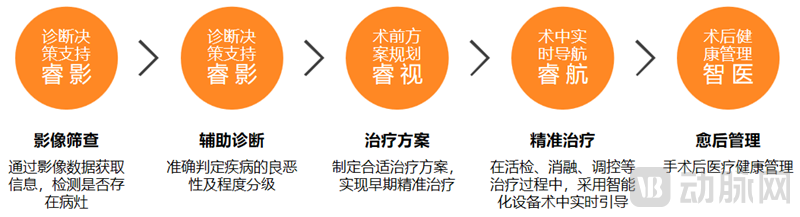
Integrated Intelligent Diagnosis and Treatment Technology Platform
Data provided by interviewees; graphic by VCBeat
Specifically, these six technologies are respectively targeted at tumor diagnosis and treatment.Multimodal Image Registration Technology, Deep Learning-Based Automatic Segmentation Technology, and Machine Learning-Driven Intelligent Diagnosis and Treatment Technology, with regard to brain diagnosis and treatmentBrain Disease Feature Extraction and Analysis Technology, High Spatiotemporal Resolution Precision Source Imaging Technology, and Non-invasive Wearable Brain-Computer Interface Encoding and Decoding Technology。
Among them,Multimodal Image Registration TechnologyIt is a multimodal image registration technology based on hybrid probability and deep learning models, capable of achieving real-time, high-precision image fusion within seconds. The deep learning-based automatic segmentation technology is an automated segmentation method that employs semi-supervised deep learning on sparsely labeled images.Reduces manual annotation workload by 70%. Machine learning-based intelligent diagnosis and treatment technology integrates mathematical models, expert experience, and attention mechanisms into machine learning,Non-invasive differential diagnosis with over 80% accuracy。
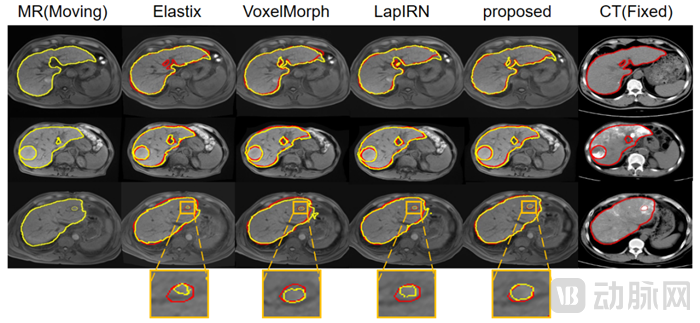
Multimodal Image Registration and Fusion Technology
Provided by the interviewee
Brain Disease Feature Extraction and Analysis Technologythen automated modeling of brain functional regions and construction of multi-level brain networks based on MRI can be performed,Simultaneously remove over 80% of complex EEG artifacts. This technology also enables deep, intelligent recognition and analysis of brain diseases,Accuracy rate exceeds 90%。High Spatiotemporal Resolution Precise Source Imaging Technology Based on Heterogeneous Fusion of MRI and EEGIt is a highly efficient, high-precision, one-stop brain source imaging platform that assists in the diagnosis and localization of brain disorders such as epilepsy.
Non-invasive Wearable Brain-Computer Interface Encoding and Decoding TechnologyIt is based on highly biocompatible electrodes, combining DC-coupled front-end amplification for full-band dynamic low-gain acquisition and multivariate empirical mode decomposition denoising technology,Avoid over 90% of motion artifacts, ensuring high-quality EEG signal acquisition. Meanwhile, by mining the spatiotemporal and spectral features of individual EEG signals, combined with deep learning algorithms, it has achievedDecoding Four-Direction Motor Imagery with Average Accuracy Exceeding 90%。
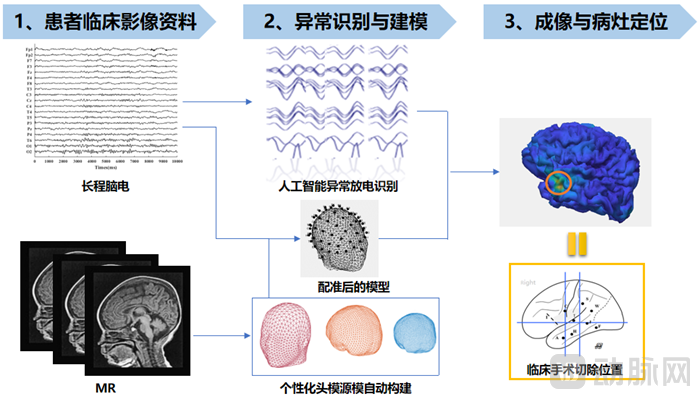
High-Precision Brain Function Analysis Technology Based on Multimodal Neuroimaging Fusion
Provided by the interviewee
Five product R&D lines running in parallel,
Two “multimodal + AI” products have obtained regulatory approval
Currently, Guoke Kangcheng has five product lines under development: the AI Medical Imaging Analysis System “Kangcheng Ruiying,” the Medical Image Processing System “Kangcheng Ruishi,” the Surgical Planning and Navigation System “Kangcheng Ruihang,” the Brain Imaging Analysis System “Kangcheng Ruinao,” and the Healthcare Management and Analytics System “Kangcheng Zhiyi.”
It is reported that the Class II medical device registration for the Kangcheng Ruishi medical image processing system was approved in 2022, and the Kangcheng Zhiyi healthcare management analysis system has entered mass production.
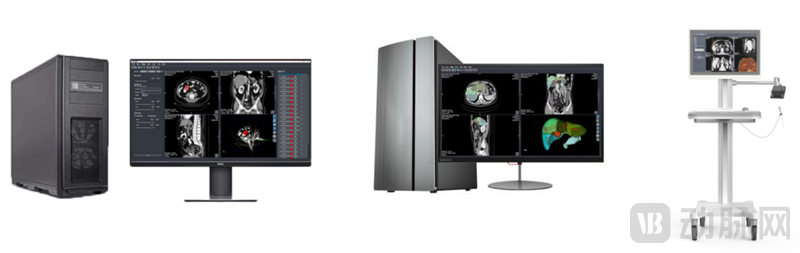
Kangcheng Ruiying AI Medical Imaging Analysis System, Kangcheng Ruishi Medical Imaging Processing System, and Kangcheng Ruihang Surgical Planning and Navigation System (from left to right)
Provided by the interviewee
Intelligent Precision Interventional Surgical Planning and Navigation Robotic SystemIt is currently the company's flagship product. The system consists of two parts: a software workstation and hardware equipment. The software workstation is divided into Kangcheng Ruiying and Kangcheng Ruishi, while the hardware equipment is Kangcheng Ruihang.All three are based on multi-modal imaging data, including CT, MRI, PET, and ultrasound.
Kangcheng RuiyingPhysician-specific intelligent auxiliary diagnostic models can be constructed through standardized and streamlined processes, including image annotation, feature extraction, feature selection, and artificial intelligence-based classification.Kangcheng VisionIt achieves precise analysis of tissues and lesions through processes such as segmentation, registration, human-computer interaction, measurement, and 3D reconstruction, thereby assisting in diagnosis and treatment planning.
Kangcheng RuihangIt features functions such as precise preoperative planning, real-time intraoperative guidance, and postoperative assessment. It is currently applicable to clinical departments including surgery, interventional radiology, oncology (for biopsy and ablation), hepatobiliary surgery, and urology. It is suitable for puncture biopsy and ablation of thoracic and abdominal organs, such as the liver and lungs.The system has currently entered the type testing phase.
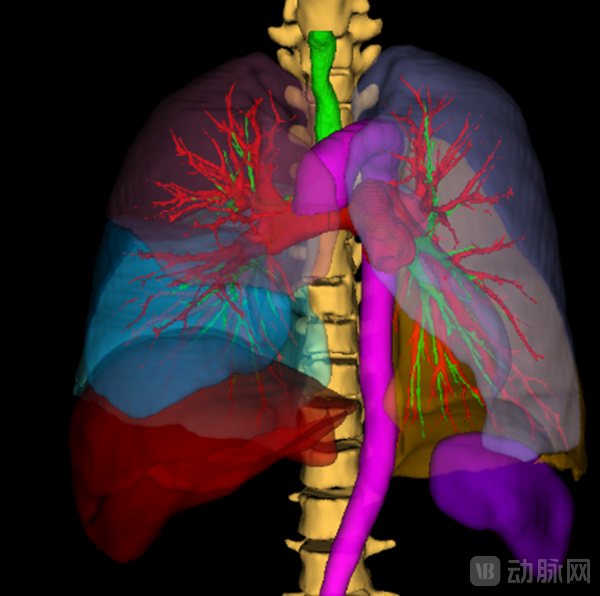
3D Reconstruction of Breast Tissue
Provided by the interviewee
In addition, the second major indication targeted by Guoke Kangcheng is brain disorders, including epilepsy, neurodegenerative diseases, neurodevelopmental disorders, disorders of consciousness, sleep disorders, and psychiatric disorders. The team has developedKangcheng Rui Brain Neuroimaging Processing SystemSupports image preprocessing, brain extraction, brain tissue segmentation, cortical reconstruction, brain region parcellation, as well as quantitative analysis of brain morphological features, brain network analysis, and assisted diagnosis.
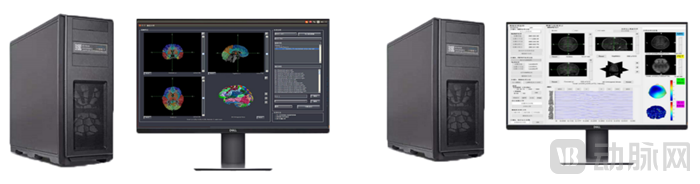
Kangcheng Rui Brain: Neuroimaging Processing and Analysis System (Brain MRI, EEG, etc.)
Provided by the interviewee
Kangcheng RuiNao EEG Processing and Analysis SystemTransforming EEG signals that are difficult to acquire, interpret, and utilize into a high-precision EEG analysis and imaging system that is easy to acquire, read, and use.Supports functions including preprocessing, registration, brain tissue segmentation and modeling, time-frequency analysis, topographic mapping, high spatiotemporal resolution brain source imaging, and AI-based analysis.
Dai Yakang, CEO of Suzhou Guoke Kangcheng Medical Technology Co., Ltd., stated that the company’s integrated auxiliary diagnosis and treatment solutions for oncology and brain diseases can be flexibly customized to meet the specific needs of different medical institutions. In the future, the company plans to collaborate with medical imaging equipment manufacturers to integrate its patented software systems into imaging devices of various modalities and specifications, achieving mutually beneficial development.
Establish an interdisciplinary R&D team with advanced academic qualifications,
Guoke Kangcheng's products have reached more than 30 Grade A tertiary hospitals.
According to data from LeadLeo Research Institute, the market size of China’s AI medical imaging sector is projected to grow from RMB 820 million in 2021 to RMB 13.76 billion in 2025, representing a compound annual growth rate (CAGR) of 102.4%. Leveraging its innovative algorithmic advantages, Suzhou Guoke Kangcheng Medical Technology Co., Ltd. has emerged as a frontrunner in China’s AI-assisted diagnostic and therapeutic medical imaging landscape. However, AI medical imaging will only deliver value and gain market acceptance if it achieves clinical validation.
Dai Yakang introduced to VCBeat that,Suzhou Guoke Kangcheng Medical Technology Co., Ltd. has established sales channels across multiple regions in China, including Beijing, Jiangsu, Guangdong, and Jiangxi. Currently, its products are available in over 30 Grade A tertiary hospitals nationwide, serving more than 1,000 institutions.
The widespread success of these products is inseparable from the R&D team’s dedicated efforts. The accumulation of interdisciplinary talent has always been a key driver for R&D and the translation of research into practical applications in AI medical imaging enterprises.
Leveraging the R&D capabilities of the Suzhou Institute of Biomedical Engineering and Technology, Chinese Academy of Sciences, Guoke Kangcheng enjoys unique advantages in multidisciplinary talent collaboration. According to Dai Yakang,The core team of Guoke Kangcheng comprises multidisciplinary experts in biomedical engineering, software engineering, and clinical medicine, with over 80% holding master’s degrees or higher. Dai Yakang, the CEO, has published more than 100 academic papers and filed over 100 patents and software copyrights.
As a scientist, the origins of Dai Yakang’s transition into entrepreneurship date back to 2009. In 2009,After earning his Ph.D. from the Institute of Automation, Chinese Academy of Sciences, Dai Yakang immediately went to the United States to study cutting-edge global knowledge in biomedical engineering and subsequently conducted postdoctoral research for many years at the University of Minnesota and the University of North Carolina.
Upon returning to China after completing his studies, Dai Yakang remained true to his original aspirations and joined the Medical Imaging Technology Research Laboratory at the Suzhou Institute of Biomedical Engineering and Technology (SIBET), Chinese Academy of Sciences, where he served as Deputy Director. Later, with the support of SIBET, Dai founded Suzhou Guoke Kangcheng Medical Technology Co., Ltd. and led his team in building an industrial translation platform for image-assisted diagnosis and treatment that integrates medical imaging with artificial intelligence. The company has developed multiple medical device products targeting tumors, brain diseases, and other conditions.
The opportunities of the era have propelled scientists to the forefront. As a pioneer in the field of AI-assisted medical imaging diagnosis and treatment in China, Dai Yakang and his team, amidst the surging tide of globalization in AI medical imaging innovation, have chosen to stand from a scientist’s perspective—while ensuring robust technology and enterprise-grade products—to support the development and advancement of China’s AI medical imaging technology.
“Guoke Kangcheng will focus on technological innovation to further develop a more diverse and advanced portfolio of AI-assisted diagnostic and therapeutic products for medical imaging. In the future, we also plan to open the technical platforms of certain products to researchers free of charge, aiming to drive innovation in China’s AI medical imaging technology,” said Dai Yakang at the end of the interview.