

ShanghaiTech Spin-offs Surge: 35 Financings in Two Years, Multiple Biotech Firms Poised for Series B

Gluetacs Therapeutics
Developer of Oral Small-Molecule Protein Degrader Drugs

SynMetabio
Developer of New Synthetic Biology Materials
In March 2023, a company namedYiru BiotechA synthetic biology company announced the completion of a multi-million-yuan angel financing round, which quickly attracted attention from the venture capital community. Beyond the cutting-edge nature of its synthetic material technologies, the most critical factor behind this interest is the company’s founder, Su Rui, who hails from ShanghaiTech University (hereinafter referred to as “ShanghaiTech”).Was still a senior undergraduate student when starting the business, an age that is extremely rare across China’s pharmaceutical industry.
But it is not only the post-2000s founder who is rare; his alma mater, ShanghaiTech University, is also relatively unfamiliar within Shanghai’s pharmaceutical ecosystem, unlike the well-known Shanghai Jiao Tong University and Fudan University.After all, it has only been in existence for ten years as of this year., yet this youngest “Double First-Class” university in China has been making quite a splash in the pharmaceutical market over the past year or two.
In March 2021, as the first enterprise incubated by ShanghaiTech University in the pharmaceutical sector,BiaoXin BiomedicalHaving secured tens of millions of yuan in angel financing, BiaoXin Biomedical Technology (Shanghai) Co., Ltd. subsequently completed three additional funding rounds within just a year and a half, demonstrating extremely rapid growth momentum. During this same period, according to incomplete statistics from the VCBeat Orange Database,A total of 15 pharmaceutical companies affiliated with ShanghaiTech University have successively completed financing rounds, with the total amount exceeding RMB 5 billion. Top-tier investors, including Sequoia Capital, Matrix Partners China, Hillhouse Capital, Honghui Capital, and Lilly Asia Ventures, have actively entered the field.。
Amidst this surge of capital investment, one cannot help but ask: As a university established only 10 years ago, how exactly has ShanghaiTech University managed to tackle the formidable challenge of biomedicine?
Why Do Investors Favor ShanghaiTech University?
According to incomplete statistics from VCBeat, in recent years, as many as a hundred investment institutions have increased their stakes in pharmaceutical enterprises affiliated with ShanghaiTech University. Additionally, Su Rui, founder of Shanghai Yiru Biotechnology Co., Ltd., has stated that he frequently observes investors visiting the university for exchanges. The recently held ShanghaiTech University special roadshow on protein degradation, immunotherapy, and energy metabolism regulation also attracted numerous investment firms, including Qiming Venture Partners, YuanSheng Capital, Northern Light Venture Capital, and Proxima Ventures.
The reason why ShanghaiTech University has attracted such significant attention from investors boils down to two factors:First, there is an open atmosphere for innovation and entrepreneurship; second, the project features cutting-edge technology that is closely aligned with clinical needs.
Let’s start with the open and innovative entrepreneurial atmosphere. Unlike other established institutions in China,ShanghaiTech University has not established a seed fund to specifically support the commercialization of its research projects; instead, it proactively introduces these projects into the market, allowing market forces to determine their viability.. According to insiders, the reason for this approach at ShanghaiTech University is twofold: on one hand, there is a concern that establishing a seed fund might, to some extent, “tie down” projects; on the other hand, it is believed that projects selected by the market are more likely to withstand future market tests.
Moreover, the “openness” of ShanghaiTech University is also reflected in the selection of incubation projects. In fact,ShanghaiTech University aims to provide an opportunity for all projects with commercialization potential., regardless of the project’s stage, “he” has been highly supportive of the project team engaging in discussions with investors and industry professionals. Moreover, “he” has not imposed numerous rigid constraints on the projects, as establishing strict standards may lead projects to forcibly align with them, which would instead constrain their development.
However, “opening up” merely opens a window; whether investors are willing to truly step in depends on the merits of the project itself. Wang Jie, Director of the Technology Transfer Office at ShanghaiTech University, has stated that ShanghaiTech never chases specific market trends, because by the time a so-called “trend” has formed, it is already too late to jump on the bandwagon. Instead, ShanghaiTech aims to stay at the forefront of the industry by pursuing original innovation, which requires strategic planning at least five years in advance.
In fact, since its inception, ShanghaiTech University has designated biomedicine as a key strategic focus and has successively establishedSchool of Life Science and Technology, School of Biomedical Engineering, Institute for Immunochemistry, iHuman Instituteresearch institutions, attracting a large number of top talents from around the world. Jia Chen, founder of Correctseq, is one of them. He joined ShanghaiTech University as a professor at the School of Life Science and Technology after completing his postdoctoral research at the National Institutes of Health in the United States. Also notable is Raymond Stevens, founding director of the iHuman Institute, an internationally renowned structural biologist who has made significant contributions to the field of G protein-coupled receptor (GPCR) structural biology.
It is precisely because of the addition of such a group of scientists with an international perspective that ShanghaiTech University always has much room for imagination in the biomedical sector. Take, for example,BiaoXin BiomedicalAs an example, it is reported that this is one of the few new drug R&D enterprises to simultaneously deploy both molecular glue and PROTAC dual platforms. Furthermore, thanks to its core E3 ligase patents and the multiple target-specific PROTAC candidate compounds developed and reserved therefrom, it has become one of the rare platform-based small-molecule innovative drug companies in China possessing proprietary ligand patents.
In addition, there is the company that has recently completed its Series A financing round exceeding RMB 100 million.Kelun Pharmaceutical, this startup, founded in 2021, is deeply focused on novel first-in-class disease targets, primarily conducting innovative pharmaceutical R&D for major diseases such as metabolic disorders and cancer. It is reported that two representative projects of Kelan Pharma are currently approaching the preclinical candidate compound selection stage.
andCorrectseqThe company focuses on developing breakthrough precision therapies by leveraging its proprietary novel base editing systems. Built upon its independently owned intellectual property (IP) base editing platform, represented by the transition-type base editor tBE (transformer Base Editor), it has established a new drug discovery platform integrating multiple therapeutic areas. This platform enables the long-term development and screening of effective therapeutic targets for various genetic and rare diseases. Currently, Correctseq has laid out nearly 10 pipelines targeting genetic disorders, oncology, metabolic diseases, and infectious diseases, with the first pipeline expected to enter the Investigational New Drug (IND) application and clinical trial stages by the end of this year.
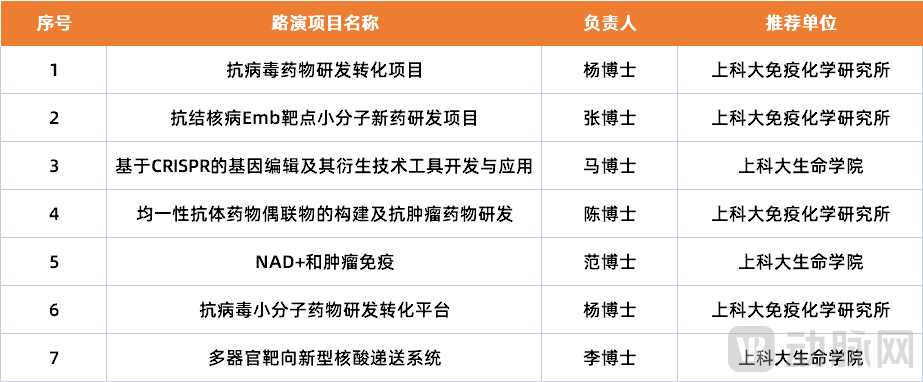
Figure 1. Overview of ShanghaiTech University-affiliated pharmaceutical projects at four roadshows in 2023 (Source: ShanghaiTech Technology Transfer WeChat Official Account)
In addition, among the four roadshows that have already concluded this year, one can also observe ShanghaiTech University’s strategic layout in the biomedical sector. According to statistics, the themes of these four roadshows includeImmunotherapy, Nucleic Acid Drugs, Delivery Systems, Protein Degradation, Energy Metabolism RegulationThese are all frontier areas with significant clinical demand and an urgent need for original innovation.
Perhaps it is precisely for this reason that investors are a common sight at ShanghaiTech University, whether at roadshow events, the annual Innovation and Entrepreneurship Competition, or in frequent on-campus industry exchanges and training courses.
How Did 15 Pharmaceutical Companies Emerge in Just 3 Years?
According to publicly available information, since the establishment of the first pharmaceutical company, BiaoXin Biomedical Technology (Shanghai) Co., Ltd., in February 2020,To date, ShanghaiTech University has incubated 15 biopharmaceutical companies that have completed financing rounds, with total funding exceeding RMB 5 billion.。
This is no easy feat. On one hand, ShanghaiTech University, founded in 2013, is only ten years old as of this year and remains very young; this contrast is particularly pronounced in the biopharmaceutical sector, which is characterized by long R&D cycles. On the other hand, influenced by the overall market environment, pharmaceutical companies have found it increasingly difficult to break through in recent years, necessitating stronger core competitiveness.
So, besides securing investors, what else has ShanghaiTech University done right in terms of innovation and technology transfer?
First, prioritize scientific research and entrepreneurship education. It is reported that ShanghaiTech University was jointly established by the Chinese Academy of Sciences and the Shanghai Municipal People's Government; therefore, since its inception, ShanghaiTech has consistently adhered to“Talent Development Through Scientific Research and Projects”educational philosophy, it places great emphasis on cultivating and strengthening the research capabilities of undergraduate students. Undergraduates can enter laboratories to participate in research projects during their freshman and sophomore years, and may take graduate-level courses during their junior and senior years. Furthermore, all scientific research instruments and equipment on campus are accessible to all students. It is precisely under such a mechanism that, at ShanghaiTech University,Approximately 10% of undergraduate students have already achieved scientific research outcomes during their undergraduate studies.。
For graduate students, ShanghaiTech University has taken research education to a deeper level. It not only emphasizes original innovation capabilities in research practice but also prioritizes “personalized training,” encouraging graduate students to leverage advanced research platforms and cutting-edge technologies to conduct scientific research in collaboration with their supervisors. According to statistical data from the past three years,60% of ShanghaiTech University’s graduate students have participated in research projects related to the development of the Shanghai Science and Technology Innovation Center.。
However, this is only one aspect; the other lies in fostering a mindset of innovation and entrepreneurship. Dr. Jiang Ge, Deputy Secretary of the Party Committee and Vice President of ShanghaiTech University, once stated that,For ShanghaiTech University, publishing in CNS journals does not signify “mission accomplished”; it merely marks the starting line of a relay-style marathon in new drug development. The ultimate goal of ShanghaiTech is to translate source innovation into a new drug.。
Therefore, since its establishment, ShanghaiTech University has strategically prioritized innovation and entrepreneurship as the focal point of its disciplinary development.School of Entrepreneurship and Management, and its courses are also required for undergraduates in the School of Life Science and Technology and the School of Biomedical Engineering. In addition, ShanghaiTech University has established within its administrative departmentsTechnology Transfer Office, it regularly organizes activities such as the Early-Stage Entrepreneurship School, the ShanghaiTech University Innovation and Entrepreneurship Conference, the early-stage incubator for sci-tech innovation industries, and early-stage startup financing events, with the aim of promoting the commercialization of scientific and technological achievements across the university and fostering innovation and entrepreneurship among faculty and students.
It is precisely under the training model that emphasizes both scientific research education and entrepreneurship education that, as of March 2022, patent applications involving current ShanghaiTech University students as inventors accounted for 62% of the university’s total patent applications; furthermore, among all patents successfully commercialized by the university, 32% involved the participation of current students, with student inventors directly receiving proceeds from patent commercialization.
Secondly, fully respect market principles.As previously mentioned, ShanghaiTech University does not establish an on-campus seed fund, aiming instead to let the market screen projects. However, this is only one aspect; furthermore, its “respect for the market” is also reflected in ShanghaiTech’s strategic control over niche sectors. For instance, rather than chasing industry trends, it proactively positions itself in frontier fields from the perspectives of globalization and the development of the biopharmaceutical industry.
Of course, another aspect is reflected in the division of labor and collaboration within incubated projects. Taking Correctseq as an example, according to Dr. Mu Xiaodun, CEO, “Within the entire team at Correctseq, roles are clearly defined: those working on frontier technologies focus on innovation, while those developing pharmaceutical products concentrate on process quality and clinical affairs. Additionally, specialized teams and consultants engage with established pharmaceutical companies to negotiate collaborative projects. Externally, the Technology Transfer Office handles on-campus translation processes or resource matchmaking. Furthermore, Correctseq collaborates with relevant laboratories within the university, channeling innovative achievements back into the company. In short, each party specializes in its respective field, with everyone contributing their expertise toward a common goal.”
Finally, long-term, sustained post-transition empowerment support. At this juncture, the first step taken by ShanghaiTech University is to lower the barriers to technology transfer. For projects with high commercialization potential, the university reduces the upfront payment requirements. This is because imposing high transfer fees at the “initial threshold” would cause both the university and the projects themselves to miss out on numerous opportunities.
Another key aspect is the precise matching of industrial resources. Taking investment institutions as an example, although ShanghaiTech University leaves the final selection to the institutions, most of these eligible investors are pre-screened by the university based on the specific needs of each project. This is because the team members at ShanghaiTech’s Technology Transfer Office largely possess relevant industry backgrounds, enabling them to have a solid understanding of both the investment firms and the projects.
In addition to having a Technology Transfer Office, among the incubation teams at ShanghaiTech University, there are also those located just across the street from the university.Lianyu Incubator, according to the relevant person in charge, Lianyu Incubator not only provides convenient hardware conditions for startups, such as office and laboratory spaces, but also fosters a favorable entrepreneurial atmosphere for tenant companies through regular activities. More importantly, Lianyu helps provide comprehensive empowerment, including coaching on corporate operations and project applications.
It is precisely for this reason that, in the interview, Dr. Mou Xiaodun wouldComparing ShanghaiTech University to a Highly Reliable “Parent” on the Entrepreneurial JourneyOn one hand, “he” can help the project screen for high-quality industrial resources and spare no effort to resolve various issues arising during its development. For instance, in the process of Correctseq’s global patent layout, ShanghaiTech University provided substantial support and assistance. Currently, Correctseq has obtained exclusive global licenses for multiple patents from ShanghaiTech University, including 7 PCT patents and 3 Chinese patents. Additionally, six more PCT patent applications have been filed with Correctseq as the applicant. While providing comprehensive support, ShanghaiTech University also grants the project considerable autonomy, refraining from imposing any constraints that could hinder its development.
Multiple Companies Await Entry into Series B: How Much Potential Remains for ShanghaiTech University?
Unlike Shanghai Jiao Tong University and Fudan University, which have numerous listed companies in the pharmaceutical sector or have already established mature industrial chains, ShanghaiTech University, despite its rapid progress, has projects that are largely still in the early stages, except for those already at the B+ round.Huaxia Yingtai, other pharmaceutical companies are at Series A or earlier stages.
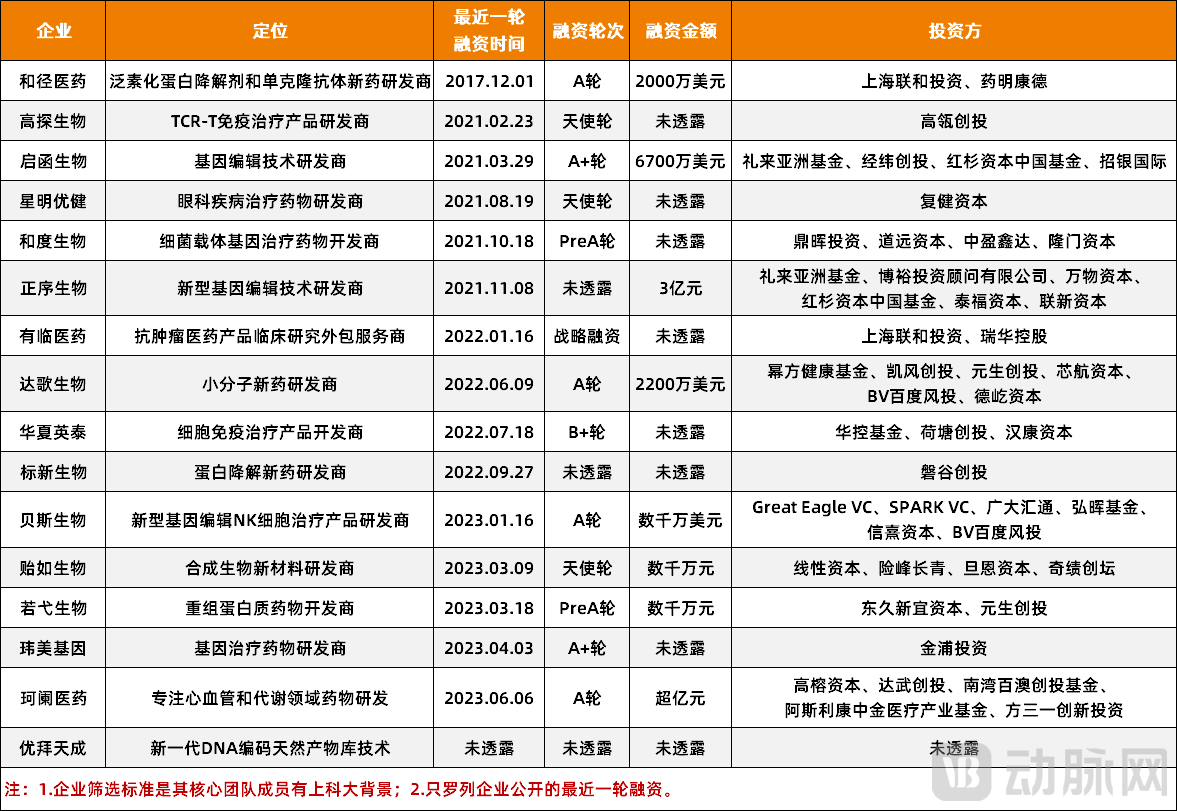 Figure 2. Latest round of financing for pharmaceutical companies affiliated with ShanghaiTech University (Source: VCBeat Orange Database)
Yet it is precisely for this reason that ShanghaiTech University enjoys greater flexibility in the pharmaceutical sector, along with expanded possibilities.
It is reported that the affiliated hospital of ShanghaiTech University—Shanghai Clinical Research CenterConstruction commenced in 2022, with completion expected in 2025 and trial operations scheduled to begin in 2026. As a research-oriented hospital under the Shanghai Municipal Health Commission, the Shanghai Clinical Research Center features two core functions,1. Clinical Practice and Trials; 2. Basic and Translational Research, a bidirectional cyclical research model of “from bench to bedside” and “from bedside to bench” will be adopted in the future to provide clinical support for scientific research and offer clinical scenarios for project incubation.
It is worth mentioning that the Shanghai Clinical Research Center is also located opposite ShanghaiTech University, forming a triangular “ecosystem” with ShanghaiTech University and the Lianyu Incubator, each separated by one city block. This explains why Dr. Liu Jia, founder of Ruobiologics, remarked, “It is hard to imagine that the entire journey from “source innovation” to “industrialization” and then to “clinical research” can be accomplished within a mere two-kilometer radius.”
In addition to its high efficiency, convenience, and an increasingly mature biopharmaceutical ecosystem, ShanghaiTech University also boasts a growing R&D community and an increasing number of cutting-edge scientific achievements. According to statistics, as of February 2023, ShanghaiTech University had 2,617 master’s students and 1,108 doctoral students, and it continues to recruit tenured professors from overseas. Among the existing faculty team,84% are young scholars under the age of 45, and 95% have overseas study or work experience.。
Furthermore, ShanghaiTech University continues to expand its collaborations with renowned universities worldwide. In 2022 alone, it established partnerships with institutions such as the Massachusetts Institute of Technology, the University of Chicago, and the University of California, Berkeley. The university has explicitly stated its goal to enable at least 50% of its undergraduate students to study abroad, striving to cultivate a cohort of biomedical professionals with international competitiveness and global vision.
It is precisely for this reason thatAs of December 2022, ShanghaiTech University faculty members published more than 1,300 papers as first or corresponding authors in Science, Nature, Cell, and other representative journals in their respective fields.. Beyond its efforts in scientific research, ShanghaiTech University has successfully commercialized 25% of its patents. In 2020, the contract value for its technology transfer through licensing ranked second among universities and research institutions. This indicates that, driven by both high R&D investment and a high conversion rate, ShanghaiTech will incubate more cutting-edge achievements in the pharmaceutical sector in the coming years.
As an innovative pharmaceutical company “based in” ShanghaiTech University, Jing Medicine’s CEO, Dr. Zeng Li, predicts that looking ten years ahead, the development of innovative drugs in China will exhibit three major trends:First, the industry will undergo de-homogenization and resource integration., various forms of collaboration are becoming more prevalent, and companies with genuine capabilities in source innovation and commercialization will stand out and grow stronger and larger;Second, the hotspots for innovation in disease areas will expand from the current focus on oncology and autoimmune diseases to neurodegenerative diseases., and mental health conditions such as depression, exacerbated by the COVID-19 pandemic and other global geopolitical shifts, will also receive greater attention;Third, a cohort of professional managers will emerge who possess both scientific backgrounds and logical thinking skills, as well as business acumen., they possess exceptional learning abilities, broad perspectives, and mature mindsets, and will lead the development of the entire industry in the future.
Underlying these trends are the steady strides ShanghaiTech University has made in the biopharmaceutical industry.