

Shijing Medical's Digital Surge in Ophthalmic Care: Powering Myopia and Amblyopia Management with VR and Photobiomodulation
In recent years, visual problems among children and adolescents in China have presented a severe situation. The prevalence of myopia has reached as high as 56.74%, with the number of myopic individuals exceeding 120 million. The total number of patients with strabismus and amblyopia is also projected to reach 17.02 million, a staggering figure. According to an analysis by Soochow Securities, the market size for myopia prevention and control among Chinese children and adolescents reached RMB 38.2 billion in 2022, while the market for strabismus and amblyopia treatment reached RMB 12.3 billion. These figures are expected to grow to RMB 133 billion and RMB 67.7 billion, respectively, by 2030.
In recent years, the Chinese government has also increased its attention and investment in eye health, actively promoting the widespread implementation of vision screening and myopia prevention and control measures, thereby driving robust industry growth. During the 13th Five-Year Plan period, local governments incorporated myopia prevention and control among children and adolescents into their performance evaluations, with explicit requirements to control myopia rates across different age groups. In early 2023, the Ministry of Education of China included myopia prevention and control outcomes in the performance assessments of governments at all levels for the first time and released the Key Work Plan for Comprehensive Myopia Prevention and Control Among Children and Adolescents Nationwide in 2023. The frequent introduction of such policies has brought significant benefits and substantial market opportunities to the development of the optometry and ophthalmic industry.
As one of the few industries possessing both medical and consumer attributes, the optometry sector benefits from parents’ high regard for children’s and adolescents’ vision health issues, which translates into a strong willingness to pay. Moreover, the industry is largely exempt from the constraints of medical insurance cost-containment policies, ensuring smooth payment channels. These factors collectively underscore the immense potential and promising prospects of the optometry industry in the Chinese market, attracting significant attention from investors.
In the vibrant optometry and ophthalmology industry, digitalization has become an undeniable and significant trend. As a pioneer in the digital exploration of the eye care sector, Guangzhou Shijing Medical Software Co., Ltd. (hereinafter referred to as "Shijing Medical") remains committed to advancing the digital transformation of eye health services. To date,Shijing Medical has launched two innovative products: “Duobaoshi,” a visual function training system for the treatment of strabismus and amblyopia, and “Beibele,” a VR-based device for myopia prevention and control.
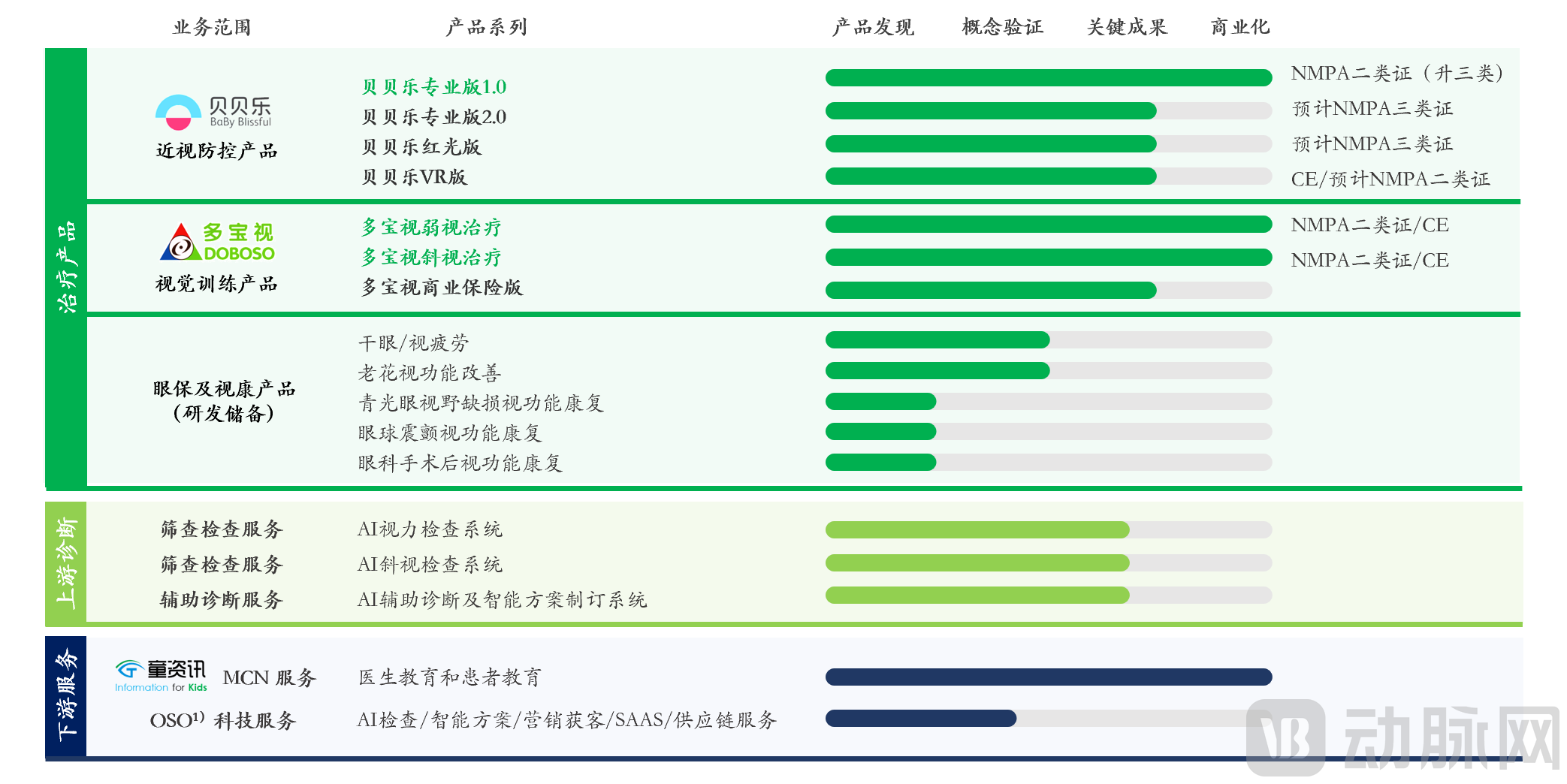 Shijing Medical Product Pipeline Chart
So, how does the development of digital optometry help improve patients' visual health? What specific breakthroughs has Shijing Medical made in promoting digital ophthalmology? What innovative treatment methods has Duobaoshi adopted to help patients with strabismus and amblyopia restore their visual health? And how does Beibeile use intelligent application tools to help children prevent and control the progression of myopia? Next, we will analyze these questions one by one.
Integrating Photobiomodulation Therapy, VR Accommodative Training, and Visual Function Training: How Does Beibeile Achieve a Myopia Control Effect Where 1+1+1>3?
By integrating 650 nm red light from Photobiomodulation Therapy (PBMT) with VR accommodative training and VR visual function training, Shijing Medical has independently developed the Beibele VR Myopia Prevention and Control Device. This device integrates multiple myopia prevention mechanisms, achieving a triple-effect synergy.
Specifically, Photobiomodulation Therapy (PBMT) is a low-level laser therapy used in clinical treatment. Its mechanism of action leverages the "biostimulatory" effects of laser, along with photonic and thermal effects, to improve physiological, biochemical, immune, and reparative functions in the human body, thereby achieving therapeutic objectives.
Currently, PBMT has been widely applied in the fields of healthcare, aesthetics, and wellness. Examples include pain management and inflammation treatment in sports medicine, skin care, hair growth, mental health, and myopia prevention and control in ophthalmology.
Scientific research has identified scleral hypoxia as a key factor inducing the differentiation of scleral fibroblasts, leading to extracellular matrix remodeling and thereby contributing to the development of myopia. The choroid supplies nutrients and oxygen to the sclera; thus, increasing choroidal thickness and improving blood flow may represent important strategies for controlling myopia progression. Furthermore, multiple studies have revealed that photobiomodulation therapy (PBMT) using 650 nm red light can increase choroidal thickness and slow axial elongation and myopia progression, demonstrating significantly higher efficacy in myopia prevention and control than low-concentration atropine and orthokeratology (OK lenses).
In July 2022, the Chinese Journal of Experimental Ophthalmology officially released the Expert Consensus on Repetitive Low-Intensity Red Light Irradiation as an Adjunctive Therapy for Myopia in Children and Adolescents (2022), in which the expert panel fully affirmed the clinical value of photobiomodulation therapy (PBMT) in myopia prevention and control. The mechanism of action of Beibele’s PBMT involves repeated low-dose red light irradiation at a wavelength of 650 nm to the fundus, which promotes dopamine secretion, improves blood supply and oxygenation to the fundus, and stimulates thickening of the choroid and sclera, thereby inhibiting excessive axial elongation and the progression of myopia.
Not only that,VCBeat’s PBMT SolutionSafety in myopia prevention and control can also be achieved through five major pathways: First, the use of eye-safe light sources with the highest safety rating, which comply with the International Electrotechnical Commission (IEC) standards and the Chinese national standard GB 7247.1-2012. Second, the safety circuit employed is the only domestically certified red-light-related device, ensuring more stable laser power output. Third, the light source control circuit is more reliable, guaranteeing that laser energy will not increase due to any component failure or malfunction. Fourth, the diffused light spot is softer, with a larger retinal spot size and lower energy per unit area on the fundus, thereby avoiding excessive focusing and the formation of hot spots. Fifth, direct current (DC) power supply is more stable; the 3.7V lithium battery DC supply is more stable than the 220V alternating current (AC) mains power used in household settings, preventing fluctuations in laser power and thus ensuring constant and safe laser energy output.
In addition to PBMT, Beibeile has innovatively integrated a comprehensive solution combining VR regulation training and VR visual function training, creating a synergistic “three-in-one” approach where 1+1+1 > 3.
Among these, accommodative training can enhance the physiological function of the ciliary muscle, improve lens elasticity, effectively control excessive axial elongation, and delay myopia progression. Visual function training can improve the ability to control eye movements and eliminate the impact of visual dysfunction on myopia progression.
Moreover, Beibeile’s training regimen is designed as a level-based game, offering high engagement. The treatment requires only 15 minutes each in the morning and evening, ensuring great convenience and good patient compliance. More importantly, Beibeile obtained the National Class II Medical Device Registration Certificate and Class I Laser Certification prior to its market launch, providing strong evidence of its product performance and safety.
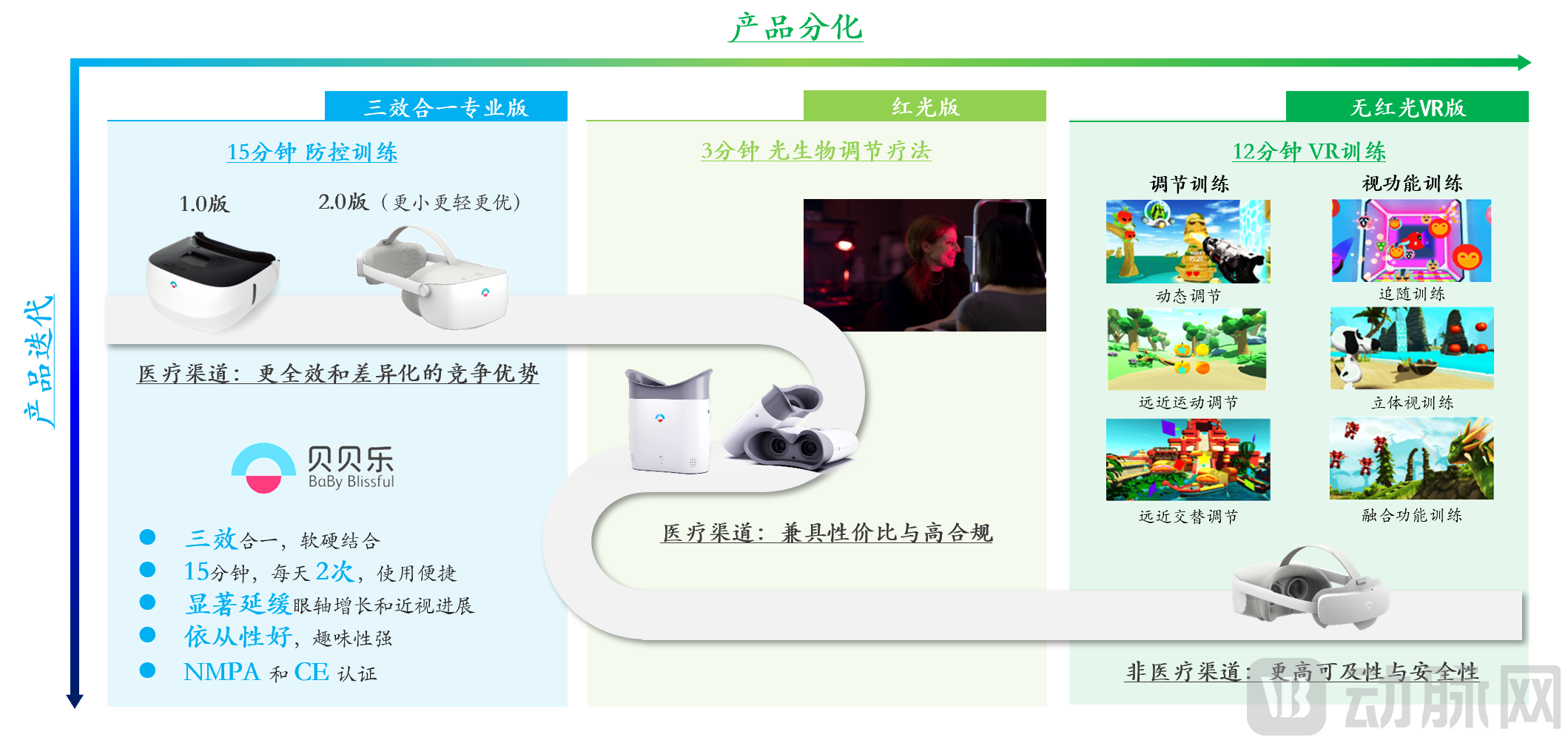 Beibeile Product Matrix Chart
88.75% Treatment Efficacy Rate Achieved Within 3 Months; Shijing Medical’s Strabismus and Amblyopia Treatment Products Gained Recognition from 2,800 Institutions
In the field of strabismus and amblyopia, Shijing Medical has also launched an innovative digital therapeutic product with dichoptic vision—Duobaoshi.
Leveraging the plasticity of the brain’s nervous system and based on mathematical models of visual neuron responses, Duobaoshi innovatively integrates perceptual learning tasks that coordinate hand-eye-brain interaction. By incorporating the principles of perceptual learning stimuli commonly used in clinical practice—such as Haidinger’s brush, red-light flicker, and CAM stimulation—this approach can reshape synaptic structures between neurons, enhance the excitability of cortical pathways, and improve the efficacy of signal transmission, thereby improving visual acuity and visual function.
Duobaoshi’s innovatively developed Internet-based Perceptual Learning (NBPL) product leverages AI-driven intelligent algorithms to formulate personalized digital treatment plans tailored to each individual, ushering the treatment of strabismus and amblyopia into the era of Precision Medicine.
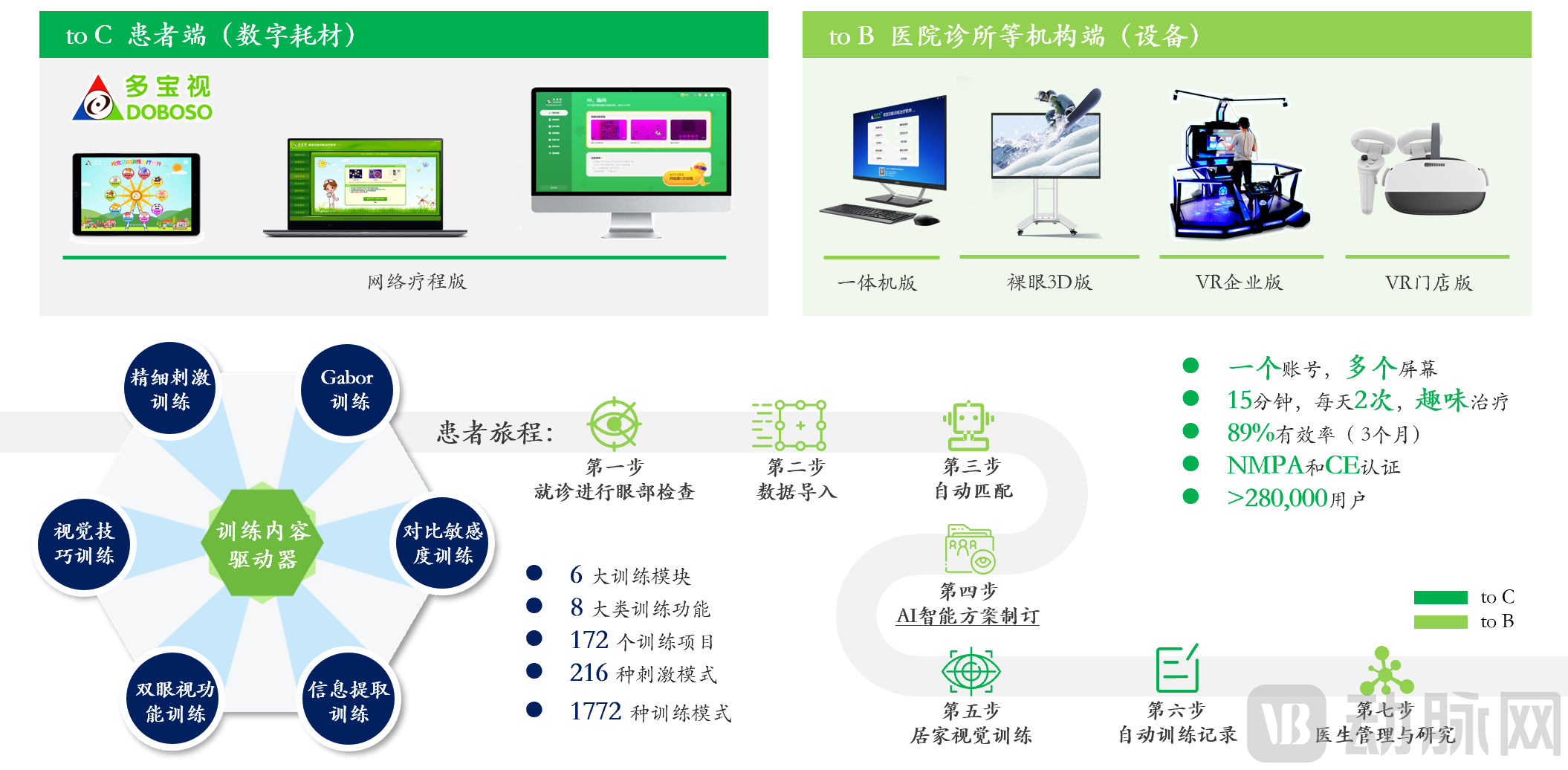
Duobaoshi Product Matrix Diagram
The results of multiple clinical trials for Duobaoshi have also gained widespread recognition. Clinical trials conducted by Peking University First Hospital, Peking University Third Hospital, and Beijing Friendship Hospital demonstrated that the total effective rate of treating amblyopia with Duobaoshi NBPL for three months reached 88.75%, significantly superior to the 55.88% effective rate observed in the control group. Furthermore, clinical trial results from the Eye & ENT Hospital of Fudan University (Shanghai) and Shanghai Tongji Hospital indicated that Duobaoshi NBPL not only accelerates the improvement of best-corrected visual acuity (BCVA) in amblyopia patients without an obvious plateau phase but also yields better improvements in near stereopsis. Research from Wenzhou Medical University Eye Hospital showed that early orthotropic training combined with Duobaoshi NBPL training after intermittent exotropia (IXT) surgery can effectively reduce the incidence of suboptimal surgical outcomes in IXT patients and improve fusion control and binocular visual function.
To date, over 2,800 institutions have adopted Duobaoshi, serving more than 280,000 patients and delivering nearly one million cumulative treatment courses. According to third-party research findings, Duobaoshi maintains a significant lead in both expert ratings and prescription share.
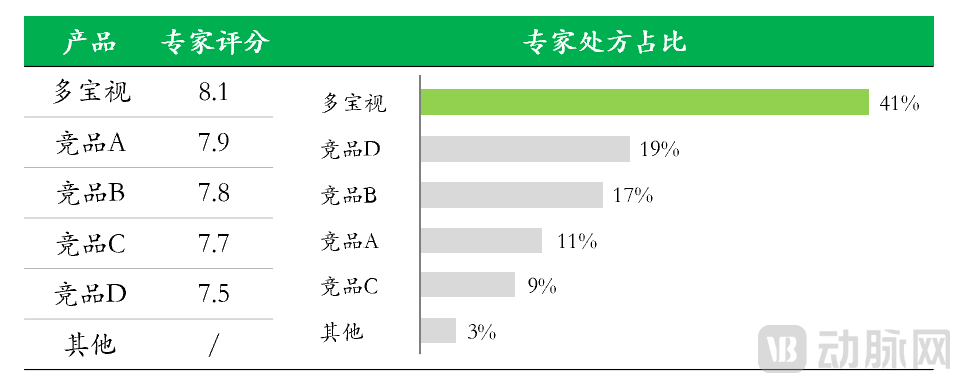
Multivue Expert Rating and Prescription Survey Form
Digital Therapeutics (DTx) is an emerging product of the exploration of digital technologies in the medical field. In recent years, DTx has been explored and applied across multiple disciplines, including ophthalmology, psychiatric and cognitive health, chronic disease management, and oncology. Among these, ophthalmology stands out as a leader in DTx application, becoming the first specialty area to be included in international clinical practice guidelines and the most commercially successful market segment.
In December 2022, the American Academy of Ophthalmology (AAO) released the *Preferred Practice Pattern® Guidelines for Amblyopia (2022 Edition)*, which separated “binocular dichoptic digital therapy” from the “alternative therapies” section of the 2017 edition and included it as an independent chapter among the recommended treatments for amblyopia.
This move has profoundly influenced the development of the digital ophthalmology sector in China. In China, Frost & Sullivan released the *Blue Paper on the Current Status of Digital Therapeutics for Pediatric Strabismus and Amblyopia in China (2022)*, which provided an in-depth analysis of regulatory frameworks for digital therapeutics, product approval pathways, market potential, and investment and financing cases involving companies in the field of digital ophthalmic therapeutics. MedSci released the *White Paper on the Current Status of Digital Therapeutics for Pediatric Strabismus and Amblyopia in China (2022)*, aiming to popularize the technical advantages of digital therapeutics in ophthalmology, standardize clinical diagnosis and treatment, and promote their widespread clinical application. Endorsements from such authoritative platforms indirectly demonstrate the vast market prospects for digital therapeutics targeting strabismus and amblyopia.
Patients, Physicians, and Channels/End-Users Still Face Pain Points: How Does Shijing Medical Address Them One by One?
For the market of myopia prevention and control in children and adolescents, as well as strabismus and amblyopia treatment, although advancements in diagnostic and therapeutic technologies have met part of the demand, the industry still faces significant pain points and urgent issues that need to be addressed.
On the patient side, the efficacy of conventional treatments for myopia and strabismus with amblyopia is relatively low, indicating that a considerable number of patients still need to seek more effective solutions. Furthermore, traditional treatment regimens are often monotonous, leading to poor patient adherence during long-term therapy. Additionally, due to individual variations or specific usage characteristics, conventional pharmacological therapies or contact-based medical devices may cause adverse reactions of varying degrees, resulting in patient intolerance.
For physicians,Traditional visual function assessments and the formulation of training and treatment plans require considerable time for both learning and execution, leading to low willingness among physicians to adopt them. Furthermore, patient usage outside the hospital setting remains an information blind spot, preventing physicians from timely monitoring of patient status and resulting in weak patient management. Meanwhile, inconsistent product quality and compliance issues prolong decision-making processes for physician collaboration or directly lead to refusal of cooperation due to lack of trust.
For channels,, serious product homogenization and insufficient support from ancillary services have significantly impacted its market expansion.
In response to the multiple pain points in the market, Vision Medical has conducted extensive and in-depth analysis over a long period. Centered on user needs, we continuously iterate our products and optimize our services, providing targeted solutions and delivering product value step by step.
For example, on the patient side, Shijing Medical’s digital therapeutic products not only address the limitations of traditional treatments—enhancing treatment efficacy, timeliness, and cost-effectiveness—but also incorporate engaging visual training exercises to maximize patient adherence.
On the physician side, Shijing Medical has significantly improved diagnostic and treatment efficiency through its intelligent examination and protocol formulation system, while ensuring the stability and standardization of medical quality. Meanwhile, its digital management system covers the entire continuum of patient care, both in-hospital and out-of-hospital, enabling the tracking and recording of patient diagnostic and treatment data. This allows physicians to monitor patients’ out-of-hospital treatment status in real time. This fully visible and traceable information system empowers physicians to better guide patients in undergoing timely follow-up examinations and consultations, thereby enhancing therapeutic outcomes and management quality.
More importantly, with the aid of this system, physicians or parents can supervise pediatric patients to ensure proper training execution to a certain extent. In cases of improper training techniques, timely corrections can be made.
Finally, Shijing Medical’s highly competitive digital vision training products for optometry, along with its currently only approved digital therapeutic product for myopia, provide robust product support for channel and end-user market coverage. Meanwhile, Shijing Medical has long provided partners with comprehensive support, including academic conferences, clinical trials, 24/7 customer service, patient and physician education, brand promotion, and promotional campaigns, helping partners reduce costs, improve efficiency, optimize operations, and drive performance growth.
Looking ahead, Shijing Medical will pursue an integrated horizontal and vertical development strategy. Horizontally, it will expand its innovative digital products and services, enrich its business product portfolio, and extend into diverse channel and terminal scenarios. Vertically, it will create sticky tools across the upstream and downstream value chain, accumulate industry-specific data and AI models, and build a robust collaborative ecosystem, thereby continuously solidifying its leading position in the optometry and ophthalmology industry. Furthermore, Shijing Medical will actively engage in innovative exploration by piloting novel commercialization pathways, such as innovative payment solutions with commercial insurance, OSO (Online-Service-Offline) technology services, and overseas business expansion.