

Tsinghua-Linked Companies: No Success by Chance
Recently, Keya Medical, a company specializing in surgical robots, announced its initial public offering (IPO). Notably, some of Keya Medical’s early technologies were derived from technological achievements resulting from collaborative research and development with Tsinghua University.
In December 2018, Jianjia Medical signed an agreement with Tsinghua University"Technical Development Contract", entrusted Tsinghua University to carry out the research and development of navigation systems for orthopedic surgical robots. The foundation of the collaboration between Keya Medical and Tsinghua University lies in the fact that the company's founding team members are from Tsinghua University.
Jianjia Medical is not an isolated case; Tsinghua University alumni are frequently found among medical innovation enterprises. According to statistics, as of June 2023,A total of 1,638 entrepreneurs are Tsinghua University alumni., nearly 500 more than second-place Peking University, solidifying Tsinghua’s reputation as a “CEO incubator.”
It is well known that entrepreneurship has never been an easy endeavor; it hinges on capital, individual determination, and the social support systems behind individuals. Behind the phenomenon of “Tsinghua University producing a large number of CEOs” liesSupported by Tsinghua University’s comprehensive incubation system.
Tsinghua Alumni Dominate Half of the Investment Landscape: Are Tsinghua-Affiliated Enterprises More Likely to Break Through?
If funding is the foundation for the continued growth of startups or innovative projects, then Tsinghua University has provided entrepreneurs with ample confidence.
Tsinghua University accounts for half of China’s investment community—this is by no means an exaggeration.Looking at the investment community, Tsinghua University has produced wave after wave of prominent investors. Notable examples include Zhou Kui from Sequoia Capital China, Zuo Lingye from Matrix Partners China, Wu Jun from Fyuan Ventures, and Tang Jincao from Shuimu Capital, all of whom are Tsinghua alumni. Additionally, the founders of firms that focus heavily on angel-stage investments—such as Lianjie Capital, Yuanming Capital, and Daotong Investment—are also Tsinghua alumni.
In addition to Tsinghua alumni serving at renowned investment firms, there are also relevant investment institutions affiliated with Tsinghua Holdings.Over 50, a figure that other Chinese universities cannot hope to match.
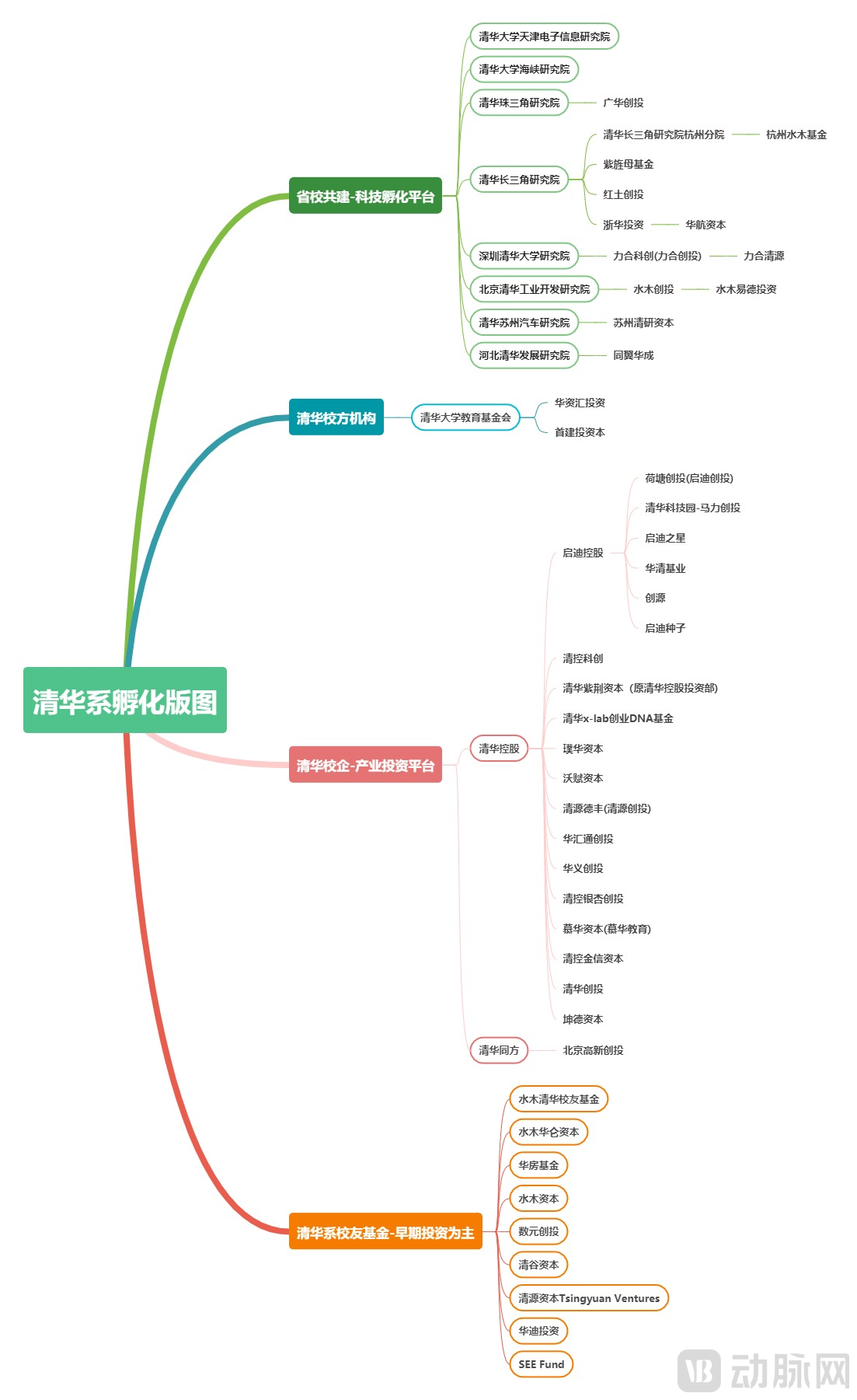 Tsinghua-affiliated Investment Institutions
Tsinghua-affiliated investment institutions can be broadly categorized into four types:Provincial-University Joint Development, Tsinghua University’s Institutional Entities, Tsinghua University-Affiliated Enterprises, and Tsinghua-Alumni Funds. However, whether it is an on-campus institution, an off-campus platform, or even alumni donations, Tsinghua-affiliated investment firms always pay extra attention to entrepreneurship by Tsinghua alumni.
For instance, Saiqiao Biotech, which focuses on key upstream manufacturing in the cell and gene therapy industry, was founded by Dr. Shang Yuanfang, a graduate of the Department of Precision Instruments at Tsinghua University. The company’s angel round was exclusively invested by Shuimu Ventures, while TusStar participated in its Pre-A round. Similarly, Dr. Zhao Xueqiang and Professor Lin Xin, both Tsinghua University alumni, together with four postdoctoral fellows who had completed their research at Tsinghua, founded Huaxia Yingtai. Hetang Venture Capital also participated in Huaxia Yingtai’s Pre-A financing round.Similar cases are ubiquitous at Tsinghua University.
A partner at a well-known Tsinghua-affiliated investment firm told Chengguo Bureau:“Tsinghua alumni share a deep sense of camaraderie; I always feel inclined to learn more about companies founded by my fellow alumni. Communicating with them also fosters a greater sense of trust.”This has also been confirmed by companies affiliated with the Tsinghua University ecosystem. Wang Yingqi, CEO of Topcon Medical Systems (Tupai), stated:“Many investors from Tsinghua University have also experienced the journey of entrepreneurship, incubation, and investment at Tsinghua. Therefore, Tsinghua alumni may be more enthusiastic about investing in and serving enterprises affiliated with Tsinghua.”
So, does the fact that Tsinghua-affiliated investment institutions favor Tsinghua alumni indicate that Tsinghua alumni are more likely to succeed in entrepreneurship?
The answer is not absolute. Some investors have stated, “The entrepreneurial success of Tsinghua University alumni is inseparable from the strong competitiveness of their own projects.”
Taking Shuimu Ventures as an example, from January 2022 to June 2023, the firm completed a total of eight financing rounds in the healthcare sector. All its portfolio companies are unequivocally focused on “hard tech,” boasting technological capabilities that are leading not only in China but also worldwide.
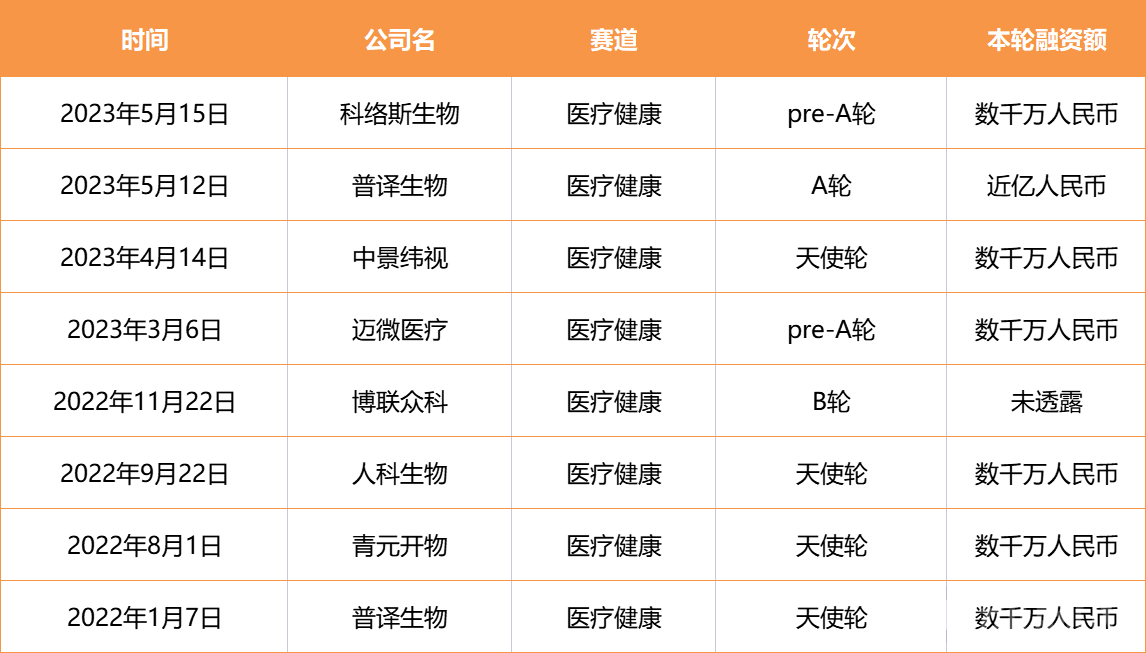 Shuimu Ventures: Investment Overview (January 2022 – June 2023)
For instance, Keluosi Biotech has established China’s first covalent drug lead compound screening platform and active molecular target discovery platform, leveraging cutting-edge chemical proteomics technologies as its core competency. Meanwhile, Puyi Biotech has developed the first commercially available, domestically produced biological nanopore sequencer. Therefore, “technologies that are far ahead of the industry” represent the most valued corporate attribute for Tsinghua-affiliated investors.
Policies are temporary; a comprehensive translation system is an essential requirement.
In addition to financial support, Tsinghua University also encourages entrepreneurship among students and faculty through policies and incubation platforms.
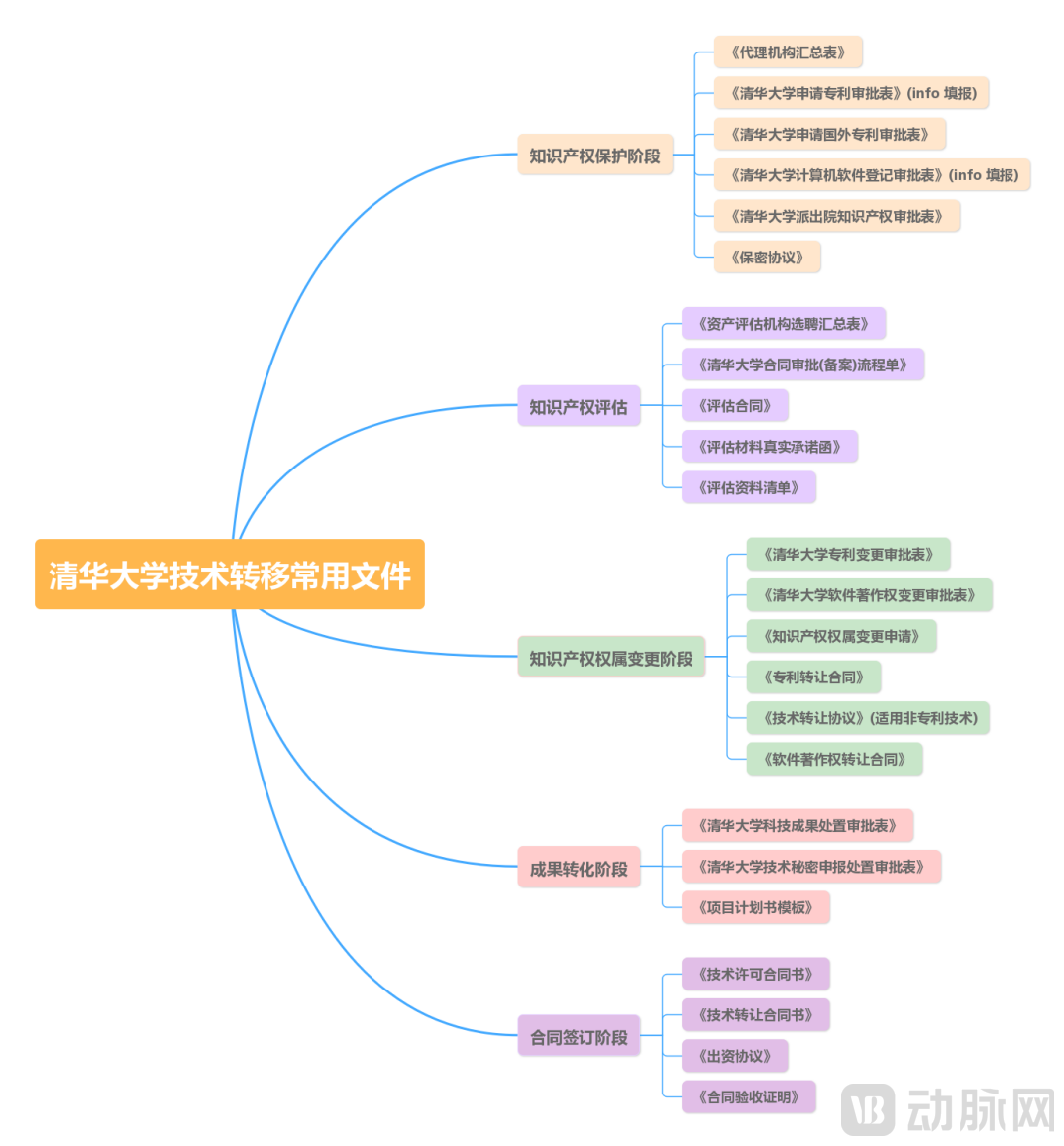 Common Documents for Technology Transfer at Tsinghua University
However, compared to policy considerations, Tsinghua University has devoted more energy toTransformation Platformin its development. Tsinghua University has established its own entrepreneurship hubs, such as the Tsinghua iCenter, x-lab, Chuang+, and the Tsinghua Art and Science Technology Innovation Base, which serve as Tsinghua’s “Three Innovations” education platforms to provide comprehensive resource support for student entrepreneurs. A senior project manager within Tsinghua’s service system told Orange Fruit Bureau:“We recognized early on that policies are temporary; what is now more critical for the translation of scientific research is a comprehensive translational framework.”
To enhance the conversion rate of scientific research innovations, Tsinghua University has established a process tailored to support entrepreneurial projects. First, the university set up a Technology Transfer Office to assist entrepreneurs in identifying market positioning and planning patent ownership in advance. Subsequently, dedicated technology transfer specialists provide one-on-one mentoring and planning for each project, addressing gaps in industry expertise and technological development during the commercialization process.
Meanwhile, the School of Finance at Wudaokou has established a specialized program in technology transfer, cultivating a cohort of experienced technology managers to support projects. These professionals facilitate the entire commercialization process—from initial product positioning to later-stage corporate implementation and team building—truly enabling the transition from laboratory to market.
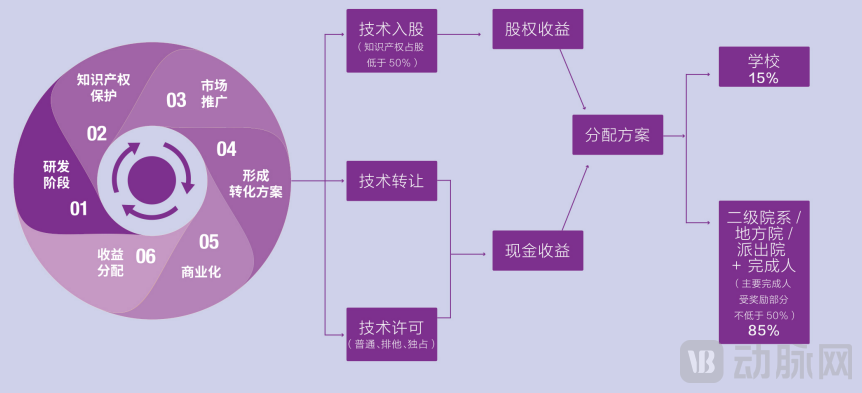 Tsinghua University’s Technology Transfer Model (Source: Tsinghua University Handbook on Scientific and Technological Achievement Transformation Services)
Additionally, before a project enters the commercialization phase, Tsinghua University conducts an assessment of its feasibility and market potential, known as the Proof of Concept (POC) stage. Once the project’s implementability is confirmed, the Tsinghua Technology Transfer Center identifies suitable entry points and benchmark enterprises for the project, while designing its core value proposition. Often, the core value proposition and technological entry point are mutually reinforcing, representing key areas of focus for investors when evaluating projects.
Based on current practices, Tsinghua University has explored an incubation pathway tailored to its institutional needs. In the rankings of the “2021 Annual Report on China’s Scientific and Technological Achievement Transformation,” jointly compiled by institutions such as the National Center for Science and Technology Evaluation in 2022,Tsinghua University once again ranked first among Chinese universities in total revenue from the commercialization of scientific and technological achievements.
Every Tsinghua Alumnus Has an Entrepreneurial Dream
A favorable entrepreneurial environment can meet entrepreneurs' external needs, but success ultimately depends directly on their capabilities and determination.
Research StrengthNeedless to say, as a top-tier university in China, Tsinghua University is second to none in terms of both student quality and faculty strength. Furthermore, Tsinghua places particular emphasis on cultivating students’ theoretical and research capabilities. For instance, through the “Tsinghua Xuetang Talent Training Program,” it has established a decade-long framework for nurturing talent in basic sciences. It has also taken the lead in launching “interdisciplinary” majors, breaking down traditional disciplinary barriers to foster innovative professionals with cross-disciplinary expertise. These initiatives have laid a solid foundation for entrepreneurship among Tsinghua alumni.
Additionally,The entrepreneurial spirit is particularly prevalent at Tsinghua University., which is inseparable from Tsinghua University’s innovative cultivation model of “unity of knowledge and action.”
First, to cultivate students’ awareness of innovation and entrepreneurship, Tsinghua University deliberately facilitates close interactions between students and successful entrepreneurs. In addition to inviting accomplished entrepreneurs to deliver lectures and host seminars on campus, Tsinghua has also recruited a group of outstanding market elites to provide guidance to students. To date, Tsinghua has appointed several distinguished figures as advisors to its school, including Apple CEO Tim Cook and Jim Breyer, widely regarded as the world’s leading venture capitalist.
Secondly, to help students understand and engage in entrepreneurship, Tsinghua University has held an annual Innovation and Entrepreneurship Competition since 1988. “Real-world entrepreneurship” is the defining feature of Tsinghua’s competition, during which the university provides participants with market guidance and basic incubation services. This approach has planted the seeds of entrepreneurial ambition among Tsinghua affiliates; indeed, some companies took their initial shape through the competition. As the CEO of a medical innovation startup once remarked to VCBeat, “Our venture first took root as a project in the Innovation and Entrepreneurship Competition.”
The rise of an entrepreneurial culture has not only inclined Tsinghua alumni toward entrepreneurship but also made it easier for them to find compatible partners along the way. It is evident that many companies have been founded by “Tsinghua + Tsinghua” duos, with TopEye, a company specializing in the R&D of ophthalmic medical devices, being a prime example. Commenting on the frequent emergence of such “Tsinghua + Tsinghua” founding teams, Wang Yingqi, CEO of TopEye, stated:“In our entrepreneurial journey, we did not deliberately seek out fellow Tsinghua alumni; however, due to Tsinghua’s unique startup culture, its alumni share a high degree of common ground in their entrepreneurial identity, making it easy for them to come together along the way.”
Moreover, another distinct characteristic of Tsinghua-affiliated startups is the prevalence of teams featuring a “senior-junior” mentorship model.Many teams are composed of fellow students or mentor-mentee pairs, such as Liuhe Ningyuan, Qitan Technology, and Yumeike. According to some Tsinghua University alumni, this may reflect the inherent trust among Tsinghua graduates: “Collaborating with alumni lowers both trust and communication costs, laying a solid team foundation for future entrepreneurial ventures.”
Epilogue
Driven by robust financial resources, a comprehensive incubation system, and Tsinghua University’s vibrant entrepreneurial culture, the startup stories emerging from Tsinghua have become legendary within China’s higher education community.
On the surface, it seems that Tsinghua alumni have dominated entrepreneurship."Timing, Location, and Harmony", it is only natural that their startup success rate is high. Yet, at a deeper level, the entrepreneurial success of Tsinghua alumni stems more from their innovative spirit of relentlessly pursuing industry-leading technologies and their scientific research strength in continuously producing landmark scientific achievements.
Technological innovation is advancing at a breathtaking pace, and the times are raising the bar ever higher. A growing number of researchers are moving closer to industry, with many university professors transforming into corporate CEOs. Yet one thing remains unchanged: the market’s demand for innovative “hard tech.” As Thomas Peters once said, “Distance has disappeared; innovate or die.” Whether in academia or business, only those who stay at the forefront can ride the wind and soar.