

TransCode Therapeutics Raises $7M in Desperate Bid to Extend Runway Amid $5M Cash Crunch

Transcode Therapeutics
Cancer Treatment Drug Developer
Affected by the “capital winter” that began in 2021, the global pharmaceutical market has entered a cyclical “financing winter.” Investors have become more cautious during this downturn, deploying capital into fewer projects and with smaller ticket sizes. This capital market “winter” has also prompted innovative drug companies to reassess the competitive landscape, rationally evaluate their team and product competitiveness, and initiate self-rescue measures.
Transcode Therapeutics has reached a critical juncture for its survival.
As an innovative gene therapy company with seven pipelines, TransCode Therapeutics had only $5 million in cash reserves and a market capitalization of just $2.2354 million by the end of 2022. Meanwhile, TransCode’s cancer-targeting drug initiated its first-in-human (FIH) clinical trial.
Amid the “Winter Chill,” How Can an Innovative Pharmaceutical Company with $5 Million in Cash Reserves Make Drastic Cuts to Survive?
TransCode has been striving to save itself.
On February 14 this year, TransCode withdrew its previously filed registration statement for a stock offering, triggering heavy trading in its shares. Trading volume reached 40 million on the 15th, and the share price surged 100% in pre-market trading. On the 17th, TransCode completed a registered direct offering of 2.85 million shares of common stock at $0.527 per share, generating net proceeds of $1.3 million.
On April 5, Transcode Therapeutics was awarded a Year 3 grant under the NIH SBIR (Small Business Innovation Research Fast-Track) program, totaling approximately $871,000. On April 14, Transcode completed an equity financing with White Lion Capital, pursuant to which it will sell approximately $1.08 million in common stock to the investor by May 31.
On the other hand, the substantial equity issuance undertaken as a self-rescue measure has eroded TransCode’s stock price advantage. Shareholders are concerned about equity dilution and a decline in stock price driven by the pricing of the new issuance, which even poses a potential risk of delisting.Over a two-month period, Transcode’s single-share price did not fall below $8 from January to March, and never exceeded $8.70 from March to May, with an annual price range reaching as high as $34.65 per share.
TransCode has clearly recognized this issue as well.In May, TransCode executed a 1:20 reverse stock split to increase the trading price of its common stock and comply with Nasdaq’s minimum bid price requirement.This reverse stock split automatically consolidates every 20 shares of common stock into one share, reducing the number of outstanding shares from approximately 17 million to approximately 850,000.
However, the results were disappointing; since May 25, the stock price has fallen below the unprecedented threshold of $5. TransCode remains financially strained.
Nevertheless, TransCode has launched a new round of public offering. On June 6, TransCode priced its public offering at $7 million. The public offering price per share was $3.50. Each share of common stock comes with an exercise price of $3.25, allowing the purchase of one Series A-1 warrant or one Series A-2 warrant. Both types of warrants are immediately exercisable and expire three years from the date of issuance.
Warrants are essentially Transcode selling its own future.
Where lies the future? Clearly, Transcode’s answer is its delivery platform and drug pipeline.
TransCode is dedicated to combating cancer through intelligent design and effective delivery of RNA therapies, with its patented product being the TTX system, a nano-drug delivery platform.
TTX Delivery System is an RNA delivery platform that uses iron oxide nanoparticles as material carriers.Iron oxide nanoparticles possess properties such as superparamagnetism, biocompatibility, low toxicity, and low immunogenicity, enabling their application in biomedicine. They have currently been approved for use as clinical imaging agents for cancer and as a treatment regimen for iron-deficiency anemia.
In the TTX delivery system, iron oxide nanoparticles can reduce early renal and hepatic clearance, leading to a prolonged circulation half-life and effective accumulation at tumor and metastatic sites. Additionally, their inherent imaging capability facilitates the quantitative assessment of particle delivery to target organs and holds promise for enabling targeted delivery to sites beyond the liver and kidneys.
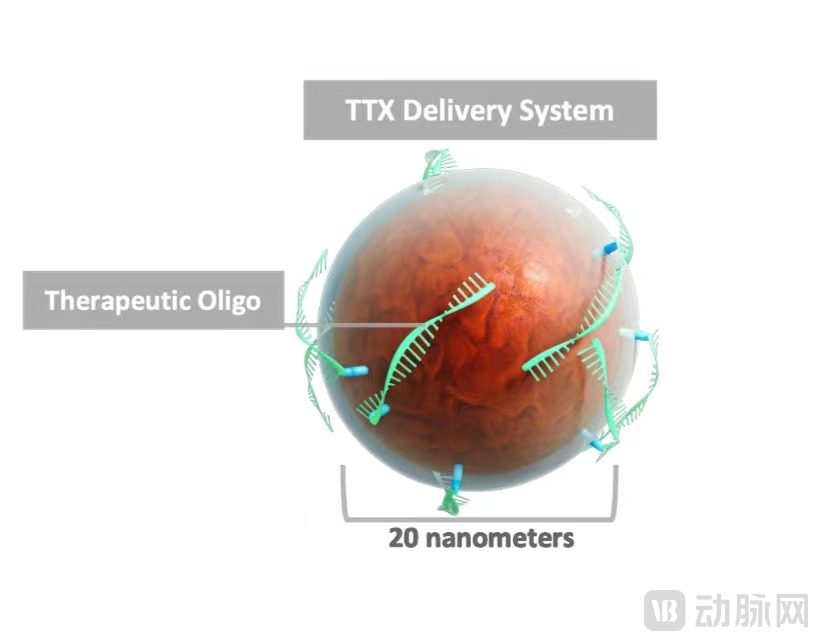
TTX Delivery System Model
Image source: TransCode official website
In further preparation, the core iron oxide complex is cross-linked with the glucose polymer dextran to provide overall stability to the particles. The dextran coating and the iron oxide core are amino-functionalized to form stable linkages for loading therapeutic oligonucleotides. This composite design protects the oligonucleotides from degradation.
The small size, hemodynamic distribution, and positive charge of the complexes enable them to penetrate tumor microvasculature, extravasate into the tumor and metastatic stroma, and facilitate cellular uptake. Meanwhile, the dextran coating leverages the high metabolic activity of cancer cells to further accelerate particle absorption. The combined effects of hemodynamic distribution and metabolism-triggered uptake enhance the ability of TransCode nanoparticles to reach intracellular genetic targets within tumor cells.
Compared with traditional delivery methods or organic nano-delivery systems, the TTX delivery system offers the advantages of low risk and high efficacy:
1. High binding affinity and high specificity for RNA targets;
- Low toxicity, low immunogenicity, and proven clinical safety;
3. High stability, adaptable to various types of payloads; can be preserved via lyophilization, eliminating the need for cold-chain transportation;
4. Achieve high-efficiency cellular delivery by leveraging the proton sponge effect;
5-Applicable to neurology, enabling quantitative non-invasive imaging assessment through MRI and drug bioavailability measurements;
High tunability and high flexibility, allowing vector adjustment based on target tissue。
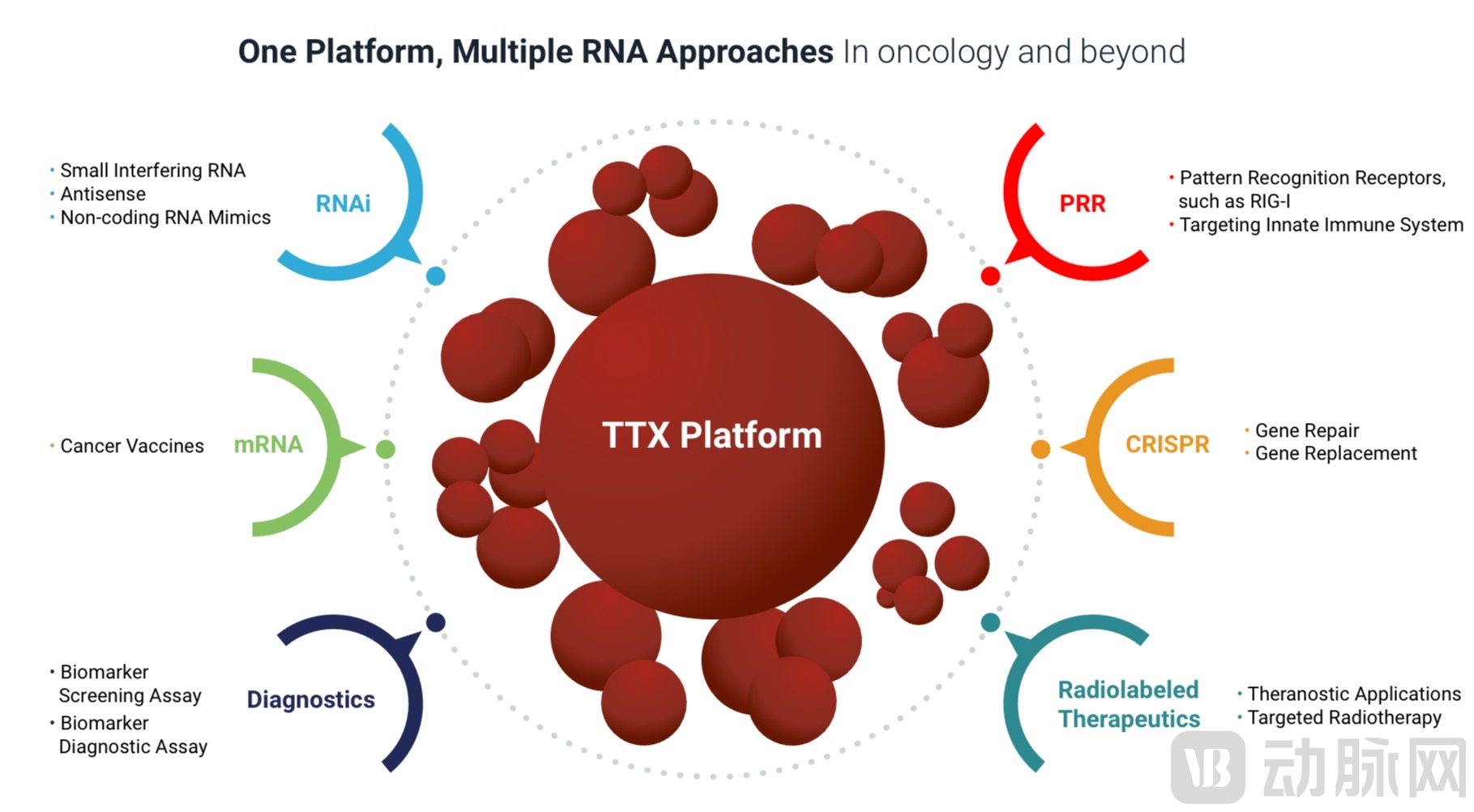
TTX System Candidate RNA Therapeutic Regimen
Image source: TransCode official website
The TTX platform is applicable to a variety of RNA-based therapeutic approaches. Leveraging this capability, Transcode Therapeutics has developed seven distinct candidate therapeutic product pipelines aimed at improving prognosis and long-term survival in cancer patients.
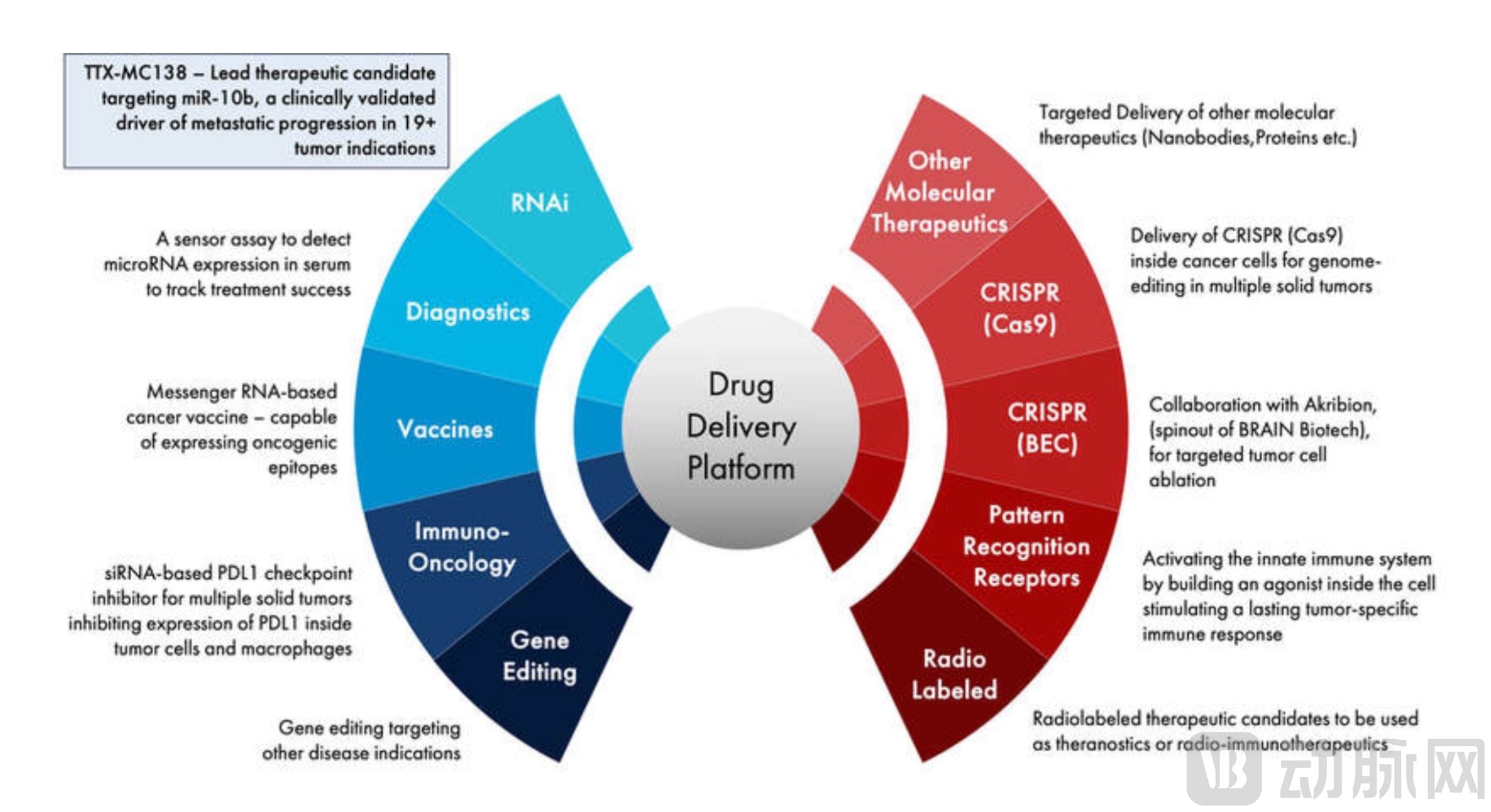
Transcode Candidate Product Pipeline
Image source: TransCode official website
Furthermore, TransCode has deployed a modular toolbox to design and develop an extensive pipeline of candidate products. The size, charge, and surface chemistry engineering of the core iron oxide nanoparticles in the delivery system can be adjusted and optimized according to the intended targets and therapeutic payloads. This modular toolbox enables further development of customized products, such as RNA-targeted radiolabeled therapies and biomarker diagnostics.
In addition to its proprietary delivery platform, the TTX system, TransCode’s other major strategic focus lies in the development of cancer therapeutics. Its lead therapeutic candidate, TTX-MC138, targets miRNA-10b and is specifically designed for the treatment of metastatic cancer. Metastasis refers to the spread of cancer from its primary site to other parts of the body.Metastatic cancer is an area that has been neglected in traditional drug development.
According to a 2019 report by the American Cancer Society, 90% of cancer deaths are attributable to metastasis. Conventional clinical practice holds that non-metastatic and metastatic tumor cells share identical compositions and therapeutic approaches; consequently, treatment for patients with advanced-stage disease offers only limited prognostic improvement.
However, scientists in the field of genetic testing and therapy have discovered that metastatic cancer is fundamentally different from primary tumors. This has also brought new treatment options for patients with metastatic cancer—gene-targeted therapy.
miRNA-10b is one of the earliest microRNAs identified with dysregulated expression in cancer. It serves as a key regulator of tumor cell viability and metastatic potential across a range of malignancies, including breast, pancreatic, ovarian, and colorectal cancers, as well as glioblastoma. Its overexpression is a critical determinant of survival in metastatic cells.
Specifically, a subset of cells within the primary tumor (i.e., metastatic cells) overexpresses miRNA-10b. Upregulated miRNA-10b enables these metastatic cells to detach from the primary tumor, acquire the capacity for migration and invasion into surrounding tissues, and subsequently form new metastatic lesions in vivo.
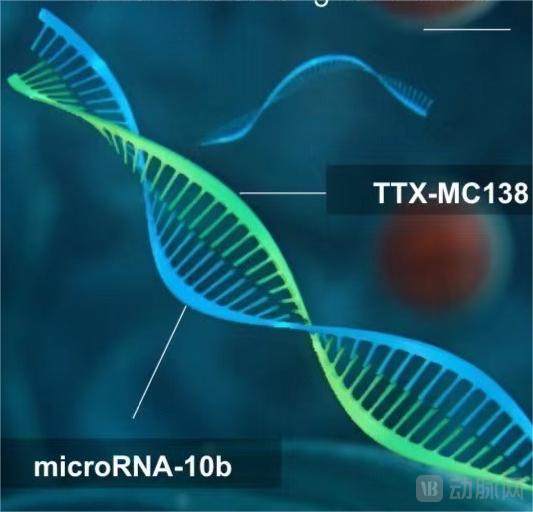
TTX-MC138 Binds to Target miRNA-10b
Image source: TransCode official website
TTX-MC138, delivered to target tissues via the TTX system, is extensively taken up by metastatic tumor cells and binds to the miRNA-10b target.TTX-MC138 will lead to the inhibition and inactivation of miRNA-10b, thereby inducing tumor cell death and overall disease regression.In preclinical studies, successful delivery was achieved in the lymph nodes, lungs, bones, liver, kidneys, spleen, and muscles.
Furthermore, TTX-MC138 operates independently of hormone receptors and is therefore unaffected by hormone receptor status, making it applicable for the treatment of metastatic breast cancer. This provides a new therapeutic option for patients with triple-negative breast cancer (TNBC), who have limited treatment choices. In animal model studies, TTX-MC138 was administered in combination with low-dose chemotherapy for the treatment of TNBC.
This preclinical study demonstrates that,TTX-MC138 Durably Eradicates Established Metastases in a Mouse Model of Metastatic Breast Cancer.100% of cases showed elimination of regional metastases (cancer spread to the lungs and lymph node regions), 65% of cases showed elimination of distant metastases (cancer spread to all parts of the body), and no metastasis or recurrence occurred after treatment cessation.
TTX-MC138 is also being applied in the treatment of pancreatic cancer, known as the “king of cancers.”40% of animals receiving monotherapy achieved a complete response, defined as 100% elimination of the disease with long-term survival and no recurrence, while miRNA-10b expression was downregulated by 97%.For this indication, TTX-MC138 has received Orphan Drug Designation (ODD) from the FDA.
In glioblastoma multiforme, the combination regimen of TTX-MC138 and temozolomide has yielded positive preclinical results, enhancing the cytotoxic efficacy of temozolomide and successfully inhibiting tumor cell viability and invasiveness.
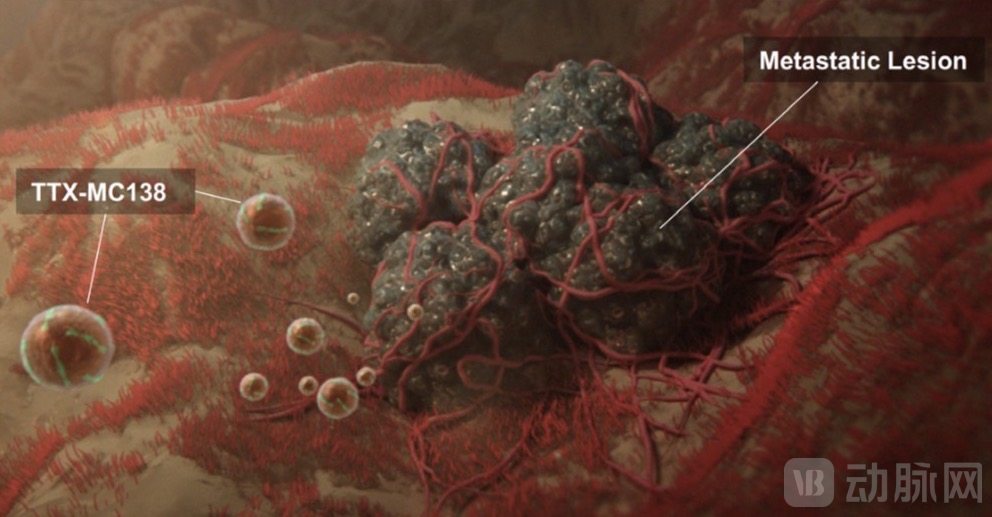
TTX-MC138 Simulated Treatment Process
Image source: TransCode official website
Currently, the FDA has authorized TTX-MC138 for a Phase 0 first-in-human (FIH) clinical trial. This trial will treat 12 patients with advanced solid tumors to evaluate the efficacy of TTX-MC138 against their metastatic lesions.The FIH trial also received written approval from the Institutional Review Board (IRB) of Dana-Farber Cancer Institute.
Proprietary delivery platforms provide TransCode with a robust R&D foundation and broad avenues for expansion.Currently, TransCode has initiated the research and development of two major therapeutic approaches—TTX-CRISPR and TTX-RNA (for cancer vaccine development)—as well as four targeted cancer drugs.
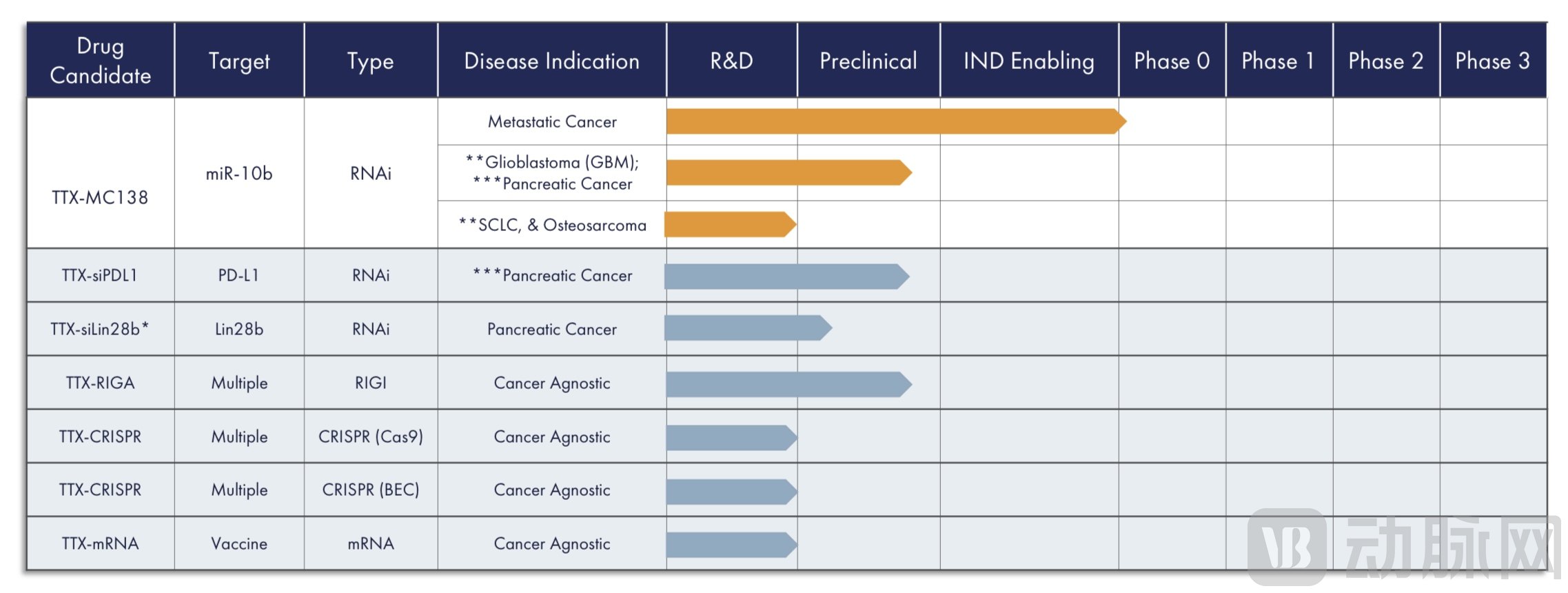
Transcode's R&D Pipeline Layout
Image source: TransCode official website
In addition to TTX-MC138, Transcode has three targeted drugs in the preclinical stage.TTX-RIGA is a novel immuno-oncology candidate designed to bind specific RNA within tumor cells and activate the intracellular receptor RIG-I (retinoic acid-inducible gene I), thereby driving innate immune responses in the tumor microenvironment.
TTX-siPDL1 is an immunotherapeutic agent targeting the PD-1/PD-L1 pathway. Unlike conventional inhibitors that merely block the interaction between PD-1 and PD-L1, TTX-siPDL1 employs an RNA interference (RNAi) approach to completely inhibit PD-L1 synthesis. Following successful preclinical animal studies, TTX-siPDL1 received Orphan Drug Designation (ODD) from the U.S. Food and Drug Administration (FDA) for the treatment of pancreatic cancer.
TTX-siLin28B is a drug targeting solid tumors. Lin28B is a biomarker for tumor survival. In this treatment regimen, TTX-siLin28B utilizes shRNA and siRNA to reduce Lin28B expression, thereby effectively inhibiting cell proliferation and tumor mass. Previously, Massachusetts General Hospital (MGH) entered into an exclusive option agreement with TransCode Therapeutics for TTX-siLin28B and 64Cu-TTX-MC138.
The multi-directional expansion in the RNA field is also inseparable from the founding team’s diverse backgrounds in medical sectors.
Co-founder and CEO R. Michael Dudley previously founded Artemes Technologies, a drug delivery technology company specializing in customized delivery systems for injectable medications. This experience has allowed him to accumulate extensive expertise in drug delivery. Additionally, Michael Dudley earlier conducted immunological and biochemical research on blocking factors related to breast cancer tumors at Harvard Medical School, laying the foundation for his establishment of TransCode Therapeutics.
Co-Founder and Chief Technology Officer Dr. Zdravka Medarova is a geneticist and cancer biologist who has gained international recognition for her work in the field of non-coding RNA cancer therapeutics. She is one of the pioneering scientists to apply nanoparticles as siRNA vectors for tumor therapy. Previously, she served as an Associate Professor of Radiology at Harvard Medical School, where she developed nanotechnology and imaging tools for cancer diagnostic monitoring and the development of anticancer therapeutic agents.
Dr. Anna Moore, Co-founder, currently serves as a Scientific Advisor to TransCode. She is a former Professor of Radiology and Physiology and a former member of the Board of Directors of the World Molecular Imaging Society (WMIS). For 18 years, she served as Director of the Molecular Imaging Laboratory at the Athinoula A. Martinos Center for Biomedical Imaging at Massachusetts General Hospital.
The three co-founders bring to TransCode Therapeutics multidisciplinary expertise spanning drug delivery, cancer research, nanocarriers, and molecular imaging. Meanwhile, TransCode Therapeutics continues to strengthen its multidisciplinary team.
Dr. Peter Liu, Vice President of R&D and Chief Scientist, brings over 20 years of research and management experience in the fields of bioconjugate chemistry, nucleic acid chemistry, and blood product development. Another Chief Scientist, Subarta Ghosh, is an expert in immuno-oncology, with a primary research focus on molecular biology, translational oncology, and innovative combination therapies. He has led multiple GLP-compliant preclinical studies, as well as antibody and cell therapy study designs and project evaluations.
In 2016, TransCode was founded.
In 2021, Transcode Therapeutics listed on the Nasdaq, completing an IPO with a total value of $25.4 million.
In 2023, TransCode initiated its first-in-human clinical trial, marking the company's entry into the clinical development stage.
The issuance of warrants is a sale of the future, and Transcode’s seven-year R&D journey is no less a bet on what lies ahead.
A therapeutics company, a drug targeting an innovative mechanism, and a novel therapeutic agent all represent high-stakes gambles for R&D teams, pharmaceutical companies, and investors alike. Some are washed out on the shore, while others stage remarkable comebacks against the odds; yet the tide of pharmaceutical innovation continues to rise.