

Lanke Bio Launches EasyGo!™ One-Step ELISA Kits Featuring Proprietary HRP Lyophilized Microsphere Technology
The Hardships of ResearchersELISA Has Been Around for a Long Time!
A research colleague, who wished to remain anonymous, recently poured out their frustrations to the author: “ELISA assays are simply the most frustrating procedure in cellular and molecular immunodetection! The protocol is cumbersome, the process is time-consuming, and it is highly prone to failure. This is particularly devastating when working with precious samples, as a single failed experiment can render weeks of effort futile. To make matters worse, there is no guarantee that subsequent attempts will successfully yield data.”
The underlying reason is that ELISA is a highly reproducible assay technique with relatively straightforward procedures; however, each step in the workflow significantly impacts the test performance. Conventional ELISA techniques require two or even three manual steps to achieve proper incubation, inevitably introducing errors and sample contamination at each stage. The accumulation of such errors and mishaps largely contributes to significant deviations in experimental results, where minor initial discrepancies lead to substantially divergent outcomes.
Although ELISA was developed in the 1970s, research on this technology started relatively late in China. Currently, most domestic manufacturers adopt either the two-step method or the one-step incubation method. As the crown jewel of ELISA technology, the one-step method has long been monopolized by foreign life science giants, resulting in high product prices.
However, this situation was disrupted by a Hangzhou-based company listed on the National Equities Exchange and Quotations (NEEQ), which was founded in 2002.
On June 12, 2023 (Beijing Time), Lianke Biology officially launched EasyGo!, its independently developed product.TMOne-Step ELISA and Kits Mark China’s Breakthrough from Following to Leading Global ELISA Technology Development. And EasyGo!TMOne-step ELISA will also propel domestically produced ELISA technology into the “one-step” era.
Lianke Bio EasyGo!TMIntroduction to ELISA
ELISA techniques include the direct method, indirect method, sandwich assay (double-antibody sandwich method), and competitive method. Among these, the double-antibody sandwich assay has become one of the most commonly used methods for antigen detection due to its high sensitivity, strong specificity, and the fact that antigens do not require prior purification. However, traditional multi-step incubation double-antibody sandwich ELISA suffers from numerous pain points.
l For the vast majority of research users, preparing and diluting multi-component reagents is a tedious, complex, and time-consuming process; repeated addition of reagents can lead to experimental errors or inaccuracies, resulting in poor reproducibility.
l For enterprise users such as biopharmaceutical companies, CROs, and CDMOs, the two-step assay is characterized by long turnaround times, high costs, low accuracy, and poor stability, leading to increased risks of experimental failure and higher operational costs; furthermore, its cumbersome and complex operation fails to meet the demands for large-scale, industrialized, automated, and streamlined processes.
l For medical institutions and clinical laboratories, the two-step method is time-consuming, inefficient, and operationally complex, resulting in the inability to rapidly test a large volume of clinical samples and leading to low efficiency in clinical diagnosis and treatment.
Compared with the traditional two-step method and one-step incubation method, the one-step method significantly simplifies the operational procedures and reduces time costs. Meanwhile, due to the reduction in reaction steps and optimization of the experimental system, the one-step ELSA demonstrates superior detection sensitivity and precision.
However, the market for one-step ELISA products is monopolized by foreign manufacturers, resulting in high prices. This changed with Lianke Biology's EasyGo!TMThe advent of one-step ELISA and its kits marked the beginning of a revolutionary transformation.
As early as 2012, Lianke Biotech dedicated itself to the R&D of EasyGo!TMOne-Step ELISA and Kits. Eleven Years of Dedication: Full Independent Intellectual Property Rights from Technology to Product Realization. EasyGo!TMThe one-step ELISA kit has become the globally leading and China’s only one-step ELISA product.
According to Song Luhong, Chairman of Lianke Biology, most one-step products on the market are, strictly speaking, based on a one-step incubation method, which requires the addition of detection antibodies for incubation after the sample has been added. In contrast, Lianke’s EasyGo!TMOne-Step ELISA products require only a single sample addition, eliminating the need for additional procedures. While ensuring product performance, this approach omits cumbersome steps such as adding detection antibodies and enzymes, reducing the assay time from approximately 4 hours to under 90 minutes, thereby offering greater innovation and operational advantages.
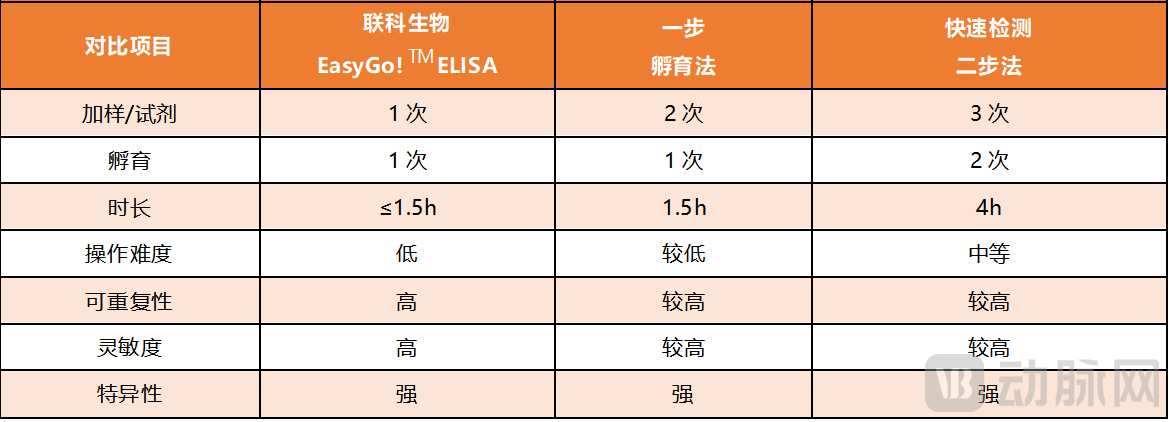
Lianke Bio EasyGo!TMComparison of ELISA with One-Step Incubation and Two-Step Methods
Linko Biosciences’ proprietary HRP lyophilized microsphere technology is the “key” to unlocking one-step assays. EasyGo!TMBy pre-coating the capture antibody onto the bottom of the microplate and pre-loading the detection antibody (or HRP)-conjugated microspheres into the wells, this ELISA method enables colorimetric detection immediately after adding standards and samples. It eliminates cumbersome procedures such as multi-component reagent preparation and dilution, achieving a “sample-in, result-out” workflow. This approach minimizes sample contamination during testing, saves time, improves efficiency, reduces error rates, and ensures high reproducibility, making it an ideal choice for high-throughput ELISA assays that demand high accuracy, high reproducibility, and time efficiency.
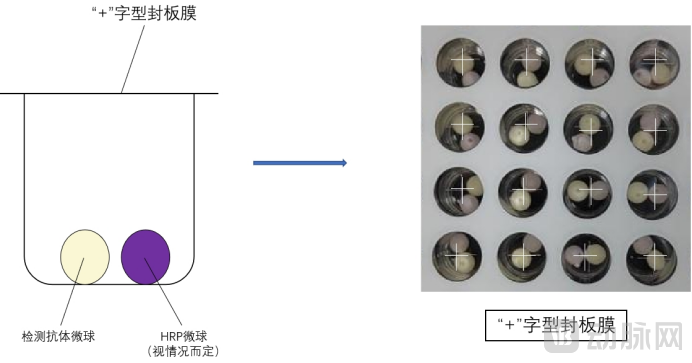
EasyGo! TMTechnical Innovations in ELISA
EasyGo! Based on our proprietary patented microsphere technology.TMThe ELISA kit is pre-coated with capture antibodies and HRP-conjugated detection antibodies. Users need only add standards and samples to obtain reliable results in a single step. This kit offers superior sensitivity and reproducibility compared to one-step incubation methods and conventional two-step ELISA kits.
EasyGo! TMCompared to one-step products on the market, ELISA kits offer a longer shelf life and more flexible storage conditions. They are easy to use, requiring no manual application of plate sealing films and no freezing, allowing for testing at any time, which significantly enhances accessibility and convenience. EasyGo!TMWith their superior performance characterized by precision, stability, time efficiency, and high throughput, these ELISA kits address the limitations and pain points of traditional ELISA kits. They meet the critical demands of a broad user base—particularly enterprise users—for accuracy, stability, cost-effectiveness, and sensitivity in ELISA assays, providing an ideal ELISA experimental solution for biopharmaceutical companies, CROs, CDMOs, and other enterprise clients, as well as medical institutions and clinical laboratories.
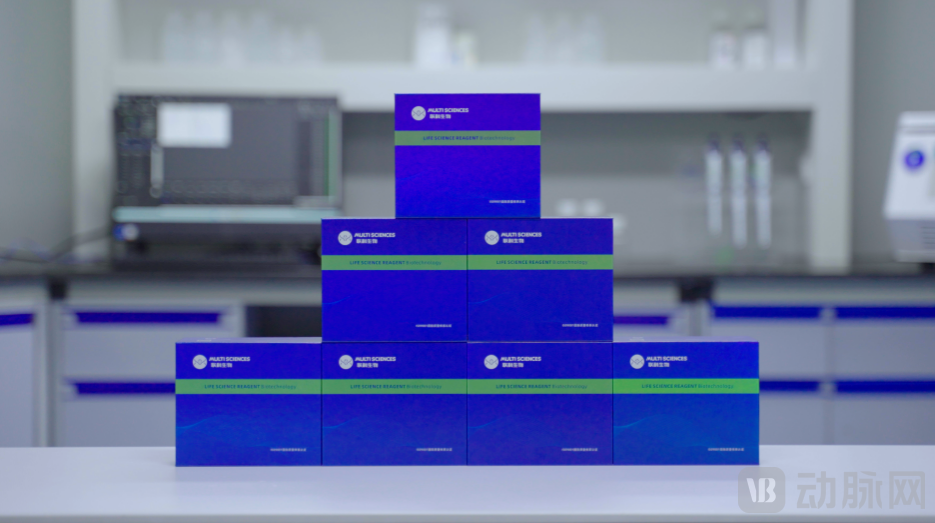
EasyGo! TMELISA Kit Products
Professor Zhang Ming from Zhejiang University commented, “ELISA is the gold standard for protein quantification and is widely used. The one-step method represents the most advanced ELISA technology and the future direction of its development. To my knowledge, one-step ELISA offers numerous advantages. First, it features a simple operation that saves time and effort, thereby reducing labor and time costs. Second, the simplified procedure minimizes errors, avoids interference from operational and environmental factors, and ensures high accuracy and excellent reproducibility. Furthermore, one-step ELISA is compatible with automated instruments, enabling workflow optimization, which lays the foundation for mechanized and automated laboratory practices in the future.”
When we step back from individual products and take a higher-level perspective, we discover EasyGo!TMOne-step ELISA and its kits are merely a small part of Lianke Biology's expansive product portfolio.
Lianke Bioscience has established R&D platforms for ELISA technology and flow cytometry. Its ELISA product portfolio alone comprises over 460 items, covering 15 disease areas. The company also offers hundreds of other products, including flow cytometry antibodies, apoptosis/cell cycle detection kits, and auxiliary reagents. Furthermore, Lianke Bioscience operates GMP-compliant production workshops, with an annual production capacity of 100,000 ELISA kit boxes and an output value exceeding RMB 100 million.
Currently, Lianke Biology has established long-term partnerships with over 400 research universities and colleges both in China and abroad, more than 600 research institutions, over 1,000 distributor partners, 2,400+ tertiary hospitals, and 3,000+ medical laboratory companies. It provides products and services to more than 50,000 customers, with its products exported extensively to North America and Europe.
With EasyGo!TMWith the launch of the one-step ELISA and its kit, Lianke Biology is poised to further increase its market penetration and share both domestically and internationally.
In the future, Lianke Biology will develop more assay kits around its ELISA application development platform, flow cytometry antibody application development platform, recombinant protein technology platform, and recombinant antibody technology platform, to serve clinical diagnostics and scientific research.