

Venus Medtech Executive Boosts Stake Amid Anticipated Explosive Growth in TAVR Sector
Benefiting from national innovation-support policies and the sustained growth in patient demand, the high-value medical consumables industry has undergone a rapid recovery in the post-pandemic era as expected. Among its segments, the transcatheter aortic valve replacement (TAVR) industry, representing high-end innovative medical devices, has drawn particular attention. This year, multiple TAVR companies have provided guidance targeting high double-digit growth for the entire industry in 2023, suggesting that the sector is poised to enter a new cycle of substantial volume expansion.
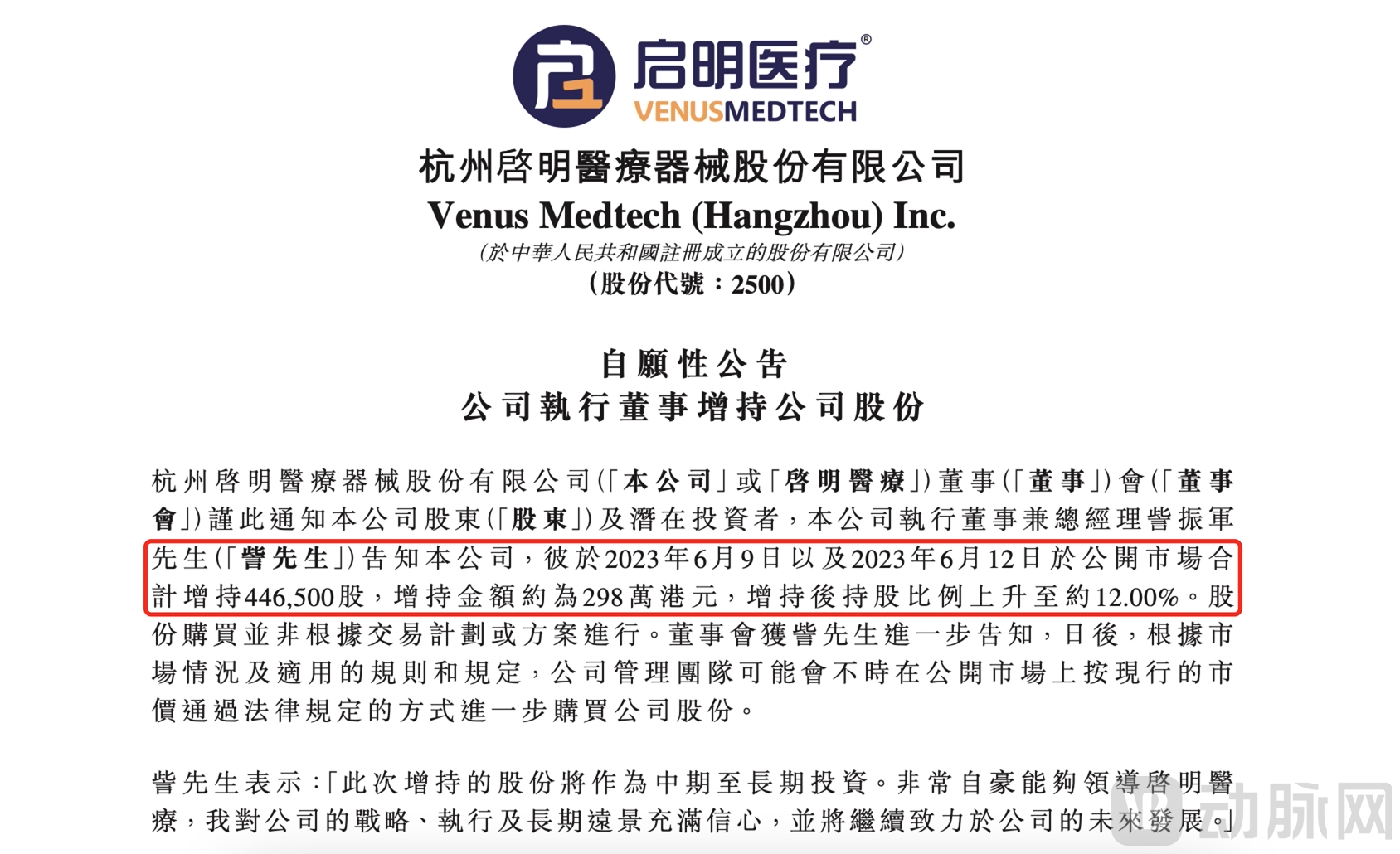
Recently, Zi Zhenjun, co-founder and executive director of Venus Medtech (02500.HK), a leading Chinese TAVR company, has repeatedly increased his holdings in the company’s shares, demonstrating strong confidence in the industry’s return to rapid growth. According to disclosure documents filed with the Hong Kong Stock Exchange, Mr. Zi increased his shareholdings on June 9 and 12, 2023. Within just a few days, he completed multiple purchases, acquiring a total of 446,500 shares for approximately HK$2.98 million. Following these transactions, his stake in the company rose to 12%.
With the Pandemic Subsiding, the TAVR Industry Is Poised for Explosive Growth This Year
Since the beginning of this year, as the pandemic has gradually subsided, the TAVR industry has been steadily recovering. In recent years, with the successive launch of next-generation products, the learning curve for TAVR operators has continued to shorten. Driven by market education efforts from multiple companies, awareness of the procedure among both physicians and patients has strengthened. Meanwhile, the competitive landscape within the sector has remained relatively stable this year, positioning the industry for a rapid recovery.
We have observed that since the beginning of this year, the volume of transcatheter aortic valve replacement (TAVR) procedures at hospitals across all tiers in China has recovered rapidly. For instance, Venus Medtech disclosed at its annual results conference in early April that the company’s sales grew significantly in the first quarter, with domestic implantations increasing by 55% year-on-year in February and March, and March recording the highest monthly procedural volume in nearly three years. It is understood that from January to May this year, the company’s TAVR implantations approached 2,000 units, maintaining a leading position in the industry.
In the United States, the annual volume of transcatheter aortic valve replacement (TAVR) procedures grew steadily and sustainably from over 6,000 in 2012 to more than 70,000 in 2019. In China, TAVR is still in its early stages of development, with procedure volumes expected to maintain rapid and continuous growth over the next 5–10 years. According to the 2022 Annual Report on Structural Heart Disease released by the Chinese Medical Doctor Association, the number of TAVR procedures in mainland China has shown a year-on-year increase; however, the total volume remains small, indicating a substantial gap compared with the United States, yet promising future prospects.
By the end of 2021, more than 15,000 TAVR procedures had been performed in mainland China. Since launching its first TAVR device, VenusA-Valve, in 2017, Venus Medtech has achieved cumulative implants exceeding 10,000 cases, establishing itself as a pioneer and leader in the TAVR sector. Domestically produced TAVR devices gained regulatory approval in China ahead of foreign competitors’ products, providing significant first-mover advantages that have helped increase penetration rates and maintain market share.
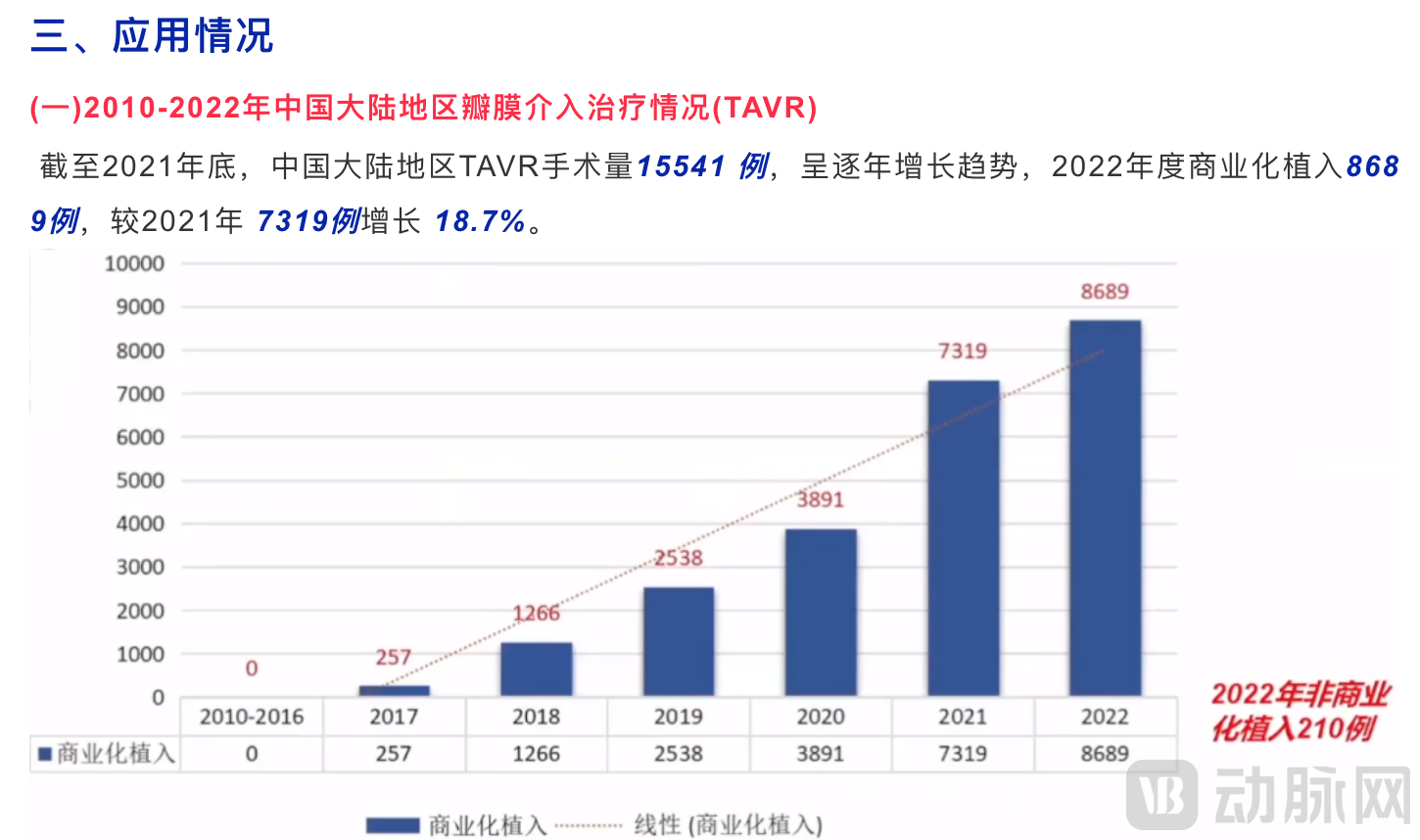 Source: 2022 Annual Report on Structural Heart Disease
Innovation Remains the Main Theme of the Medical Device Industry
Mitral and tricuspid valve therapies represent an emerging treatment area in structural heart disease. Compared with the relatively mature field of aortic valve disease, mitral and tricuspid valve diseases are more complex, and the development of interventional devices faces higher technical challenges; however, the market potential is substantial. According to Frost & Sullivan data, the global market size for transcatheter mitral valve interventions is projected to reach $17.4 billion by 2030, ultimately becoming three to four times the size of the TAVR (Transcatheter Aortic Valve Replacement) market. Currently, only one mitral valve repair product has been approved for marketing in China. Thus, in the field of mitral and tricuspid valve interventions, domestic and international companies are at the same starting line, providing all parties with opportunities to achieve innovative breakthroughs that address unmet clinical needs.
Taking Venus Medtech as an example, the company has proactively established a global innovative pipeline by leveraging its three major R&D centers in China, the United States, and Israel. In addition to its approved aortic and pulmonary valve products, the company continues to launch next-generation innovative devices, such as Cardiovalve, an innovative device designed for mitral and tricuspid regurgitation. As of the end of May this year, the pivotal clinical trial TARGET CE had successfully enrolled more than 30 patients across ten renowned cardiovascular centers in Europe and North America, demonstrating its clinical value and earning high recognition from medical experts.
Furthermore, the international multicenter clinical trials for the company’s independently developed next-generation dry TAVR products, including Venus-Vitae and Venus-PowerX, are progressing smoothly, with steady advancement in global markets. Its transcatheter pulmonary valve replacement (TPVR) system, VenusP-Valve, received EU CE MDR certification in April 2022, pioneering the entry of Chinese-made prosthetic heart valves into the European market. It has currently been approved for marketing in more than 30 countries, including China, France, Germany, the United Kingdom, Italy, and Spain.
Notably, Venus Medtech has established a comprehensive global patent portfolio covering major markets including China, the United States, Europe, Japan, Canada, Russia, and India, with over 80% consisting of invention patents, thereby providing a robust foundation for its globalization strategy. The company’s manufacturing and quality control standards have obtained certification from mainstream global quality systems, including those in China, the European Union, and MDSAP. Furthermore, Venus Medtech is actively investing in overseas marketing and cultivating strong relationships with leading international experts to build an overseas innovation ecosystem and partner network, thereby enhancing its global brand influence.
With globally competitive innovative products from the new generation and an increasingly robust global operational framework, a growing number of Chinese medical device companies are poised to emerge as industry leaders on par with their international counterparts.