

Headache e-Station (CDSS 2.0) Launches with Enhanced AI-Powered Diagnostic Support for Primary and Secondary Headaches
The newly upgraded Headache CDSS 2.0 (Headache e-Station), jointly developed by the International Headache Center of the Chinese PLA General Hospital and Shanghai Aimu Medical Technology Co., Ltd., was released on the 10th of this month at the 16th Annual Conference of Neurologists of the Chinese Medical Doctor Association.
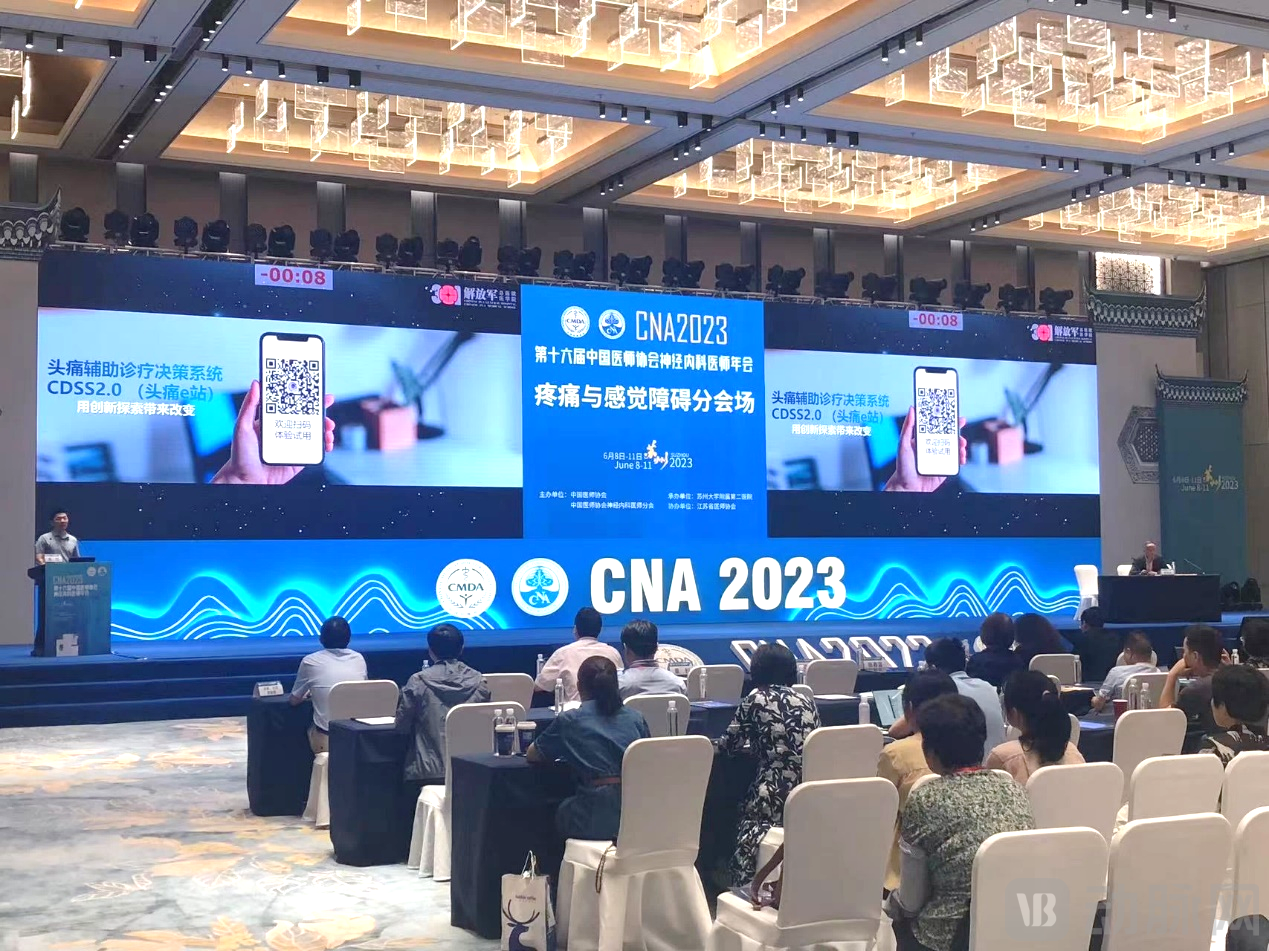
Headache e-Station is an auxiliary diagnostic and treatment decision support system designed for headache management. It can be used for screening secondary headaches, providing clinical auxiliary diagnosis for various primary headaches, and enabling patient self-screening. Patients input their chief complaints via a WeChat-based consultation chatbot; the system then synchronizes this information to the physician’s interface and provides AI-assisted diagnostic recommendations.
Clinical test results from 16 hospitals across China, recently published in *The Journal of Headache and Pain*, demonstrate that the "Headache e-Station" system achieves high accuracy in the auxiliary diagnosis of both secondary and primary headaches. The system attained a 100% risk alert rate for secondary headaches, with sensitivity exceeding 80% and specificity surpassing 95% for primary headaches. Furthermore, human-computer interaction data were effectively integrated into the diagnostic process, yielding high patient satisfaction.
Compared with the original Headache CDSS 1.0, Headache e-Station has undergone key upgrades, featuring a more user-friendly digital assisted diagnosis and treatment management system, along with enhanced user interaction and interface design. It supports headache diary logging and online access to the International Classification of Headache Disorders (ICHD-3), while also enabling the export and sharing of hospital-specific data. The system complies with Level 3 Classified Protection Certification standards, effectively ensuring data security and privacy protection. Headache e-Station efficiently integrates patient information related to headaches, reduces outpatient consultation time for physicians, and significantly improves the efficiency of doctor-patient communication.
Headache is one of the most common chief complaints among patients in neurology outpatient clinics, accounting for 20% of all such visits. However, the diagnosis of headache disorders in China remains somewhat disordered, with suboptimal rates of accurate diagnosis and treatment: only 13.8% for migraine and 5.6% for tension-type headache. Non-standardized diagnoses can lead to inappropriate treatment, exacerbating headache severity and frequency, and causing acute headaches to progress into chronic and refractory forms that are difficult to cure, thereby significantly impairing patients’ quality of life. Therefore, it is crucial to improve the efficiency of headache consultations and the accuracy of headache diagnosis. The launch of “Headache e-Station” will help clinicians more effectively enhance their capabilities in diagnosing and treating headaches, particularly by providing decision-making support for headache diagnosis in primary care hospitals.

Prof. Shengyuan Yu(Director of the Department of Neurology, First Medical Center of Chinese PLA General Hospital; Chief Physician; Doctoral Supervisor. Council Member of the International Headache Society; President-Elect of the Asian Headache Society; China Lead for the World Health Organization’s Lifting The Burden initiative; Council Member of the Chinese Medical Doctor Association; President of the Neurologists Branch of the Chinese Medical Doctor Association; Council Member of the Chinese Research Hospital Association; Chairman of the Committee on Headache and Sensory Disorders)
China has a large population base and a substantial number of headache patients. However, the diagnosis and treatment of headaches are often non-standardized, and there is an urgent need to further improve diagnostic accuracy. Studies have shown that primary headaches cost Chinese patients RMB 672.7 billion annually, accounting for 2.24% of China’s GDP. This imposes a heavy burden not only on patients’ families but also on the national economy. The World Health Organization (WHO) has called for 90% of headache patients to receive standardized diagnosis and treatment at primary healthcare institutions. Headache CDSS 2.0 (Headache e-Station) helps non-specialist or less-experienced physicians improve the accuracy of headache diagnoses, thereby enabling targeted treatments, reducing unnecessary medical expenditures, and alleviating the burden of headaches. It delivers significant social and economic benefits.

Prof. Dong Zhao(Director of the Department of Neurology, Faculty of Neurology, First Medical Center of the Chinese PLA General Hospital; Chief Physician; Doctoral Supervisor. Deputy Leader of the Head and Facial Pain Group under the Pain Medicine Branch of the Chinese Medical Association; Chairman of the Youth Committee of the Headache and Sensory Disorders Professional Committee of the Chinese Research Hospital Association; Standing Committee Member of the Neuroscience Professional Committee of the Chinese Research Hospital Association; Committee Member of the Pain and Sensory Disorders Professional Committee of the Neurologist Branch of the Chinese Medical Doctor Association)
Headache CDSS 2.0 (e-Headache Station) facilitates the creation of an integrated solution for headache awareness, diagnosis, treatment, and management. By allowing patients to pre-fill chief complaint information via a consultation robot while waiting, it saves physicians’ outpatient consultation time and improves efficiency. AI-generated diagnostic recommendations help enhance the accuracy of headache diagnoses. Post-visit, patients can use a headache diary to record subsequent episodes, with user satisfaction feedback being highly positive. We plan to initiate deployment this year in 100 headache centers/clinics within China’s National Headache Prevention and Control System bases, and further expand to more primary care hospitals in need.