

OnKure Therapeutics Advances Epigenetic Cancer Therapies with $109M Funding and Submits IPO Prospectus

OnKure
Targeted Small Molecule Drug Developer
Cancer has long been a formidable challenge in the medical field. Despite the emergence of various advanced therapeutic techniques driven by technological advancements, cancer remains a leading cause of death worldwide. According to 2023 data from the World Health Organization, approximately 12.5 million people die from cancer globally each year, with this figure projected to rise to 13 million in 2023.
The discovery and development of precision oncology drugs have long been a hot topic in the field of pharmaceutical innovation.
Recently, precision oncology company OnKure, Inc. (“OnKure”) announced on May 23, 2023, the completion of a $54 million Series C financing round to support the continued development of its differentiated pipeline of next-generation precision medicines and to advance its lead discovery candidate, OKI-219 (a selective PI3Kα H1047R inhibitor), into clinical trials.
Including this round of financing, OnKure has completed a total of eight funding rounds since its inception, raising approximately $119.8 million in aggregate.
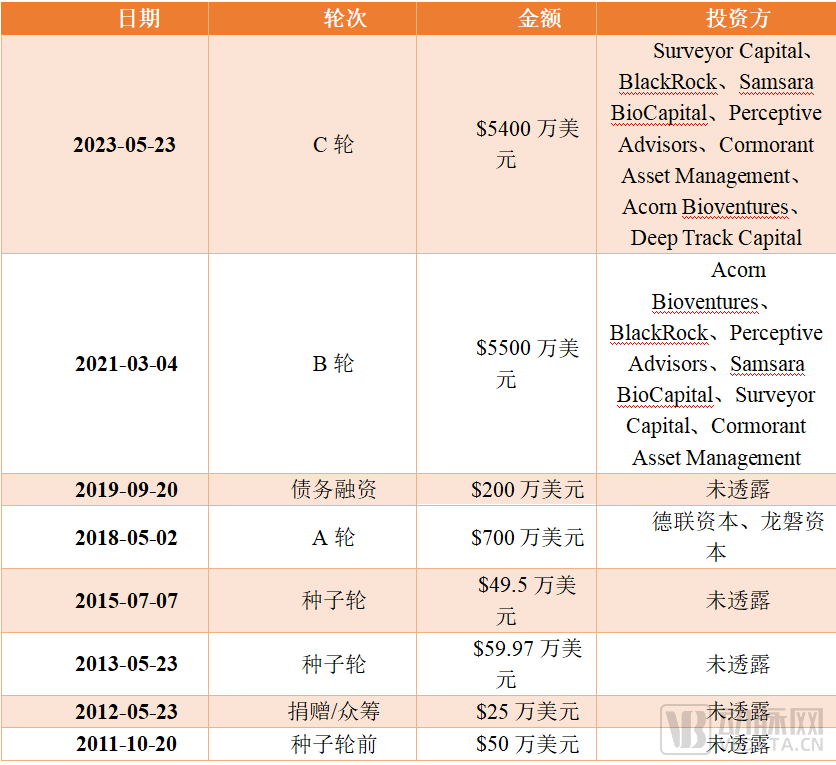
OnKure’s Historical Financing Rounds (Data Source: Crunchbase)
Why OnKure Continues to Attract Investor Interest: A VCBeat Analysis
OnKure, headquartered in Boulder, Colorado, USA, was founded in 2011. OnKure’s drug candidates are designed to treat patients using epigenetic therapies, delaying resistance to other targeted therapies and leveraging synthetic lethality.

Tony Piscopio, CEO and President (left); Jim Winkler, Chief Scientist (right)
(Image source: OnKure official website)
Tony Piscopio is the co-founder of OnKure and has served as its Chief Executive Officer and President since 2011. Dr. Piscopio recently served as Chairman of the Board and Chief Executive Officer of Chemizon, a global drug discovery organization. Prior to that, Dr. Piscopio co-founded Array BioPharma.
He is a serial entrepreneur with over 20 years of executive leadership experience in the life sciences industry.
Jim Winkler is the Chief Scientific Officer at OnKure. Prior to joining OnKure, Dr. Jim Winkler held positions at Johnson & Johnson, GlaxoSmithKline, Array BioPharma, and Arvinas. During his tenure at Arvinas, he helped the company focus on a novel technology, validate and further advance it, and establish a preclinical pipeline that enabled Arvinas to go public. His extensive professional background has endowed Dr. Jim Winkler with rich experience in team leadership.
OnKure’s leadership team made significant contributions to the success of Array BioPharma, a renowned small-molecule drug discovery company that was acquired by Pfizer in 2019.
As of today, OnKure’s product pipeline, developed based on technologies such as epigenetic regulation, delayed drug resistance, and synthetic lethality, has taken shape. It includes an oral selective Class I HDAC (histone deacetylase) inhibitor, a selective PI3Kα H1047R inhibitor, and oncogenic kinase inhibitors.
The discovery and development of OKI-179 represent a significant milestone in OnKure’s corporate journey.
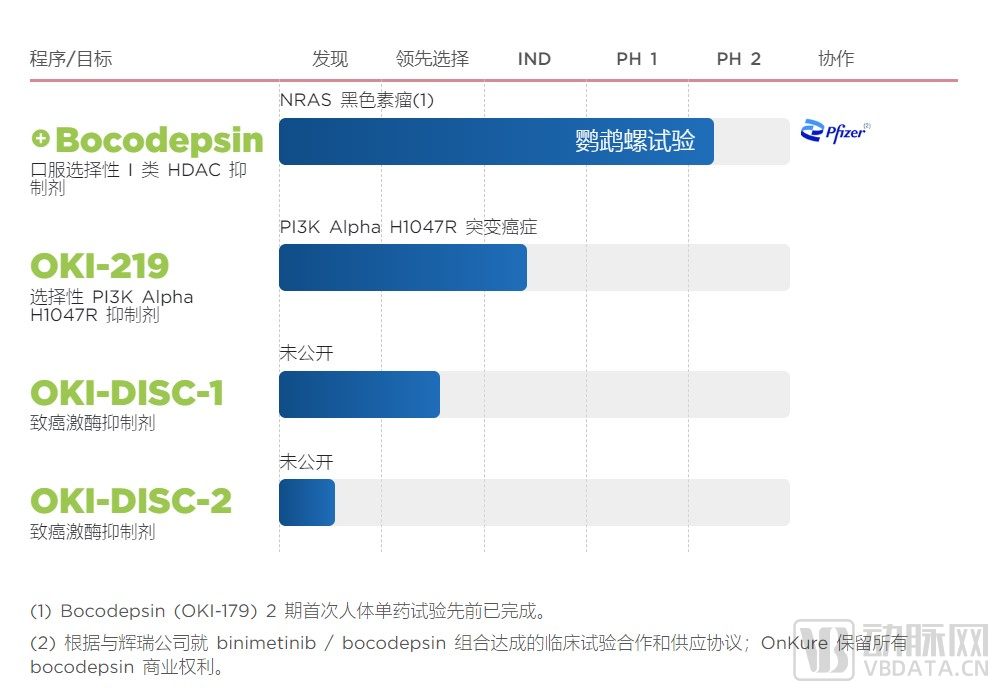
OnKure, Inc. Product Pipeline (Image source: OnKure official website)
Histones are DNA-binding proteins that play crucial roles in gene regulation and DNA replication. Histone deacetylases (HDACs) are a class of enzymes that remove acetyl groups from histones and cytoplasmic proteins, thereby regulating gene transcription and protein activity, respectively.
Unlike normal cells, cancer cells may lack multiple epigenetic regulatory mechanisms. Consequently, HDAC inhibition leads to cell cycle arrest, differentiation, and apoptosis in tumor cells, demonstrating significant promise for HDAC inhibitors in preclinical models. However, due to poor tolerability, inappropriate dosing regimens, irrational combination strategies, and a lack of stratified biomarkers, HDAC inhibitors have achieved little success in the treatment of solid tumors.
Romidepsin is currently the most effective Class I histone deacetylase inhibitor approved by the FDA, administered via continuous infusion. In contrast, bocodepsin besylate (OKI-179) is administered orally and has demonstrated safety in preclinical studies.
OKI-179 is an orally administered, selective Class I HDAC inhibitor designed to offer improved potency, selectivity, tolerability, and combinatorial flexibility for the treatment of various solid tumors and hematologic malignancies, such as triple-negative breast cancer, melanoma, and colorectal cancer.
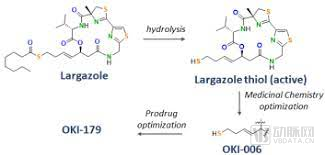
OKI-179 Reaction Generation Flowchart (Source: Google Search)
1. OKI-179 Monotherapy Trial in Humans Demonstrates Selectivity and Tolerability
On May 6, 2019, OnKure announced that OKI-179 had received IND approval, allowing Phase I trials to commence. On June 11, 2019, the first patient was enrolled in the first-in-human Phase I clinical trial of OKI-179, a novel HDAC inhibitor being developed in collaboration with the University of Colorado Cancer Center.
On December 14, 2021, the Phase I first-in-human (FIH) monotherapy trial of OKI-179 was completed. The study demonstrated that OKI-179, administered as a monotherapy on an intermittent schedule of 4 days on/3 days off or 5 days on/2 days off over a 21-day cycle, was safe and well tolerated. The most common adverse events were nausea, fatigue, and anemia.
The Phase I first-in-human monotherapy trial of OKI-179 has been completed. Study results indicate that OKI-179 induces histone hyperacetylation, thereby activating transcription and translation to restore the production of downregulated proteins. These re-expressed proteins are recognized and degraded by the immune system, a mechanism that cancer cells exploit to evade anticancer therapies. Therefore, combining OKI-179 with targeted therapy is expected to be more effective than monotherapy.
On April 8, 2022, OnKure announced preclinical data for OKI-179 in RAS-mutant tumor models at the AACR Latest Breakthroughs Conference. The data demonstrated that OKI-179 exhibits synthetic lethality when combined with MEK and BRAF inhibitors in cancer models harboring mutations in the RAS pathway.
Based on the favorable results from the OKI-179 monotherapy trial in humans, OnKure announced on April 25, 2022, the opening of a research laboratory in Boulder and the expansion of its team of local industry leaders to advance its clinical development strategy, with plans to initiate the Nautilus Phase 1b/2 trial of OKI-179 in collaboration with Pfizer.
2. OKI-179 in Combination with Binimetinib for the Treatment of NRAS-Mutant Melanoma
Activating NRAS mutations occur in approximately 20% of melanomas, representing the second most common oncogenic driver mutation in melanoma after BRAF mutations. Currently, there is an unmet medical need for targeted therapies in patients with metastatic NRAS-mutant melanoma.
Binimetinib is a mitogen-activated protein kinase (MEK) inhibitor that has been approved in combination with encorafenib for the treatment of patients with unresectable or metastatic melanoma harboring BRAF V600E or V600K mutations.
On June 2, 2022, the first patient was dosed in the Phase 1b/2 Nautilus trial evaluating OKI-179 in combination with binimetinib for the treatment of patients with advanced NRAS-mutant melanoma; the trial is currently ongoing.
A recent report in Cancer Discovery on a study by Maertens et al., along with preclinical combination studies conducted by OnKure, suggests that rational co-administration of these two drugs may enhance the clinical benefit of MAPK inhibition in the treatment of NRAS-mutant melanoma. Furthermore, Dr. Keith T. Flaherty (Director of Clinical Research at the Massachusetts General Hospital Cancer Center) indicated that translational research conducted in collaboration with colleagues at Harvard University similarly demonstrated that the addition of an HDAC inhibitor can further augment the activity of binimetinib in patients with NRAS-mutant melanoma.
3. OKI-179: An Innovative Model for Cancer Therapy
To determine the safety and efficacy of OKI-179 in combination with binimetinib for the treatment of patients with NRAS-mutant melanoma, OnKure and Pfizer are collaborating to conduct the Phase 1b/2 Nautilus clinical trial.
Patients with activating mutations in the RAS pathway (Phase 1b) will receive combination therapy with OKI-179 and the MEK inhibitor binimetinib. The Phase 1b trial aims to determine the maximum tolerated dose, dose-limiting toxicities, and recommended Phase 2 dose of OKI-179 and binimetinib in patients with solid tumors harboring RAS pathway mutations.
Data from the Phase 1b trial demonstrate the potential of the synthetic lethal combination of OKI-179 and RAS pathway inhibitors in treating RAS-mutant tumors.
In cell line-derived xenograft models, OKI-179 and binimetinib as monotherapies demonstrated tumor growth delay but rarely induced regression. However, the combination of binimetinib and OKI-179 in NRAS-mutant melanoma, or the combination of binimetinib and encorafenib in BRAF-mutant colorectal xenografts, both showed significantly increased regression compared with either monotherapy after a period of treatment.
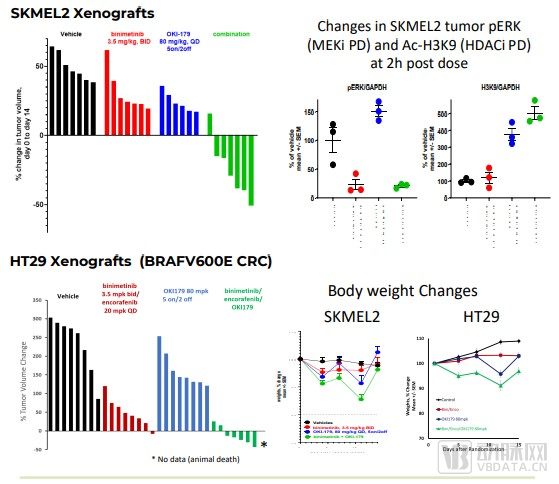
Figure Showing Results of OKI-179, Binimetinib Monotherapy, and Combination Therapy (Source: OnKure Official Website)
OKI-179’s superior selectivity, tolerability, enhanced potency, and ease of combination have overcome the historical limitations of other HDAC inhibitors, pioneering a new paradigm in cancer therapy that combines HDAC inhibitors with targeted therapies.
Since its inception in 2011, OnKure has been quietly engaged in the discovery and development of precision small-molecule oncology therapeutics. After years of steadfast perseverance, the company is finally seeing the light at the end of the tunnel.
On May 2, 2018, OnKure secured $7 million in Series A financing. The discovery of OKI-179 enabled OnKure to raise over one million dollars for the first time. That year, OnKure made significant progress in advancing its first clinical candidate, OKI-179, into Phase I trials. The discovery and development of OKI-179 can be regarded as a major milestone in OnKure’s corporate history.
Subsequently, the OKI-179 clinical trial proceeded smoothly and has currently completed Phase II. OnKure’s other drug candidate, OKI-219 (a selective PI3Kα H1047R inhibitor), is expected to complete its IND submission in 2023 and advance into clinical development in early 2024. Information regarding the two classes of kinase oncogenic inhibitors, OKI-DISC-1 and OKI-DISC-2, has not yet been disclosed.
OnKure is currently continuing to develop its next-generation differentiated pipeline of precision medicines. The company’s senior drug discovery team is exploring a series of novel oncogene-targeting programs designed to achieve optimal tolerability and efficacy, thereby advancing the creation of its candidate drug pipeline.