

Assisted Reproductive Technology Finally Gains Medicare Coverage: Is the Hidden RMB 100 Billion Market on the Verge of Explosion?

JINXIN FERTILITY
Assisted Reproductive Technology Service Provider
Recently, the Beijing Municipal Healthcare Security Administration issued a notice,Effective July 1, 2023, 16 therapeutic assisted reproductive technology (ART) services, including ovulation induction monitoring, oocyte retrieval, artificial insemination, and embryo transfer, will be included in Beijing’s Basic Medical Insurance scheme and reimbursed as Class A items under outpatient coverage.This means that assisted reproductive technology, which has long remained silent on the issue, has finally gained access to medical insurance coverage.
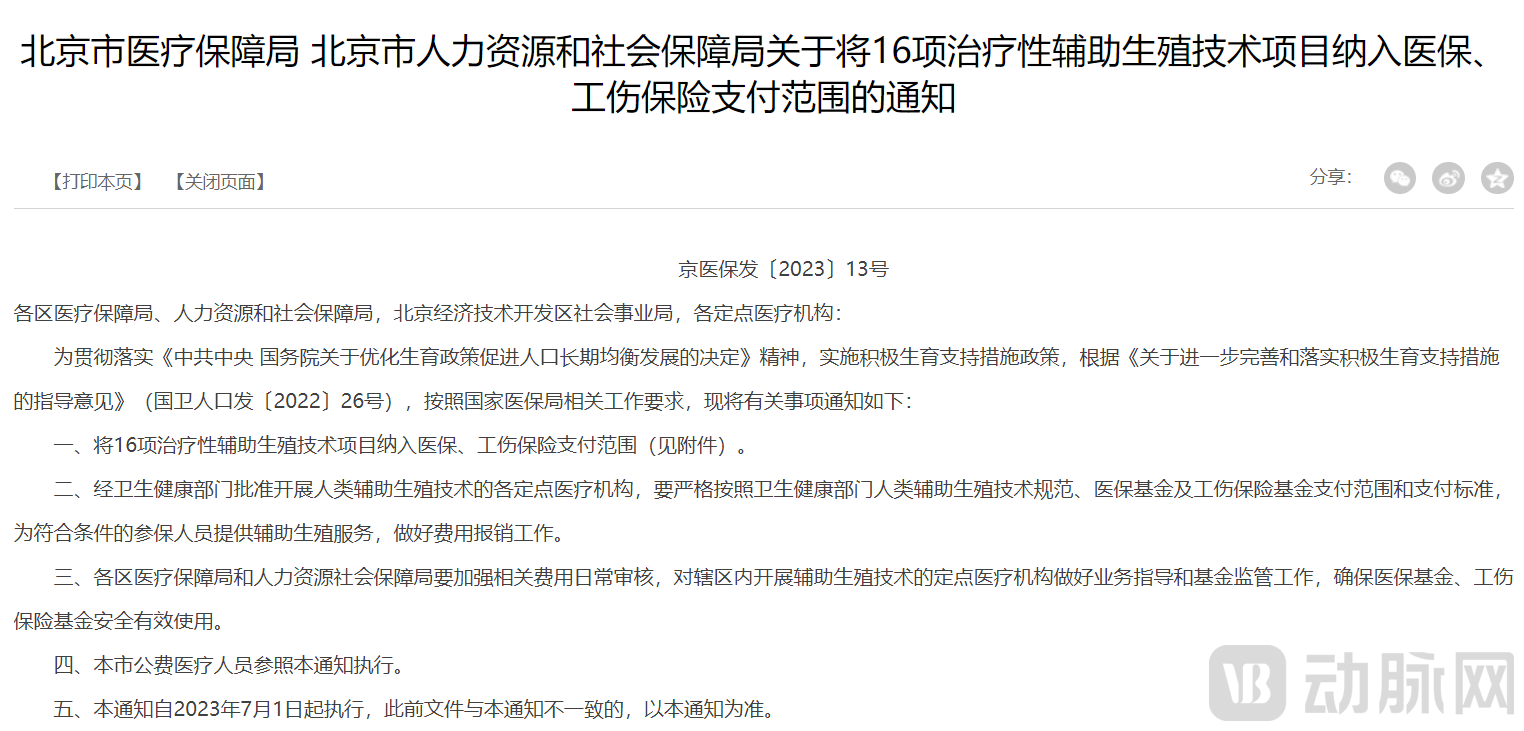 Figure 1. Beijing Medical Insurance Bureau’s Policy Document on Assisted Reproductive Technology (Source: Official Website of the Beijing Medical Insurance Bureau)
In fact, as early as February 2022, Beijing Municipality had proposed to include multiple assisted reproductive technology services in the Category A reimbursement list of the basic medical insurance.Regrettably, the policy was shelved for a time and ultimately came to nothing.According to industry insiders, the inclusion of assisted reproductive technology (ART) in the national medical insurance scheme was postponed in 2022 primarily for two reasons. First, the policy announcement came as a surprise, with many implementation details not yet fully finalized at the time. Second, amid the pandemic, government authorities found it difficult to project the financial pressure that would result from expanding medical insurance coverage to include these services.
Although inclusion in the national medical insurance scheme has faced obstacles, numerous policies have continued to favor assisted reproductive technologies (ART) over the past one to two years. In August 2022, the National Health Commission, together with 16 other departments, issued the “Guiding Opinions on Further Improving and Implementing Proactive Fertility Support Measures,” which proposed the gradual inclusion of appropriate labor analgesia and ART procedures into the scope of fund coverage in accordance with established protocols. In February 2023, the National Healthcare Security Administration stated that it would encourage traditional Chinese medicine hospitals to establish eugenics and family planning outpatient clinics to provide diagnosis and treatment services for infertility. These developments, coupled with the earlier “three-child policy” and the National Medical Products Administration’s relaxation of approval requirements for ART-related products,At the policy level, comprehensive coverage has been achieved for assisted reproductive technology, spanning market regulation, approval processes, and payment mechanisms.。
However, unlike other medical fields,Assisted reproduction may be the only niche sector that policy support alone cannot directly drive., because it involves not only medical issues, but also ethical and family concerns, and is even closely related to the broader social environment.
However, on the other hand, assisted reproductive technology (ART) represents a consistently growing high-potential sector in China. It is reported thatSince 2015, the market size of assisted reproductive technology (ART) in China has maintained a growth rate of over 10%., reaching RMB 43.41 billion in 2020. Looking ahead, Frost & Sullivan and LeadLeo Research Institute predict that the market size of assisted reproductive services will grow at a compound annual growth rate (CAGR) of 14.5% from 2020 to 2025, reaching RMB 85.43 billion and gradually approaching the RMB 100 billion mark.
On one hand, there is industry anxiety that policy cannot resolve; on the other, a hundred-billion-yuan potential market is taking shape. Amidst this push and pull, what development opportunities are hidden within the “special” assisted reproductive technology (ART) industry? Has the eve of its explosive growth already arrived?
From Overnight Sensation to Calm: Where Does Assisted Reproductive Technology Stand Today?
On the afternoon of May 31, 2021, a tranquil day, the “Three-Child Policy” was officially released. While public discussion focused on how to meet the national fertility targets in the future, the secondary market reacted with an immediate surge. According to VCBeat, on the day of the policy announcement, the stock prices of companies such as Aoyang Health, Hybribio, Joint Pharmaceutical, International Medicine, and Yuexin Health rose significantly. Before the market close, the A-share sector for stocks related to the two-child policy soared, with Beingmate and GaoLe Shares hitting their daily price limits, while Aiying Shi (Baby Room) and David Medical continued to climb sharply.
As time has passed, this enthusiasm has gradually extended to the primary market. According to incomplete statistics from the VCBeat Orange Database, since the announcement of the “three-child policy,”Nearly 30 early-stage assisted reproductive technology (ART) startups secured financing, with the total amount exceeding RMB 10 billion. Top-tier investors including Sequoia Capital, IDG Capital, Danlu Capital, Yida Capital, TusStar, and Fortune Capital have all increased their investments.。
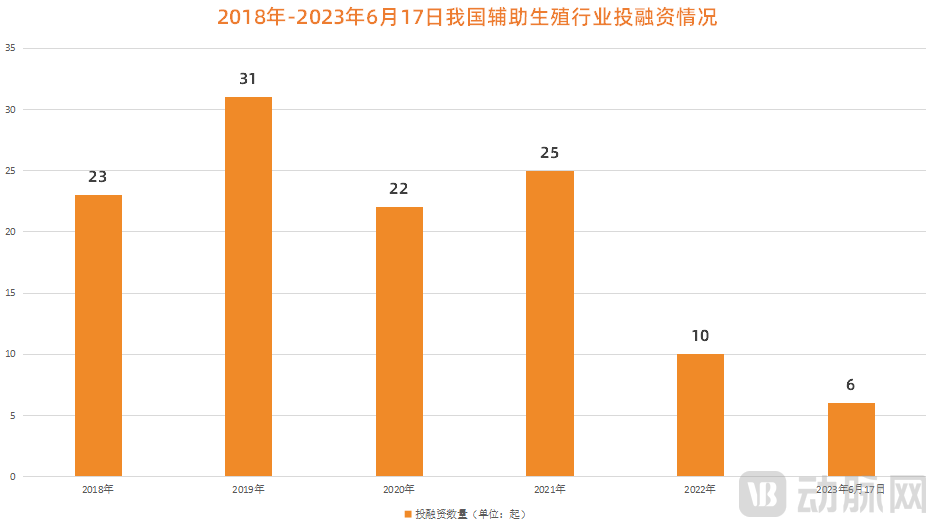
Figure 2. Investment and Financing in China’s Assisted Reproductive Technology Industry, 2018–June 17, 2023 (Data source: VBInsight)
However, this momentum did not last. As entrepreneurs and investors delved deeper into the field, the fundamental challenges of the assisted reproductive technology industry gradually came to light.
First, there are the non-medical issues mentioned earlier, such as ethical concerns. Taking surrogacy as an example, it is a form of assisted reproductive technology,However, in China, surrogacy remains completely prohibited.Furthermore, whether under the current Biosecurity Law or the regulations of the Human Genetic Resources Administration, assisted reproduction remains a relatively sensitive clinical service in terms of laws and regulations, with many standardized protocols yet to be fully established.
Secondly, there is the issue of low market penetration. According to forecasts based on information released on the official website of the National Medical Products Administration (NMPA) at the end of 2020,Infertility Rate in China to Rise to 18.2% in 2023, if this data is used for estimation, the number of infertile patients in China has exceeded 50 million, but among these 50 million patients,The actual penetration rate of assisted reproductive technology is less than 3%., each year, only more than 1 million infertile patients choose to use assisted reproductive technology to conceive children.
There are three main reasons for this:First, the patient’s physical condition is unsuitable for assisted reproductive technology., such as severe genetic disorders unsuitable for childbearing, severe somatic diseases, and mental or psychological disorders.
Second, due to price sensitivity, they are unable to afford the costs of assisted reproductive technology.VCBeat has learned from industry experts that the current cost per cycle for first- and second-generation in vitro fertilization (IVF) ranges from RMB 30,000 to 70,000, while third-generation IVF costs between RMB 90,000 and 120,000 per cycle. Each cycle typically takes two to three months; however, due to success rate considerations, some patients require two to three embryo transfer attempts to achieve pregnancy. Consequently, the total expenditure on assisted reproductive technology for some infertile couples amounts to approximately RMB 100,000–200,000. Therefore, while insurance coverage will increase market penetration to a certain extent, the actual magnitude of this increase will ultimately depend on specific demand levels.
 Figure 3. Market Details of Third-Generation IVF Technology
Third, some patients choose to undergo in vitro fertilization (IVF) overseas.This strategic consideration is primarily driven by two factors. First, success rates: the current success rate of in vitro fertilization (IVF) in China is approximately 40% to 60%, whereas major global markets for assisted reproductive technology (ART), such as the United States and Thailand, have achieved rates of 70% to 80%. Given these relatively lower success rates, China’s cost advantage is not particularly significant. Second, there is a current supply-demand gap in China. Taking the number of service providers as an example, due to the stringent licensing process, there are currently only 451 ART medical institutions in the country, predominantly public hospitals. Institutions affiliated with private hospitals or infused with private capital account for less than 10% of the total. Furthermore, fewer than 100 institutions currently hold licenses for preimplantation genetic diagnosis/screening (PGD/PGS), also known as third-generation IVF.
Finally, the market is still in its early stages, with core products remaining predominantly imported.. Data shows that domestically produced devices hold a significant advantage over imported ones in low-value-added, low-technology products such as oocyte retrieval needles/sperm aspiration needles for assisted reproduction and micro-tools for assisted reproduction; however, in the category of high-priced assisted reproductive culture media with technical barriers, imports currently dominate, accounting for as high as 81% of the market share.
When Health Insurance Meets Low Penetration Rates, Will Assisted Reproductive Technology Still Be a Good Business?
In early 2022, after the inclusion of assisted reproductive technology (ART) in medical insurance was stalled, and compounded by the impact of the pandemic at the time, the ART industry was suddenly pushed back to square one. According to incomplete statistics from the VCBeat Orange Database, the ART sector completed only 10 financing rounds in 2022, and six rounds from 2023 up to the time of publication. Combined, these figures fall short of the total volume recorded for the entire year of 2021.
After the ups and downs, one cannot help but ask:AssistantIs Assisted Reproductive Technology Still a Good Business?? VCBeat has listed some key data through research and interviews.
First is the “nepotism effect” brought about by medical insurance. In fact, before Beijing officially included assisted reproductive technology (ART) in its medical insurance coverage, Liaoning Province announced on June 8, 2023, that at least 17 ART-related medical service items would be covered by maternity insurance, with province-wide implementation scheduled to begin on July 1. Additionally, regions such as Sichuan, Hunan, Hubei, Guangdong, and Shanghai are currently discussing policies to incorporate ART into their medical insurance schemes, with official announcements expected shortly.
Next is the reversible market penetration rateAlthough the current penetration rate of China's assisted reproductive technology (ART) market is only 3%, lagging behind the United States by 30 percentage points, the continuous innovation of related technologies, the ongoing expansion of medical insurance coverage, and the year-on-year rise in infertility rates driven by lifestyle factors, work-related stress, and delayed age at first marriage and childbirth are driving change.China's Assisted Reproductive Technology Market Penetration Rate Expected to Reach 9.2% in 2023。
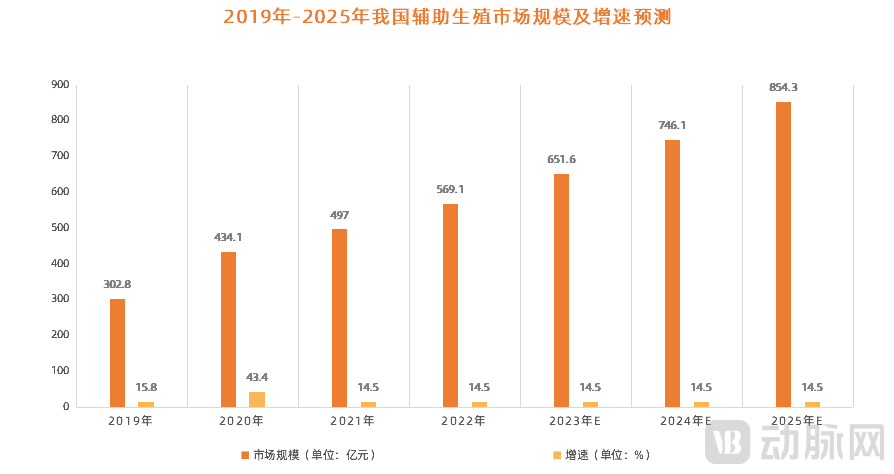
Figure 4. Forecast of the Market Size and Growth Rate of China’s Assisted Reproductive Technology Industry, 2019–2025 (Data Source: “China’s Assisted Reproductive Services Investment Planning and Prospect Forecast Report, 2023–2028”)
Driven by rising market penetration, the assisted reproductive technology (ART) market in China is also poised for rapid expansion. According to forecasts by Frost & Sullivan, the size of China’s ART market is expected to reach RMB 85.43 billion by 2025, representing a compound annual growth rate (CAGR) of 14.5% from 2021 to 2025.
Finally, the industrial dividends brought about by domestic substitutionAs of December 8, 2022, there were a total of 211 valid registration certificates for medical devices used in assisted reproductive technology (ART), including 106 domestically produced and 105 imported. The total number of approved domestic and imported products was virtually equal; however, there were significant differences in the composition of Class II and Class III products between the two. Domestically approved products were predominantly Class II, accounting for 77%, whereas imported approved products were mainly Class III, accounting for 61%. This indicates that China still relies primarily on imports in the high-end ART device sector.
However, it is evident that the localization of assisted reproductive technology (ART) devices is advancing rapidly. According to publicly available statistics, a total of 24 domestically produced Class III medical devices for ART were approved between 2020 and 2022, originating from 10 local companies. Among these, Vitrolife China (Weituo Biotech), Reprobiotech Corp China Ltd (Ruibo Biotech), and Dongyun Medical emerged as the leading recipients of Class III certifications, with their product portfolios primarily focused on oocyte retrieval, sperm preparation, fertilization, and cryopreservation.
In 2023, the number of domestically produced assisted reproductive technology (ART) devices receiving regulatory approval continued to expand. In March, the cleavage-stage culture medium independently developed by Weituo Biology obtained a Class III medical device registration certificate. In April, Dongyun Medical’s vitrification freezing solution kits and vitrification thawing solution kits were approved for Class III medical device registration. In June, Weituo Biology’s oocyte retrieval needles, embryo transfer catheters, and insemination catheters for assisted reproduction received Class II medical device registration certificates, further enriching the company’s product portfolio.
The same trend applies to pharmaceuticals. Although the import rate of assisted reproductive technology (ART) drugs is relatively lower compared to medical devices, it remains at approximately 80%. With growing expectations for domestic substitution and the expansion of the ART drug market size, domestically produced ART drugs in China are poised for rapid growth in the future.
Where Is the Future of Assisted Reproductive Technology Heading?
As previously mentioned, the assisted reproductive technology (ART) industry has experienced a rapid surge followed by a cooling-off period over the past two years. Amidst this fluctuation between “hot” and “cold” market conditions, companies and investors in this sector are seeking new breakthroughs.
andThe first “new” is reflected in the gradual penetration of innovative technologies, represented by AI, into the assisted reproductive technology industry.. An industry insider vividly remarked, “The assisted reproductive technology (ART) sector is truly defined by craftsmanship. To date, ART laboratories still rely entirely on manual operations, resulting in a heavy dependence on embryologists’ skills. Frankly speaking, if the industrial side fails to advance, embryo manipulation in ART could well be nominated for UNESCO Intangible Cultural Heritage status within the next ten to twenty years.”
Although said in jest, it is evident that automating the high-frequency, low-skill operational workflows within embryology laboratories represents a significant future direction, thereby creating opportunities for AI. Current market research indicates that AI primarily contributes to assisted reproductive technologies by enhancing assessments of oocyte quality, sperm quality, gamete matching, zygote/embryo quality, and endometrial receptivity. The core objective across these applications is to control variables.
Taking AI-based assessment in oocyte therapy as an example, AI technology is employed to differentially recognize features in oocyte images, thereby evaluating the developmental potential of oocytes. Specifically, these differential image features include textural characteristics, elastic properties, and motility patterns of the oocytes. By training AI systems to learn and identify oocyte status, variability associated with manual inspection can be reduced, thus improving the consistency of results.
The second “new” is reflected in the building of the enterprise’s full life cycle, with business tentacles gradually extending into women’s health.According to VCBeat’s observations, since 2022, both listed companies and startups, while maintaining assisted reproduction as their core strategy, have been expanding into the broader women’s health sector—for example, by developing menstrual care services and opening channels for HPV vaccine appointments. The primary objective is to expand the potential patient base and enhance user stickiness to the platform, thereby better driving the subsequent expansion of the assisted reproduction market.
The final “new” aspect is reflected in the attention that assisted reproductive technology pays to men.. When assisted reproductive technology (ART) is mentioned, people naturally tend to associate patients directly with women; however, men are equally important. As early as 2021, Beikang Medical, the first next-generation sequencing (NGS) company listed on the Hong Kong Stock Exchange, acquired Singbo Bio, one of the earliest and largest in vitro diagnostic (IVD) companies specializing in andrology in China. Through this acquisition, Beikang Medical further deepened its strategic layout in the field of ART testing.
Also in 2021, Jinxin Ai’nan Hospital, China’s first healthcare institution dedicated to men’s full-lifecycle health, jointly established by JINXIN FERTILITY and Chengdu Jinxin Medical Group in collaboration with a team of senior physician partners, commenced trial operations, underscoring JINXIN FERTILITY’s commitment to its strategic layout in the men’s health market.
Therefore, overall, the “new trends” in the assisted reproductive technology (ART) industry are broadly moving in three directions: First, at the technical level, innovative technologies represented by artificial intelligence (AI) are being introduced to empower various stages of ART, thereby improving success rates. Second, at the product level, offerings are gradually extending toward greater convenience, affordability, and personalization; thus, oral medications and alternatives to injections will represent new future directions for the industry. Third, at the market level, customer bases are progressively expanding upstream through strategic coverage of women’s health across their entire life cycle and exploratory efforts in male reproductive services.
Amid these new trends, with a steadily growing market and expanding health insurance coverage, assisted reproductive technology holds even greater potential for the future.Therefore, in retrospect, the development and investment in assisted reproductive technology may have only just begun.。