

Manson Bio: Building Intelligent Biological Laboratories to Bridge the Last Mile of Industrializing Synthetic Biology
Synthetic biology is sweeping across various industries with unstoppable momentum, and the vision of “synthesizing everything” is poised to become more than just a slogan. According to data released by Coherent Market Insights, the global synthetic biology market size reached $13.9 billion in 2022, with a projected compound annual growth rate (CAGR) of 28.0% from 2022 to 2030. Emerging sectors such as biomedicine, new materials, agricultural technology, and food and beverage are expected to drive rapid market expansion.
Since the 13th Five-Year Plan period, synthetic biology has been designated as a strategic, forward-looking major scientific issue and a frontier generic biotechnology in China, with a series of supportive policies introduced by the state. Subsequently, the Bioeconomy Development Plan for the 14th Five-Year Plan period, issued by the National Development and Reform Commission (NDRC), explicitly stated that “technological innovation in synthetic biology should be promoted.”
Before the “surge” in synthetic biology, driven by policy support and capital attention, many technical hurdles still need to be overcome. In the stages of strain screening and process development prior to scaled-up production, there are certain critical technical bottlenecks that urgently need to be resolved. Prior to industrialization, these technical bottlenecks serve as the “stumbling blocks” hindering improvements in the development efficiency of synthetic biology products.
Furthermore, a disconnect exists between strain screening and process development. The independent research approaches for strain screening and process development overlook the interplay between genetic traits and environmental factors, resulting in significant discrepancies during process validation of high-yielding strains identified through screening.
With the continuous advancement of artificial intelligence, automation, and related sciences, intelligent biological laboratories centered on fermentation processes have provided targeted solutions to this challenge. In this field, VCBeat has identified a standout player: Manson Biotech.Manson Biotech was founded by technical teams from the Shanghai Institutes for Biological Sciences of the Chinese Academy of Sciences and East China University of Science and Technology. The company is dedicated to providing technical research support, product development, and comprehensive solutions for biological laboratories. To date, Manson Biotech has developed multiple technological platforms, including a high-throughput automated fermentation process development platform and a high-throughput automated strain screening platform, and holds 30 patents and five software copyrights.
When Manson Bio was founded in 2017, Hao Youyou had already been deeply engaged in the field of microbiology for over two decades. “From pursuing my doctoral degree to joining the Chinese Academy of Sciences, and with the development of various interdisciplinary fields, my research scope has expanded from strain screening and industrial-scale upscaling to the development of automated laboratory equipment,” said Hao Youyou.
In 1997, Hao Yuyou joined CSPC Pharmaceutical Group, a major pharmaceutical enterprise, after completing his master’s degree, where he was responsible for technical research in microbial pharmaceutical technology. This period marked the eve of the first decade of synthetic biology’s development. “During this time, the focus of synthetic biology research was on understanding life at the molecular level and advancing modern biotechnology. Disciplines such as molecular biology, systems biology, bioinformatics, genomics, transcriptomics, and metabolomics, along with their corresponding technical methodologies, were developed, characterized by a primary emphasis on biology.”
In 2002, Hao Yuyu, who had worked in the pharmaceutical industry for five years, enrolled at East China University of Science and Technology to pursue a doctoral degree. After graduation, he remained at the university as a master’s supervisor in Fermentation Engineering and Microbiology, engaging in both scientific research and teaching. Eight years later, when he joined the Key Laboratory of Synthetic Biology at the Chinese Academy of Sciences, the field was on the cusp of its “second decade” of development. “This period witnessed the deep integration of biotechnology with modern information technologies such as automation and artificial intelligence, leveraging these technologies to empower biotechnological advancements.”
In 2010, the research team at the J. Craig Venter Institute (JCVI) garnered worldwide attention by fully synthesizing a bacterial genome, expanding DNA synthesis and assembly to the megabase scale. Alongside these major academic breakthroughs, the integration of engineered platform development with open-source applications of biological big data has propelled synthetic biology into broader application domains, driving continuous advancement in biotechnology, the bioindustry, and biopharmaceuticals.
“With the continuous invention and creation of automated and intelligent life science instruments, as well as the emergence of total laboratory automation research models, the pace of biotechnology R&D has increased exponentially while costs have decreased exponentially. ‘Biofoundries emerged during this period, transforming tedious experiments from manual to automated, low-throughput to high-throughput, and customized to standardized processes. This has significantly shortened experimental cycles and improved efficiency, thereby reducing production and R&D costs, signaling that experimental research has entered an era of industrialized automation. To date, more than 30 biofoundries have been put into operation worldwide,’ said Hao Youyou.”
“Leveraging technologies such as automation and artificial intelligence, strain construction has become rapid, efficient, and low-cost, butThe corresponding fermentation technologies remain stuck in low-efficiency, high-cost, and labor-intensive modes, making fermentation a rate-limiting step in the industrialization of synthetic biology.“Meanwhile, the characteristics of fermentation engineering research also make it difficult to attract and retain talent,” Hao Youyou added.
In 2017, driven by industry demands, Hao Youyou founded Manson Biotechnology, dedicated to addressing technical challenges in strain screening and process development within the field of synthetic biology. The company aims to build intelligent biological laboratories by empowering the midstream sector with artificial intelligence, automation, and information technologies. “We aim to accelerate the translation of synthetic biology research outcomes from the laboratory to industrial application by developing automated, high-throughput technologies for biological laboratories and parallel bioreactors, thereby creating high-throughput automated technology platforms for strain screening and fermentation process development,” emphasized Hao Youyou.
“The core of laboratory automation is not automation itself, but rather a deep understanding of laboratory scenarios, upon which automation solutions should be developed,” said Hao Youyou. Unlike modern factories that have achieved automation, the laboratory sector possesses considerable unique characteristics.
First, the requirements for production objects differ. Industrial automation handles objects characterized by “single variety, large volume, single batch, and non-continuous production,” whereas laboratory automation addresses the demands of “multiple varieties, small volumes, multiple batches, and high timeliness.”
Next is the variation in intelligent design resulting from manufacturing processes. “Industrial automation often involves multiple robots collaborating to complete a single task, with each robot responsible for only one specific action. In contrast, laboratory settings typically rely on a single robot to perform multiple actions, including loading and unloading samples, opening and closing caps, liquid handling, shaking, centrifugation, and material transport. This presents greater design challenges, requiring a thorough understanding of the operational scenarios and requirements, as well as the ability to translate these needs into comprehensible and feasible solutions,” said Hao Youyou.
Starting from scenario-based development, Manson Biotech first developed its core equipment—parallel bioreactors and a series of laboratory robots.
According to the introduction,Parallel bioreactors can be applied in strain validation and screening, process development and optimization, strain-process matching, and direct evaluation of raw materials.. Manson Biotech Parallel BioreactorUtilizes AFDP mainboard chip control technology, featuring high control precision, low failure rate, and ease of maintenance., available in various models including 500 mL, 1 L, 2 L, and 5 L; supports multiple configurations such as single-unit and four-unit setups; suitable for a wide range of microbial strains, animal cells, plant cells, enzymes, or cell-free systems.
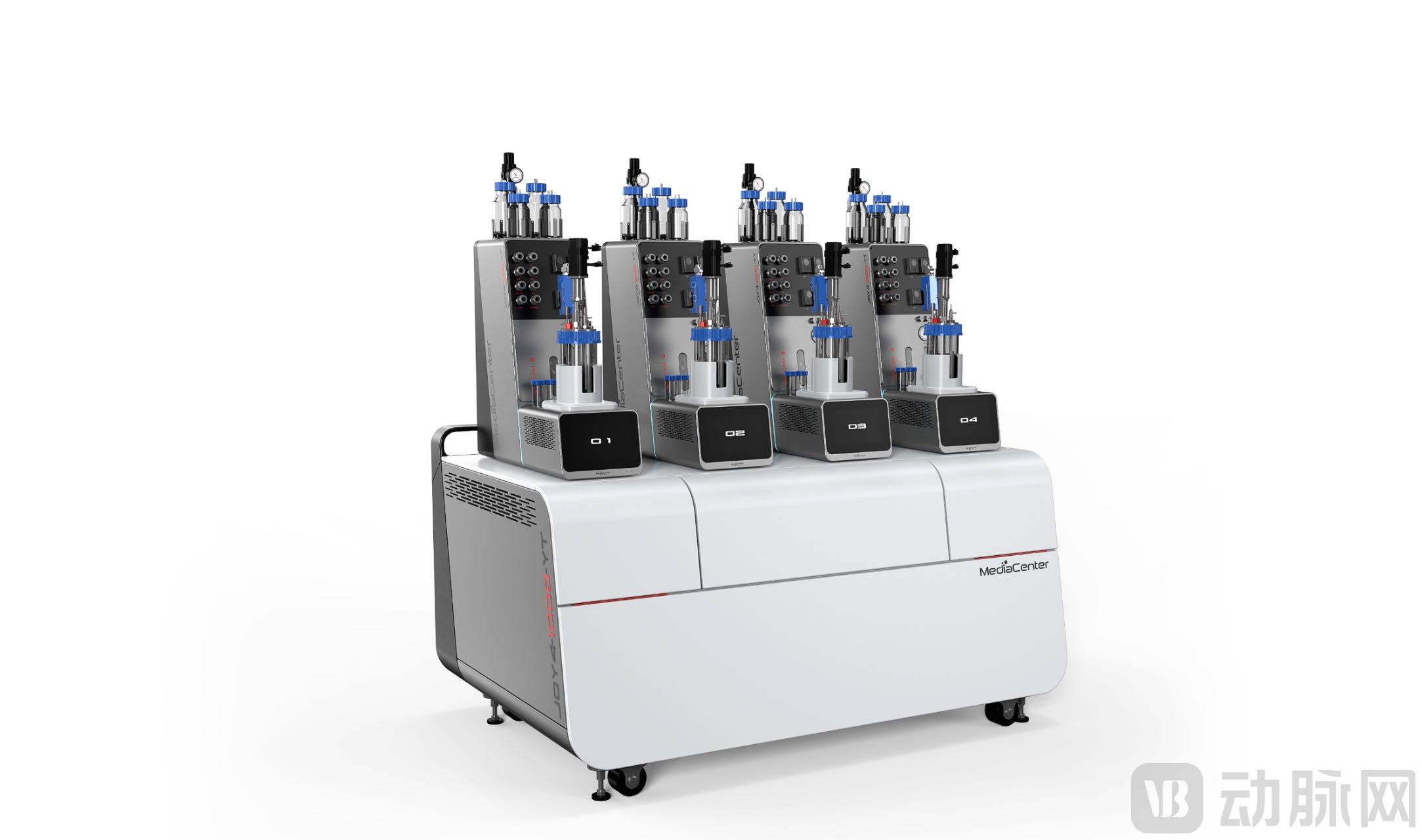
Manson Biotech Parallel Bioreactor JOY1
In addition, the parallel bioreactors developed by Manson Biotech offer several other advantages:
Parallelism: Identical experimental results can be achieved across different reactors, with minimal systematic error, ensuring inter-instrument reproducibility.
Precision Feeding: The feeding control accuracy is typically less than 2%, with a maximum not exceeding 5%, and the rate can be as low as 100 µL/hour.
Usability: Easy to operate, with one person able to control up to 16 fermenters; compact footprint, allowing 100 single-unit parallel bioreactors to be placed in a 100-square-meter laboratory.
Scalability: Capable of connecting to over 40 peripheral sensors, such as novel Raman, infrared, and live-cell sensors, while enabling seamless communication.
Centered on its independently developed parallel bioreactors, Manson Biotech has also created the intelligent control software “Zhi Zhi” and smart robots for liquid handling, dilution, plating, and pouring. Through “Zhi Zhi,” researchers can control multiple bioreactors of varying specifications and models within a single system, achieving full-process automation and seamless data integration and analysis, thereby enhancing development efficiency.
Based on laboratory robots and parallel bioreactors, Manson Biotech has developedHigh-Throughput Automated Strain Screening Platform, High-Throughput Automated Fermentation Process Development PlatformandHigh-Throughput Automated Platform for Probiotic Viability Assay...and multiple high-throughput automated technology platforms, complemented by automated sample pre-processing and post-processing technologies, automated sample detection technologies, and intelligent analysis software. These solutions systematically address efficiency, cost, and intelligence challenges in the fermentation process, ensure throughput matching and condition consistency across all steps, and facilitate the intelligent manufacturing upgrade of fermentation processes.
According to the introduction, the high-throughput automated strain screening platform aims to achieve full-process automation and throughput matching, rather than being limited to high-throughput automation in certain unit operations. It boasts strong versatility, applicable to bacteria, actinomycetes, and fungi, while offering exceptional cost-effectiveness and significant efficiency improvements.
High-throughput automated fermentation technology is not merely an increase in the number of fermenters; it involves systematic solutions addressing a series of new challenges arising from high-throughput modes, such as automation of ingredient dispensing, synchronization of sterilization, parallelism of sampling, high-throughput automation of sample processing and analytical detection, and online integration of offline data. Manson Bio’s high-throughput automated fermentation process development platform provides tailored solutions to these challenges.
Probiotic viability testing involves cumbersome procedures such as liquid dispensing, sample dilution, and pour plating. While national standards stipulate that the processing time for a single sample must not exceed 15 minutes, the pre-treatment time is significantly prolonged when handling large batches of samples, far exceeding the regulatory requirements. Moreover, particular attention must be paid to the risk of secondary contamination during sample processing. To address these challenges, Manson Biotech has developed a high-throughput automated platform for probiotic viability testing, which enhances the reliability and reproducibility of test results, improves detection efficiency, and reduces the need for replicate testing.
“Synthetic biology has entered its third decade, a critical period for the development of synthetic biology technologies. There is an urgent need to address innovations in fermentation engineering technology and conduct iterative research on new equipment, new technologies, and new methods. Manson Bio’s vision is to accelerate the industrial translation of synthetic biology achievements through automated, high-throughput, and intelligent fermentation technologies, aiming to become a leading enterprise in this field,” said Hao Yuyou.