

Qingpai Technology Secures Tens of Millions RMB in Angel Funding to Advance Domestic Substitution and Clinical Adoption of Photoacoustic Imaging
VCBeat has learned that recently,TsingPAI(hereinafter referred to as “TsingPAI”) announced the completion of an angel round financing amounting to tens of millions of yuan. This round of financing was led byFreeS Fund led the investment, with co-investment from the Beijing Medical Robot Industry Innovation Center (IMC) and the Global Health Industry Innovation Center (GHIC). Beijing Banxing Enterprise Management Consulting Co., Ltd. served as the exclusive financial advisor.
The proceeds from this round of financing will be used to finalize the design of photoacoustic clinical medical imaging systems, conduct R&D on core devices and components, and further expand the team.
The TsingPAI team was established in 2019, incubated by the Tianjin Electronic Information Research Institute of Tsinghua University, Zhongguancun Zhiyou Research Institute, Fuzhou Data Technology Research Institute of Tsinghua University, and the Tsinghua Strait Research Institute (Xiamen).
The company is dedicated to the research and development, as well as clinical application, of photoacoustic imaging technology and products.Leveraging photoacoustic imaging (PAI) technology originating from the Biophotonics Laboratory of the Department of Electronic Engineering at Tsinghua University, TsingPAI has developed the MarsonicsPIIP integrated photoacoustic imaging system through technology commercialization.
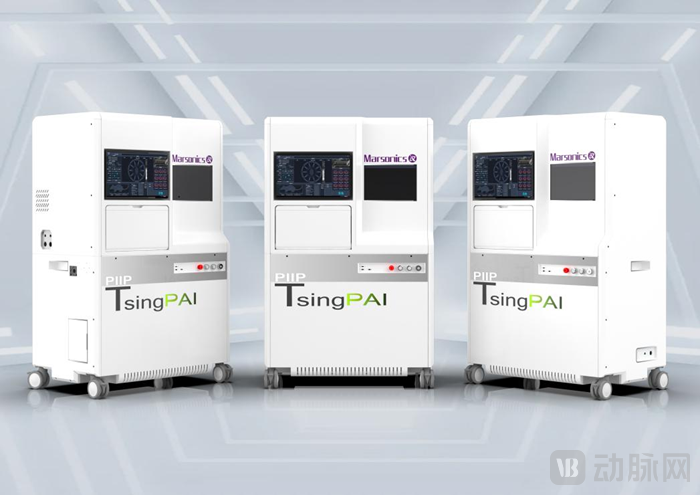
MarsonicsPIIP Photoacoustic Integrated Imaging System
Provided by the interviewee
Since its establishment,TsingPAI holds dozens of core proprietary patents and has jointly established an industry-academia-research collaboration platform with universities such as Tsinghua University and multiple Grade A tertiary hospitals.The company’s innovative technologies and products have also received numerous honors, such as“First Prize at the 10th ‘Dongsheng Cup’ International Entrepreneurship Competition in 2022,” “First Prize at Tsinghua University’s First Medical-Engineering Innovation Competition,” and “First Prize at the Finals of the Precision Human Measurement Track of the 4th China Medical Device Innovation and Entrepreneurship Competition.”
What is Photoacoustic Imaging (PAI) technology? Compared with other well-known imaging methods in the biomedical field, such as MRI and CT, what unique advantages does photoacoustic imaging offer?
First, the principles of excitation and detection of physical signals in photoacoustic imaging differ from those in MRI and CT. Photoacoustic imaging is based on the photoacoustic effect, which is generated by light-induced vibrations in matter. Specifically, when light irradiates the surface of a material, it generates heat; this heat causes thermal expansion in the illuminated region, thereby propagating pressure waves through the solid material and ultimately producing the photoacoustic effect.
Therefore,The photoacoustic imaging technology platform combines the advantages of both optical and ultrasound imaging technologies. It not only offers high-contrast, spectrally versatile multifunctional imaging but also provides high penetration depth, non-invasiveness, and multi-scale, multimodal imaging capabilities.
Among these, functional imaging is the most significant feature of photoacoustic imaging; however, spectral coloring issues arise during the computational process of typical functional imaging. This directly affects the accuracy of functional imaging measurements and hinders the widespread adoption of photoacoustic imaging.
Leveraging Tsinghua University’s cutting-edge technologies and the company team’s innovative R&D capabilities,TsingPAI has innovatively resolved the computational challenges in the precise detection of tissue composition during photoacoustic functional imaging through its independently developed world’s first high-precision spectral analysis technology.
The MarsonicsPIIP Photoacoustic Integrated Imaging System effectively performs structural and functional imaging of biological tissues. It is suitable for photoacoustic imaging in small animals, large animals, and ex vivo tissues, as well as for the detection and diagnosis of diseases in superficial human tissues (3–4 cm deep). The system addresses key imaging challenges in the industry by enabling precise, quantitative detection and imaging of components such as hemoglobin, blood oxygen, lipids, and collagen.
Furthermore,In terms of 3D imaging, MarsonicsPIIP delivers 3D image quality comparable to that of 7.0T MRI, achieving an innovative translation of high-performance imaging at a lower cost.This not only provides new methods for studying the morphological structure, physiological characteristics, pathological features, and metabolic functions of biological tissues, but also facilitates further market promotion of this emerging technology and its associated products.
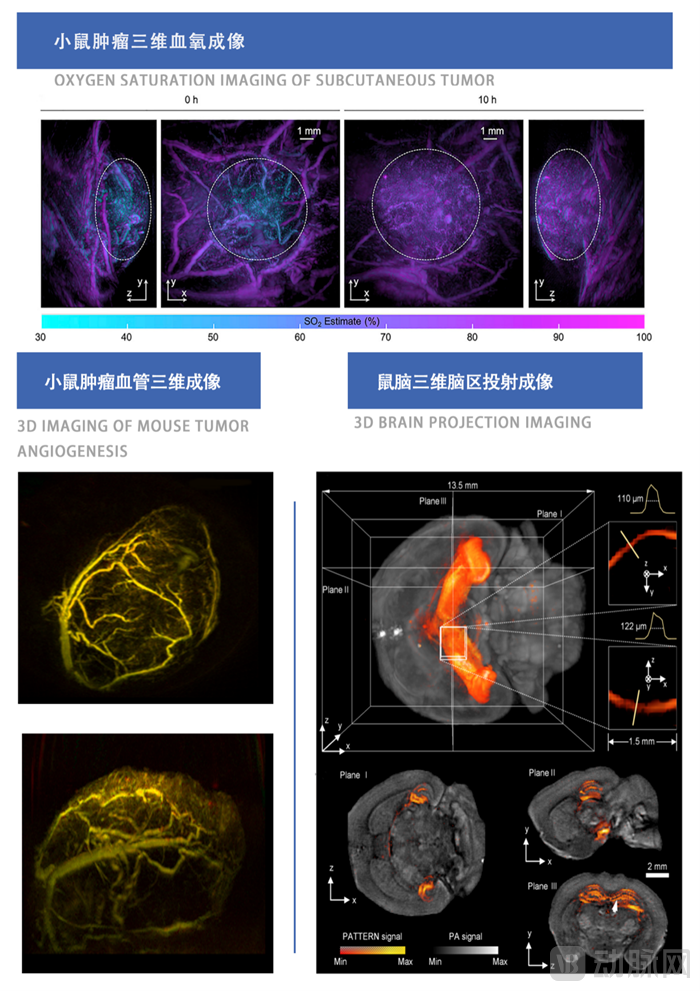
Image Quality of the Marsonics PIIP Photoacoustic Integrated Imaging System
Image provided by the interviewee
According to Wang Xiaojun, CEO of TsingPAI, MarsonicsPIIP can also be applied toGene expression, stem cell immunology, brain science, as well as fields such as temperature detection and neuroimaging.Furthermore, as the technology matures and is more widely implemented, the platform will provide richer and more valuable information to support the diagnosis, treatment, and efficacy assessment of a broader range of clinical conditions.
Currently, the focal points of the photoacoustic imaging industry are primarily centered on the clinical implementation of the technology, as well as scientific research in the fields of life sciences, biotechnology, pharmaceutics, and clinical and preclinical studies.
However, photoacoustic imaging has not yet achieved the same level of widespread adoption as MRI and CT. The primary challenges limiting its application are that current market products and core components rely heavily on imports, resulting in high costs, as well as a steep learning curve and complex operation.
TsingPAI, originating from Tsinghua University, has nearly half of its core R&D team also hailing from Tsinghua University.Leveraging its team’s comprehensive R&D capabilities across multiple disciplines and domains, as well as its proven track record in market management and commercialization, TsingPAI has targeted and resolved the aforementioned industry and technological pain points.
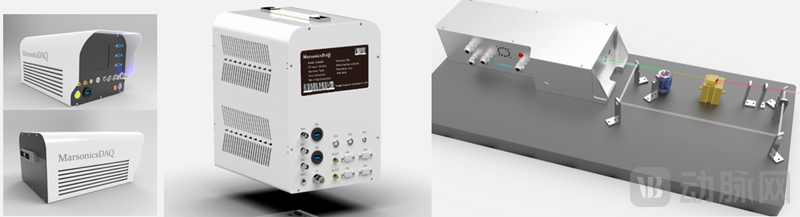
Proprietary Core Components, DAQ, and Laser Systems
Provided by the interviewee
TsingPAI leverages its R&D team’s technical strengths in optoelectronics and electronic information, persists in the independent development of core devices and components, and continuously reduces the high costs associated with imported equipment.
The cost of core devices and components of MarsonicsPIIP is only one-third that of imported ones.This not only accelerates the pace of domestic substitution and promotes the development of photoacoustic technology in China, but also provides high-quality, cost-effective component products and supporting services to researchers in the photoacoustic field both domestically and internationally.
Furthermore,To reduce the learning curve and operational complexity associated with new technologies and equipment, TsingPAI has developed three-dimensional photoacoustic imaging technology.This technology enables the development of imaging system products that are more intuitive and user-friendly, allowing researchers and medical experts to quickly master and utilize them.
According to research data from the international consulting firm IMARC Group, the global photoacoustic imaging market size was $71.21 million in 2021 and is projected to reach $183.7 million by 2027, representing a compound annual growth rate (CAGR) of 15.70%. However, the future market for photoacoustic imaging extends far beyond these figures; leveraging its technical advantages of being non-invasive, radiation-free, and relatively low-cost, it is poised to target the global medical imaging market, which is valued at nearly $100 billion.
In response, TsingPAI has accelerated the productization of its technologies through industry-academia-research collaborations with research institutes and Grade 3A hospitals.
TsingPAI and the Tsinghua Strait Research Institute (Xiamen) jointly established the Tsinghua Strait Institute Photoacoustic Biomedical Imaging Laboratory.Leveraging the platform of the Tsinghua Strait Institute, TsingPAI provides researchers and clinical experts in relevant fields with professional, high-performance photoacoustic imaging products and supporting technical services. This initiative not only reduces the time and cost required to build photoacoustic imaging research systems, but also establishes a leading domestic ecosystem for photoacoustic imaging technology, helping researchers and clinical experts accelerate their research plans while saving time and equipment costs.
Furthermore,TsingPAI has also established industry-academia-research collaboration platforms with multiple Grade 3A hospitals across China, including Beijing Tiantan Hospital, Beijing Tsinghua Changgung Hospital of Tsinghua University, Beijing Friendship Hospital, and Beijing Anzhen Hospital.This not only accelerated the clinical adoption of the company’s photoacoustic imaging products,It also provides innovative solutions for the scanning, detection, and diagnosis of neurological and neurosurgical conditions, vascular diseases, and breast diseases.
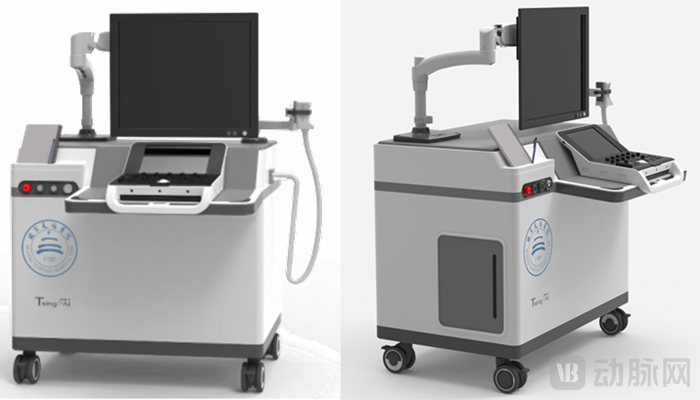
TsingPAI Photoacoustic/Ultrasound Multimodal Medical Imaging System (Collaborating Institution: Beijing Tiantan Hospital)
Photo provided by the interviewee
As the lead investor in this round of financing, Li Feng, Founding Partner of FreeS Fund, and Li Gang, Head of Early-Stage Projects, stated:Biomedical imaging equipment has consistently evolved toward higher-dimensional capabilities, progressing from 2D to 3D, from structural to functional imaging, and from single-spectrum to hyperspectral imaging. Photoacoustic imaging technology combines the advantages of optical and ultrasound imaging, offering high-precision 3D imaging, functional imaging, molecular imaging, and non-destructive, non-invasive assessment. It provides a new perspective for in vivo imaging and delivers richer information on biological tissues to clinicians, aligning with the broader trends in precision medicine and the development of biomedical imaging devices. TsingPAI is an excellent and pragmatic startup team, driven by first-principles-based algorithmic innovation, possessing independent R&D capabilities for core hardware, and maintaining close collaborations with clinical resources. Its commercialization strategy is clear and well-grounded. We firmly believe that TsingPAI will lead the advancement of the photoacoustic imaging field.
As a strategic investor, Dr. Wang Jingjing, Director of the Global Health Industry Innovation Center (GHIC), stated:Precision medicine represents a significant trend in the future development of clinical medicine, and the introduction of a new medical imaging modality holds immense potential to deliver value and drive transformation in clinical practice. Although the realization of such value and transformation often requires considerable time, GHIC remains confident in the trend of technology empowering medical advancement and is optimistic about TsingPAI’s technological advantages, honed over many years in this field. In the future, GHIC will assist TsingPAI in exploring additional clinical application scenarios, providing professional platform support, and facilitating and accelerating its path toward industrialization, thereby jointly promoting the innovative journey from technology to clinical application with TsingPAI.
As a strategic investor, Wang Binbin, Managing Director of the Beijing Medical Robot Industry Innovation Center (IMC), stated:High-end medical imaging equipment is a key area of national support and development. TsingPAI possesses strong innovation capabilities and independent R&D strength, demonstrating significant growth potential in the field of photoacoustic imaging. It is a key entrepreneurial and innovative team supported by IMC. The Innovation Center provides a high-end medical device CDMO platform, offering comprehensive services and empowerment to TsingPAI. This support enables the team to focus on product R&D and clinical applications, accelerating its development and achieving breakthroughs and overtaking competitors in the field of photoacoustic medical imaging by Chinese teams.
FreeS Fund
FreeS Fund is committed to mobilizing all available capital, technology, and resources to invest in outstanding startups and help them grow into great enterprises with long-term social and commercial value. FreeS Fund focuses on early-stage and growth-early-stage investments, with key investment areas including Consumer/TMT, Hard Tech, and Biopharmaceuticals. Research-driven and innovation-oriented, FreeS Fund has developed its own systematic investment strategy through continuous exploration—seeking unique investment opportunities at the intersection of disciplines.
Global Health Industry Innovation Center (GHIC)
The Global Health Industry Innovation Center was initiated and established by the Beijing Tsinghua Industrial R&D Institute. It aims to connect global medical innovation technologies and resources, strengthen the translation of scientific and technological achievements, facilitate the effective implementation and development of innovative technologies in medical devices, diagnostics, and services, and provide comprehensive support for early- to mid-stage projects.
Beijing Medical Robot Industry Innovation Center (IMC)
IMC is a collaborative innovation platform for medical robotics technology and industry, established under government guidance. Focused on the high-end medical device sector, IMC deeply explores clinical needs and drives technological innovation, striving to become a trusted partner in the industry and build a world-class platform for industrial innovation. With a robust mechanism for medical-engineering collaboration and clear pathways for product commercialization, IMC constructs an integrated chain linking academia, research, production, and application. It provides CDMO (Contract Development and Manufacturing Organization) and innovation empowerment services to high-end medical device companies, research institutes, and healthcare institutions.