

OmicEra Diagnostics: Revolutionizing Early Cancer Detection with AI-Driven, Mass Spectrometry-Based Proteomics

OmicEra Diagnostics
Proteomics and Artificial Intelligence Technology Developer
Proteomics is the scientific discipline dedicated to studying the composition, localization, dynamics, and interaction patterns of proteins within cells, tissues, or organisms, encompassing research into protein expression profiles and functional proteomic models. The advancement of proteomics holds significant importance for identifying disease diagnostic markers, screening drug targets, and conducting toxicological studies, thereby leading to its widespread application in medical research.
OmicEra Diagnostics (hereinafter referred to as “OmicEra”) is a proteomics and artificial intelligence (AI) startup. The company leverages mass spectrometry-based proteomics to transform medical diagnostics and improve human health. Founded on January 1, 2019, OmicEra is headquartered in Planegg, Germany. Its leadership team comprises proteomics scientists, AI experts, and serial entrepreneurs.

Dr. Ole Vorm, CEO and Co-Founder (Image source: OmicEra official website)
Dr. Ole Vorm is the CEO and co-founder of OmicEra, a serial entrepreneur with extensive leadership experience.
In 1997, Ole Vorm and Matthias Mann founded Protana in Odense, Denmark, an early proteomics company that was acquired by MDS Intl in 2000. In 2004, Ole Vorm established Proxeon, which was acquired by Thermo Fisher Scientific in 2010. From 2014 to 2016, Ole Vorm served as Vice President of Proteomics at Bruker. In March 2016, Ole Vorm founded Evosep, an innovative and rapidly growing HPLC company.
On June 17, 2022, OmicEra was acquired by Exact for $15 million. Exact is a company focused on early cancer diagnosis. The company aims to leverage the latest mass spectrometry-based proteomics technologies to further discover early-stage cancer biomarkers.
So, what makes OmicEra’s mass spectrometry-based proteomics technology unique and worthy of acquisition by Exact? VCBeat conducted an analysis.
Biomarkers are biochemical indicators that mark changes or potential changes in the structure or function of systems, organs, tissues, cells, and subcellular components, and they have a wide range of applications. Currently, biomarkers can be used for disease diagnosis, determining disease staging, or evaluating the safety and efficacy of new drugs or therapies in target populations.
OmicEra’s proteomics pipeline can analyze a variety of human sample types, including plasma, cerebrospinal fluid (CSF), and urine samples, isolated cells, and formalin-fixed paraffin-embedded (FFPE) or fresh-frozen tissues.
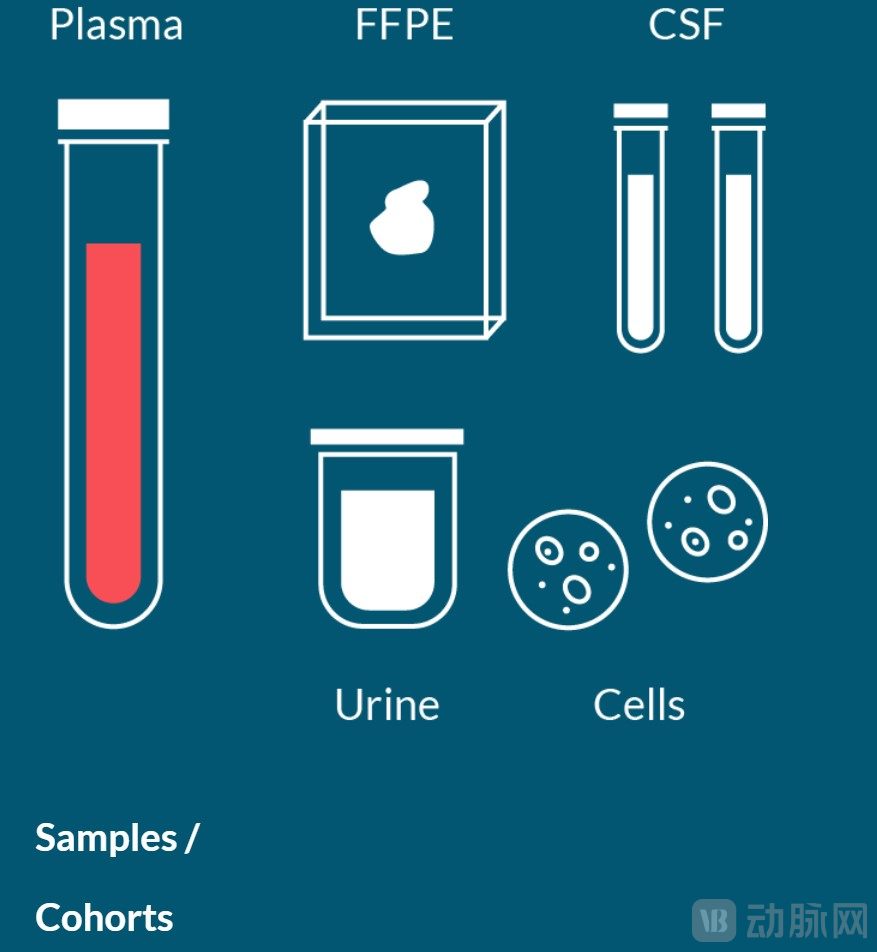
Sample Cohort (Image Source: OmicEra Official Website)
OmicEra has developed a robust platform for large-scale, mass spectrometry-based proteomic analysis of clinical samples, capable of processing over 200,000 samples annually. Founding members of OmicEra, including Dr. Philipp Geyer, pioneered the exploration of the plasma proteome and developed a novel biomarker discovery approach known as the “Rectangular Strategy.”
The workflow of the rectangular strategy is divided into two phases.
Phase 1: A large cohort was studied in the discovery phase, with proteome coverage maximized. In the validation phase, another cohort was analyzed to confirm candidate biomarkers, requiring the use of the same technology and a similar cohort size. Alternatively, both cohorts can be analyzed simultaneously, but only proteins showing statistically significant differences in both studies are considered validated biomarkers.
Phase II: Plasma proteomic analysis across diverse lifestyles, diseases, and treatment modalities will establish a knowledge base over time, linking plasma protein changes to perturbations in a generalizable manner.
The rectangular strategy offers two advantages over the traditional “triangular strategy” for biomarker discovery. First, it enables the discovery and validation of protein patterns characteristic of specific health or disease states, as well as individual biomarker candidates. Second, it allows for rapid, deep quantification of the plasma proteome across large sample cohorts.
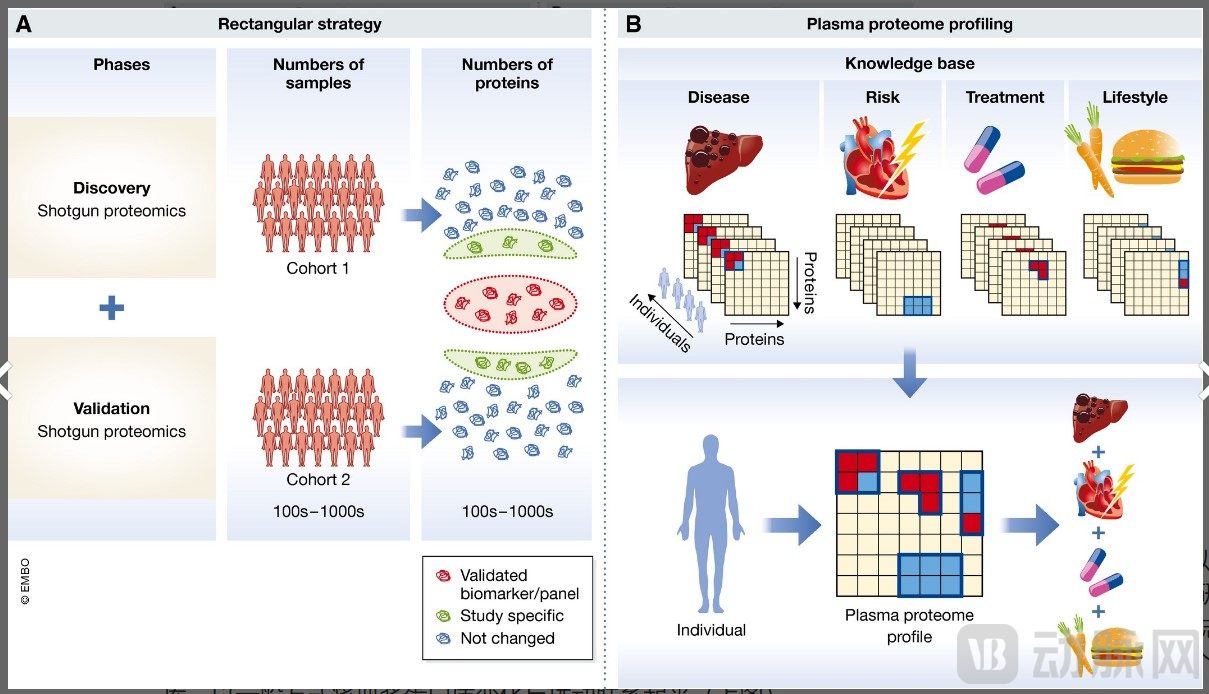
Rectangular Workflow (Image source: OmicEra Diagnostics official website)
Compared with genomics, proteomics offers higher specificity, such as in the diagnosis of benign and malignant thyroid nodules.
A 2018 assessment in Nature Reviews Endocrinology indicated that the sensitivity of gene sequencing test results can reach 83%–100%, meaning that if a nodule is malignant, the test kit can basically identify it; however, the specificity is only 10%–52%. This implies that approximately 50%–90% of nodules identified as malignant by the test kit are actually benign, putting up to 90% of patients at risk of overtreatment.
However, proteomics technologies also have limitations and challenges. The difficulties in protein detection lie in how to process small amounts of tissue, identify more proteins, perform stable protein quantification, improve data reproducibility, and efficiently analyze mass spectrometry data.
OmicEra has overcome the challenges in protein detection by obtaining effective information primarily through two aspects: data quality and high reproducibility, as well as data processing, thereby enabling the discovery and validation of biomarkers.
There is an industry consensus that data quality is a prerequisite for accurate diagnostic results. Therefore, OmicEra Diagnostics implements rigorous controls from sample collection to data generation to ensure data quality.
OmicEra leverages robotics for sample preparation to achieve scalability and high reproducibility in protein extraction, denaturation, enzymatic digestion into peptides, and purification.
To detect and correct quality issues related to sample collection or storage, OmicEra regularly applies a panel of quality markers and quality assessment strategies to correct plasma sample biases caused by red blood cell lysis, platelet recontamination, and partial blood coagulation.
The quality marker panels of the OmicEra application mainly consist of the combined red blood cell and platelet quality markers, as well as the coagulation quality marker panel.
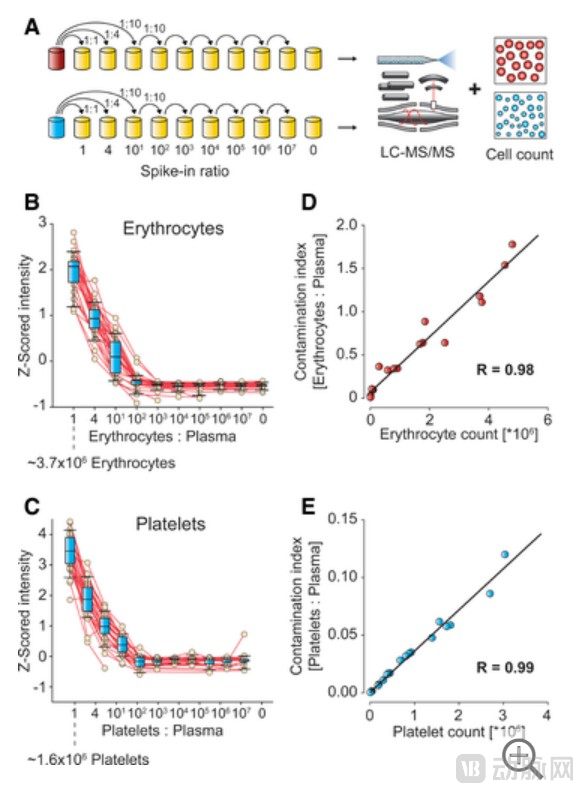
Combination of Red Blood Cell and Platelet Quality Markers (Image source: OmicEra Diagnostics official website)
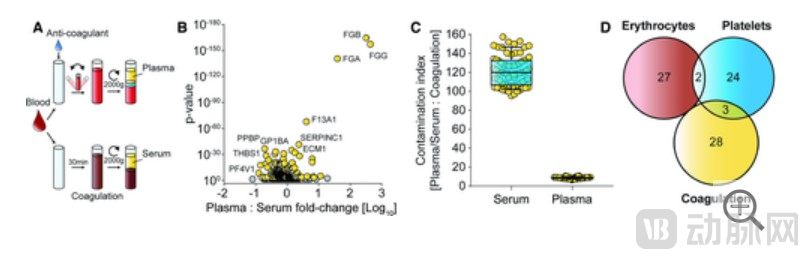
Coagulation Quality Marker Panel (Image source: OmicEra Diagnostics official website)
The application of quality marker panels enables the assessment of sample-related quality issues at three levels: the quality of each individual sample within a clinical cohort, potential systematic biases across the entire study, and the likelihood that individual biomarker candidates belong to the contaminant proteome.
Furthermore, OmicEra has established standard operating procedures (SOPs), a sample tracking strategy, and real-time quality control software to monitor the performance of liquid chromatography and mass spectrometry systems, thereby ensuring data quality.
By controlling quality deviations throughout the entire process from sample to data, OmicEra ensures data quality. So how does its mass spectrometry-based proteomics analysis ensure high data reproducibility?
OmicEra primarily employs Data-Independent Acquisition (DIA) technology for the qualitative and quantitative analysis of proteins.
Data-dependent acquisition (DDA) is currently the predominant technique for qualitative and quantitative protein analysis; however, DDA exhibits a bias toward high-intensity peptide signals during scanning, often resulting in the omission of low-abundance peptides.
Compared with DDA, DIA enables unbiased acquisition of fragment ion information for all ions in a sample, thereby improving the reproducibility and accuracy of quantitative results. Furthermore, DIA data acquisition is not limited to predefined target peptides, making it suitable for quantitative analysis of unknown proteins and large-scale proteomics.
OmicErade ensures high data reproducibility by performing multiple quantifications of peptides using DIA technology.
OmicErade’s proteomics pipeline quantifies multiple peptides per protein, with each peptide quantified multiple times in a single analysis, thereby generating highly reproducible data and accurate protein quantification.
Compared with antibodies and other affinity-based assay methods, mass spectrometry identifies analytes based on their physical properties and is therefore definitive. Consequently, the identification of peptides and proteins achieves nearly 100% specificity.
OmicEra has obtained high-quality, highly reproducible data through DIA technology. However, regarding data processing, how to extract effective information from the acquired data to discover and validate biomarkers remains a limitation of proteomics technology. So, how does OmicEra break through this limitation?
Clinical databases can help hospitals and research institutions establish information-based management mechanisms, thereby improving clinical diagnostic efficiency and decision-making capabilities to a certain extent. In life sciences research, integrating proteomics data with artificial intelligence enables rapid and accurate analysis of mass spectrometry data.
Graph Databases: Enhancing Data Insights
OmicEra employs a graph database to enhance medical and biological insights into proteomics data. This database consists of a knowledge base and biomedical information systems containing information on protein perturbations across various health and disease states.
OmicEra’s software pipeline includes a novel AI-powered database search engine and optimized quantification algorithms, enabling the conversion of raw data into quantitative peptide and protein information.
Machine Learning: Building Predictive Models
Machine learning is an artificial intelligence technology that enables computer systems to automatically improve and optimize by learning from and extracting knowledge from data.
OmicEra discovers and validates novel biomarkers using machine learning techniques such as ensemble learning, thereby establishing predictive models for patient stratification or disease progression prediction.
Predictive models can assist research institutions in deciding whether to conduct further testing. If the likelihood of obtaining a diagnostic result is extremely low, further testing will not be pursued. Predicting the patient’s disease course facilitates clinical decision-making regarding treatment plans and supports patients’ psychological preparedness.
Furthermore, OmicEra also applies machine learning to predict peptide retention time, collision cross-section, or MS/MS spectral intensity of peptides to enhance its pipeline technology.
Since 2019, OmicEra has collaborated with mass spectrometer vendor Bruker and Evosep, a supplier of liquid chromatography systems for clinical or translational applications, aiming to push the boundaries of clinical proteomics. Ultimately, OmicEra acquired cutting-edge technologies in mass spectrometry-based proteomics and was acquired by Exact in 2022.
The future development of quantitative proteomics technologies will focus on further enhancing throughput, accuracy, stability, and automation. OmicEra’s mass spectrometry-based proteomics technology will continue to advance in this direction.