

Cyted Submits IPO Prospectus for Cytosponge: A 10-Minute, Non-Endoscopic Test Revolutionizing Esophageal Cancer Screening

Cyted
Early Cancer Diagnosis Technology Developer
How Many Steps Does It Take to Perform an Esophageal Cancer Screening That Can Replace Endoscopy? Just 10 Minutes with Cytosponge:
Step 1: Swallow a soft pill, 1 cm in width, with water; one end of the pill is attached to a thin string.
Step 2: Wait for seven and a half minutes, during which you may chat, drink water, or rest.
Step 3: Open your mouth and pull the cord to remove the sponge.
No sedatives, no anesthesia, and no need to insert a long camera-equipped tube into the esophagus; the Cytosponge test is painless, takes only 10 minutes, and delivers diagnostic results within one week.
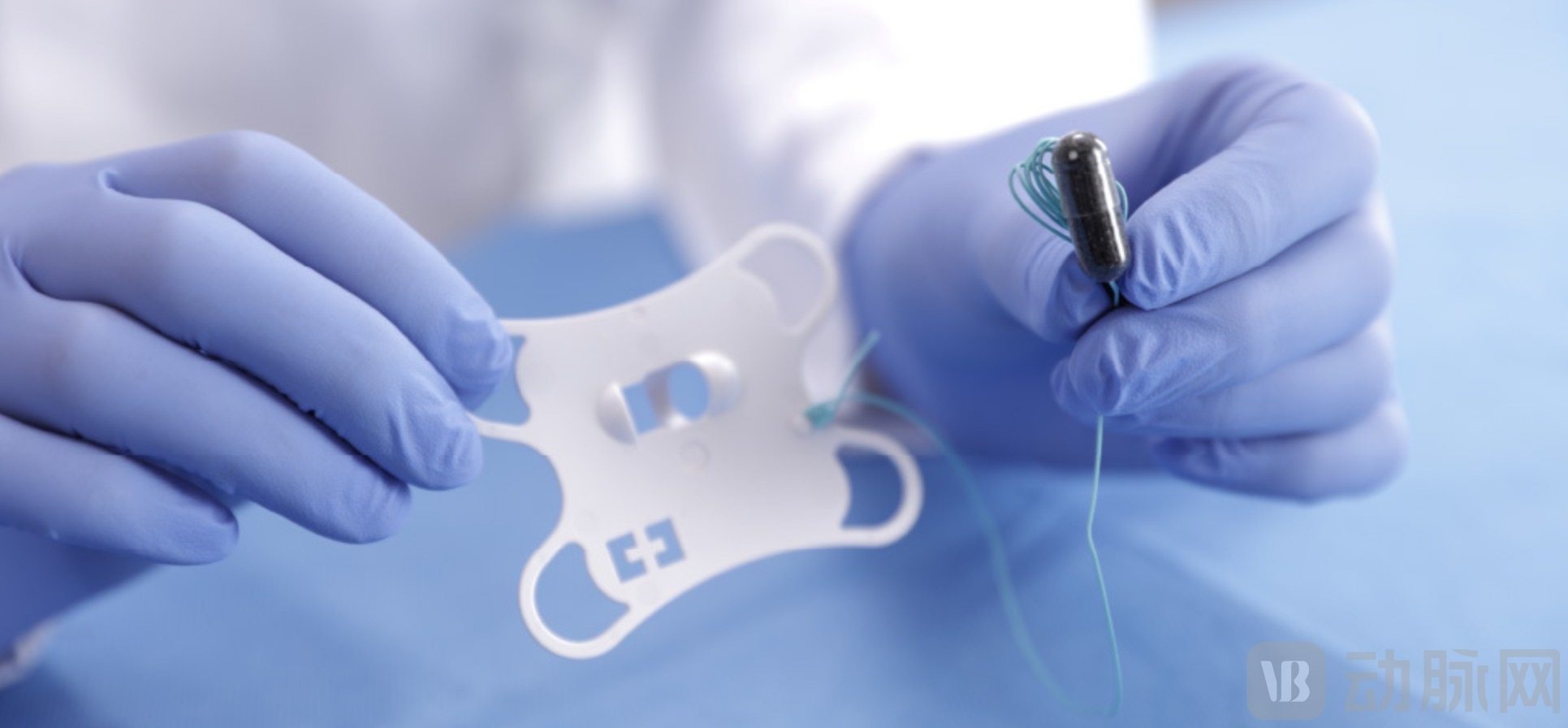
Actual Photos of the Cytosponge Sponge Pill Product
Image source: Cyted
This is a diagnostic test developed by Cyted, a UK-based early cancer diagnosis company, suitable for the early monitoring of esophageal cancer, a malignant tumor. Cyted specializes in providing AI-powered digital diagnostic infrastructure to improve early cancer detection and patient outcomes.
Cyted Completes £13.4 Million Series A FinancingRecently, Cyted completed a £13.4 million Series A financing round, which included a £3.4 million non-dilutive grant from the NHS Cancer Programme. The round was co-led by BGF and the initial investor, Five Source Capital (Wuyuan Capital), with participation from private investors. The newly secured funds will be used to expand operations and enter the U.S. market. Additionally, the capital will support further research and development of its tests for gastrointestinal cancers and inflammatory diseases.
How to Deeply Integrate Machine Learning with Novel Biomarker Detection and Translate It into Diagnostic Solutions: Exploring Cyted’s Path
The Cytosponge-TFF3 test is indicated for patients with heartburn or reflux symptoms to diagnose Barrett’s esophagus (BE). A positive Cytosponge-TFF3 test result warrants referral for endoscopy, followed by monitoring and treatment.
Barrett’s esophagus (BE) is a subtype of gastroesophageal reflux disease (GERD) and a major precancerous lesion for esophageal adenocarcinoma. According to the “Guidelines for the Diagnosis and Treatment of Esophageal Cancer (2022 Edition)” issued by the National Health Commission, global cancer statistics in 2020 reported approximately 604,000 new cases and 544,000 deaths from esophageal cancer. About 70% of patients with esophageal cancer are diagnosed at an advanced stage, and the five-year survival rate for these patients does not exceed 15%. Implementing screening programs to achieve early diagnosis and treatment is a key measure to curb the high incidence of esophageal cancer and reduce mortality. Therefore, diagnosis at the early precancerous stage of BE enables more effective monitoring and treatment for patients.
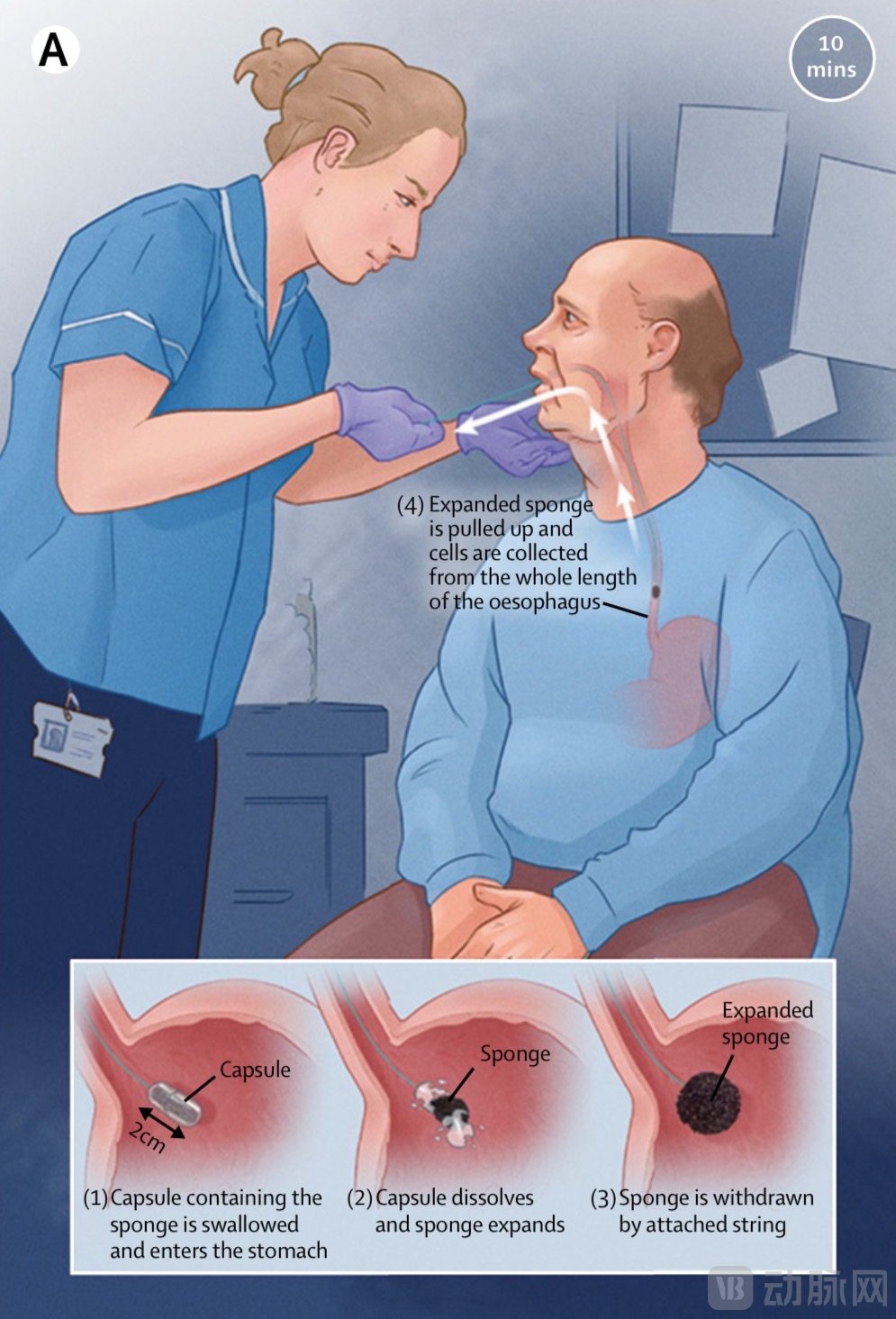
Cytosponge Clinical Workflow
Image source: The Lancet
Cytosponge is a cell collection device developed by Cyted, consisting of a gelatin capsule containing a compressed, medical-grade polyester mesh ball. After swallowing, the gelatin capsule dissolves in the stomach. The enclosed sponge expands to 3 cm in diameter and collects cells from the esophageal surface during retrieval.
This cell collection device provides a non-endoscopic upper gastrointestinal (GI) testing solution that is simple, rapid, painless, and minimally invasive, making it suitable for emergency and community settings. To date, the Cytosponge-TFF3 test has been used more than 15,000 times in hospitals across the United Kingdom.
Following Cytosponge sampling, the specimen will be sent to the laboratory for diagnostic analysis.
After being sent to the laboratory, pathologists and artificial intelligence will jointly search for the key diagnostic biomarker for Barrett's esophagus (BE), Trefoil Factor 3 (TFF3).
Trefoil Factors (TFFs) belong to the neuropeptide family and are a class of small-molecule peptides. As an important mucosal protective factor in the gastrointestinal tract, TFF3 plays a significant role in mucosal injury, repair, proliferation, and malignant transformation. In the characterization of Barrett’s esophagus (BE), TFF3 is overexpressed in mucin-producing goblet cells.
After treatment with a preservative solution, the samples were embedded in paraffin. The sample cells were stained with hematoxylin and eosin (H&E) to identify and quantify cellular phenotypes. Immunohistochemical staining for TFF3 was then performed on the pathological sections for histopathological evaluation.
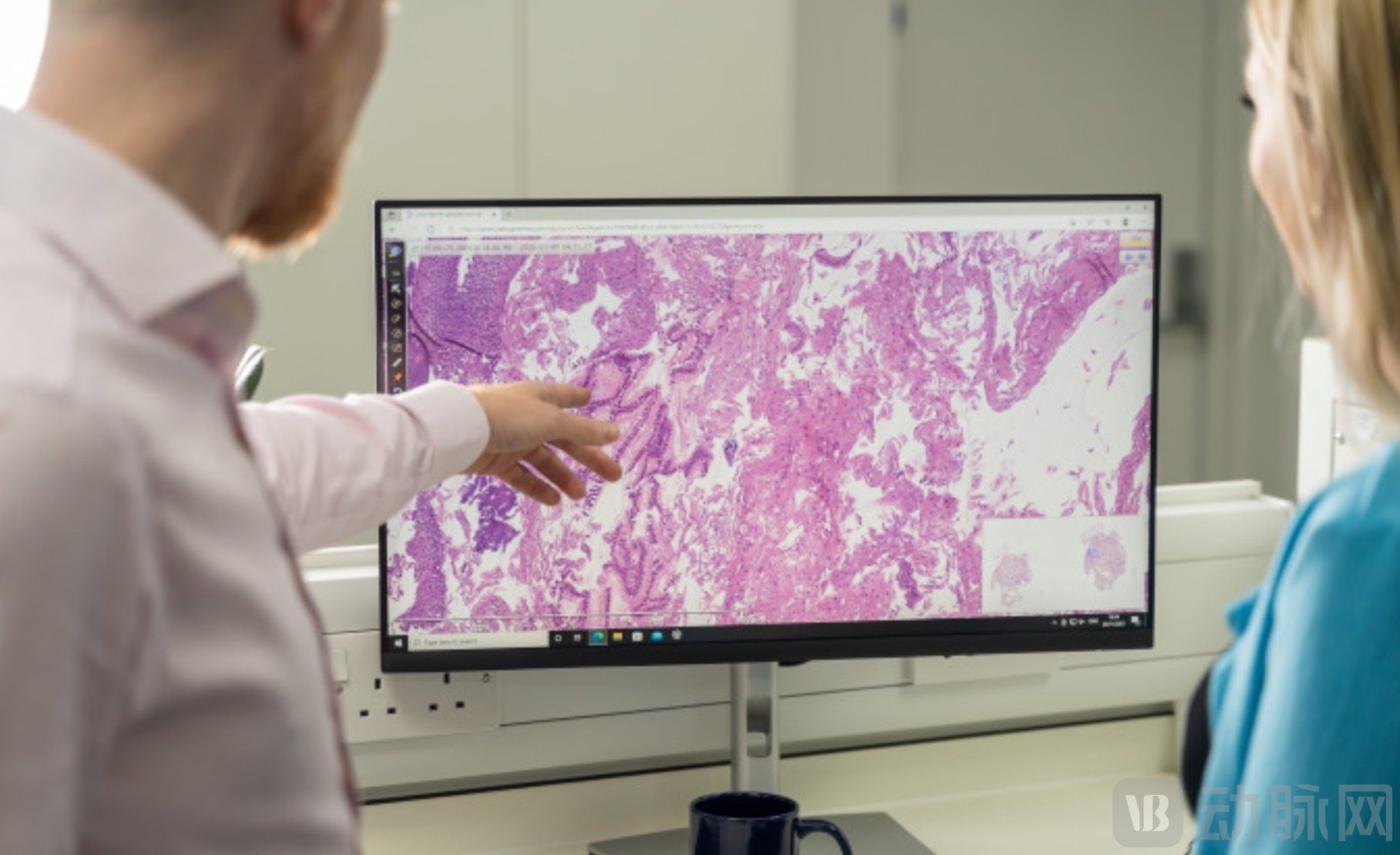
AI-Powered Semi-Automated Triage System
Image source: Cyted
Under traditional methods, histopathological assessment of sample cells is performed independently by gastrointestinal pathologists. However, fully manual diagnosis is plagued by inefficiency, high costs, and prolonged turnaround times. Therefore, Cyted has introduced artificial intelligence (AI)-powered deep learning to enhance diagnostic efficiency and reduce costs.
AI demonstrates excellent performance in diagnostic tasks, but the accuracy of fully automated diagnosis and treatment remains lower than that of humans. The design of clinical decision support systems needs to balance the limited performance of AI with economic benefits.Therefore, bridging the gap between fully automated and fully manual pathways, Cyted has innovatively developed a semi-automated triage system.
During the early R&D phase, the team used deep learning to train the AI. The trained AI performs quality control and diagnosis on pathological slides from Cytosponge-TFF3 tests. Trial results showed that the AI correctly identified 73% of cases, while pathologists achieved an accuracy rate of 82%. The breakthrough finding is that both methods correctly identified 93% of negative cases.
In this semi-automated triage system, pathological slides are categorized into eight risk levels based on artificial intelligence-driven quality control and diagnosis. Samples with high risk levels are referred to pathologists for manual evaluation to ensure diagnostic accuracy.
In clinical trials, this triage system has demonstrated promising results. When applied to high-quality histopathological slides, the algorithm successfully identified 83% of cases. By integrating quality control and diagnostic metrics for histopathological slides, AI can significantly reduce workload while achieving sensitivity and specificity comparable to those of pathologists. This clinical study was published in Nature Medicine.
Cyted is a prime example of translating pioneering research into clinical practice, co-founded by the teams of Professor Rebecca Fitzgerald OBE and Dr. Marcel Gehrung at the University of Cambridge.
The original concept stemmed from the work of Dr. Marcel Gehrung during his doctoral studies at the Cancer Research UK Cambridge Institute. Dr. Gehrung’s research focused on applying machine learning and artificial intelligence to various types of medical imaging data.
During his doctoral work, Dr. Marcel Gehrung came into contact with Professor Rebecca Fitzgerald’s team, which is engaged in early-stage cancer research. Professor Fitzgerald primarily focuses on the early detection of esophageal and gastric cancers and has led her team in developing the Cytosponge-TFF3 test.
Marcel Gehrung and Rebecca formed a new team, aiming to leverage artificial intelligence to alleviate the burden of sample analysis and enhance the efficiency of the Cytosponge-TFF3 test. In 2018, this new AI-powered diagnostic team received support from Cancer Research UK, leading to the establishment of Cyted.
In just three years, the Cytosponge-TFF3 test has been deployed at more than 80 sites across the UK, with over 15,000 tests performed. This rapid clinical implementation and accumulation of samples can be attributed to the support of the NHS (National Health Service).
SBRI Healthcare, an initiative launched by the NHS, is a healthcare service program provider aimed at promoting economic growth in the UK, addressing unmet medical needs, and supporting outstanding innovative technologies. Cyted has received SBRI Healthcare funding twice, totaling £3.9 million. The initial grant of £500,000 supported the pilot of the Cytosponge-TFF3 test in community care settings in Northwest England. The current £3.4 million grant will be used to scale up the Cytosponge-TFF3 test for inclusion in primary and community care settings nationwide.
NHS support is evident—the Cytosponge project will be able to identify a large number of patients with gastroesophageal reflux and Barrett’s esophagus, diverting them from endoscopy waiting lists.Taking endoscopy services in Northwest England as an example, more than 50% of patients have to wait over six weeks for their procedures, significantly delaying diagnosis and treatment and reducing patient survival rates. Patients who test positive on the Cytosponge-TFF3 test will be prioritized for endoscopy and treatment.
Furthermore, Cyted Laboratory has collaborated with the NHS, private healthcare providers, and life sciences companies to establish a pathology service system that supports large-scale clinical decision-making for enterprises. This system encompasses histopathology laboratory and digital reporting services, ISO international standard certification, and External Quality Assessment (EQA).
In the United States, the Cytosponge-TFF3 test has been endorsed by the American College of Gastroenterology (ACG) for Barrett’s esophagus screening, leading to updates in U.S. clinical guidelines. The revised guidelines were published in the American Journal of Gastroenterology (AJG). They state that the Cytosponge-TFF3 test can serve as an alternative to endoscopy for screening patients with risk factors such as chronic reflux.
This guideline revision marks a clinical milestone for the Cytosponge-TFF3 test in the United States. The ACG emphasizes that Cytosponge is the only “non-endoscopic capsule sponge device combined with a biomarker” with a substantial evidence base and commercial scale in recent years.
In the R&D direction of esophageal exfoliative cytology and computational cytology, domestic research has also achieved relevant breakthroughs.
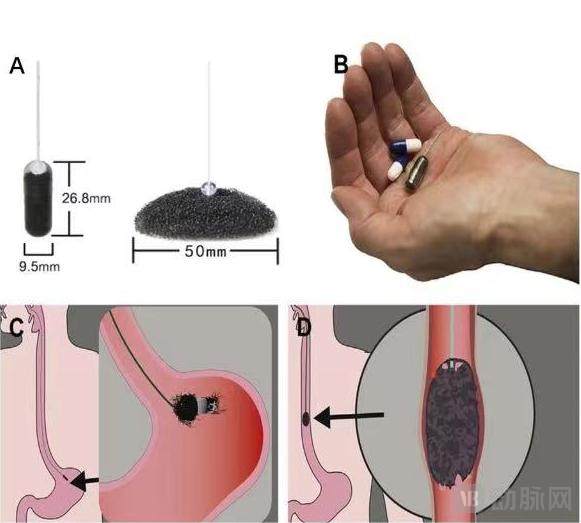
Novel Esophageal Cell Enricher Developed by Academician Li Zhaoshen and Professor Wang Luowei’s Team
Image source: Shanghai Changhai Hospital
Since 2021, research findings on novel esophageal cell collection devices combined with AI-assisted screening have been successively published in journals such as The American Journal of Gastroenterology and Cancer Medicine. In March this year, the latest research by Academician Li Zhaoshen and Professor Wang Luowei’s team, titled “Machine learning-based computational cytology for screening oesophageal squamous cell carcinoma and oesophagogastric junction adenocarcinoma: a nationwide, multicohort, prospective study,” was published in The Lancet Gastroenterology & Hepatology.
This study employed machine learning-based computational cytology to screen for esophageal squamous cell carcinoma and adenocarcinoma of the esophagogastric junction.
Unlike the Cytosponge-based semi-triage system that relies on histopathological sections, the computational cytology screening in this study integrates cytological image features with epidemiological risk factors to develop and validate a risk assessment model for screening esophageal and gastroesophageal junction cancers.
This study collaborated with 39 medical institutions and five communities across China, enrolling a total of 17,498 participants. The model demonstrated a sensitivity of 94.5%, a specificity of 91.9%, and a positive predictive value of 18.4%. Following initial screening using this method, 90.3% of the population could be classified into the low-risk group, thereby obviating the need for endoscopic examination.
The integration of non-endoscopic screening methods with computational cytology and artificial intelligence offers a glimpse into the future of early cancer screening—more universal, simpler, and smarter.In the future, multi-tiered screening approaches stratified by risk coefficients and disease levels will facilitate the precise allocation of medical resources. More importantly, integrating early cancer screening into communities and clinics to raise public awareness and enable early diagnosis and treatment represents the most critical first step in reducing the high incidence and mortality rates of cancer.