

Why Healthcare Enterprises Are Embracing DingTalk in the Era of Digital Transformation

Cofoe
Intelligent Medical Device R&D, Production, and Sales Company
During the 2020 pandemic, Cofoe Medical, which had always maintained a low profile, experienced a significant surge in popularity. This occurred against the backdrop of many medical companies coming to a standstill due to the pandemic.Cofoe not only maintained operations but also expanded production, manufacturing at least one million units of anti-epidemic supplies daily., becoming the backbone of the fight against the epidemic in those critical times.
It was precisely for this reason that Cofoe Medical experienced a significant surge in performance in 2020. According to the annual financial report, Cofoe Medical achieved a revenue of RMB 2.375 billion in 2020, representing a year-on-year increase of 62.45%, and a net profit of RMB 425 million, marking a year-on-year growth of 242.76%.
Behind the dual success of fame and fortune,Wang Xifeng, General Manager of Cofoe’s Medical Business Division, attributed this to the company’s early adoption of DingTalk., “Cofoe has nearly 5,000 employees,However, during the three years of the pandemic, we never halted production for a single day and maintained normal operational status throughout.. In our own view,A key reason is that we embarked on our digital transformation journey several years in advance.“As early as 2018, we had already onboarded all employees onto DingTalk, so when the pandemic struck in 2020, we were able to rapidly transition our offline work scenarios to an online environment.”
As we entered 2023, amidst a new competitive landscape,Multiple investors have included the adoption of digital office tools as a criterion for evaluating portfolio companies., and the underlying logic is actually to observe a company’s organizational capabilities and strategic management capabilities, which is particularly important in the current healthcare landscape characterized by original innovation and the translation of research achievements into practical applications.
Therefore, to some extent,DingTalk’s Integration with the Healthcare Industry Is Just Beginning。
"Disruptive Strike: Leveraging Internet Methods in Healthcare"
The healthcare industry is a typical knowledge- and technology-intensive sector, characterized by high talent costs and a workforce drawn from diverse fields, leading to frequent interdisciplinary communication. Furthermore, as companies must simultaneously address innovation, production, and market promotion, many healthcare enterprises have established operations across China and even globally. Therefore,Achieving online communication, online collaboration, and online organization has become the first step in digital transformation.。
Based on DingTalk, Cofoe has created a unified office portal, andCancel all paper-based approval processes, all matters, including leave requests, procurement, and reimbursements, must be initiated and fully processed through DingTalk. Specifically, from the moment an employee is onboarded and registers on DingTalk, all their information—including accommodation, shift schedules, assigned production lines, as well as daily living matters such as access control and cafeteria card usage—can be queried and handled with a single click on DingTalk.
Furthermore, due to its unique application scenarios, the healthcare industry is characterized by stringent regulation, which is reflected not only in policy approvals but also in the quality of products and services. Therefore, for medical enterprises such as Cofoe, the ability to leverage digitalization to deepen integration into business processes such as procurement and production, thereby ensuring product and service quality, determines operational efficiency.
To meet the requirements of factory safety management, Cofoe has established management teams and assigned inspectors to conduct environmental inspections at each of its manufacturing facilities. Prior to the adoption of DingTalk, inspection results had to be manually compiled and uploaded using Excel. Due to the limited educational background of many inspectors, factories typically needed to assign an additional staff member to assist with data organization and uploading in Excel, making information retention and transmission exceptionally cumbersome.
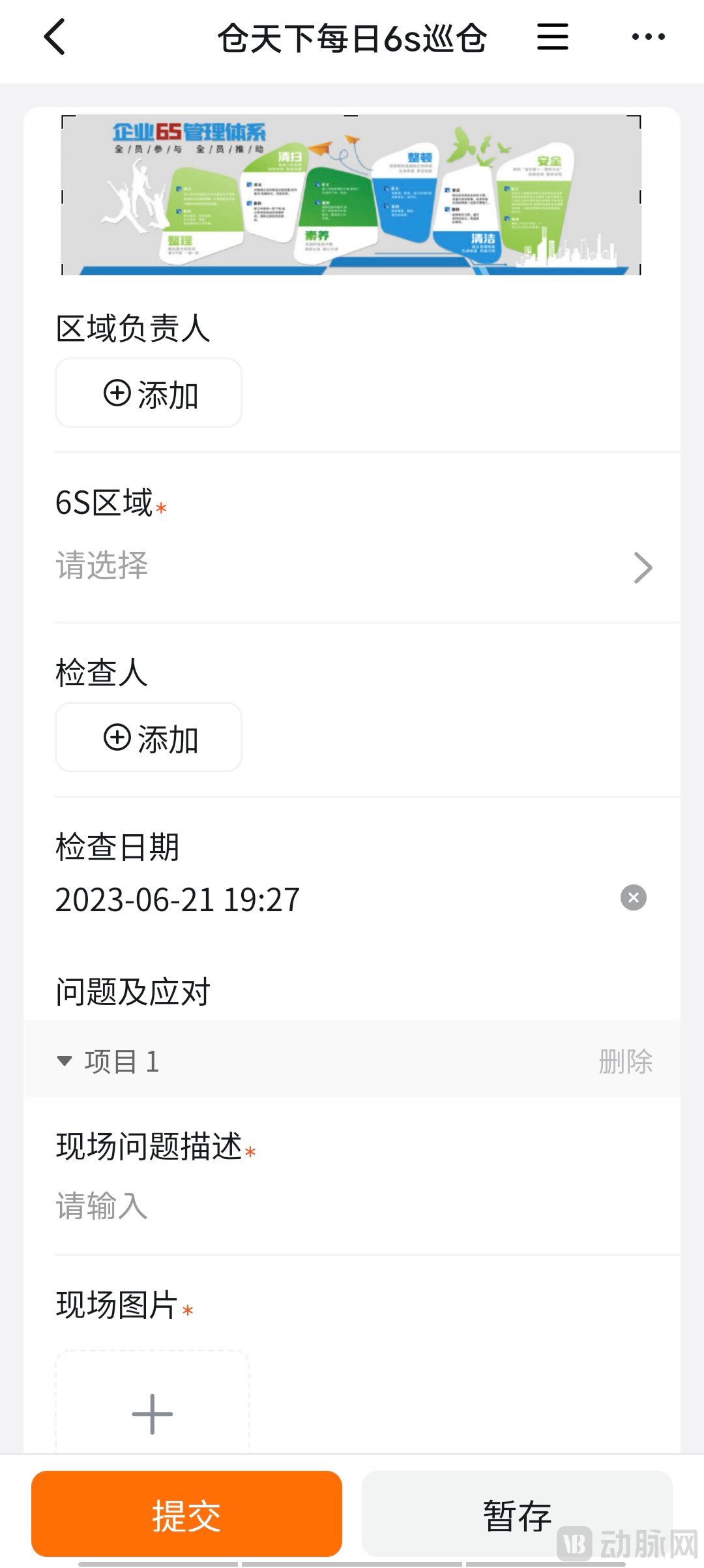
Figure 1. Cofoe Medical Factory Inspection Scenario Interface
To address this pain point,Cofoe leveraged DingTalk’s low-code platform, YiDa, to independently develop a factory inspection application, migrating all inspection processes online., inspectors are only responsible for uploading inspection photos. In this way, Cofoe not only reduces the difficulty for inspection personnel to organize data, compile summaries, and upload Excel files,This has saved at least one staff member per inspection team, while also reducing the overall inspection workload by 40%.. It is understood that Cofoe has independently developed approximately 80 low-code applications, which are widely used in various office scenarios such as production and management.
According to Wang Xifeng,Cofoe has independently developed more than 120 systems, the vast majority of which are secondary developments based on DingTalk, achieving digitalization across the entire business spectrum—from upstream R&D and midstream production to downstream logistics and distribution.. In key business processes such as procurement, Cofoe has achieved collaboration across the upstream and downstream industrial chains based on DingTalk.
In the past, procurement operations relied heavily on phone communications between buyers and suppliers, resulting in low efficiency, information “black boxes,” and frequent data discrepancies. Today, by integrating DingTalk, Cofoe has streamlined this process: when raw material procurement needs arise, buyers publish purchase requests through a ticketing system, and a DingTalk bot named “Ticket Assistant” automatically pushes the procurement tasks to the DingTalk group chats shared by Cofoe and its suppliers.
Upon viewing the information, suppliers can directly submit their bid details and report production schedules to procurement staff by clicking on the card notification pushed by the DingTalk bot. Cofoe’s procurement personnel then review and approve the submitted production plans based on internal requirements, thereby completing the procurement and supply process. This streamlined workflow significantly simplifies business operations, facilitates data accumulation, and greatly enhances procurement efficiency.
Wang Xifeng candidly stated, “The rapid expansion of our business and the phased changes in the healthcare industry will continue to exert significant pressure on Cofoe’s management. Amidst this pressure, the introduction of DingTalk has effectively established a unified operational foundation for Cofoe. Within this framework, DingTalk has leveraged digital tools to integrate our previously fragmented work scenarios. In other words,”"We are leveraging internet-based approaches to deliver healthcare, which constitutes a 'dimensionality reduction attack' on traditional medical enterprises."”
DingTalk: Venturing Deeper into the Healthcare Ecosystem
Cofoe is merely a typical microcosm of the sweeping digitalization process in the healthcare industry. For players within the healthcare ecosystem, such as pharmaceutical companies and hospitals, digitalization has become an imperative challenge in the advent of the digital era. According to publicly available data,Currently, over 60% of the top 100 biopharmaceutical companies are using DingTalk, while more than 50% of public hospitals have also migrated their organizational structures and business operations to the platform.. Beneath this lies the healthcare ecosystem’s recognition of DingTalk’s digital value.
In other words,As a digital tool, DingTalk not only alleviates management pressures for healthcare enterprises and institutions but also deeply integrates into various business scenarios within the medical sector, driving cost reduction and efficiency improvements across all operational links.。
For innovative pharmaceutical companies such as Chase Sun Pharmaceutical, the quality of raw materials directly determines the quality of the final products. Therefore, ensuring the quality of raw materials like Chinese herbal medicines and improving procurement efficiency are of paramount importance.
It is reported that in the procurement of traditional Chinese medicinal herbs, "arrival inspection" is a highly specialized task that relies heavily on the experience and expertise of seasoned experts. In the past, to ensure the authenticity of therapeutic efficacy, pharmaceutical companies had to dispatch herbal medicine specialists to factory sites for on-site inspections, where they would assess the quality of incoming materials through visual examination. With Chasesun Pharmaceutical operating eight factories across China and its product portfolio encompassing more than 600 types of Chinese herbal medicines, the associated time and financial costs are self-evident.
To this end, Hongri Pharmaceutical independently developed a “Visual Procurement Acceptance System” using the DingTalk low-code platform. This system digitally records information on the characteristics, requirements, execution standards, and upstream supplier qualifications for over 600 types of traditional Chinese medicinal materials, while standardizing and digitizing all acceptance processes and criteria.
As a result, inspectors no longer need to spend extensive time mastering knowledge of Chinese herbal medicines. Instead, they can simply use tools such as color charts and rulers to capture images showcasing the characteristics of the herbal materials and upload them to the system via a low-code application. The inspection process is completed once these submissions are reviewed by Chinese herbal medicine experts on the backend. This approach not only makes the entire acceptance process for Chinese herbal medicines simpler, more efficient, and standardized, but also saves enterprises hundreds of thousands of yuan annually in costs related to employee training and travel.
Beyond medical companies such as Cofoe and Hongri Pharmaceutical,Public hospitals are also actively embracing the wave of digital transformation.。
Unlike healthcare enterprises, hospital systems are relatively complex. For a long time, due to the lack of a unified platform and data accumulation, hospital management has faced drawbacks such as a large workforce, complex processes, multi-campus operations, and fragmented systems. Over time, this pressure has gradually shifted to frontline medical staff, who must expend significant energy daily on cumbersome workflows.
Taking the most complex approval process as an example, at Sun Yat-sen University Cancer Center (hereinafter referred to as “SYSUCC”), due to strict requirements for procedural standardization and safety, the most intricate workflows involve up to 51 branching conditions. If paper-based signatures were used for approvals, relevant personnel would sometimes have to visit multiple departments to obtain signatures, consuming at least half a day or even a full day.
However, leveraging DingTalk's low-code tools,Sun Yat-sen University Cancer Center has now migrated over 300 approval processes to DingTalk, enabling real-time online approvals.This feature has been widely adopted since its launch, with over 100,000 approval requests processed annually, including common workflows such as leave applications, medical consumable requisitions, and equipment repair reports, effectively enhancing inter-departmental collaboration efficiency. Furthermore, by leveraging the DingTalk low-code platform, the average development time for a single application at Sun Yat-sen University Cancer Center was reduced from nearly twenty days to just three days, representing a five-fold increase in efficiency.
Therefore, from a broader perspective, DingTalk has implemented personalized deployments to address the digital pain points of various institutions in the healthcare sector, keeping pace with the times through real-time updates. This achievement is attributable not only to DingTalk’s keen observation of industry trends but also to its ongoing efforts over the past few years to co-build a collaborative office ecosystem with healthcare institutions. From a more granular perspective,DingTalk is essentially embedded as a foundational platform into various application scenarios within the healthcare sector. Its core value lies in leveraging digital means to enhance managerial efficiency and alleviate operational pressures, thereby enabling healthcare institutions to devote greater resources to critical areas such as innovation and market promotion.。
Digital Transformation in the Healthcare Industry Is Imminent
It is imperative to acknowledge that, due to a late start, the digitalization of China’s healthcare sector remains in its early stages. According to the “2021 China SaaS Survey Report,” the paid subscription rate for office software in China was less than 15% in 2021, whileThe payment rate for healthcare enterprises is below 10%., which is far from the 70% paid subscription rate of office software in the European and American markets.
Of course, there are multiple reasons for this, but in terms of importance, they mainly focus on two points:First, insufficient market education, unlike the mature digital office environments in Europe and the United States, many healthcare enterprises in China initially failed to recognize the importance of office software. Coupled with the limited number of available platforms on the market, which were also in their developmental stages, most healthcare companies did not proactively adopt office software but rather accepted it passively.
The second point is that the “silo effect” still persists.. It is reported that in many medical institutions, due to differences in information interfaces, some “data silos” have not yet achieved interoperability and integration at this stage. Furthermore, those “data silos” that have already been integrated require deeper-level connectivity.
Even so,The Digitalization of the Healthcare Industry Is ImminentOn the one hand, against the backdrop of the current emphasis on original innovation and the translation of scientific achievements in the healthcare sector, as well as the gradual opening up of the medical market following the easing of pandemic controls, enhancing operational efficiency has become particularly critical, determining whether enterprises can seize the first-mover advantage in development. On the other hand, as an increasing number of healthcare companies go public and their scale continues to expand, upgrading organizational capabilities will be an inevitable choice to determine whether they can take the next step forward when gradually reaching a new critical point in their life cycle.
DingTalk has provided numerous best practices for the digital transformation of the entire healthcare industry. For instance, to address the issue of “information silos,” DingTalk early on proposed a “connector” solution that integrates various applications and systems through unified protocols. This solution offers secure, highly available, and lightweight connectivity capabilities, while also providing standardized application data models covering diverse business scenarios. As a result, it enables seamless interoperability between internal and external enterprise systems, meeting businesses’ needs for lightweight, comprehensive, and highly flexible integration.
But this is not enough. As the healthcare industry continues to delve deeper, DingTalk will make more attempts in the future. For example, in April this year,DingTalk Announces Integration of the “Tongyi Qianwen” Large Language Model to Advance Open AI Capabilities and Applications。
Many believe that the pandemic accelerated digital transformation across industries. In reality, however, even without the pandemic, the healthcare sector’s digitalization was poised for a major surge, driven by evolving healthcare enterprises and the increasing maturity of digital technologies such as AI. Eager to undergo business transformation and achieve cost reduction and efficiency gains, the healthcare industry is set to unlock even greater potential through this digital shift.
Amidst this industrial transformation, DingTalk has already secured significant first-mover advantages. It has become deeply embedded in a vast healthcare ecosystem that includes numerous leading healthcare enterprises as well as more than half of all public hospitals. Building on this foundation, DingTalk is actively transitioning into the digital infrastructure for this large and complex healthcare ecosystem by opening up its various capabilities, thereby deepening and enhancing customer value.
Therefore, amidst these demands and industry shifts, as the digitalization of the healthcare sector continues to deepen, there is even greater potential for DingTalk’s strategic value within the broader healthcare ecosystem.