

Chuangze Bio Launches Fully Automated Cell Preparation System Supporting Both Adherent and Suspension Cell Cultures, Files IPO Prospectus
Cell and Gene Therapy (Cell and Gene Therapy (CGT) has provided revolutionary therapeutic approaches for overcoming cancer, rare diseases, autoimmune disorders, and other conditions. As a result, CGT has emerged as the next generation of precision medicine following small-molecule drugs and macromolecular targeted therapies, sparking a new wave in biopharmaceutical innovation.
The momentum of this wave has also extended to the upstream cell manufacturing market. According to data from a report by the research and consulting firm Roots Analysis, the global cell manufacturing market is projected to reach $11 billion by 2030.
However, China’s cell preparation market is predominantly dominated by overseas manufacturers. This is primarily due to two factors. First, the manufacturing process for cell products is highly complex, particularly for personalized cell therapy products. Second, China’s CGT (Cell and Gene Therapy) industry started relatively late, and the domestic supporting supply chain remains immature. Currently, most equipment and consumables are imported, inevitably leading to high costs, expensive consumables, and limited flexibility. Additionally, some cell preparations are still produced through manual operations. Since stem cells grow adherently, expansion requires multiple culture flasks, and the entire process involves numerous open steps, thereby increasing the risk of microbial contamination. Moreover, such rudimentary manual operations constrain the scalable mass production of cell therapy products.
Fully automated, integrated, and intelligent manufacturing systems are key to addressing the challenges of standardization, industrialization, and quality control in cell therapy, representing a widely recognized industry trend. However, constrained by high technical barriers and foreign patent blockades, many domestic companies lack the capability despite their strong intentions. Only a handful of enterprises in China have achieved fully automated cell manufacturing. Jinan Chuangze Biopharmaceutical Technology Co., Ltd. (hereinafter referred to as “Chuangze Bio”) is a leading player among them.
Founded in 2016, Chuangze Biology is a company under the Pansheng Bioengineering Group, dedicated to the research, development, and manufacturing of intelligent laboratory systems and regenerative medicine production equipment. By leveraging artificial intelligence (AI), automation control, underlying electronics development, microscopic optics, and biochemical experimental process integration technologies—combined with frontline insights into laboratory workflows—the company focuses on developing intelligent solutions and products for automated cell production across both upstream and downstream processes.
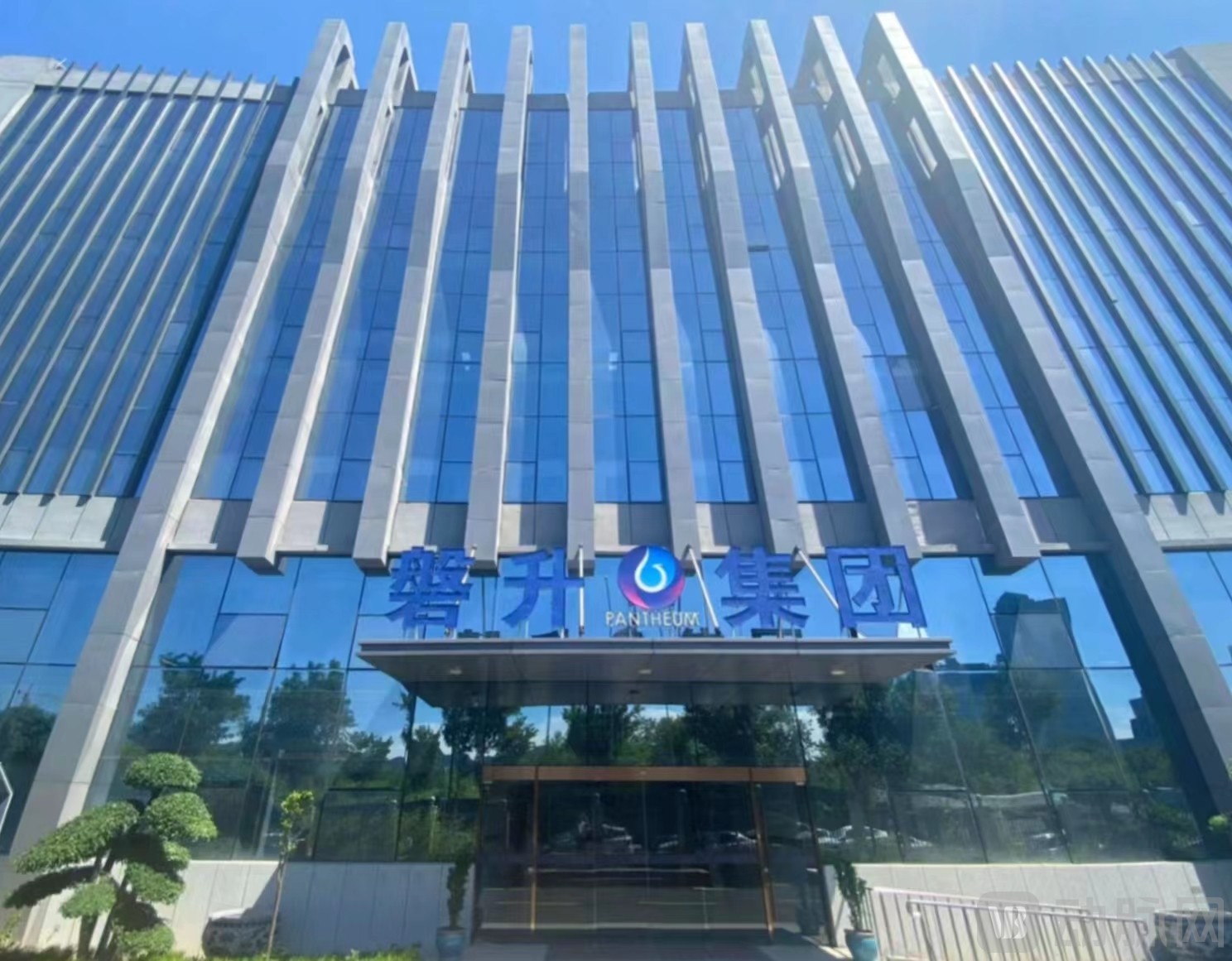
Chuangze Biotech Corporate Environment
China’s First Fully Automated System Capable of Cultivating Both Adherent and Suspension Cells,
Achieving High-Quality, Low-Cost, Personalized, and Consistently Stable Cell Product Manufacturing
During cell preparation, how to avoid interference from factors such as microscopic dust particles, bacteria, and vibrations within confined production workspaces; how to dynamically maintain a Grade A environment to comply with cGMP manufacturing standards for cell products; and how to achieve batch production while ensuring stability and consistency... have become significant obstacles in the cell preparation process.
To address the aforementioned challenges, Chuangze Biotechnology has developed an intelligent robotic system for high-containment laboratories, integrated with micromanipulation, cell manipulation, and cell image processing technologies. This system enables the fully automated preparation of adherent cells (such as dermal fibroblasts, epidermal cells, and mesenchymal stem cells) and suspension cells (including NK cells, CIK cells, and CAR-T cells), thereby creating conditions for research institutions and pharmaceutical companies to scale up production and expand their business scope.
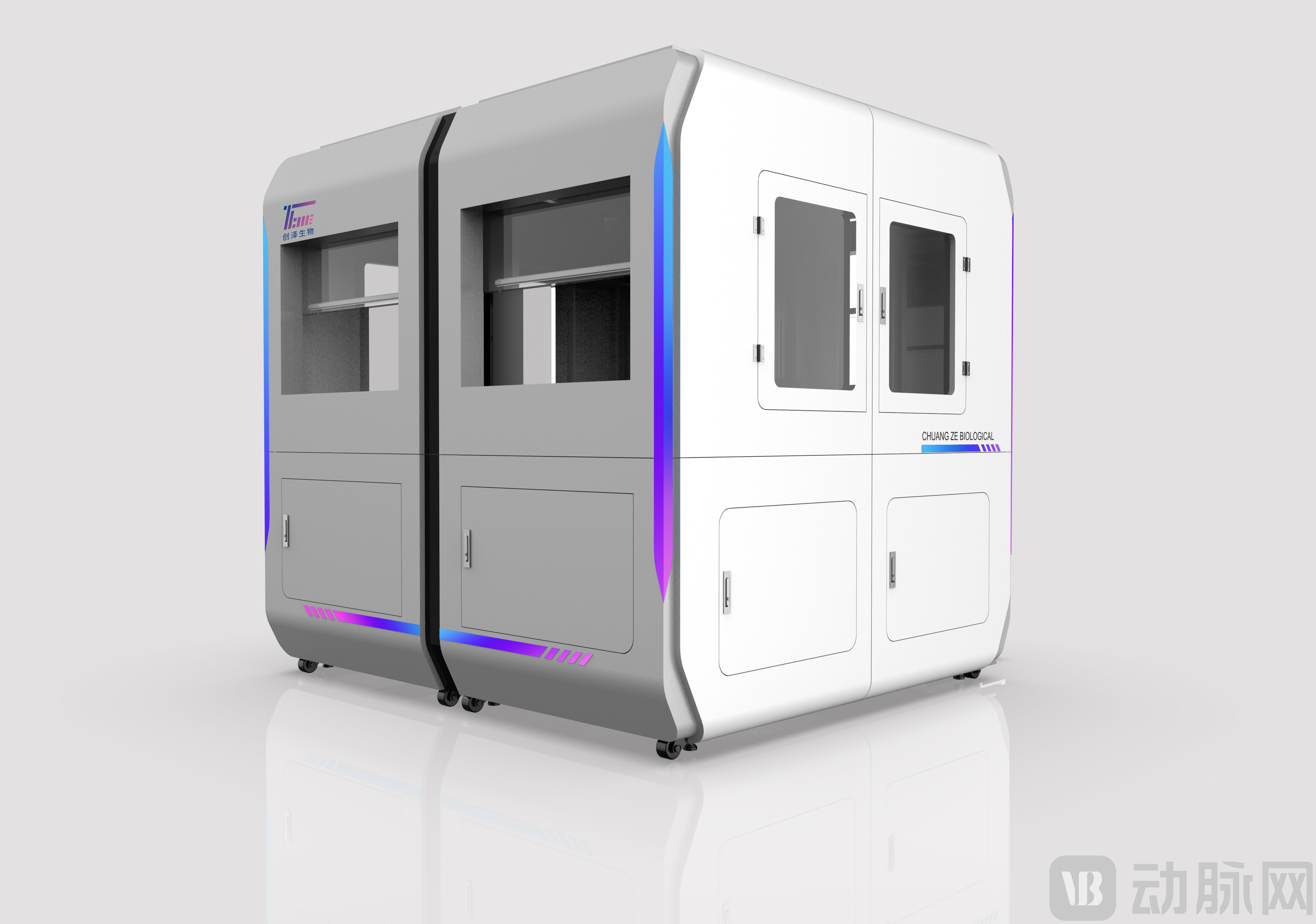
Fully Automated Cell Preparation System
Chuangze Bio’s fully self-developed, full-stack automated cell preparation system is compatible with the culture of both adherent and suspension cells. It is suitable for the production of at least three types of cell-based products and enables cytokine collection functionality. The system enhances stem cell culture productivity, improves standardization, reduces the risk of product contamination, and increases the adaptability of manufacturing processes. Designed for large-scale industrial cell culture, it is widely applicable to stem cell production, immune cell production, skin tissue engineering, intelligent biological laboratories, and unmanned testing centers in pharmaceutical companies, hospital laboratories, and research institutions specializing in biological culture.
According to Professor Wang Zenan, co-founder of Chuangze Biology, the system features the following distinctive advantages:
Seven Major Modules and Six Core Technologies Safeguard High-Quality Cell Preparation.Chuangze Bio’s fully automated cell preparation system comprises seven major modules: a multifunctional solid-liquid handling module, a subculture module, a fixed-point and fixed-speed centrifugal separation module, a fully automated counting and analysis module, a clean-space operation system module, a visual monitoring and display module, and a temporary storage and aliquoting module. The system incorporates six core technologies: real-time machine vision monitoring of cell growth status; image processing integrated with cloud platforms for precise cell counting; high-precision force-sensing adaptive drive control; microscopic high-precision displacement control for the analysis and sorting of individual cells; ultrasonic cell detachment technology; and non-invasive in situ stem cell viability analysis technology.
The system’s equipment and production line feature a fully enclosed, intelligent, and integrated automated process that isolates operators from direct contact with cells. This significantly enhances cell production volume and efficiency, reduces cell mortality and mutation rates, improves the stability and reproducibility of cell products, and lowers the risk of biological contamination.
Standard flexible modular design enables rapid installation, deployment, and upgrades, with customizable production workflows tailored to specific needs.The system features built-in, customizable SOPs that can be flexibly configured based on user requirements, product characteristics, and production scale. Furthermore, the equipment is equipped with an intelligent environmental monitoring system for a Class 100 ultra-clean space, incorporating high-efficiency HEPA filtration, UV disinfection, and settleable microorganism monitoring to enable aseptic production. Meanwhile, the system is compatible with various configurations to meet the demands of small- to medium-batch production.
The equipment is the production line; installation equals commissioning, with low construction and maintenance costs.According to Professor Wang Zenan, CEO of Chuangze Bio, a single device can unlock the productivity of three researchers, allowing scientific personnel to devote themselves to higher-value work. The system’s automated analysis results for cell confluence, cell counting, and cell viability exhibit over 95% concordance with the findings of cell culture operators with more than three years of experience. Clients using this system have reduced costs for cleanroom facility renovation and equipment investment by 94% and 50%, respectively. The system’s monthly electricity consumption is only one-ninth that of manual cell preparation, offering higher efficiency and lower energy consumption, thereby comprehensively supporting enterprises in cost reduction and efficiency enhancement.
Currently, Chuangze Biologics’ fully automated cell preparation system has secured intellectual property protection through 42 patent applications, introduced six original innovative technologies, and was awarded the Innovation Achievement Award by the Shandong Equipment Manufacturing Industry Association in 2022.
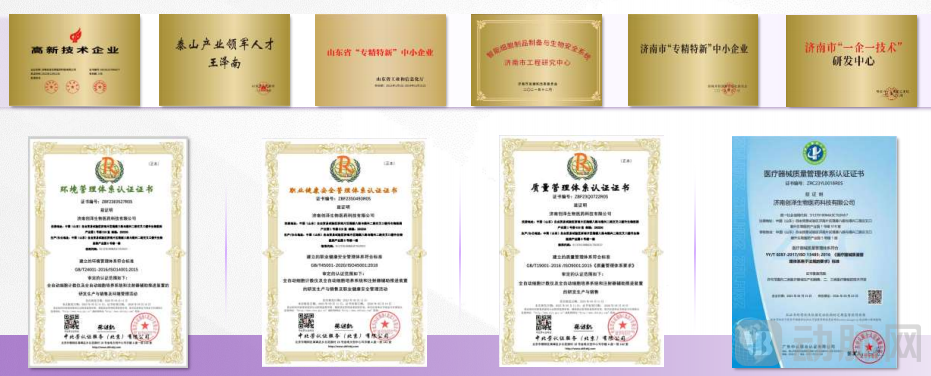
Honors and Awards of Chuangze Biology
Behind the innovation of product technology lies the indispensable support of specialized talent.
Xing Zhiqing, Founder of Chuangze Biology,Founder of Pansheng Group, Senior Engineer, Technical Committee Member for the Classification of Tissue-Engineered Medical Devices under the National Technical Committee on Standardization of Surgical Implants and Orthopedic Devices, Industry Professor at University of Jinan, and Vice Chairman of Jinan Pharmaceutical Association. Over the past decade, he has been primarily engaged in industrial operations and investment in the field of regenerative medicine. During this period, he led his team in achieving industrialization in technologies such as tissue-engineered regeneration, organ-on-a-chip, biological laboratory automation, medical aesthetics, medical devices, and model animals and testing services, successfully obtaining regulatory approvals and facilitating clinical application for multiple Class II and Class III medical devices.

Xing Zhiqing, Founder of Chuangze Biology
Professor Ze-Nan Wang, Co-founderGraduated from Nanyang Technological University, Singapore. Selected for the Chinese Academy of Sciences’ “Hundred Talents Program” and as a Taishan Scholar in Shandong Province. Doctoral supervisor and Associate Research Fellow at the Shenzhen Institutes of Advanced Technology, Chinese Academy of Sciences. Primary research focuses on single-cell manipulation, automated stem cell culture, micro/nano-controlled robots, and medical robots. Successfully developed the third-generation fully automated artificial insemination robot system, a handheld microsurgical robot system, and a fully automated cell culture system. Has filed three international patents and over 70 Chinese invention and utility model patents in the field of medical devices.
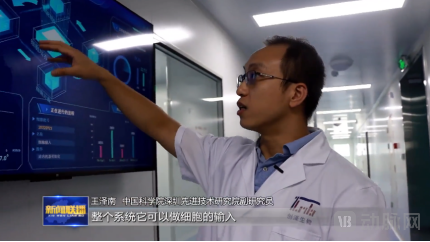
Wang Zenan, Co-founder of Chuangze Biotech
Leveraging the technical and talent advantages of University of Jinan, Shenzhen Institutes of Advanced Technology (Chinese Academy of Sciences), and Nanyang Technological University in Singapore, as well as the industrial platform strengths of Pansheng Bioengineering Group, Chuangze Biotechnology has built a robust R&D team with multidisciplinary expertise spanning computer science, electronic engineering, nanomaterials, chemical engineering, and life sciences. This foundation has firmly established the company’s capabilities in interdisciplinary R&D, automated system integration, biological sample analysis algorithm development, biological laboratory software development, modular mechatronic software development, high-level biosafety environment design, and frontline needs assessment for biological laboratories, thereby injecting sustained and inexorable momentum into its innovative R&D efforts.
Chuangze Biotech focuses on developing intelligent life science solutions and products for automated cell production (upstream and downstream). In addition to the fully automated cell preparation system mentioned earlier, the company has developed products such as an automatic cell counter, syringe-assisted propulsion device, medium-frequency therapy instrument, and microarray biochip spotter for these applications. Among these, two products have obtained Class II medical device certification, and several others are in the approval process.
It is reported that Chuangze Biology has established collaborations with several cell product manufacturers, pharmaceutical companies, universities, and hospital laboratories. Its automated cell preparation system is now in mass production with a queued order schedule.
Across the entire cell therapy industry, the sector has entered a golden age of development. On the policy front, as early as March 2019, the National Health Commission released the Administrative Measures for Clinical Research and Translational Application of Somatic Cell Therapy (Trial) (Draft for Comments), proposing new requirements and innovative pathways for translational application in the development of cell therapy in China. The 14th Five-Year Plan for the Development of the Pharmaceutical Industry also highlighted achieving stability and controllability of industrial and supply chains as one of its development goals, creating opportunities for the domestic production of upstream equipment. On the industry front, China not only ranks second globally in the total number of CGT clinical trials but has also become the largest initiator of clinical trials in categories such as CAR-T, possessing vast market potential.
As the CGT industry accelerates its comprehensive development, fully automated cell preparation systems are bound to become a “new essential” for enhancing research efficiency in the future. Chuanze Biotech will ride this momentum, ushering in a period of explosive commercial growth.
Wang Zenan stated that the company will intensify its marketing efforts for fully automated cell preparation systems and strategically position itself in the field of intelligent laboratories. Leveraging Chuangze Biotech’s years of accumulated data, the company aims to build a “community-based” platform for shared research clusters, providing researchers with convenient data sharing and collaborative capabilities to support the high-quality development of China’s CGT industry.