

Xinke Medical Submits IPO Prospectus for World’s First Micro-pore Induced Intravascular Shockwave Balloon Catheter System
According to WHO research data, cardiovascular diseases (CVD) claim 17.9 million lives annually, making them the leading cause of death globally.
Nowadays, with the intensifying aging of the population and the improvement of living standards, this figure is rising year by year. According to estimates from the Report on Cardiovascular Health and Diseases in China 2022, released by the National Center for Cardiovascular Diseases in June 2023, the number of patients with cardiovascular diseases in China has reached 330 million, and two out of every five deaths nationwide are attributed to cardiovascular diseases.
Underlying these rates of disease incidence and mortality is a common factor: vascular calcification.
Vascular calcification is a systemic vascular disease characterized by the abnormal deposition of calcium and phosphate in the vessel wall. It primarily manifests as increased arterial stiffness and reduced compliance, which can lead to myocardial ischemia, left ventricular hypertrophy, and heart failure, as well as trigger thrombosis and plaque rupture. It is a significant contributor to the high morbidity and mortality associated with cardiovascular and cerebrovascular diseases.
According to the recently released “Chinese Expert Consensus on the Diagnosis and Treatment of Coronary Artery Calcified Lesions (2021 Edition)” (hereinafter referred to as the “Expert Consensus (2021 Edition)”), the prevalence of coronary artery calcification increases gradually with age, reaching approximately 50% in individuals aged 40–49 years and rising to 80% in those aged 60–69 years.
Currently, China is facing the dual pressures of an aging population and the persistent prevalence of metabolic risk factors, with the burden of cardiovascular disease showing a year-on-year increase. In this context, effectively and thoroughly addressing the challenge of vascular calcification has become a key focus for countries worldwide in their efforts to treat cardiovascular diseases and reduce mortality rates.
So, how can stone-hard calcified tissue be removed to thoroughly and safely treat vascular calcification without damaging fragile blood vessels?
In response, XINKE MEDTECH (hereinafter referred to as “Xinke Medical”) has introduced a pioneering solution: the world’s first balloon catheter system that generates shockwaves via micropore induction.
Once vascular calcification occurs, it is difficult to reverse. Currently, the main conventional approaches for treating vascular calcification include balloon angioplasty, laser ablation, or rotational atherectomy to remove plaques.
However, these therapeutic modalities each have their own advantages and disadvantages. They are often associated with vascular injury and complications during treatment, and most importantly, they cannot provide safe and effective intervention for calcified lesions, while the procedures are relatively complex. For instance, balloon angioplasty can cause intimal perforation or dissection, endothelial hyperplasia, and an increased risk of restenosis.
Shockwave technology has been hailed as the “terminator” of coronary artery calcified lesions in the Expert Consensus (2021 Edition). Building on existing shockwave technologies, XINKE MEDTECH has pioneered a vascular calcification treatment regimen based on “micropore-induced” shockwaves and has obtained authorization for a national invention patent.
This innovative shockwave balloon catheter system first regulates and converts mains electricity into pulsed voltage via an internal voltage module and control module, which is then transmitted to the shockwave generator of the intravascular balloon catheter. The shockwave generator undergoes micropore-induced treatment, triggering a cavitation effect in the contrast agent filling the balloon.
Subsequently, the bubble pulsation generated by liquid cavitation undergoes multiple cycles of expansion and collapse within an extremely short timeframe, producing outward-propagating shock waves. These shock waves are continuously transmitted through the balloon wall to the adjacent calcified vascular segments, thereby “loosening” the calcified lesion tissue and ultimately improving vascular compliance.
Compared with traditional shockwave devices based on electrohydraulic principles, the "micropore induction" mode prevents the balloon from being punctured by electrodes during operation, ensuring no balloon damage even when the balloon is in contact with the shockwave generator. This innovative proprietary technological principle not only significantly enhances device safety but also simplifies patients’ preoperative preparation procedures, thereby optimizing existing calcification treatment protocols.
Specifically, the innovative advantages of XINKE MEDTECH’s shockwave balloon catheter system based on “micropore induction” are mainly categorized into the following three aspects:
First, halving the voltage threshold enhances surgical safety and reduces manufacturing costs.
Typical shockwave balloon catheter systems on the market generate electrohydraulic effects by directly applying an electric field to the liquid, a method that requires high voltages exceeding 3,000 V. In contrast, XINKE MEDTECH has adopted an innovative approach using micropore induction to reduce the voltage threshold required for liquid cavitation to half of the original level.
This not only significantly reduces the risk of balloon rupture, but the lower voltage and weaker current also prevent damage to the electrodes of the shockwave balloon catheter during treatment, thereby increasing the number of uses per catheter, enhancing product durability and safety, and reducing manufacturing costs.
Second, the adjustability of voltage and current meets more diverse clinical needs.
This shockwave system can adjust the current and voltage during treatment according to different types of vascular calcification, such as calcified nodules, eccentric calcification, and superficial and deep calcified lesions. This enables the device to efficiently "fragment" intravascular calcified plaques without damaging the vascular intima, thereby improving treatment efficiency while fully ensuring procedural safety.
Third, key components have achieved independent and controllable supply.
XINKE MEDTECH’s innovative shockwave balloon catheter system represents a breakthrough in domestic innovation, with independent R&D achieved for both the complete system and its core components. This advancement not only reduces manufacturing costs but also accelerates product commercialization and industrialization.
In an interview with VCBeat, Guo Qi, CEO of XINKE MEDTECH, stated that the company has developed three targeted intravascular lithotripsy balloon catheter systems for the treatment of coronary artery disease, peripheral vascular disease, and aortic valve stenosis.
In terms of product advantages,The maximum number of working pulses for intracoronary and peripheral intravascular shockwave balloon catheters is more than three times that of similar marketed products., demonstrating the product's superior fatigue resistance. Furthermore, each electrode of these two products can selectively deliver energy independently according to therapeutic requirements, enabling targeted treatment of lesions and avoiding unnecessary pulse delivery during surgery, thereby further enhancing the device's safety profile.
In terms of clinical progress, the peripheral intravascular shockwave catheter system has entered the clinical stage; the coronary shockwave catheter system is expected to initiate clinical trials this July; and the valvular shockwave catheter system is currently in the animal study validation phase.

Intracoronary Shockwave Balloon System, Intravascular Shockwave Balloon System for Peripheral Vessels
Image provided by the interviewee
In May 2023, XINKE MEDTECH successfully enrolled the first patient in the pre-market clinical study of its Intravascular Shockwave Balloon Catheter System for Peripheral Vessels, indicated for the treatment of calcified lesions in lower extremity arteries.
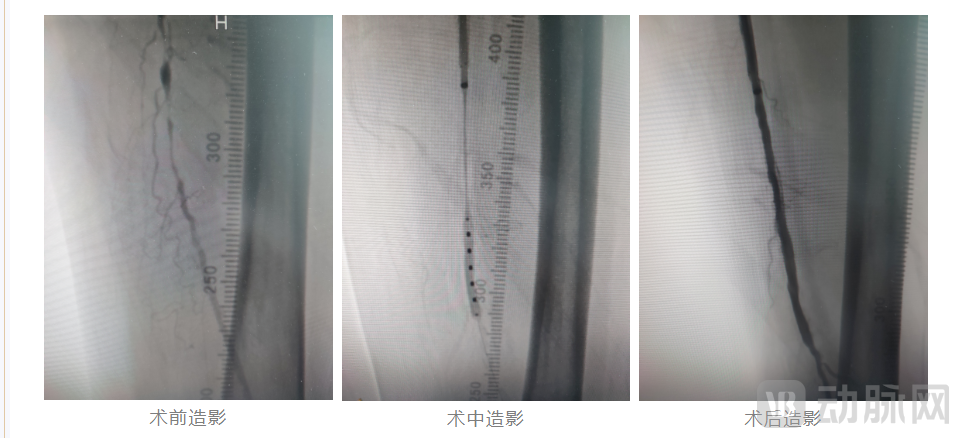
Treatment of Calcified Lesions in Lower Extremity Arteries
Image provided by the interviewee
In this clinical application, angiography demonstrated reduced stenosis of the target lesion in the peripheral vessels of a patient with calcified lower extremity arterial disease after one cycle (30 pulses) of intravascular lithotripsy using a shockwave balloon. No complications occurred, indicating a favorable safety profile. Furthermore, neither drug-coated balloons (DCB) nor stents were implanted during the procedure, thereby achieving the goal of “intervention without implantation.”
Experts stated that the first clinical application of XINKE MEDTECH’s peripheral intravascular shockwave balloon system demonstrated favorable outcomes and ease of operation. It can safely and effectively fragment both superficial and deep calcification, providing physicians with a superior option for treating calcified lesions.
According to data from the China Business Industry Research Institute, the market size of China’s electrophysiology medical device sector is projected to reach RMB 12.32 billion by 2023. Within this market, the pulsed field ablation (PFA) segment—characterized by advantages such as tissue selectivity, non-thermal mechanism, and enhanced safety—is attracting numerous domestic and international companies to develop their product pipelines, driven by its high growth potential and broad market prospects.
PFA technology is categorized into microsecond (µs)-level energy and nanosecond (ns)-level energy. Microsecond-level energy induces cell necrosis or apoptotic necrosis,Nanosecond-level energy, a hallmark of third-generation pulsed field ablation (PFA) technology, directly induces apoptosis, mitigates inflammatory responses, enhances ablation efficiency, and improves the long-term safety profile of the device, representing an innovative approach with superior clinical therapeutic advantages.
Another active interventional technology platform developed by XINKE MEDTECH is based on third-generation PFA technology—nanosecond pulsed electric field (nsPEF) technology.
VCBeat has learned that the company has established a mature nsPEF technology platform, with indications currently focused on the cardiovascular and gastrointestinal fields, and future expansion planned into the pulmonology field. Among these, coronary myocardial bridging is the primary indication being advanced by XINKE MEDTECH.Relevant PFA products have entered the final stage of type testing.
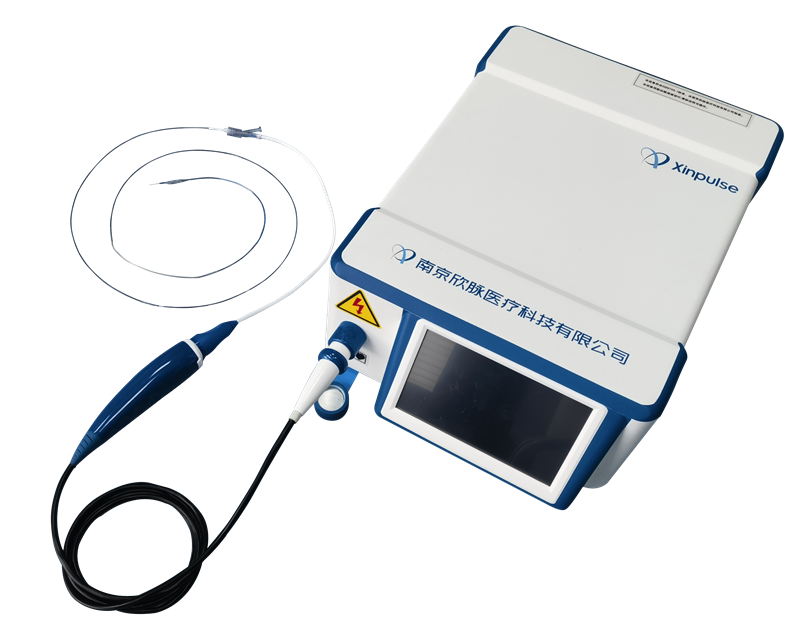
XINKE MEDTECH PFA Prototype
Image provided by the interviewee
Regarding myocardial bridging, the primary indication targeted by XINKE MEDTECH, this condition is a congenital coronary artery anatomical anomaly in which myocardium overlies a segment of a coronary artery like a bridge. This may lead to angina pectoris, myocardial infarction, atrioventricular conduction block, heart failure, and even sudden cardiac death. The average prevalence of myocardial bridging is approximately 25%.
XINKE MEDTECH’s nanosecond pulsed field ablation technology applies high-voltage electrical pulses to the phospholipid bilayer of cell membranes within an extremely short time, inducing irreversible electroporation and subsequent apoptosis, thereby relieving myocardial contractile compression without damaging the coronary arteries.
As the third-generation PFA technology, nsPEF features high technical barriers, with few companies in China or abroad having entered this field. However, XINKE MEDTECH, having been in the market for only two years, has already established four major technological advantages in the nsPEF domain:
First, the pulse rise/fall edges are extremely steep (<10 ns); second, the pulse width can be less than 200 ns; third, the new generation of power semiconductor technology adopted by the company can instantly generate ultra-high current. With these three major advantages, the ablation efficiency of XINKE MEDTECH’s PFA equipment has reached an internationally leading level. In addition, through its proprietary short-circuit protection system, XINKE MEDTECH achieves power shutdown within nanoseconds, a feat unattainable by traditional circuit protection technologies.
Beyond the treatment of myocardial bridges, XINKE MEDTECH has expanded its exploration of nsPEF technology to include diseases such as chronic obstructive pulmonary disease (COPD), which currently lacks a complete cure; diabetes, which requires long-term management; and breast tumors, known as the “leading killer” of women’s health.
Since its establishment in 2021, XINKE MEDTECH has secured tens of millions of RMB in angel-round funding from well-known domestic investment funds and the Nanjing government fund, and subsequently completed its Pre-A and Series A financing rounds successfully over the following two years.
Headquartered in Nanjing, Xinke MedTech is a high-end medical device project that has been prioritized for introduction by the Nanjing Life Science and Technology Town.The Company has also established a research and development center in Shanghai, and built industry-academia-research collaboration platforms with renowned domestic universities such as Fudan University, Shanghai Jiao Tong University, and the University of Shanghai for Science and Technology, as well as Grade 3A hospitals.
The company has also established and improved a quality management system compliant with ISO 13485 and GMP requirements, equipped with R&D laboratories, office spaces, Class 10,000 cleanrooms, microbiology laboratories, and other facilities.
XINKE MEDTECH will in the future“Micropore-Induced” Shockwave Balloon Catheter System and Nanosecond Pulsed Electric Field TechnologyBuilding on these two major active interventional technology platforms as the foundation and starting point, we will continue to delve into energy-based advantages and clinical needs. Through an innovative development model integrating medicine, engineering, and research, we aim to develop more high-performance, high-safety domestic medical devices across multiple fields, including cardiology, gastroenterology, endocrinology, pulmonology, and breast surgery.
In the final remarks of the interview, Guo Qi stated that the gap between China’s medical device industry and its international counterparts is gradually narrowing, with China already achieving parity or even taking a leading position in certain niche segments. Looking ahead, realizing “Intelligent Manufacturing in China” within the medical device sector will require close collaboration among medical professionals, engineers, researchers, and investors, who must join forces to build an innovative ecosystem for the medical device industry tailored to our era.“Though the road is long, you will surely arrive if you keep walking.”