

Digital Disposable Electronic Pressure-Sensing Ureteroscope Emerges as Preferred Clinical Solution Amid Over 60 Million Urolithiasis Patients in China

Happiness Workshop Medical
R&D, Manufacturing, and Sales of Disposable Medical Electronic Endoscopes
A Disposable Flexible Ureteroscope Capable of Second-by-Second Monitoring of Intrarenal Pressure Is Becoming the Optimal Clinical Solution for Flexible Ureteroscopic Lithotripsy
According to a cross-sectional survey published in 2023 by Wang Yu’s team from the Department of Urology at Peking University First Hospital in *Kidney Diseases* (2022 IF=3.0), an analysis of data on urolithiasis patients registered in China’s Hospital Quality Monitoring System (HQMS) from 2013 to 2018 revealed that, among 79.8 million hospitalized patients, 3.5 million were diagnosed with urolithiasis, with the prevalence showing a year-on-year upward trend.
Against the backdrop of this high incidence rate,The 20th National Conference on Urinary Stones of the Chinese Urological Association (CUA), hosted by the Chinese Medical Association and the Chinese Urological Association (CUA), organized by the Guangdong Medical Association, and co-organized by Shenzhen People's HospitalRecently held successfully in Shenzhen.
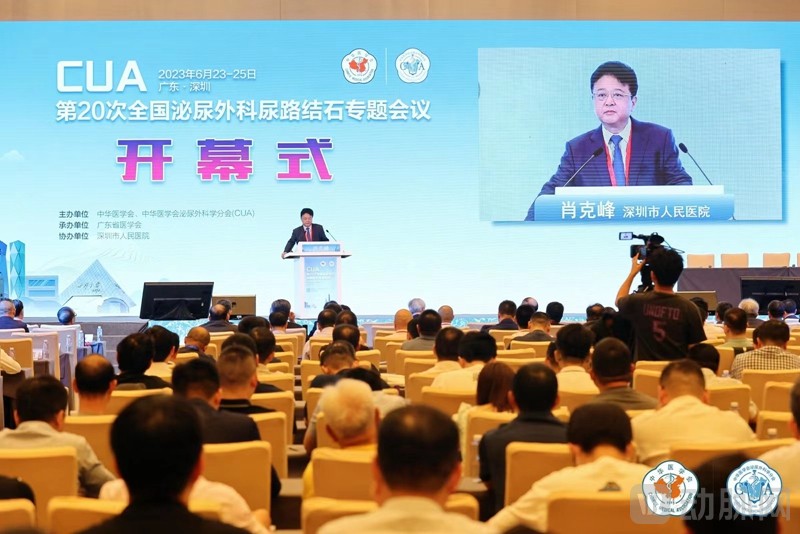
CUA 20th National Symposium on Urinary Stones in Urology
Image source: CUA Cloud Photography
Centered on the theme of “Inheriting and Innovating, Encouraging Diverse Perspectives, and Striving for Excellence,” this conference invited numerous experts and scholars from mainland China, Hong Kong, and Macao to engage in extensive and in-depth exchanges and discussions on the epidemiology, pathogenesis, prevention, and treatment of urinary calculi. The event also showcased the most advanced lithotripsy surgical techniques and related equipment.
Through this series of knowledge-sharing sessions and achievement showcases, VCBeat has identified the urgent demand within academia and the medical community for novel concepts and surgical techniques in the treatment and prevention of urolithiasis. It has also glimpsed the nascent solutions to critical issues such as reducing complications. More importantly, the flexible ureteroscope sector has achieved a new breakthrough: a single-use electronic flexible ureteroscope with real-time pressure monitoring has been successfully launched on the market, bringing new hope and opportunities to clinical practice and the industry.
The Burden of Urolithiasis in China Is on the Rise,
Urgent Need for High-Performance, Safer Innovative Therapeutic Solutions
The paper in Kidney Diseases also pointed out that, in terms of treatment modalities, the proportions of retrograde intrarenal surgery (RIRS) and extracorporeal shock wave lithotripsy (ESWL) continued to increase between 2013 and 2018, while open surgery and percutaneous nephrolithotomy (PCNL) both declined to varying degrees.
As the most advanced procedures in the current field of urinary stone treatment, it may not yet be clear which holds greater weight between flexible ureteroscopic lithotripsy and extracorporeal shock wave lithotripsy. However, by examining the principles adhered to in surgical practice, one may gain some insight into the respective advantages and disadvantages of these two techniques.Namely, who can provide more effective treatment for urolithiasis while causing fewer side effects to patients.
First, let us discuss Extracorporeal Shock Wave Lithotripsy (ESWL). This procedure operates on the principle of non-invasive fragmentation, breaking down large kidney stones that cannot be passed spontaneously into smaller fragments theoretically small enough to be expelled naturally through the urinary tract. However, this approach, which fragments stones rather than directly removing them, may lead to stone impaction and the accumulation of fragments known as "steinstrasse" (stone street), potentially causing severe complications such as hydronephrosis and renal failure. Additionally, the regrowth of residual stone fragments contributes to a high recurrence rate associated with this procedure.
Regarding flexible ureteroscopic lithotripsy, over five decades of development have yielded varying degrees of technological breakthroughs in flexible ureteroscopes and their ancillary equipment. Currently, this procedure is applicable to the treatment of larger stones and those located at more challenging angles, such as stones with a small infundibulopelvic angle (IPA). Furthermore, the shorter learning curve for physicians adopting this natural orifice technique facilitates the broader adoption and clinical implementation of both the device and the procedure.
While flexible ureteroscopic lithotripsy has been advancing rapidly, it has long faced a “speed limit” challenge, one of which is intrarenal pressure.(IRP)monitoring and control.
Currently, it is clinically recognized that intrarenal pressure (IRP) is primarily influenced by factors such as the flow rate of intraoperative perfusion and irrigation, perfusion pressure, and the ratio of the nephroscope to the sheath. An IRP of 30 mmHg is widely accepted in clinical practice as the threshold for renal parenchymal reflux. Exceeding this pressure causes perfusion fluid to reflux into the bloodstream and lymphatic system, as well as extravasate into the perirenal space, leading to a series of postoperative complications, including systemic inflammatory response syndrome (SIRS), sepsis, and renal injury.
Therefore, real-time and effective intraoperative monitoring of changes in intrarenal pelvic pressure (IRP), timely elimination of factors causing elevated IRP, and maintaining IRP within a safe range are particularly important for preventing complications such as infection.
Over the years, many experts and scholars have conducted extensive research on intrarenal pressure (IRP). However, they could only perform indirect measurements by relying on instruments originally designed for other fields, making it impossible to monitor IRP in real time and with precision during both research and practical applications.
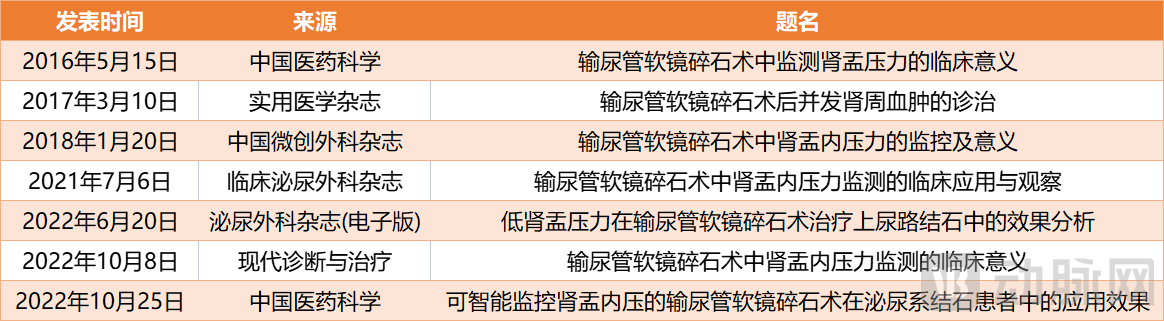
Specialized Study on Intrarenal Pressure During Flexible Ureteroscopic Lithotripsy
Source: CNKI; Graphic by VCBeat
On June 24, the first day of this specialized symposium on urolithiasis, Professor Li Jianxing from Beijing Tsinghua Changgung Hospital, affiliated with Tsinghua University, presented an innovative device for the treatment of urolithiasis—Zebra—to experts and scholars in the field of stone disease from both domestic and international communities, under the theme “Basic and Clinical Research on Intrarenal Pressure Control in the Treatment of Upper Urinary Tract Stones.”®Disposable Intraoperative Pressure-Measuring Flexible Ureteroscope.
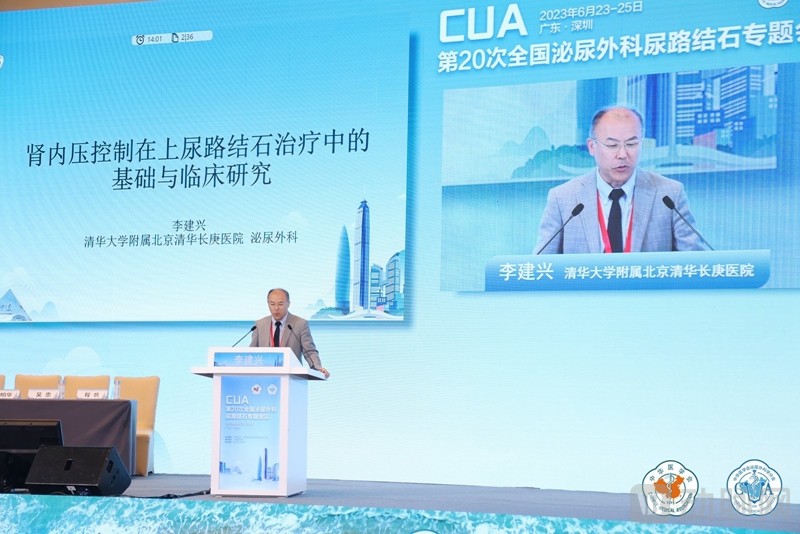
Li Jianxing: Basic and Clinical Research on Renal Pelvic Pressure Control in the Treatment of Upper Urinary Tract Calculi
Image source: CUA Cloud Photography
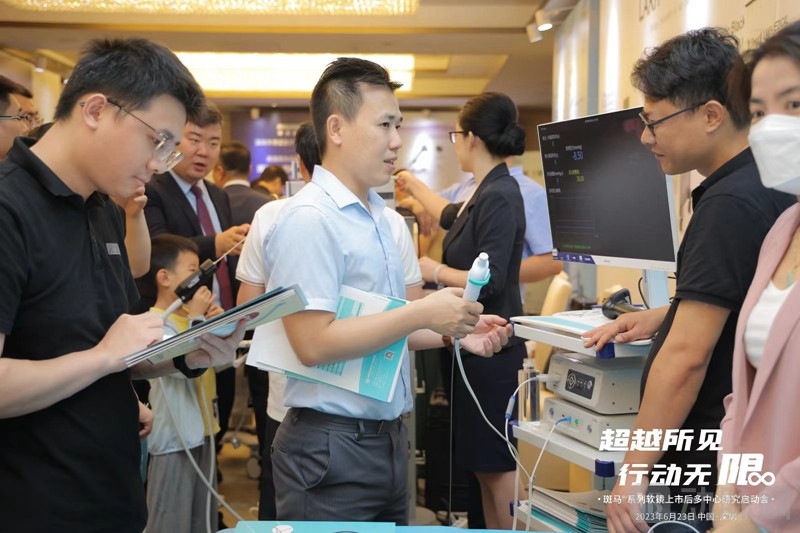
Zebra®Disposable Intraoperative Pressure-Measuring Flexible Ureteroscope
Image source: Happiness Workshop Medical
Regarding the monitoring of intrarenal pressure, this independently developed device features three major highlights.
First, Zebra®Pressure-sensing endoscopes enable intraoperative visualizationReal-time, second-by-second display of intrarenal pressure enables high-volume irrigation to be performed at safer, known pressure levels. The increased irrigation rate reduces the risk of thermal injury during laser lithotripsy and facilitates the flushing of more stone fragments out of the body via the ureteral access sheath, thereby improving intraoperative stone clearance rates. This also provides a safer and more efficient surgical tool for physicians who lack extensive experience in pressure-controlled procedures.
Secondly, zebra®The pressure-monitoring endoscope provides a complete record and statistical analysis of intraoperative pressure data throughout the entire procedure. Through automated intelligent analysis, it displays the company’s proprietary Zebra Index (Zebra Index = cumulative intraoperative high-pressure values exceeding the threshold × cumulative duration exceeding the threshold), which assists physicians in predicting patients’ postoperative infection risk.
Furthermore, there are currently only two pressure-measuring flexible ureteroscopes approved worldwide, with their approval dates separated by just two months. As the first such device in China and the second globally, Zebra®Manometry Flexible Endoscope: The catheter has an outer diameter of 8.6 Fr, the distal tip has an outer diameter of 7.4 Fr, and the maximum deflection angle reaches 274°.
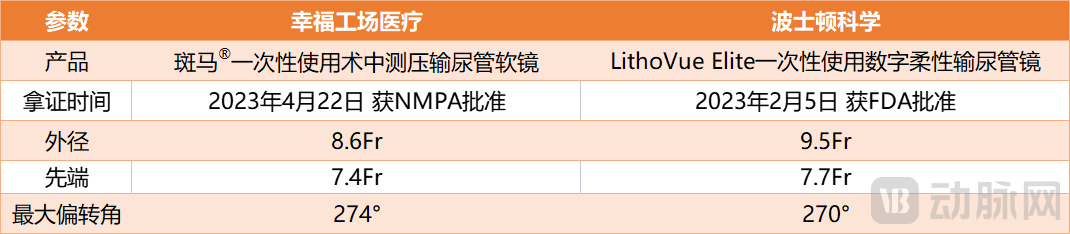
Product Parameters
Source: Company official websites; Chart by VCBeat
Professor Li Jianxing believes that zebra®Disposable Intraoperative Pressure-Measuring Flexible UreteroscopeIt has resolved the long-standing challenge of intrarenal pressure measurement that has plagued clinicians and patients for decades, holding significant importance for controlling and reducing surgical complications and promoting the adoption of flexible ureteroscopic lithotripsy.
VCBeat has learned that Happiness Workshop Medical, which has been deeply engaged in the field of medical-engineering integration for many years,A complete and stable supply chain and production line have been established, with 99% of components domestically sourced. The current annual production capacity for single-use pressure-sensing flexible endoscopes and other related products has reached 500,000 units.
Secondly, in terms of clinical application, China has a larger sample size of patient population and more types of complex kidney stones available at the same time compared to the United States, which is conducive to faster and more targeted clinical application of products.
Seven post-marketing multicenter clinical trials were launched simultaneously,
Accelerating the Push Toward the Goal of Comprehensive Stone-Free Treatment
The aforementioned brand-new Zebra®Among the more than 200 hospitals expressing interest in collaborating on the pressure-measuring flexible endoscope product, Happiness Workshop Medical has successfully partnered with seven institutions to lead a series of post-marketing multicenter clinical studies. At this pre-conference meeting, all seven post-marketing multicenter clinical studies were simultaneously launched, with over 30 hospitals planning to participate and nearly 2,000 patients expected to be enrolled in this series of studies.
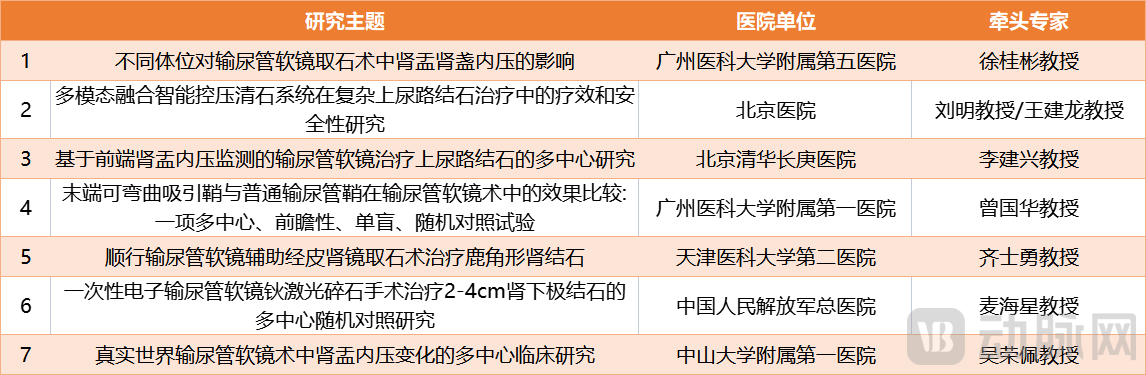
Seven Post-Marketing Multicenter Clinical Studies
Data provided by respondents; chart by VCBeat
Following the conference, Professor Li Jianxing stated in an interview with VCBeat that this year’s specialized symposium on kidney stones helped popularize and promote innovative endourological techniques and equipment for stone treatment among experts and scholars both in China and abroad.The current trend in the treatment of urolithiasis is to adopt more minimally invasive and safer therapeutic approaches for patients.
Controlling complications during flexible ureteroscopic lithotripsy is the primary challenge currently facing the development and widespread adoption of this procedure, namely that “hemorrhage risks kidney loss, while infection can be fatal.”Therefore, flexible ureteroscopes with pressure monitoring capabilities represent a long-awaited technological advancement for urologists. Real-time intrarenal pressure monitoring and control further facilitate the adoption of flexible ureteroscopic lithotripsy in primary care hospitals, thereby benefiting a broader patient population.
As a Zebra®Professor Li Jianxing, the chief advisor for seven post-market multicenter clinical trials of disposable pressure-measuring flexible ureteroscopes, stated thatIn this and future multicenter clinical studies, Zebra will leverage its pressure-measurement advantages to advance clinical research, address the challenges of monitoring intrarenal pressure, and enhance broader understanding of the clinical significance of this technology.
Furthermore, compared with clinical trials conducted concurrently abroad, China’s clinical research is more comprehensive and robust in both scope and volume, and the products are better aligned with the operational practices of Chinese physicians.
Also fromProfessor Song Haifeng, Beijing Tsinghua Changgung HospitalIt also indicates that the etiology of urolithiasis is complex, often resulting from the combined effects of multiple factors, including natural environment, dietary habits, family genetics, and urinary tract anatomy.Surgical treatment is currently the most effective therapeutic approach.Among these, flexible ureteroscopic lithotripsy is increasingly widely used in clinical practice due to its higher stone-free rate and minimally invasive nature.
However, monitoring intrarenal pressure has always been a pain point and challenge in flexible ureteroscopic lithotripsy.Leveraging Zebra®Disposable pressure-measuring flexible ureteroscope: Physicians can obtain real-time intrarenal pressure readings and actively adjust their maneuvers to maintain pressure within a safe range, thereby significantly reducing the incidence of surgical complications and further promoting the adoption of flexible ureteroscopic lithotripsy.
Based on the experts’ comments above, it is evident that urolithiasis severely impairs patients’ quality of life, warranting comprehensive attention from physicians, industry stakeholders, and society at large. To effectively improve patients’ postoperative quality of life following flexible ureteroscopic lithotripsy, many physicians have spontaneously undertaken multi-year efforts to monitor intrarenal pressure.
During the discussion session, one professor noted that his team had recognized the importance of precise intrarenal pressure measurement in flexible ureteroscopic lithotripsy many years ago, but failed to translate this insight into practice due to a lack of experience in medical device manufacturing. Another professor mentioned having attempted indirect pressure measurements using devices borrowed from other fields.
These explorations were not in vain; instead, they became the driving force accelerating Happiness Workshop Medical’s translation of doctor-patient needs into solutions.
Through joint research and development with university research institutions and suppliers, Happiness Workshop Medical has successfully integrated the pressure-sensing module into the distal tip of flexible ureteroscopes, which have extremely high equipment requirements.The cost of this domestically produced pressure measurement module is only one-third that of imported ones.Moreover, this miniature, high-precision pressure-sensing module will be integrated into a wider range of medical devices across various departments requiring pressure monitoring.
Guided by the original intention of benefiting patients,Happiness Workshop Medical is continuously developing a comprehensive stone clearance system. The system includes Zebra®Pressure-sensing flexible endoscope, thulium laser with higher lithotripsy efficiency, magnetorheological gel capable of adsorbing stone fragments smaller than 3 mm, and an intelligent pressure control platform.
The system aims to achieve immediate stone-free status postoperatively, benefiting patients in two primary ways. First, the duration of ureteral stent placement will be significantly reduced. Second, it effectively prevents rapid recurrence caused by residual stone fragments after surgery, particularly for patients with infectious stones. The system platform is expected to be fully launched in the market by mid-2024.
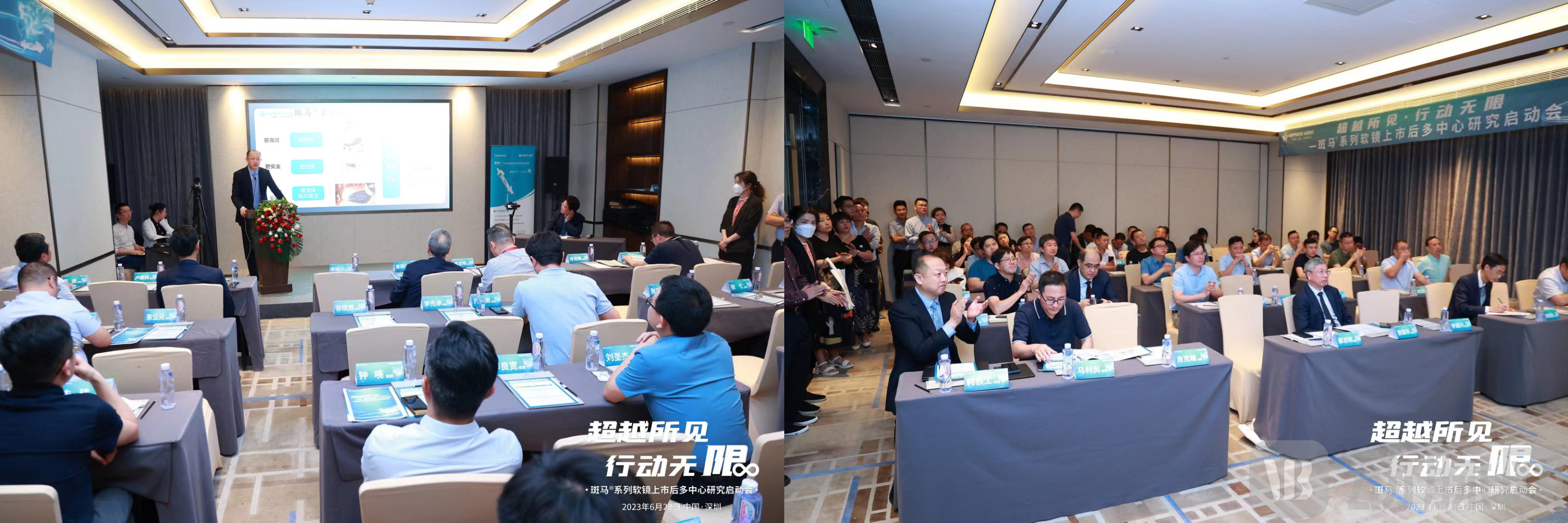
Han Tiegong, Founder of Happiness Workshop Medical, Introduces the “Comprehensive Stone Clearance System”
Image source: Happiness Workshop Medical
This special symposium on kidney stones also featured multiple academic lectures centered on the pathogenesis, prevention, and treatment of urolithiasis, including topics such as “Mechanisms and Early Warning of Urosepsis” and “A New Perspective: Understanding the Etiology of Calcium Oxalate Stones from the Viewpoint of Systemic Organ Systems.”
"Carve paths through mountains and build bridges across rivers." In clinical practice, there is no shortage of complex and challenging cases; what is lacking are professionals capable of transforming and resolving these challenges.Amid the diverse pathogenesis of urolithiasis and the less-than-perfect prevention and treatment strategies, Happiness Workshop Medical has started from clinical practice, adopted a medical-engineering integration approach, and leveraged globally leading technologies to overcome the pressure measurement challenge in flexible ureteroscopic lithotripsy, thereby forging a distinct Chinese pathway for technological and product development.
According to Grand View Research, the global market for single-use endoscopes was valued at $1.3 billion (approximately RMB 9.3 billion) in 2020 and is projected to reach $4.5 billion (approximately RMB 32.3 billion) by 2028, growing at a compound annual growth rate (CAGR) of 16.9%. In response, Happiness Workshop Medical is “gearing up” to bring Chinese innovation and manufacturing to the global market, benefiting patients worldwide, as it awaits its highly anticipated debut.
References:
1. Trends of Urolithiasis in China: A National Study Based on Hospitalized Patients from 2013 to 2018. Kidney Dis (2023) 9 (1): 49–57.
2. Safety and efficacy of extracorporeal shock wave lithotripsy vs. flexible ureteroscopy in the treatment of urinary calculi: A systematic review and meta-analysis. Front Surg. 2022 Nov 7;9:925481.