

Paradromics Advances Toward First-in-Human Trial of High-Bandwidth Invasive Brain-Computer Interface

Paradromics
Brain-Computer Interface Technology Developer
In the film *Avatar*, there is a scene in which Jake, a former Marine paralyzed from the waist down, lies in a sealed pod and controls his Avatar with free movement through thought alone, using a complex device worn on his head.
“Mind control,” a concept once relegated to the realm of science fiction, was long considered pure fantasy. In recent years, with continuous breakthroughs in neuroscience and related technologies, brain-computer interface (BCI) technology has advanced rapidly, bringing “mind control” into reality.
The brain is the most complex organ in the human body, containing over 100 billion neurons that can form more than 100 trillion neural connections. Brain-Computer Interface (BCI) technology refers to the establishment of communication and control channels between the brain and external devices, converting electroencephalogram (EEG) signals into control commands to enable information exchange between the brain and external devices. BCI technology can help individuals who have lost the ability to move or speak due to neurological damage from conditions such as stroke (CVA), spinal cord injury (SCI), and amyotrophic lateral sclerosis (ALS) to restore communication with the outside world, and even regain physical function.
Paradromics, Inc. is dedicated to developing high-data-rate invasive BCI technology to help patients with severe connectivity impairments restore communication with the outside world and regain bodily functions.
VCBeat learned that on May 18, 2023, Paradromics’ Connexus Direct Data Interface (Connexus DDI) received Breakthrough Device Designation from the U.S. FDA. The device is intended for the treatment of irreversible debilitating conditions. Meanwhile, Paradromics secured $33 million in Series A financing, led by Prime Movers Lab. The new funds will be used to initiate the first-in-human clinical trial of the Connexus DDI.
BCI technology attempts to bridge the operational gap between computers and the brain; however, neuronal signaling in the brain is extremely slow compared to computer processing speeds—nearly a million times slower. In other words, truly seamless communication between the brain and the external world requires a high-bandwidth connection.
It is clearly impossible to forcibly increase the brain’s processing speed. A feasible solution is:Read more neurons in a short period of time, thereby improving the efficiency of data transmission with computers。
A more advanced system is the Utah Array, an electrode array designed for intracortical implantation that can accommodate 128 electrodes simultaneously and be customized to support up to 1,024 channels. The Utah Array has received FDA commercial approval and has been proven effective in treating patients with stroke and spinal cord injuries.
The Paradromics team believes that given the excellent performance already achieved with hundreds to thousands of electrode channels, performance could be even better with a greater number of channels. To this end, they specifically designed the Argo system, which is the in vivo neural recording system with the highest channel count built to date.
Argo is a hybrid of microwire arrays and Utah arrays, consisting of implantable microwire electrode arrays with over 10,000 channels per square centimeter. Microwire electrodes are the longest-established type of electrodes; however, their use in large-scale recording requires addressing the challenge of connecting electrode arrays composed of numerous microwires to amplifier arrays.
As shown in the figure below, the tip diameter of the Argo microfilament is less than 200 nm. The blue portion represents the insulating aluminum oxide coating, while the white portion indicates the exposed recording sites after insulation removal. A sacrificial coating is used to thicken the insulated segments of the microfilaments, which are then bundled together. This bundle of insulated microfilaments features specific spacing that aligns precisely perpendicular to the plane of a large-scale CMOS amplifier array.

Argo Electrode. Image source: J Neural Eng
Once one end face of the micro-wire array is docked with the amplifier array on the backplane, a recording device similar to the Utah array is formed. Compared with the Utah array,Argo’s advantage lies in its high data throughput, capable of simultaneously recording data from 65,536 channels at a single-channel sampling rate of 32 kHz and a signal resolution of 12 bits.。
Based on the Argo system, Paradromics has designed a fully implantable device—the Connexus DDI—by establishing a direct data interface with the brain. This device is a smartphone-sized micro-module that can be implanted beneath the skull, containing an electrode array with 256×256 channels (totaling 65,536 microwires), a CMOS neural sensor array, and a neural signal processing chip.
Connexus DDI is an auxiliary communication device that primarily decodes neural signals through three internal components. The cortical module records signals from over 1,600 individual neurons; the cranial hub powers the cortical module and performs signal processing; and the subcutaneously implanted wireless transmitter provides power and secure, high-bandwidth data transmission, with signal transmission rates reaching up to 30 Gbps.
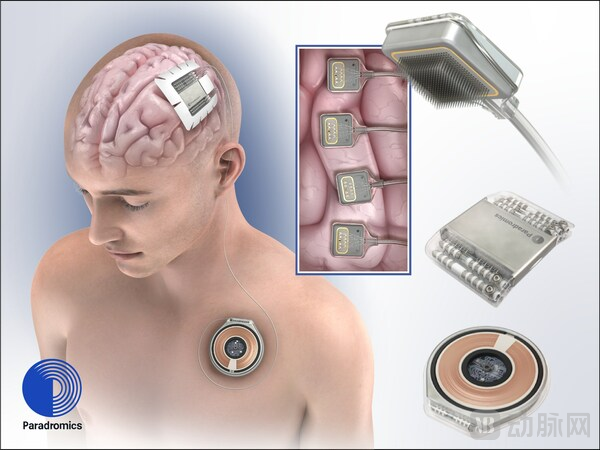
Connexus DDI. Source: Paradromics official website
From an application scenario perspective, Connexus DDI was initially designed for patients with severe motor impairments, such as those resulting from stroke, spinal cord injury, and amyotrophic lateral sclerosis (ALS). Most of these patients retain intact, highly active brains but may struggle to communicate with others or use computers.Connexus DDI can convert brain signals into speech and actions in real time, enabling patients to regain the ability to communicate with the outside world and live independently.。
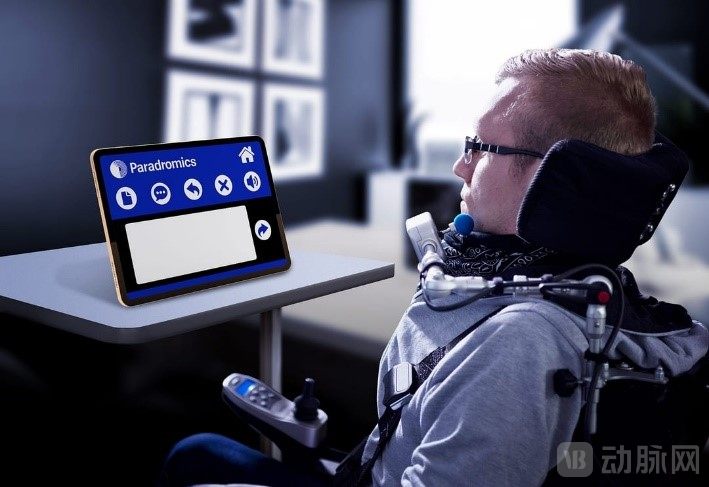
Connexus DDI Application Scenarios. Image source: Paradromics official website
Prior to product launch, Paradromics will continue to refine its form factor and explore additional clinical application scenarios, striving to integrate all chips, sensor arrays, and microwire electrode arrays onto a single 1 cm × 1 cm chip to meet the size and performance requirements for implantable devices.
Currently, Paradromics is conducting animal safety trials and is expected to initiate the first-in-human clinical trial for Connexus DDI in the first half of 2024.
Paradromics was founded in 2015 and is headquartered in Austin, Texas, known as the “Silicon Hills.” Matt Angle is the founder and CEO of Paradromics. Dr. Angle earned his Ph.D. in Neuroscience from Heidelberg University and subsequently completed a postdoctoral fellowship in Materials Science at Stanford University, where he focused on designing nanomaterials capable of interfacing and communicating with cells.

Matt Angle. Image source: Paradromics official website
Since its inception, Paradromics has raised over $90 million in funding. In 2017, Paradromics secured a $18.3 million specialized investment, funded by public money from the U.S. Defense Advanced Research Projects Agency (DARPA) and the National Institutes of Health (NIH).
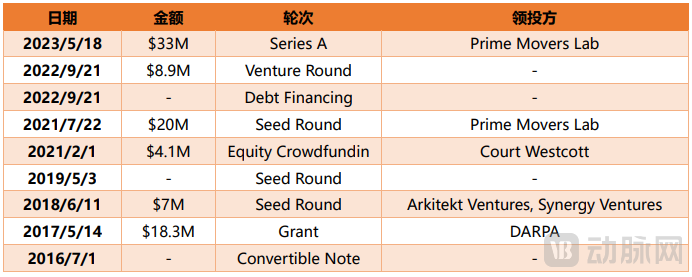
Paradromics Funding History Data Source: Crunchbase
DARPA, an agency under the U.S. Department of Defense, places significant emphasis on the military applications of brain-computer interface (BCI) technology and has made long-term investments in both non-invasive and invasive BCI fields. A notable example is its $18.3 million funding award to Paradromics. During the same period, DARPA allocated a total of $65 million to support six institutions, with Paradromics being the only commercial company among them.
However, this does not mean that Paradromics can use these funds at its discretion; it must meet a series of technical requirements set by DARPA. For instance, the device implanted in the brain must record signals from more neurons while remaining no larger than a coin, and it must be capable of feeding signals back into the brain.
Paradromics’ first venture capital investment came from Silicon Valley investor Lu Zhang, whose labels include “Chinese,” “young woman,” “Stanford academic standout,” and “deep-tech investor.” The Fusion Fund, which she leads, primarily invests in startups in the deep technology sector, manages over $300 million in assets, and has delivered an average overall return of 10x.
According to data from VBInsight’s “2022 Brain-Computer Interface Industry Research Report,”In 2020, the global BCI market size reached $1.46 billion, and is projected to reach $3.6 billion by 2027, with a compound annual growth rate (CAGR) of approximately 14%., the industry boasts a large market size and rapid growth, indicating significant development potential for the BCI sector in the future.
In recent years, brain science research has been elevated to the level of national scientific development strategy. Many countries and regions, including the United States, the European Union, and Japan, have strategically positioned themselves in the field of Brain-Computer Interfaces (BCI) by launching R&D plans and investment initiatives targeting BCI technology. In China, BCI has been elevated to the status of a provincial/municipal development strategy, with major provinces and municipalities incorporating it into their Five-Year Plans.

Overview of Brain-Computer Interfaces Across China | Image source: Artery Orange
BCI technologies are primarily categorized into three types: invasive, non-invasive, and endovascular (semi-invasive). Due to the high technical barriers associated with invasive approaches, companies in the market are predominantly focused on non-invasive BCI, which accounts for over 60% of the share. Major regions such as Europe, Japan, and China mainly focus on non-invasive BCI, whereas the United States prioritizes research on invasive BCI.
Currently, invasive BCI products are still in the clinical trial phase and have not yet entered clinical application. Foreign companies such as Neuralink, BrainGate, and Blackrock Neurotech are accelerating clinical trials of their BCI products. On May 26, 2023, Neuralink announced that it had received FDA approval to launch its first human clinical study of brain implants.
In China, apart from a few companies such as NeuroXess, Ningju Technology, and BrainCo Technologies that are developing invasive brain-computer interfaces (BCIs), most other enterprises focus on researching non-invasive BCI products.
The third type, interventional BCI, is less traumatic than invasive BCI and provides higher signal quality than non-invasive BCI. On May 4, 2023, Nankai University announced the successful completion of the world’s first interventional BCI trial in non-human primates in Beijing. This achievement holds significant importance for advancing research in the field of brain science.
Despite the progress made, BCI technology still faces numerous obstacles to overcome, and there is a long road of intensive research ahead before it can be truly translated into clinical applications.