


Recently, Xbiome's self-developed star strainXA-1416(L. salivarius) is used forWeight Loss and Fat ReductionThe heavy-hitting scientific research achievement — "A novel bile salt hydrolase -producing Ligilactobacillus salivarius prevents diet-induced obesity via regulation of bile acid metabolism and glucagon-like peptide 1 restoration" — A Novel Bile Salt Hydrolase-producing Ligilactobacillus salivarius Prevents Diet-induced Obesity by Regulating Bile Acid Metabolism and Restoring GLP-1, inLeading Global Journal in the Field of Gut MicrobiotaGut Microbes Officially published.
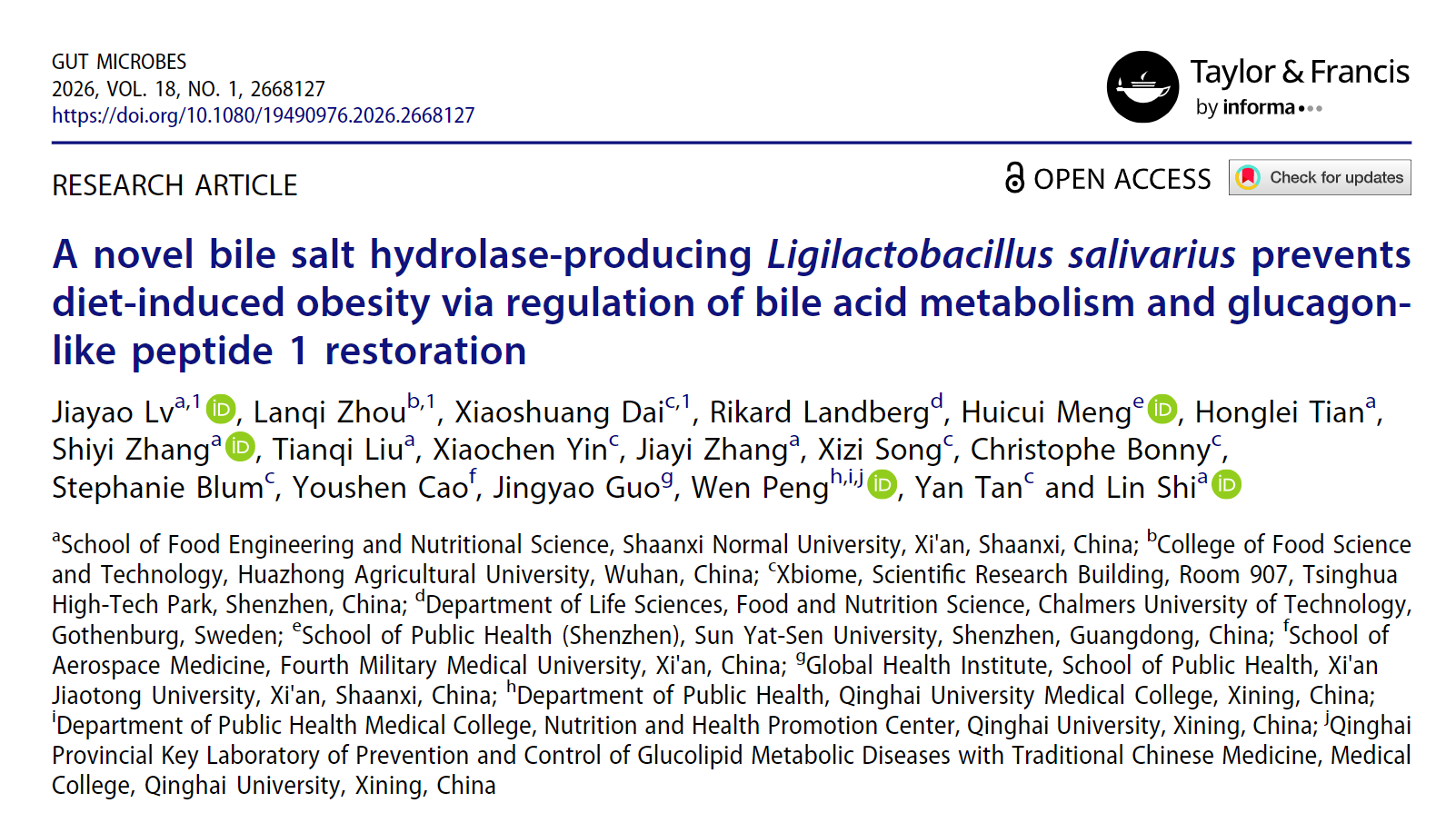
Gut Microbes The impact factor is 15.2, ranking in the top tier of both categories in the Chinese Academy of Sciences, and it is one of the most authoritative and influential academic journals in the field.This study was co-led by multiple expert teams, including Shi Lin from Shaanxi Normal University, in the overall design and mechanism exploration. Tan Xuyang, co-founder and CEO of Xbiome.Dr. Tan YanServing as co-corresponding author, responsible for the transformation of achievements; Director of R&D at XbiomeDr. Xiaoshuang DaiServed as co-first author, leading the completion of core experimental work such as strain screening and mechanism validation.
This paper represents a significant scientific breakthrough in the application of food-grade single-strain probiotics in the anti-obesity field, marking the era of "metabolic target-driven" mechanistic closed-loop in probiotic research and development, providing solutions for weight management across all populations.Combining the Safety of Human-derived Strains with Drug-like Effectiveness's brand-new solution.
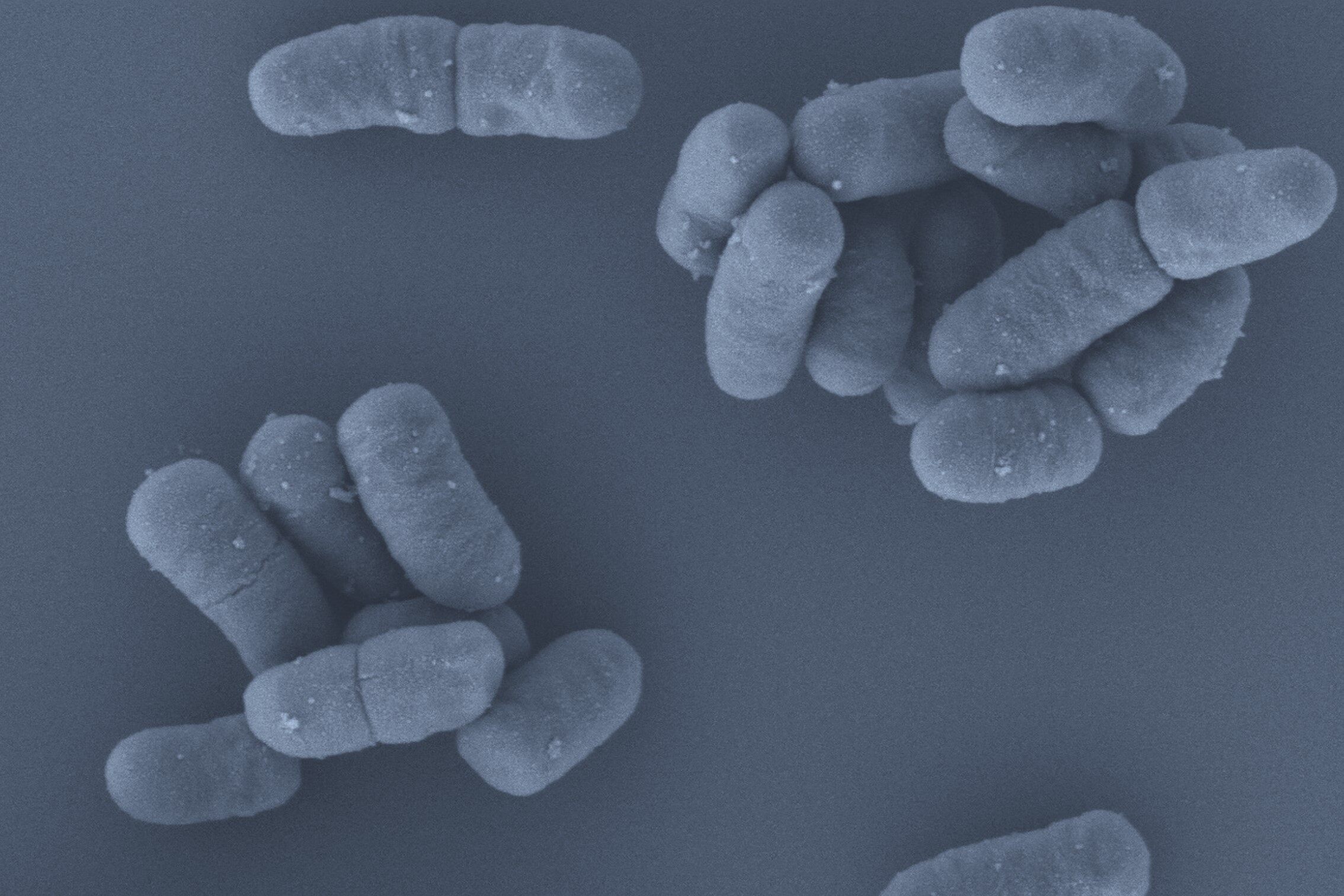
XA-1416: Enable the Body to "Actively" Reduce Fat and Weight
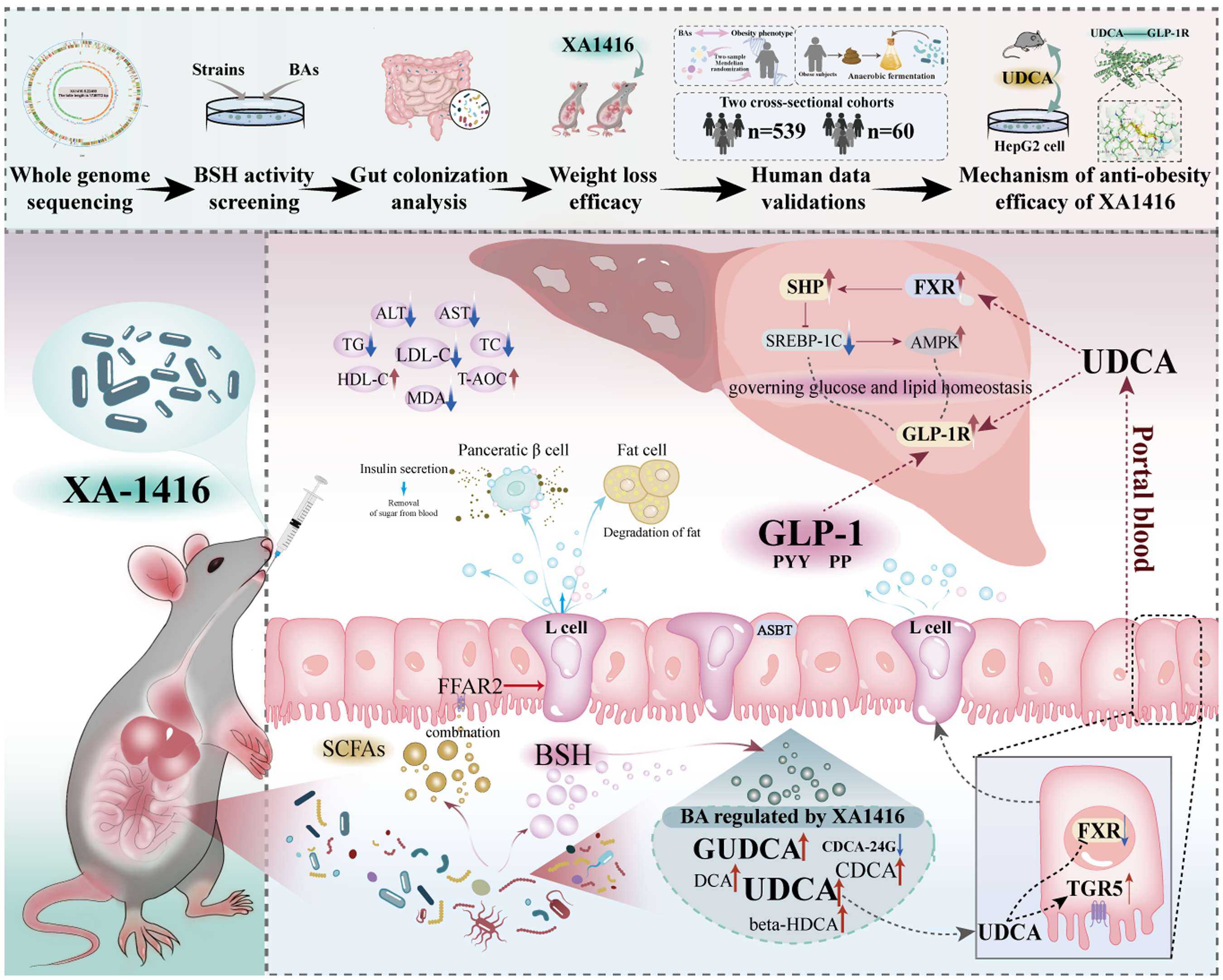
Xbiome's scientific team, in collaboration with Professor Lin Shi from Shaanxi Normal University and Professor Rikard Landberg from Chalmers University of Technology in Sweden, has solved the core problem of "how probiotic strains achieve scientifically-supported anti-obesity effects" through comprehensive animal experiments, human studies, and in vitro validations.Unlike the "difficult mode" of traditional anti-obesity methods that require "watching your mouth and moving your legs," XA-1416 activates the core metabolic pathway of "bile acid—GLP-1," enabling the body to secrete GLP-1 on its own. Without changing habits or external drug injections, it allows the body to "actively" achieve precise regulation of metabolism and weight.
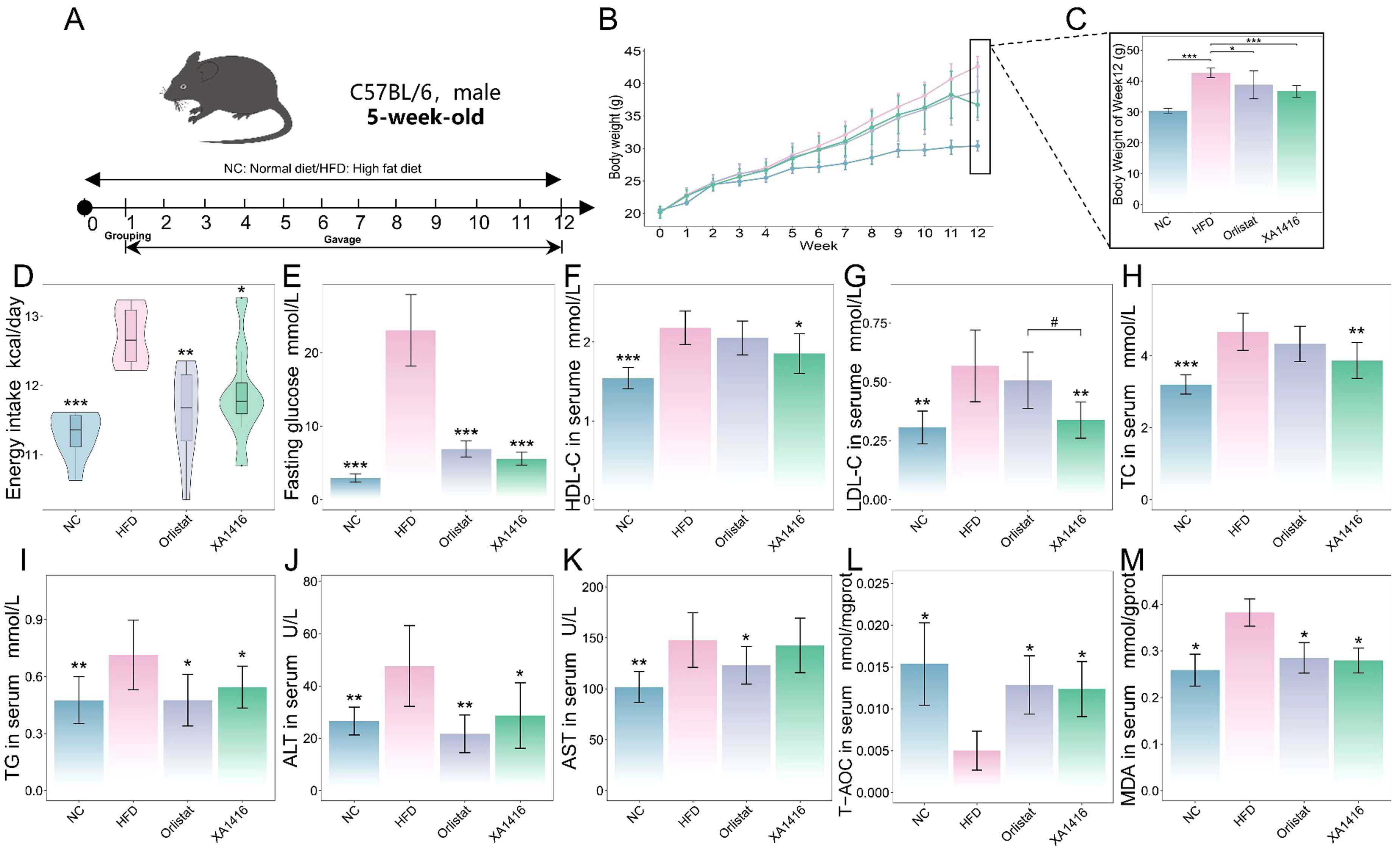
In animal experiments, the research team divided healthy mice into a normal diet group, a high-fat diet group, a drug control group, and an XA-1416 intervention group. After 10 weeks of intervention, they found that,The XA-1416 strain can effectively suppress high-fat diet-induced weight gain, with effects comparable to mainstream anti-obesity drugs. It also improves blood sugar and lipid disorders, and repairs intestinal and liver damage.
Unlocking Scientific Mechanisms, Targeting Key Metabolic Molecules
The researchers introduced that the value of this article being published in a high-impact journal lies not only in proving the effectiveness of XA-1416 but also in identifying the key substance that promotes its metabolic regulatory function and the scientific mechanism behind it. The researchers pinpointed the critical metabolic molecule.“Ursodeoxycholic Acid (UDCA)”, based on the Mendelian randomization study analysis of large-scale human whole-genome data, as well as extensive in vivo and in vitro validations,Confirmed the central role of UDCA in weight regulation.
The article points out that oral administration of UDCA can reproduce the anti-obesity effects and metabolic benefits of XA-1416. It acts as an intestinal farnesoid X receptor (FXR) antagonist and a G protein-coupled bile acid receptor 5 (TGR5) agonist, thereby stimulating GLP-1 secretion. This mechanism involves the regulation of the hepatic FXR/SHP/SREBP-1c signaling pathway while activating the GLP-1 receptor, ultimately improving metabolic homeostasis. Subsequent animal experiments and in vitro cell studies further confirmed that UDCA can directly activate the GLP-1 receptor. All data and results point to the same conclusion—XA-1416 is a highly promising anti-obesity probiotic for development and application, and UDCA is the key microbial metabolite mediating its beneficial metabolic effects.
Published in top journals, with four major milestone values
Xbiome's scientific team introduced that the formal publication of this research achievement in the top journal Gut Microbes holds multiple milestone values in the probiotics industry and the field of anti-obesity science.
Achieving precise regulation of metabolic pathways in single bacteria
Previously, microbial anti-obesity research mainly relied on multi-strain combinations or microbiota transplantation. Function validation and mechanism studies through a single strain posed extremely high scientific challenges. The core advantage of the XA-1416 strain lies in its direct impact on human metabolic hormones, achieving "precise regulation of metabolic pathways by a single strain," marking a new phase in probiotic development shifting from "multi-strain vague effectiveness" to "single-strain precise regulation."
The Huge Industrial Value of Food-Grade Strains
XA-1416 is sourced from a food-grade strain catalog. Compared to non-food-grade strains or genetically engineered strains used in other high-score studies, it offers greater safety assurance and is more suitable for long-term consumption and product transformation.
Single Strain Achieves Safe and Effective GLP-1 Regulation
In recent years, the use of drugs to enhance GLP-1 has led to intense scientific and industrial competition in the field of anti-obesity applications. The publication of this research achievement confirms that Xbiome's food-grade probiotic strain XA-1416 can effectively regulate GLP-1 through a safer pathway than drugs, offering a new approach for the prevention of obesity and chronic metabolic diseases.
Establish a Complete Scientific Mechanism Loop
This study achieves a complete scientific mechanism loop of "strain-metabolic pathway-hormone-phenotype," from bile acid metabolism to receptor signaling, then to GLP-1 secretion, and finally to weight improvement. Each step is supported by clear experimental evidence, reaching a scientific height that most previous related studies have not been able to attain.
Xbiome AI+BT Platform: Achieving Target-Driven Probiotics Development
The publication of these findings is direct proof of the advanced nature of Xbiome's AI+BT technology platform. In the past, the research and development of probiotics mainly focused on the "function verification" level, with most strains selected based on experience, lacking the ability to screen driven by metabolic targets. This has led to many probiotic products having vague effects and unclear mechanisms.
Xbiome's AI+BT platform has broken this industry bottleneck. Xbiome's scientific team precisely screens strains with high bile salt hydrolase (BSH) activity through AI technology, and validates their functions using biotechnology, focusing on the core metabolic axis of "bile acid—GLP-1".Achieved the full-process research of strain screening, mechanism analysis, and effect verification.
The publication of this research also reflects XbiomeThe full-chain validation capability from population data to molecular mechanisms.According to the introduction, the research integrated multi-layered evidence chains: animal experiments verified the efficacy of the strain, human studies confirmed clinical relevance, in vitro fecal fermentation experiments validated the strain's regulatory effects on the human gut microbiota, and molecular dynamics simulations along with surface plasmon resonance (SPR) technology verified the molecular binding mechanisms. All experimental results and data comprehensively demonstrated the effectiveness and scientific pathway of the XA-1416 strain, providing a solid foundation for subsequent commercial applications.
Through this research, Xbiome has redefined the R&D direction of "next-generation probiotics" — moving from "empirical screening" to a new phase driven by "targeted approaches."
A Strain of Bacteria May Hold the Key to Transforming the Health of a Generation
Currently, obesity has become a global public health issue in contemporary society, not only affecting personal appearance but also increasing the risk of developing major chronic diseases such as diabetes and fatty liver.In this study, the researchers provided a safer, gentler, and more sustainable solution for fat reduction and weight loss—by precisely screening functional strains, targeting core metabolic pathways, and elucidating clear mechanisms of action, making probiotics a truly "precise tool" for regulating human metabolism. This approach enables zero-burden, effortless fat reduction and weight loss, with the potential to help a generation improve metabolic health and reduce the public health burden.
The research achievement of XA-1416 strain published in Gut Microbes marks a significant scientific milestone for Xbiome and represents an important breakthrough in the development of China’s next-generation probiotics, providing valuable insights for global metabolic health research."China Solution"Xbiome will continue to rely on its AI+BT technology platform to deeply explore the relationship between microbiota and human disease health, consistently produce functionally clear probiotic strains, promote the development of the probiotics industry, and benefit public health.
Note:
1. The above content does not involve product efficacy promotion, but only cites publicly published academic reports as an introduction to the strain;
2. Original article link: https://www.tandfonline.com/doi/full/10.1080/19490976.2026.2668127#d1e1291
-End-