ABC Digital Health Cloud Files for IPO After Four Years of Building Tens of Thousands of Paying Customers in China's Grassroots Medical Digitalization Market

Chengdu Bytestream Technology
Medical Diagnosis SaaS Service Provider
“Large hospitals (particularly Grade 3A hospitals) are the mainstay of IT spending.”
This is an excerpt from Sinolink Securities’ report on the healthcare informatics industry. Judging by data and the ease of commercial implementation, this statement holds true. Due to limited funding and other constraints, primary care institutions do not appear to be the top priority for health IT vendors. Meanwhile, traditional serious medical clinics have left the impression of being on the periphery of the informatics market, owing to factors such as fragmentation, small scale, and weak willingness to pay.
But is this the fact? The answer is undoubtedly no.
Let us examine several sets of data. According to the Statistical Bulletin on the Development of China’s Health and Healthcare Services in 2021, by the end of 2021, the total number of healthcare institutions nationwide was approximately 1.03 million, with primary healthcare institutions accounting for about 978,000, or 95% of the total. This indicates that primary healthcare serves as the cornerstone of China’s healthcare system.
Furthermore, with the advancement and deepening of China’s new healthcare reforms, along with the introduction and implementation of policies such as tiered diagnosis and treatment, medical consortia, and county-level medical communities, primary healthcare institutions have increasingly assumed critical responsibilities—including initial diagnosis, chronic disease management, and disease prevention. By fulfilling their distinct roles in complementing large public hospitals, these institutions help effectively alleviate challenges such as strained medical resources, difficulties in accessing care, and the burdensome travel associated with chronic disease management.
In this context, in response to the tiered diagnosis and treatment policy and to meet the requirements for establishing medical alliances and medical consortia, public primary healthcare institutions, much like large tertiary hospitals, have substantial needs for informatization and even digital transformation.
For private primary-care clinics, the empowering effect of informatization on improving operational management and medical standards is already evident, and these clinics are indeed actively embracing the trends of informatization and digitalization. However, the issue lies in the fact that, compared to public primary healthcare institutions, private clinics have a relatively limited understanding of informatization and digitalization, as well as weaker willingness and ability to pay. This has become a concern for some health-tech startups.
However, VCBeat recently came into contact with an innovative company called Bytestream Technology, which has launchedABC Clinic Manager not only serves public primary healthcare institutions and specialty clinics, but general clinics also account for half of its client base. In terms of service offerings, beyond basic SaaS solutions, it provides a comprehensive suite of services for the primary healthcare sector, including a digital pharmaceutical supply chain and medical service connectivity.
Moreover, what is even more baffling is that,ABC Clinic Steward’s business model is to have primary healthcare institutions pay for its software.“Indeed, this is no easy task. Fortunately, by consistently and resolutely providing healthcare professionals with high-quality products and trustworthy services, we have ultimately enabled users to recognize the value of our offerings and become willing to pay for them.”Mo Sha, founder of ABC Clinic Manager, stated that as of now, ABC Clinic Manager has accumulated tens of thousands of paying customers.
Compared with large tertiary hospitals, primary healthcare institutions are still at a very early stage in their understanding of informatization and even digitalization. In Mosha’s own words, they are “still making up for lost ground.”
So, for “informatization” enterprises like ABC Clinic Manager, what assistance can they provide to primary healthcare institutions in the process of “catching up”?
In this regard,Mo Sha stated that the digital transformation of primary healthcare institutions should adhere to the “Four Modernizations” concept, namely informatization, internet integration, intelligentization, and integration. Meanwhile, Chengdu Bytestream Technology has observed that the core demands for digital products among primary healthcare institutions, particularly private grassroots clinics, can be summarized into four aspects: compliance, cost reduction, efficiency improvement, and revenue growth.
To meet the demands of these four categories of digital products, centered on the “Four Modernizations” construction philosophy,ABC Clinic Manager has built a digital medical infrastructure platform, primarily comprising three major segments: business management, marketing systems, and value-added services.
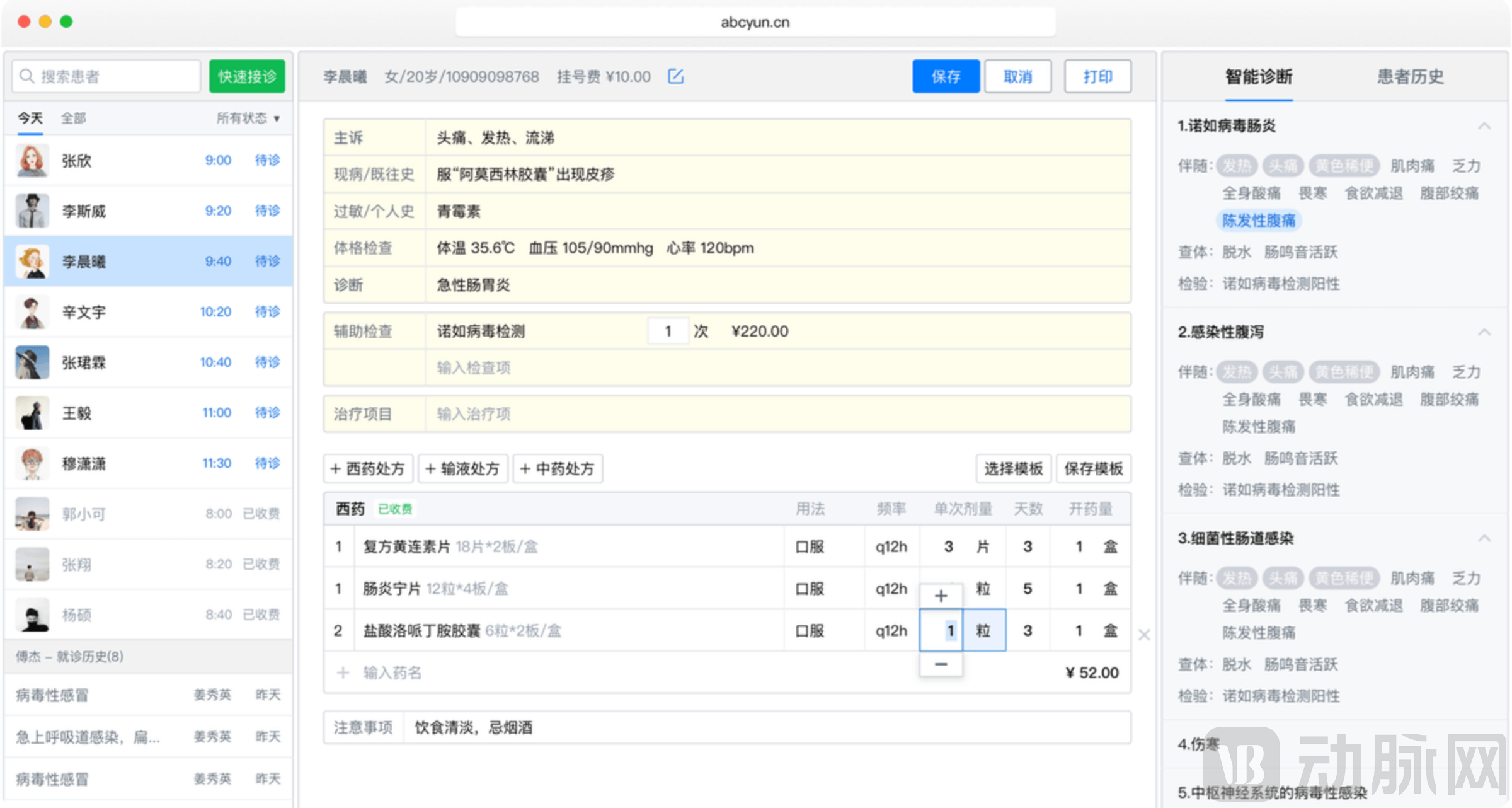
Among these, the built-in electronic medical records, e-prescriptions, clinical workflows for physicians, nurses, and technicians, and pharmaceutical and medical device inventory management services within the operational management module can ensure the efficient operation of core clinical scenarios in primary healthcare institutions; the integrated intelligent diagnosis, intelligent prescription review, and doctor-patient communication and follow-up channels can effectively enhance the institution’s level of medical service; whileThe value-added services segment can also integrate with nationwide medical insurance and health commission platforms, helping institutions effortlessly achieve medical insurance payment integration and comply with health regulatory requirements.
Regarding cost reduction and efficiency improvement, the IT infrastructure platform of ABC Clinic Manager also provides business statistical decision-making analysis services, helping clinics review various aspects of their operations and management to identify areas where costs can be reduced and efficiency enhanced. Furthermore, in the diagnosis and treatment process, by leveraging the intelligent diagnosis and smart medication tools of ABC Clinic Manager, clinics can not only improve operational efficiency but also deliver a better experience for patients.
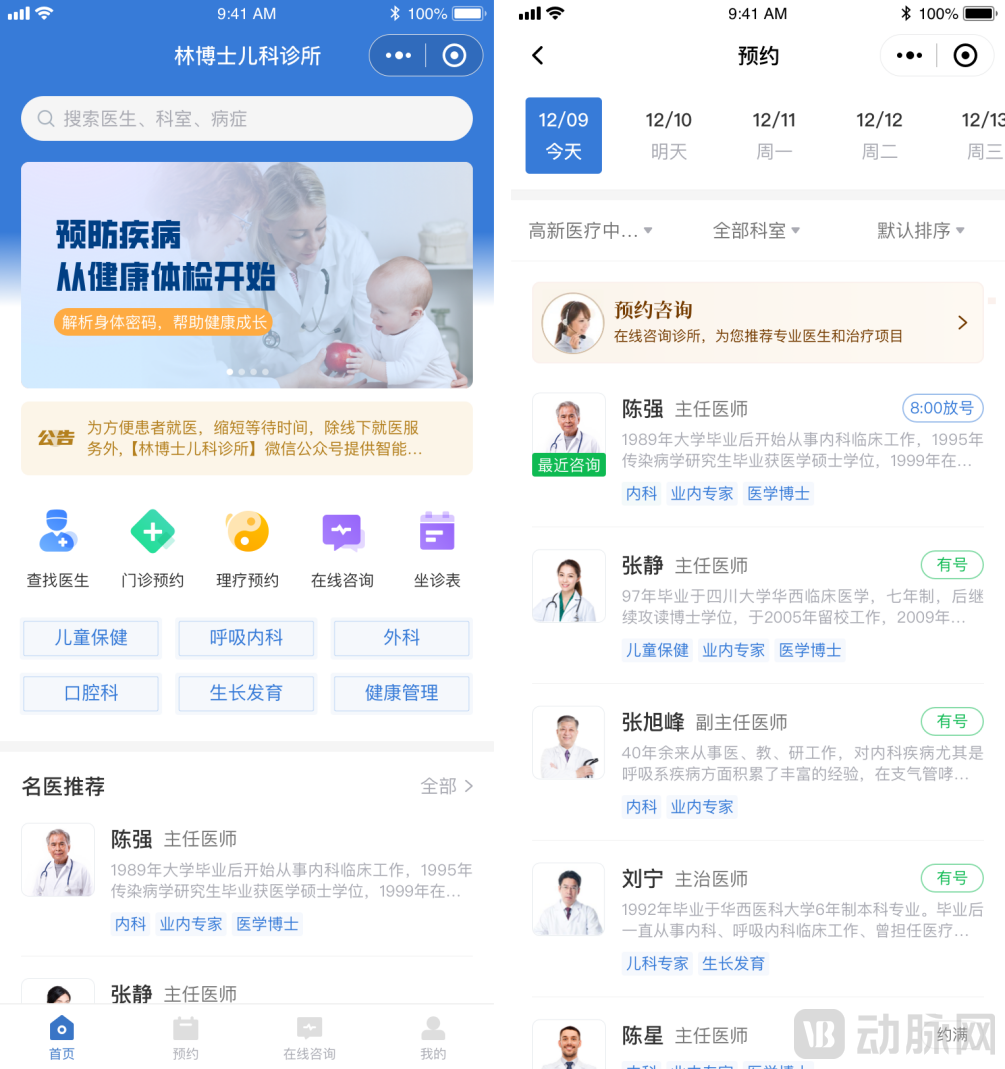
Beyond the consultation and treatment phase, ABC Clinic Manager is also empowering primary healthcare institutions to reduce costs and increase efficiency during pre- and post-consultation stages. For instance, multi-screen queue calling and large-screen self-service kiosks are designed to lower labor costs for primary healthcare institutions, particularly private clinics. Additionally, patient CRM-based follow-up communications aim to reduce the time and energy expenditures of medical staff while enhancing their patient management efficiency.
Of course, the functionality of patient CRM follow-up communication lies not only in helping clinics reduce costs and improve efficiency, but also in boosting clinic revenue.
“Primary healthcare institutions, especially private clinics, have revenue-generating imperatives.”Mocha stated,“But our support for its revenue growth is far more than just traditional marketing,”Because healthcare services are intimately tied to health and life, they inherently carry a serious dimension. Therefore, “marketing” for healthcare institutions should not be carried out in the manner of “sales promotion.”
Accordingly,ABC Clinic Steward’s marketing service philosophy is patient-centric, leveraging a suite of digital tools to enhance patients’ service experience and treatment outcomes throughout the entire care journey—from pre-consultation to in-clinic consultation and post-consultation follow-up. By providing a range of service tools, including appointment scheduling, doctor-patient communication, online consultations, chronic disease management, and post-visit follow-ups, it strengthens adherence, service stickiness, and trust between healthcare institutions and patients, thereby helping them establish long-term, stable service relationships.
“Although this process is not as fast as ‘sales pitching,’ as long as it is carried out sincerely and pragmatically with a patient-centered focus, the results will undoubtedly be significant and sustainable in the long term,” Mo Sha added.
In short, the core support provided by ABC Clinic Manager for clinic revenue growth mainly lies in enhancing patient stickiness, improving the service reputation and trust of medical institutions, expanding the scope of services, and diversifying service categories.
As for integration, Mo Sha believes it primarily encompasses two dimensions. First, numerous medical business modules no longer require additional interfaces or integration efforts; instead, a unified service platform covering the full business stack is provided to healthcare institutions, enabling smoother workflow processes and seamless sharing of patient data. Second, it involves the interconnectivity of workflows and data between medical systems and hardware devices, as well as with upstream and downstream systems. In this regard, Mo Sha stated that ABC Clinic Manager has already completed the integration of over 200 types of medical devices and facilitated data exchange with dozens of upstream and downstream systems.
In its foundational Version 1.0, ABC Clinic Manager was already fully empowering the “four modernizations” of clinic digitalization. In Version 2.0, based on the needs of primary healthcare, ABC Clinic Manager has further supplemented and deepened certain service offerings.
In Phase 2.0, ABC Clinic Manager will introduce two new service segments—Digital Medical Supply Chain Services and Medical Service Support—building upon its foundational health informatics services.
Let's first take a look atABC Clinic Manager 2.0 provides medical service support primarily across three key areas: third-party testing and inspection services based on a digital supply chain for laboratory diagnostics, the establishment of multi-directional referral pathways within medical alliances and medical consortia, and the development of an internet-based diagnosis and treatment service platform.
The service offerings of the digital healthcare supply chain are self-evident; what warrants special emphasis is that,ABC Clinic Steward’s medical digital supply chain covers not only pharmaceuticals but also the supply of the aforementioned testing and diagnostic medical devices.
“From Mo Sha’s perspective, ‘given that relevant technologies have matured and costs are controllable, certain lightweight diagnostic and testing services can be fully delivered at primary healthcare institutions.’ This approach not only addresses patients’ psychological need for timely information about their condition but also ensures adequate preparation for prompt referrals.”
Not only that,ABC Clinic Manager 2.0 also features an integrated “Cloud Pharmacy.” After patients complete consultations either online or offline, physicians’ prescriptions are transmitted directly to the Cloud Pharmacy for centralized pharmaceutical services, followed by home delivery via express courier. This model enables clinics to operate without maintaining warehouses, stocking inventory, or employing pharmacists, thereby reducing operational costs while expanding the range of available medications.For patients, home delivery of prescriptions eliminates the need to wait on-site or make additional trips to pick up medications, thereby enhancing the medical consultation experience.
Furthermore, the medication processing services offered by cloud pharmacies—such as decoction, paste preparation, pill making, and powdering—can also generate additional revenue for private clinics.
andMeanwhile, ABC Clinic Manager also identified development opportunities in consumer healthcare and began transferring the industry experience accumulated in serious medical institutions to consumer healthcare institutions.
The dental clinic marks the “first shot” fired by ABC Clinic Manager in the consumer healthcare market.
Compared with primary care clinics in the serious medical sector, the digitalization of dental clinics shares both similarities and differences. The similarity lies in the fact that dental clinics also have needs in pharmaceutical and medical device supply chain management, clinic operations management, and marketing. These common needs constitute 80% of dental digitalization initiatives. The remaining differences account for the other 20%.
These differences are mainly reflected in the support for the specialized characteristics of oral diagnosis and treatment. For example,Dental diagnosis and treatment involve data from intraoral scanning, CBCT, and other sources; furthermore, dental implantology and prosthodontics require management of the fabrication progress of dentures and prostheses. These data are closely linked to patient treatment and cannot exist in isolation. Therefore, the need for integrated digital infrastructure in dental clinics is particularly evident.
In addition to providing basic informatization and digital services for dental clinics, such as self-service appointment scheduling, visit reminders, post-visit management, electronic medical records (EMR), revenue statistical analysis, digital management of business processes, professional training, and medical insurance payment support, ABC Dental Clinic Manager also offers the aforementioned integrated hardware-software data interoperability across multiple devices, seamlessly connecting the entire diagnosis and treatment workflow.
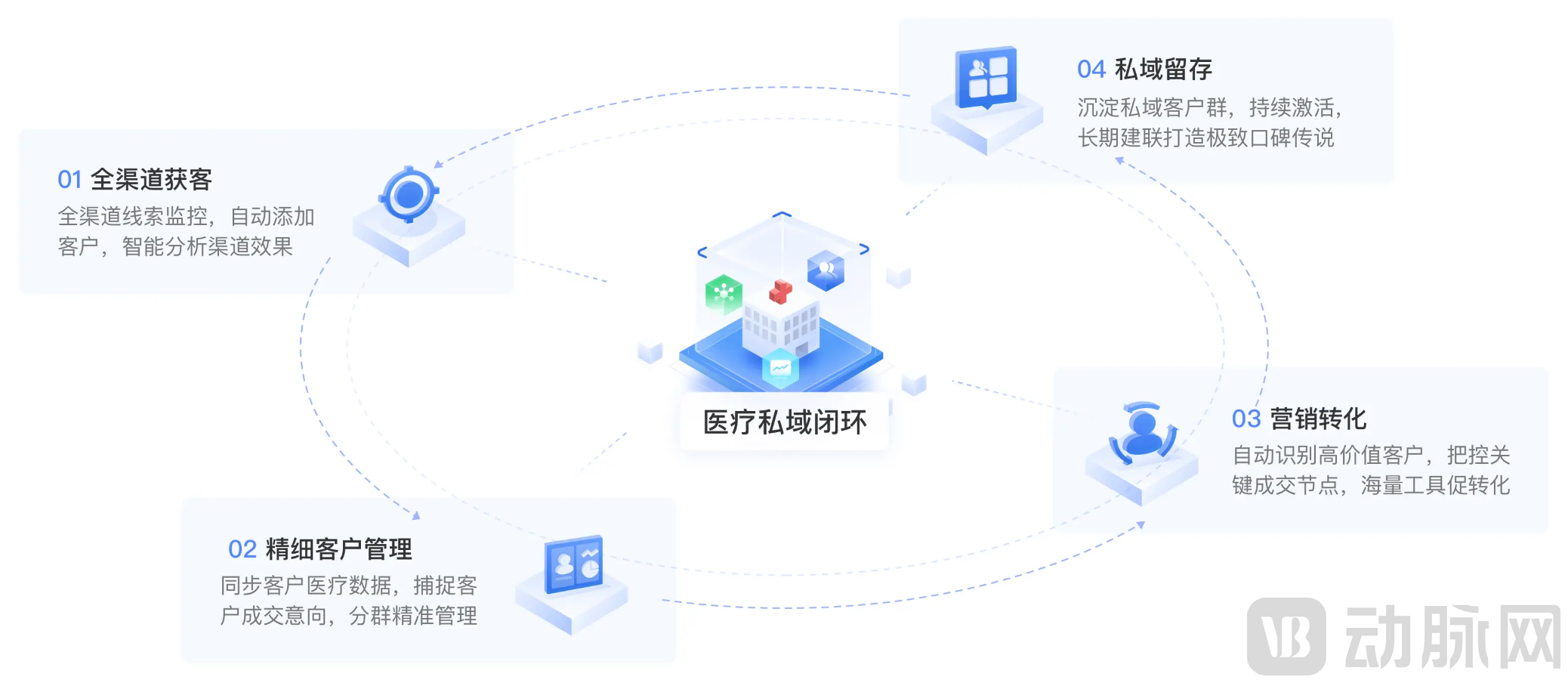
Moreover,ABC Dental Practice Manager has also launched a dedicated dental marketing system, providing end-to-end closed-loop services for customer acquisition, management, conversion, and retention.
Thus, from daily operations management to the digital integration of clinical care, from marketing to training, and from software support to hardware support (such as imaging equipment and queue display screens), ABC Clinic Manager’s empowerment of dental clinics covers every aspect. A similar trend is evident in optometry centers and will soon extend to private medical aesthetics institutions.
ABC’s Digital Healthcare Platform is steadily advancing toward its goal of becoming “China’s largest all-encompassing service platform for primary care and consumer healthcare.” With the journey underway, there is no reason to halt.