

Innovation Meets Momentum: 2026 National Brain-Computer Interface Technology and Industry Integration Innovation Conference Concludes Successfully in Nanjing

BrainCo
Non-invasive brain-computer interface technology solution provider
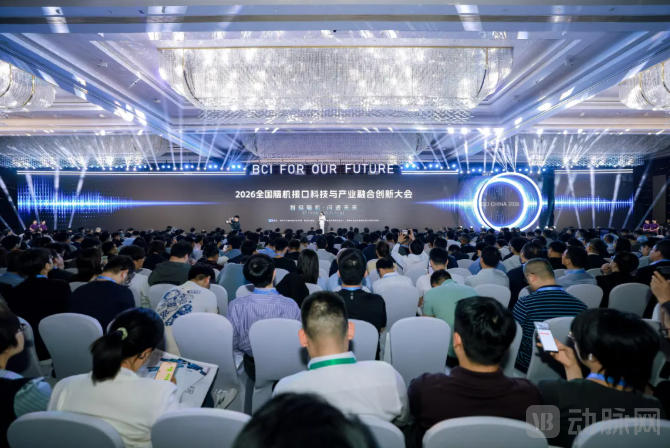
When a mind-controlled robotic arm precisely grabs a water cup, and when speech-impaired individuals output text in real-time on a screen through neural decoding, brain-computer interfaces are rapidly transitioning from science fiction into practical, large-scale industrial applications. As one of the six key future industry directions of the country and a core strategic engine for cultivating new productivity, brain-computer interfaces are entering a critical development phase under the deep advancement of national strategy.On May 10, the 2026 China Brain-Computer Interface Technology and Industry Integration Innovation Conference, themed "Intelligent Brain-Computer Interface: Exploring the Future," was held in Nanjing, Jiangsu.
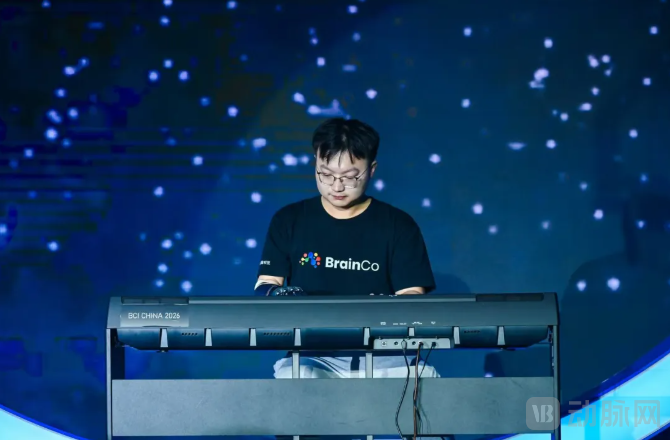
A melodious rendition of "Jasmine Flower" marked the opening of the conference. Zhou Jian, the R&D testing and product experience officer at BrainCo, skillfully performed this Eastern classic using the fingertips of his left hand in seamless coordination with the five fingers of his right-arm intelligent bionic hand. Having lost his right arm in an accident 12 years ago, he now controls the bionic hand through "thought," granting his amputated arm a "new life." As technology and life resonated together, the scene erupted in thunderous applause.
Governor of Jiangsu ProvinceLiu XiaotaoAttended the opening ceremony of the conference. Member of the Standing Committee of the Jiangsu Provincial Party Committee and Secretary of the Nanjing Municipal Party CommitteeZhou Hongbo, Academician of the Chinese Academy of Sciences, President of the University of Science and Technology of ChinaChang Jin, Academician of the Chinese Academy of Sciences, Secretary of the Party Committee of Xiamen UniversityZhang Rong, Academician of the Chinese Academy of Sciences, Secretary of the Party Committee of Nanjing UniversityTan TieniuPresent. Deputy Governor of Jiangsu Provincial People's GovernmentShen Jianrong, Mayor of Nanjing Municipal People's GovernmentLi Zhongjun, Academician of the Chinese Academy of Sciences, President of Nanjing UniversityZhe Min TanSpeech by the President of the Conference, Academician of the Chinese Academy of Sciences, Executive Vice President of Nanjing University, and Director of the National Innovation Center for High-Performance Medical DevicesZheng HairongHost.
This conference is hosted byNanjing University Brain-Computer Interface Research Institute (Gulou Laboratory), National Innovation Center for High-Performance Medical Devices, Brain-Computer Interface Innovation Consortium of the National Laboratory SystemCo-organized and adopting a "closed-door seminar + main venue + four sub-venues + frontier scientific and technological achievements exhibition" integrated structure. More than a thousand representatives from the entire chain of government, industry, academia, research, medicine, and investment gathered in Jinling, including nearly 30 academicians of the two academies, over 80 universities and research institutes, more than 100 authoritative clinical experts, over 60 investment institutions, and more than 200 industrial chain enterprises, fully activating the innovation hub of China's brain-computer interface field, collectively presenting the latest development achievements of the industry, and sounding the strong notes of the times for technological breakthroughs, industrial upgrading, and ecological co-construction.
Standing at the critical node of the "15th Five-Year Plan" planning and layout,How to seize the strategic window period and accelerate the transformation of brain-computer interface from technological advantage to industrial advantage and people's well-being has become an important topic for all parties.
Zheng HairongThe academician stated in the opening remarks that this conference focuses on the critical window period when China's brain-computer interface is transitioning from basic research to clinical application and from single-point innovation to full-chain collaboration. The event emphasizes five core directions: technological breakthroughs, clinical transformation, standard construction, capital empowerment, and industrial clustering. It aims to facilitate the synergy of the "government, industry, academia, research, medical, and capital" channels, helping China seize the initiative and gain an advantageous position in the fields of brain science and brain-computer interfaces.
Mayor of Nanjing Municipal People's GovernmentLi ZhongjunIn recent years, the industrial development ecosystem in Nanjing has been accelerating optimization. The city established the first regional collaborative research mechanism for ethics in brain-computer interface clinical studies in China, created the first brain-computer interface OPC entrepreneurial community in China, built a number of clinical research beds for brain-computer interfaces, and formed a special industry fund with a total scale of over 2 billion yuan, making every effort to facilitate the transformation channel for scientific research results from the laboratory to industrialization.
Academician of the Chinese Academy of Sciences, President of Nanjing UniversityZheming TanIt was pointed out that Nanjing University, which is about to celebrate its 124th anniversary, has always pursued the goal of serving the country and the people. The university fully leverages its distinctive advantages in technical research, innovatively implements the "789 Science and Technology Research Plan," continuously optimizes mission-driven organized research, and achieves a full-chain layout from technical research and innovation to achievement transformation, making Nanjing University's contribution to supporting the construction of a strong scientific and technological nation.
Deputy Director of the Fifth Department of the Ministry of Science and TechnologyDong KeyanIt was noted that this year's government work report has included brain-computer interface in the key cultivation list for future industries, marking the formal elevation of this cutting-edge field into a national strategic layout. The current acceleration in the aggregation of innovative elements such as technology, talent, and policy is expected to promote a pioneering breakthrough in brain-computer interface within China’s frontier technology sector. It is hoped that all scientists will bravely take on their missions, be pioneers, overcome difficulties, and contribute Chinese wisdom and solutions to the cross-disciplinary development of future industries.
Deputy Director of the Department of Science and Technology, Ministry of Industry and Information TechnologyGan XiaobinIt was reported that seven departments, including the Ministry of Industry and Information Technology (MIIT), have issued the "Implementation Opinions on Promoting the Innovative Development of the Brain-Computer Interface Industry," systematically deploying key tasks related to software, hardware, standards, and patents to provide scientific guidance for industrial development. To strengthen technological research, the MIIT has launched a Brain-Computer Interface challenge, organizing leading companies to break through a number of key technologies, cultivating a group of high-quality products and specialized, refined, distinctive, and innovative "little giant" enterprises. It also guided the establishment of the Brain-Computer Interface Industry Alliance, which brings together 315 companies and research institutions to promote collaborative innovation in industry, academia, research, and application.
In March this year, Jiangsu Province issued the "Action Plan for the Innovative Development of the Brain-Computer Interface Industry in Jiangsu Province," aiming to lead industrial upgrading with clear goals, accelerate the creation of benchmark enterprises, improve the full-chain ecosystem, and promote Jiangsu's transition from "industrial pioneer" to "national leader."
Vice Governor of Jiangsu Provincial People's GovernmentShen JianrongIt was pointed out that brain-computer interface (BCI) is a typical future industry and a key track for promoting the deep integration of life health and the digital economy. The Jiangsu Provincial Party Committee and the provincial government have attached great importance to it, planned ahead, and were the first in China to issue an action plan for the innovative development of the BCI industry, implementing four major initiatives: industrial innovation co-construction, scenario opening cultivation, industrial entity strengthening, and industrial support enhancement. Jiangsu Province continues to build a development pattern driven by scientific research innovation, clinical traction, platform empowerment, and ecological collaboration.
The blueprint for top-level design has been drawn up, and the construction of the industrial ecosystem is accelerating. In the presence of more than a thousand industry representatives,China's Brain-Computer Interface Technology Innovation Alliance, Medical Alliance, and Capital Alliance were officially inaugurated on the same day, with the three alliances precisely targeting the core aspects of industrial development.
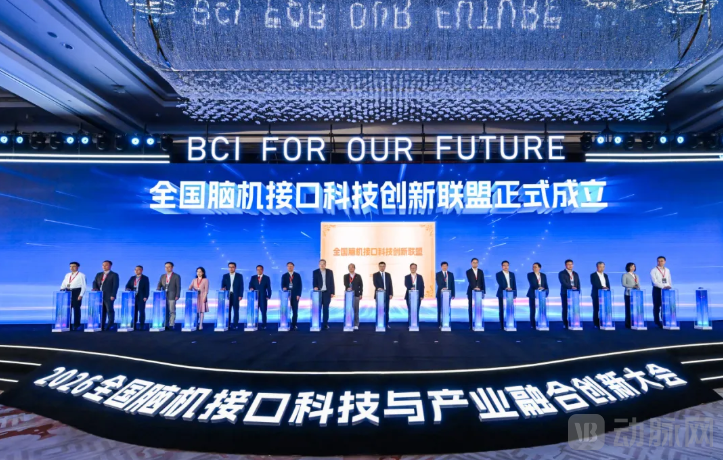
The Technology Innovation Alliance brings together China's innovative "core strengths," focusing on the research of core technologies such as chips and algorithms, as well as standard setting. It carries out collaborative efforts to build a solid technical foundation for industrial self-reliance and controllability. The Medical Alliance gathers the "clinical dream team" in the field of neurology across China, creating a cross-disciplinary and cross-institutional collaboration platform that bridges the "last mile" of technology moving into clinical practice. The Capital Alliance pools China’s “capital resources,” constructing a full-cycle financial empowerment system covering from seed rounds to IPO. Each of the three alliances fulfills its role while working in unison, forming an innovation community for brain-computer interfaces based on "technology research + clinical transformation + capital empowerment." This drives China’s brain-computer interface industry into a new phase of intensive collaboration and cluster development, building strong momentum for China to seize the development opportunity and achieve high-level self-reliance and strength in the global brain-computer interface field.
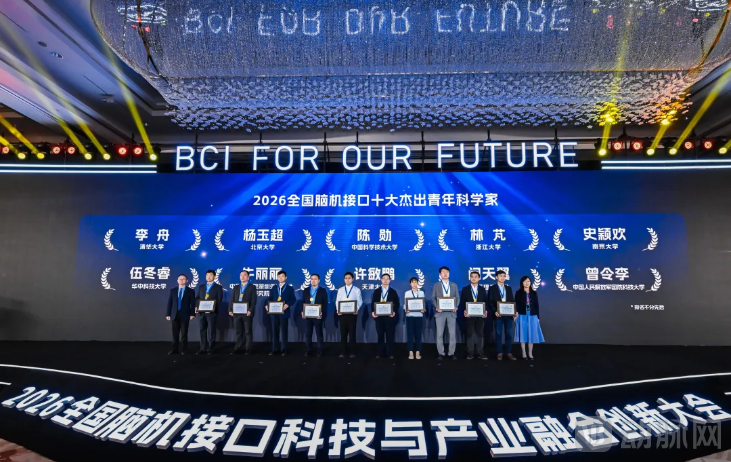
At the conference, the four excellent cases of brain-computer interface in 2026 were officially announced, and the ten outstanding young scientists, excellent doctoral research, innovative products, and innovative enterprises were showcased. These achievements not only demonstrate China's strong scientific research capabilities and industrial vitality in the field of brain-computer interface but also provide high-quality talent for the industry. This further facilitates the integration of talent cultivation, technological innovation, and industrial implementation, promoting a virtuous cycle of "talent development - technological breakthrough - clinical transformation - industrial upgrading."
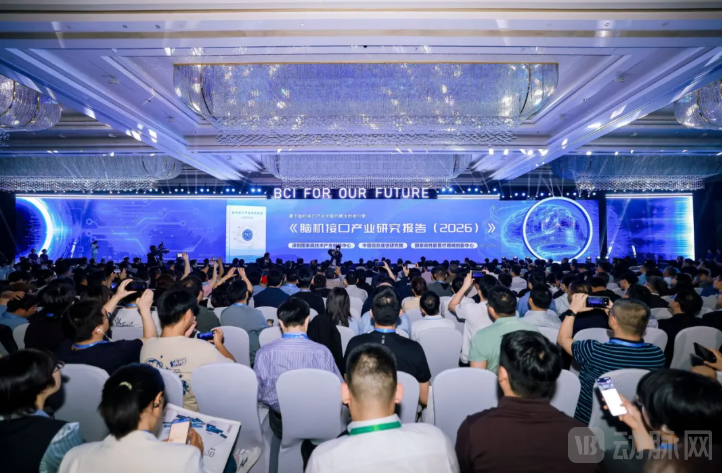
The frontier support system is accelerating its construction. The "Brain-Computer Interface Industry Research Report (2026)" was jointly released by the Shenzhen National High-Tech Industry Innovation Center, the China Academy of Information and Communications Technology, and the National Innovation Center for High-Performance Medical Devices. The report provides a panoramic scan of the global and China's industrial trends, analyzes technological pathways and core medical scenarios, and insights into policies, capital, and regulatory directions, offering forward-looking references for decision-makers and research institutions. The journal "Brain Science Research," supervised by the China Association for Science and Technology and hosted by the Chinese Medical Association and Nanjing University, has officially been launched. This journal benchmarks against top international journals, focusing on the cutting-edge fields of brain science and brain-computer intersection, aiming to create a representative platform for the "China home ground" in the global brain science domain. The "High-Quality Brain-Computer Interface Dataset of Jiangsu Province" was also released simultaneously, providing crucial "data fuel" for algorithm training and product validation.
The ability to innovate continues to improve, and the trend of industrial cluster development is becoming increasingly prominent. During the conference, the Jiangsu (Nanjing) Brain-Computer Intelligence Science and Technology Innovation Park was officially inaugurated, and the "Nanjing Guyue" Brain-Computer Interface Industry Guidance Fund was simultaneously launched. Through the dual-driven model of "physical support from the park + capital empowerment from the fund," it accurately connects the innovation chain, industry chain, capital chain, and talent chain. An integrated national hub for brain-computer interface industry innovation, encompassing R&D, incubation, and industrialization, is rapidly taking shape in China.
"Nurturing Talent through Competition, Fostering Industry Growth through Events." The 2026 China Brain-Computer Interface Innovation and Entrepreneurship Competition has officially kicked off, providing a platform for young innovators to showcase their technical skills and cultivating a "tropical rainforest"-style innovation ecosystem to support the industry's sustainable development.
One after another, cooperation agreements were solemnly signed, and a series of landmark major projects covering core technology research, the construction of clinical research centers, and the industrialization of innovative products were collectively launched. These projects directly address key bottlenecks in industrial development and will打通从基础研究到产业应用的“最后一公里” (remove Chinese part as per requirements), injecting continuous and strong momentum into the takeoff of China's brain-computer interface industry.
At present, the global brain-computer interface technology is accelerating past the signal-reading threshold of the 1.0 era, advancing comprehensively toward neural repair, intelligent integration, and bidirectional interaction in the 2.0 era, with an increasingly clear blueprint for technological evolution.
In the main venue, academicians and experts took turns to speak, forming a strategic voice for diagnosing directions and building consensus.
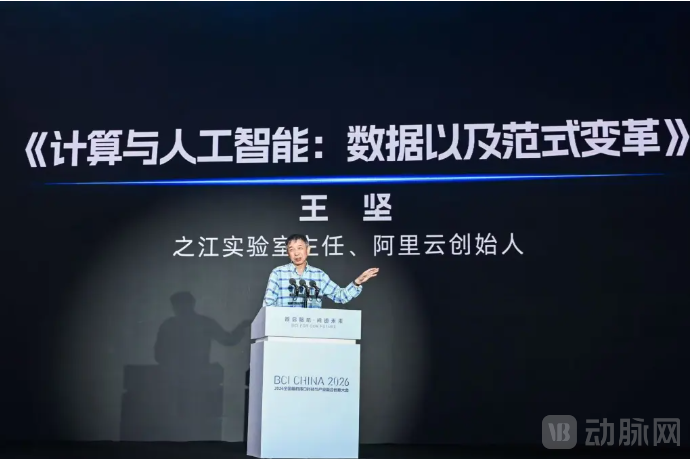
Wang Jian, Director of Zhijiang Lab and founder of Alibaba Cloud, pointed out that two years ago, the capability gap between open-source models and closed-source models "was like a generation apart." However, today, on a global scale, "because of China, the capabilities of open-source and closed-source models, strictly speaking, are now on the same level, everyone is looking at the same vast ocean." He stated that moving from the world of open source to the world of open resources, artificial intelligence models will undergo an "earth-shattering change." Wang Jian believes that artificial intelligence is becoming as fundamental as mathematics and needs to exist as a public good. "Artificial intelligence is the most deserving to become a global technological public product, and this public product is what we should strive for."
Luo Qingming, Academician of the Chinese Academy of Sciences and President of Hainan University, stated in his speech that understanding brain-computer interfaces requires a deeper comprehension of the brain's structure and working mechanisms. He introduced the concept of "Brain Spatial Informatics" and referred to the whole-brain positioning system developed by his team as "BPS." Luo Qingming emphasized that without a clear understanding of the brain’s three-dimensional structure, particularly the fine structure of each brain region, advancements in brain-computer interface surgeries and electrode implantations would be hindered. Mapping the whole brain at the mesoscopic level, he noted, "is an essential large-scale scientific project." He believes that while there is already a technical foundation, the mapping of the human brain requires long-term project support and national consensus.
Lu Lin, Academician of the Chinese Academy of Sciences and President of Shandong First Medical University, outlined the broad prospects of brain-computer interface in the treatment of brain diseases from a medical perspective. He stated that brain-computer interface technology has wide-ranging application scenarios, with the most urgent demand being in the medical field. Many brain diseases currently lack specific drugs or effective surgical methods, and brain-computer interfaces open a new window for the treatment of brain diseases. Lu Lin also reminded that the development of brain-computer interfaces should maintain both confidence and enthusiasm, as well as a cautious attitude, advancing according to clinical norms, so that treatment technologies can bring tangible benefits to patients.
Gu Xiaosong, academician of the Chinese Academy of Engineering and director of the Center for Collaborative Innovation in Nerve Regeneration of Jiangsu Universities, shared insights proposing the core pathway for the long-term development of the industry from a fundamental logic. He stated that brain-computer interfaces are innovative, interdisciplinary, and cutting-edge, and developing this field requires integrating innovation chains, industrial chains, funding, and government support. Gu Xiaosong emphasized that China's brain-computer interface development should not only promote the transformation and application of research papers and patents but also address issues such as signal acquisition, algorithms, device security, data security, ethics, and privacy, ensuring that China’s brain-computer interface sector remains at the international forefront.
Professor Hong Bo from Tsinghua University, Chief Scientist of Lingang Laboratory, Focuses on "Brain-Computer Interface 2.0 – From Functional Compensation to Neural Restoration," Systematically Sharing the BCI 2.0 Technical Framework and Outlining a Clear Roadmap for the Industry from Functional Compensation towards Neural Restoration.
When the focus of discussion shifts from cutting-edge industry insights to the implementation of clinical applications, several academicians and experts from top clinical fronts present the practical results and feasible pathways of integrating brain-computer technology into modern diagnostic and treatment systems through detailed clinical cases and authoritative scientific research data.
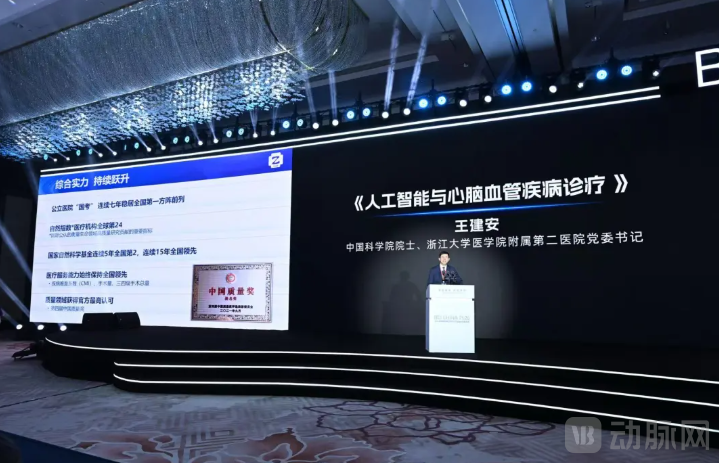
Wang Jian'an, Academician of the Chinese Academy of Sciences and Party Secretary of the Second Affiliated Hospital of Zhejiang University School of Medicine, Focuses on Innovative Exploration of Artificial Intelligence and Brain-Computer Fusion Technology in the Diagnosis and Treatment of Cardio-Cerebrovascular Diseases. He introduced that artificial intelligence has many application scenarios in hospitals, but turning an application in one scenario into science and then into a market is a long process, not something that can be achieved overnight. Taking the hospital's self-developed APTS system as an example, he said that it is difficult for doctors to review all the examinations of patients in the hospital in a short time, which requires the role of artificial intelligence. The team has also taken a firm step in follow-up and guidance by collaborating with Alibaba and Ant Financial to develop intelligent agents.
Wang Yongjun, academician of the Chinese Academy of Sciences and president of Beijing Tiantan Hospital, Capital Medical University, shared the clinical evaluation system for brain-computer interfaces based on years of clinical experience. He stated that as artificial intelligence develops at an increasingly rapid pace and on a larger scale, clinical evaluation is the critical checkpoint to ensure the eventual application of brain-computer interfaces in humans. "Clinical evaluation acts as the brake, coolant, and steering wheel for brain-computer interfaces when applied to the human body—it cannot fail," he emphasized. He believes that after innovative technologies complete registration, it does not mean they can be directly adopted for routine use in hospitals; they should still undergo standardized three-phase clinical trials. The true transformation of brain-computer interfaces in clinical applications hinges on their inclusion in relevant guidelines from medical associations or the National Health Commission.
Mao Ying, Dean of Huashan Hospital Affiliated to Fudan University, Conducts an In-Depth Analysis of the Frontier Exploration and Application Mechanisms of Brain-Computer Fusion Technology in the Field of Neurological Diseases
The sharing of top scientists and clinical experts clearly shows that the technical blueprint of Brain-Computer Interface 2.0 is rapidly moving from the frontier concept to practical applications, closely linked to people's well-being in disease diagnosis and treatment, rehabilitation assistance, and smart healthcare. It is not only a technological breakthrough in the laboratory but also a new path gradually moving towards patients, daily life, and industrial implementation under the guidance of clinical needs.
When the "spark" of technology meets the "fertile ground" of the market, the brain-computer interface industry is ushering in the dawn of commercial explosion. Guests from the industry took turns on stage to share innovative commercial achievements, each focusing on different technical routes such as non-invasive accessibility, cutting-edge minimally invasive techniques, and implantable treatments.
He Xiyujin, partner of BrainCo, delivered a speech titled "Brain-Computer Interface: Humanity's Next Century Project," focusing on the commercialization and large-scale application of the company’s full range of non-invasive brain-computer interface technologies, and shared industrial practices in scenarios such as medical rehabilitation and public health.
Li Xue, founder of阶梯医疗 (Step Medical), delivered a presentation titled "Single-Neuron-Level Brain-Computer Interface Technology and Clinical Applications," sharing insights on the technical pathways of neuron-level brain-computer interfaces, explorations in clinical applications, and future directions for transformation.
Hao Hongwei, General Manager of PINS Medical, gave a speech titled "The Industrial Development of Implantable Neurostimulation and Brain-Computer Interface Technologies," systematically breaking down the entire chain layout of implantable technologies from R&D innovation, clinical validation to industrial development.
Tudao Medical focuses on brain-computer interface surgical robots. Its chairman, Cheng Min, introduced the clinical applications, industry status, and future trends of brain-computer interface surgical robots in precise electrode implantation, complex neurosurgical procedures, and minimally invasive diagnosis and treatment throughout the entire process, based on the company's core product layout.
As the prospects for clinical exploration and industrial application become increasingly clear, industry data standards guidance, scientific regulation continuously providing support, and capital value precisely empowering, a more sustainable industrial innovation ecosystem is being built.
Yuan Jun, Vice President of the National Data Development Research Institute, delivered a speech titled "Preliminary Exploration of High-Quality Dataset Management and Service Practices for Future Industries," offering insights on dataset management services, standard system construction, and data support for future industries.
Zhang Jian, Vice President of Shenzhen Capital Group, delivered a speech titled "Brain-Computer Interface from an Investment Perspective: From Industry to Investment," analyzing the investment logic, growth cycle, and long-term value of the brain-computer interface sector from a capital perspective.
Lu Yong, Deputy Director of the National Institutes for Food and Drug Control, shared insights on regulatory science issues in the innovative development of brain-computer interface medical devices, emphasizing the support of technological innovation, clinical translation, and industry standardization through scientific regulation.
Chen Gang, Medical and Regulatory Affairs Consultant at Pharmaron Medical Device, gave a presentation titled "Pre-Market Clinical Evaluation and Registration Strategy for Brain-Computer Interface Products in the U.S." He provided an in-depth analysis of the specific requirements set by the U.S. FDA regarding preclinical testing, clinical trial design, pre-market approval pathways, and data submission for brain-computer interface products. His insights offer practical registration strategy references to help China-produced brain-computer interface products enter overseas markets.
This shows that the trilateral synergy among data, regulation, and capital is driving China's brain-computer interface industry to steadily achieve a leapfrog development from "single-point technological breakthrough" to "full-chain collaborative resonance," paving a solid path for industrial commercialization and injecting lasting momentum.
The main venue's roundtable discussion focused on core issues such as "From clinical to non-clinical settings, which BCI application scenarios will first achieve scale and influence?" and "How can the government, industry, academia, research, medicine, and capital collaboratively build a BCI innovation community?" Experts, including academicians, clinical leaders, corporate decision-makers, and investment institution partners, gathered to discuss critical industry pain points such as core technology breakthroughs, accelerating clinical translation, and precise capital empowerment. They conducted an in-depth analysis of the development trajectories of ten key application scenarios, including BCI medical rehabilitation, neuromodulation, human-computer interaction, and intelligent equipment. The session systematically addressed the practical needs of technology permeating various fields and incubating innovations, collectively exploring feasible paths from laboratory breakthroughs to scaled commercial implementation. Together, they forged an industry consensus of full-chain collaboration, symbiosis, and shared success.

The main venue sets the direction, and the sub-venues solve problems. A collaborative discussion pattern with vertical linkage and full coverage has been formed. The conference hosted four parallel sub-venues simultaneously, each focusing on specific fields, precisely addressing issues, and fostering a lively and profound atmosphere of discussion.
"Medical Value and Practice of Brain-Computer Interface" Sub-forum Focuses on Non-invasive Neuromodulation, Functional Neurosurgery, and Mental Disorder Interventions, Sharing New Research Achievements to Solve Clinical Transformation Challenges; "Industrial Synergy Innovation Investment in Brain-Computer Interface" Sub-forum Focuses on Precise Alignment between Industrial Capital and Technology to Empower Industry-Finance Interaction; "Academic Breakthroughs and Achievement Transformation of Brain-Computer Interface" Sub-forum Discusses Key Breakthroughs in Brain-Computer Interface Technology and Application Scenarios, Exploring Real Paths from Lab to Industrialization; "Frontier Progress and Development Trends of Brain-Computer Interface" Sub-forum Focuses on Cutting-edge Directions like Flexible Neural Electronics, Flexible Integrated Devices, and Multi-modal Imaging, Delving into the Key Pathways and Core Propositions for Collaborative Innovation in Industry, Academia, and Research. The Four Parallel Sub-forums Cover the Whole Chain of Topics from Basic Research, Technical Challenges, Clinical Applications, to Industrial Implementation, Building a High-end Professional Platform for Exchange, Discussion, and Collaborative Problem-solving in Various Sub-fields.
The Frontier Scientific and Technological Achievements Exhibition of Brain-Computer Interface, which debuted at the same time, attracted large crowds and created a lively atmosphere. Nearly 70 upstream and downstream enterprises in the industrial chain showcased their latest products and solutions, ranging from core components, algorithm software to complete equipment and application solutions, presenting a panoramic view of China's full-chain innovation ecosystem for brain-computer interfaces. Among the exhibits were an intelligent bionic hand capable of capturing neural and muscle electrical signals in real-time and interpreting movement intentions, a rehabilitation robot that collects brain signals to drive multi-degree-of-freedom motion training for ankle joint robots, and a brain-controlled rehabilitation wheelchair that allows patients to generate EEG signals through visual attention to control the wheelchair’s movement and steering… These cutting-edge technologies and products outline the broad application prospects of brain-computer interface in empowering medical rehabilitation and improving quality of life, promoting precise alignment between technology and market, and facilitating the smooth path of technological transformation.
The direction is clear, and the path is becoming more defined. From policy guidance to platform construction, from technological breakthroughs to clinical translation, from industrial clustering to ecosystem co-construction, this conference is not only a concentrated showcase of cutting-edge achievements but also a systematic mobilization for the deep integration of innovation chains, industry chains, capital chains, and talent chains. Taking this conference as a new starting point, all parties are accelerating efforts to push more laboratory results towards clinical use, towards the market, and towards application, injecting stronger momentum into the development of China's future industries and the cultivation of new quality productive forces.