

After Over 5-Fold Revenue Surge, Will AI-Driven Drug Discovery See Its First Public Listing?
InSilico Medicine
Intelligent Drug Development Platform and New Drug Research and Development Provider
On June 27, the Hong Kong Stock Exchange website disclosed InSilico Medicine’s prospectus. This marks the first explicit attempt by a domestic AI-driven new drug developer to enter the capital markets, drawing significant industry attention.
InSilico Medicine, a global leader in AI-driven biotechnology, primarily provides efficient end-to-end solutions throughout the pipeline development process. As a star AI-enabled new drug project in the primary market, InSilico Medicine has consistently garnered favor from top-tier capital firms. Previously, the company successfully completed more than seven rounds of financing, raising a total of $407.5 million and attracting investment from prominent institutions such as WuXi AppTec, Qiming Venture Partners, Sequoia China, Baidu Ventures, Lilly Asia Ventures, and OrbiMed.
Founded in 2014, InSilico Medicine has built a powerful AI-driven drug discovery platform, successfully developing over 30 pipeline candidates covering idiopathic pulmonary fibrosis, oncology, and immunology. The company provides AI-powered drug R&D services to 10 of the top 20 global pharmaceutical companies and has established strategic collaborations with major pharmaceutical firms such as Fosun Pharma and Sanofi. More notably, InSilico Medicine’s revenue surged from $4.713 million to $301.47 million between 2021 and 2022, representing a growth rate of 539.6%.
In a sense, after nearly a decade of efforts, InSilico Medicine has finally achieved initial self-consistency in the business logic of AI-driven drug discovery technology.
Dr. Aleksandrs Zavoronkovs, a 44-year-old Latvian, is the founder of InSilico Medicine and one of the earliest pioneers in applying AI to drug discovery. Today, he remains a prominent figure at many industry events focused on AI-driven new drug development.
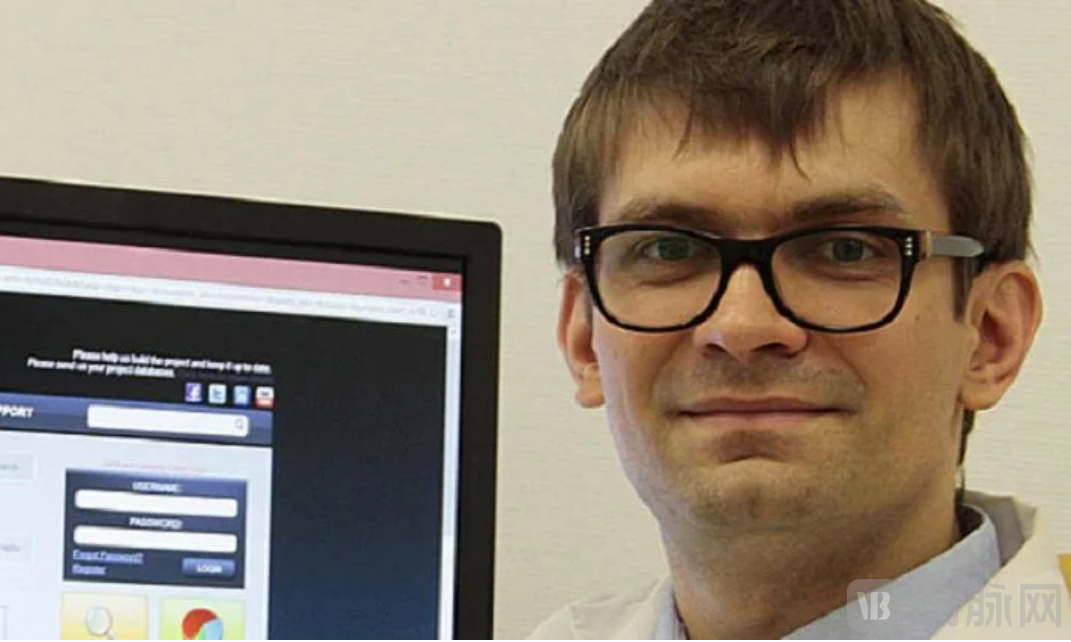
Dr. Aleksandrs Zavoronkovs
In 2014, the emergence of Generative Adversarial Networks (GANs) marked a highlight of the deep learning revolution, with AI systems beginning to surpass human performance in certain image recognition tasks. Recognizing the significant potential of generative neural networks and reinforcement learning in industry, Aleksandrs founded InSilico Medicine, one of the first AI companies in the pharmaceutical sector to adopt these technologies.
At its inception, Aleksandrs assembled a professional team at InSilico Medicine to collect all publicly available data, including omics data, compound-related literature and patent data, as well as structural and physicochemical property data of compounds. In Aleksandrs’ view, the continuous accumulation of data and iterative refinement of algorithms constitute the core competitive advantage of InSilico Medicine as a specialized AI-driven pharmaceutical company. While large pharmaceutical companies may possess extensive proprietary drug data, the development of such data is a gradual process that accumulates over time.
Aleksandr’s initial technical concept was rapidly validated. In 2016, InSilico Medicine published the first peer-reviewed paper on generative adversarial networks (GANs) in drug discovery. The study demonstrated that GANs could circumvent many limitations and yield significantly superior predictive performance. However, the commercialization of AI-driven drug development has proven exceptionally challenging.
At that time, although pharmaceutical companies were amazed by the efficiency of AI in predicting new drug molecules, they dared not blindly launch new projects lacking experimental data. Typically, AI platforms can predict new molecules within a few days, but synthesis and validation require several months. For AI-driven pharmaceutical companies, completing molecular design is only the first step; subsequent synthesis, testing, and optimization are essential critical stages. Moreover, this process requires iterative cycles to identify compounds worthy of further development.
Feng Ren, Co-CEO of InSilico Medicine, joined the company in February 2021 and is an experienced medicinal chemist. In his previous career, Ren held positions at GlaxoSmithKline and Shanghai Medicilon, where he was responsible for medicinal chemistry-related work. Within the community of medicinal chemists, there exists an unspoken hierarchy of disdain: medicinal chemists tend to distrust those engaged in computer-aided drug design (CADD), while CADD practitioners often harbor skepticism toward AI-driven drug discovery. Nevertheless, Ren has consistently maintained a positive outlook on the application prospects of AI in pharmaceutical development.
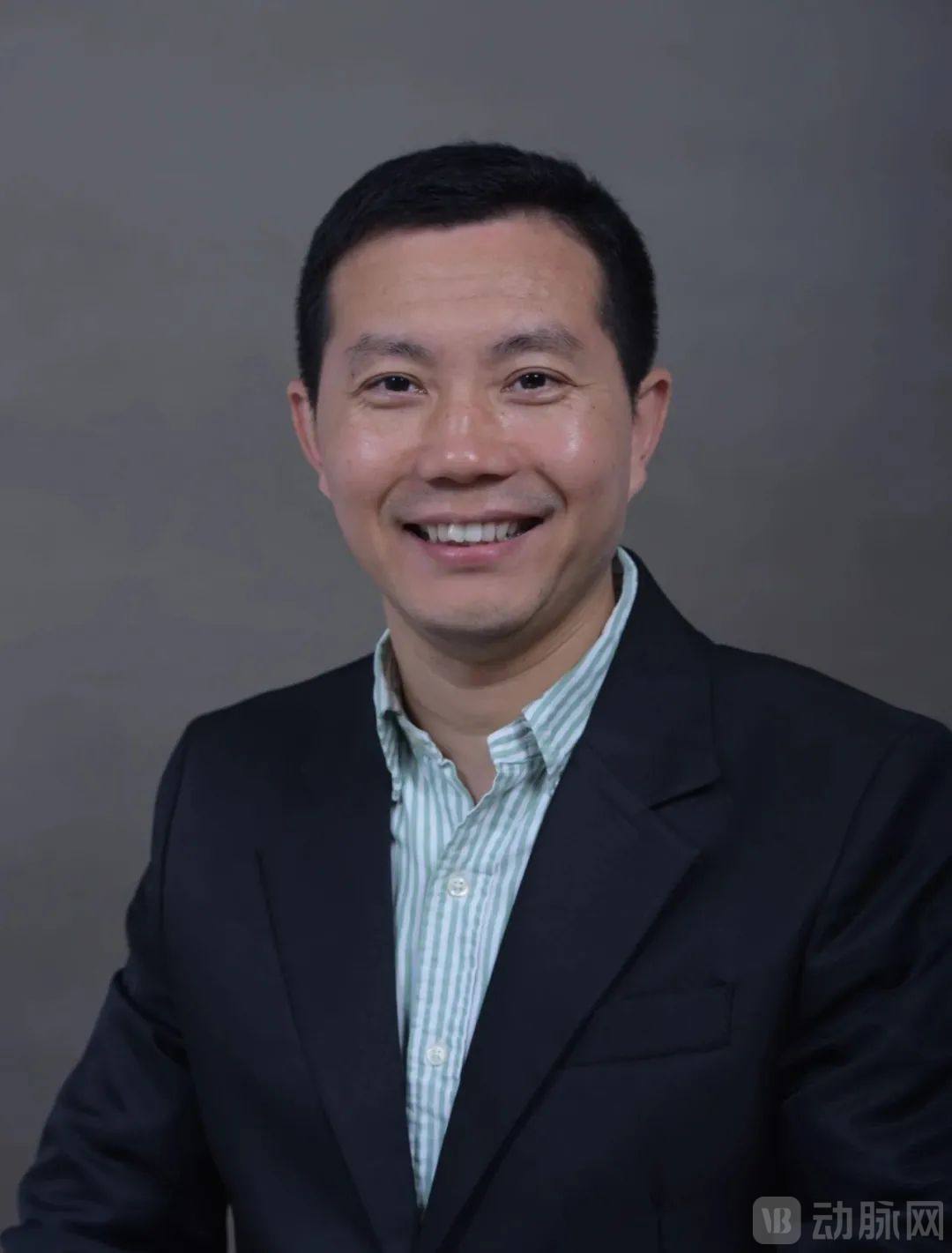
Ren Feng
At MediciNova, Ren Feng has established a dedicated CADD team within the medicinal chemistry department. This is quite a luxury for a CRO of modest size. Ren Feng aims to leverage CADD to assist in designing superior compounds, particularly by re-evaluating and ranking compounds post-design, thereby significantly reducing trial-and-error costs and helping clients improve R&D efficiency. It is precisely because he recognizedInSilico Medicine has been able to based onAI platforms such as PandaOmics and Chemistry42 have designed novel drug structures, with Ren Feng actively entering the field.
In Ren Feng’s view, the true inflection point for InSilico Medicine’s breakthrough came in 2018, four years after its founding. The landmark event was InSilico Medicine’s collaboration with WuXi AppTec, where they leveraged AI algorithms to target DDR1 and identified a small-molecule compound against this target in just 46 days. These findings were published in Nature Biotechnology, bringing InSilico Medicine to the attention of a growing audience.
Today, InSilico Medicine has built Pharma.AI, a generative AI-driven platform based on Biology42, Chemistry42, and Medicine42, which enables fully AI-driven drug discovery and development. Biology42 consists of three applications—PandaOmics, Generative Biologics, and LifeStar—responsible for discovering and prioritizing new targets. Chemistry42 includes two applications, Generative Chemistry and Golden Cubes, tasked with generating novel small molecules. Medicine42 comprises the application inClinico, which completes clinical trial outcome predictions.
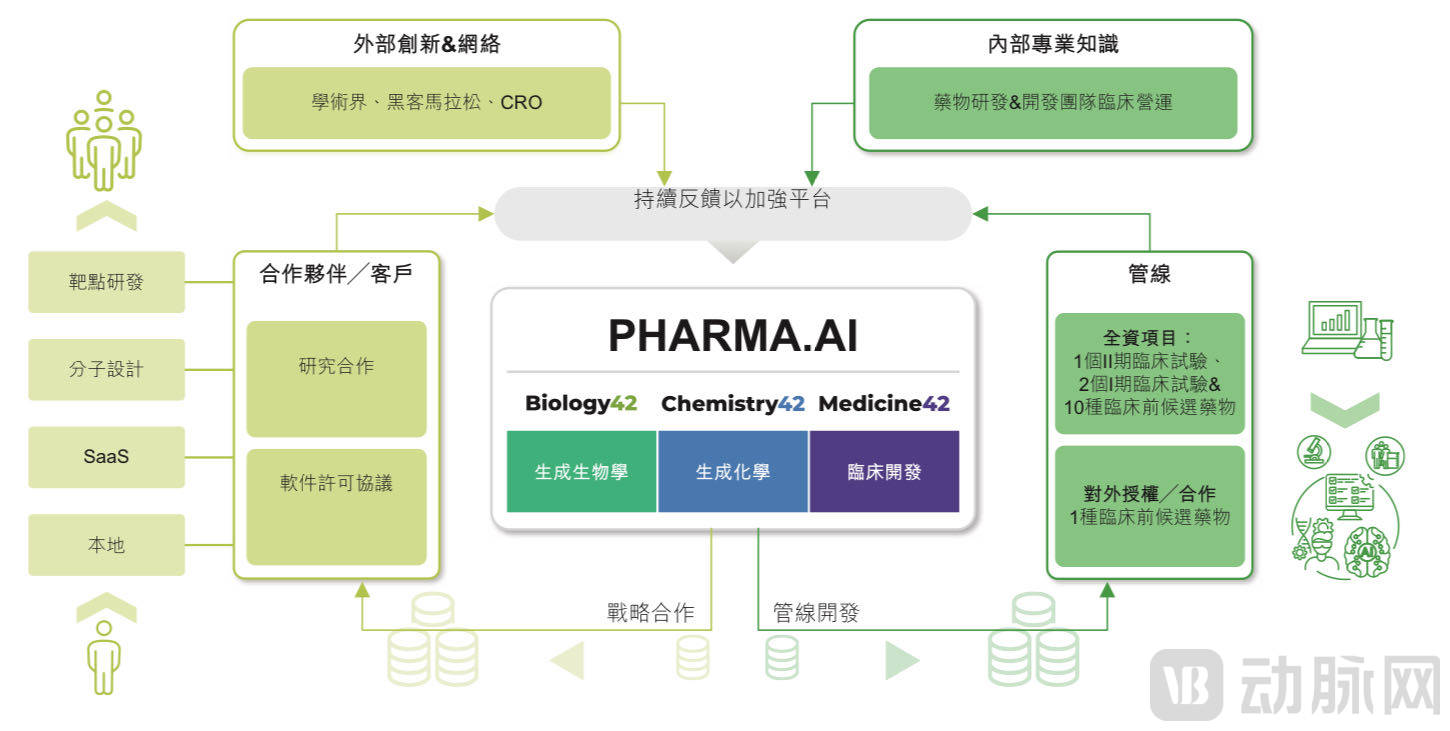
Pharma.AI Platform Deconstruction Data Source: Prospectus
Based on the Pharma.AI platform, the average time required for pharmaceutical projects from initiation to the IND-enabling study phase can be reduced from 4.5 years to under 12 months. According to the prospectus, the Pharma.AI platform has fully generated an entire pipeline comprising 31 projects, covering 29 drug targets. Among these, InSilico Medicine’s core product, ISM001-055, has just initiated Phase IIa clinical trials, primarily intended for the treatment of idiopathic pulmonary fibrosis-related indications through TNIK inhibition.
Furthermore, the Pharma.AI platform can be flexibly integrated with external tools, such as ChatGPT, to leverage the latest technological breakthroughs and create customized solutions for diverse customer needs. As of 2021, InSilico Medicine had established collaborations with 10 of the top 20 pharmaceutical companies worldwide.
For AI-driven pharmaceutical companies, securing stable revenue has long been a Sword of Damocles hanging over their heads. To date, the industry has yet to establish a robust business model.
AI-driven pharmaceutical companies either choose to independently develop their own pipelines, a path fraught with risks and requiring substantial, sustained capital investment; or they adopt an indirect approach by providing AI-based drug discovery services to pharmaceutical firms. While this latter strategy can rapidly establish an extensive commercial network, most pharmaceutical companies remain only superficially engaged with AI technologies, often leaving AI-driven drug developers in the unenviable position of exerting significant effort with little reward.
In a previous media interview, Ren Feng stated that InSilico Medicine positions itself as an AI-enabled biotech company, rather than providing AI+CRO services. The company aims to pursue a dual-engine strategy, with one part focusing on software business and the larger part dedicated to its internal pipeline resources, achieving commercialization through out-licensing.
Currently, InSilico Medicine is gradually achieving impressive commercial success under this strategy. According to its prospectus, although the overall net loss widened further, the company’s revenue grew from $4.713 million in 2021 to $30.147 million in 2022, representing a substantial increase of 539.5%—the largest growth rate among all metrics during this period. Notably, 95% of its revenue in 2022 was derived from drug discovery services. Given that AI-driven pharmaceutical companies have historically struggled to secure large-scale orders, such a significant surge in InSilico Medicine’s revenue is particularly noteworthy.
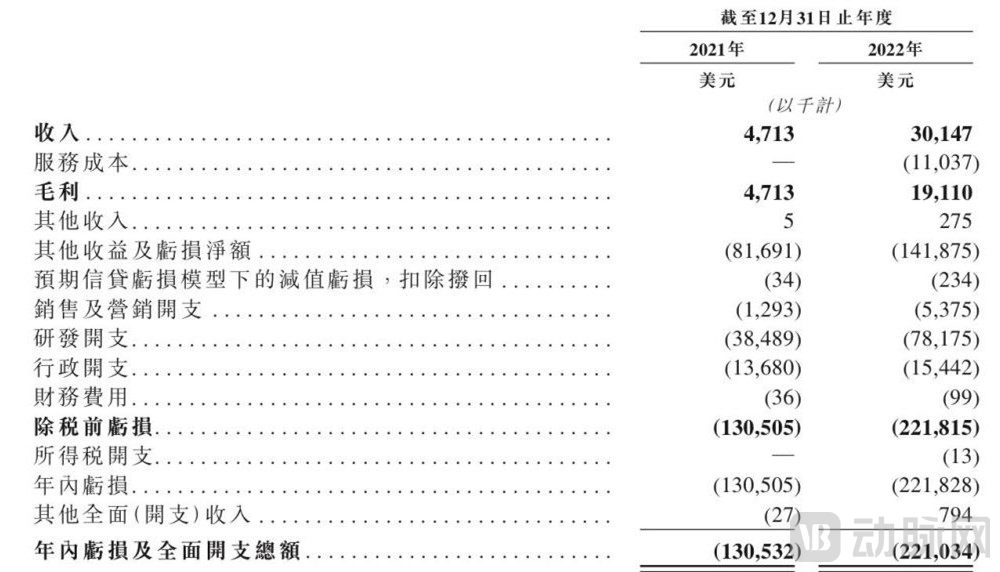
Income Statement for 2021–2022 Data Source: Prospectus
More importantly, between 2021 and 2022, InSilico Medicine’s revenue sources became significantly concentrated among its top customers. According to the prospectus, in 2021, InSilico Medicine generated $2.506 million in revenue from its top five customers, accounting for 53.1% of total revenue. By 2022, the top five customers contributed $27.32 million in revenue, with their share surging to 90.6%, while the identities of the two largest customers also changed.
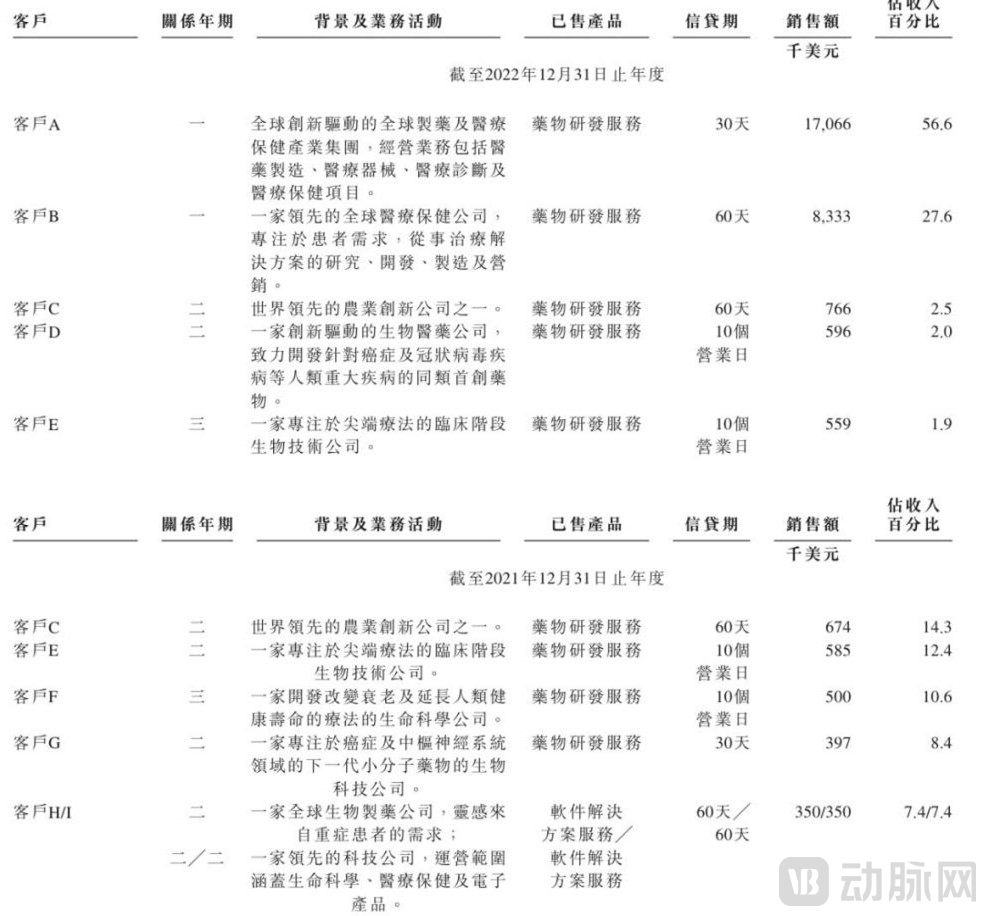
Major Customers from 2021 to 2022 Data Source: Prospectus
According to InSilico Medicine, revenue from drug R&D services is derived from research collaborations, including upfront payments and other milestone-based payments contingent on successful development. Notably, two partnerships struck by InSilico Medicine over the past two years deserve particular attention: its strategic collaborations with Fosun Pharma and Sanofi.
In November 2021, InSilico Medicine entered into a drug discovery and development collaboration agreement with Fosun Pharma, marking the highest upfront payment for a partnership between an AI company and a pharmaceutical enterprise in China at that time. Under the agreement, Fosun Pharma engaged InSilico Medicine to provide certain services for a series of drug discovery and development projects and established a collaboration with InSilico Medicine on QPCTL-related development projects.
Under the agreement, Fosun Pharma agrees to pay InSilico Medicine project initiation fees totaling up to $6 million, at a rate of $1.5 million per discovery project. Upon completion of certain R&D and regulatory approval milestones, Fosun Pharma will make additional payments. Through this agreement, InSilico Medicine is eligible to receive up to $24 million.
Furthermore, InSilico Medicine will collaborate with Fosun to research and develop compounds targeting the drug target QPCTL through the completion of Phase I clinical trials. In this process, InSilico Medicine will take the lead, and both parties will share all R&D costs equally within the agreed budget until the completion of Phase I trials. For the QPCTL project, Fosun will pay InSilico Medicine an upfront project initiation fee of $7 million, followed by milestone payments totaling up to $58 million.
In October 2022, InSilico Medicine broke its own record by entering into a collaboration and license agreement with the French pharmaceutical company Sanofi. Under the agreement, the two parties will collaborate on research programs to accelerate the identification of development candidates for each collaborative target. Specifically, the Sanofi agreement identifies two initial collaborative targets and grants Sanofi the right to designate up to four additional collaborative targets through the Joint Research Committee and to replace any collaborative target under certain conditions. Furthermore, Sanofi may designate up to five targets as reserved targets for a specified period.
Under the agreement, Sanofi is required to pay InSilico Medicine upfront payments and target nomination fees for up to six targets, totaling a maximum of $21.5 million. When subsequent milestone payments are taken into account, this collaboration could generate up to $1.2 billion in revenue for InSilico Medicine.
According to the prospectus, InSilico Medicine has received a $10.3 million payment from Fosun Pharma for the QPCTL project, as well as a $12.5 million upfront and milestone payment from Sanofi, totaling $22.8 million in revenue. Compared with the $30.147 million realized in 2022, we speculate that this constitutes the primary driver of InSilico Medicine’s revenue expansion, breaking the prevailing reluctance among major pharmaceutical companies to genuinely invest in the early stages of AI-driven drug discovery.
Another key change in InSilico Medicine’s operating data between 2021 and 2022 was the further contraction of its early-stage software business. According to the prospectus, the proportion of revenue from software solution services decreased from 21.8% in 2021 to 5% in 2022, accompanied by a significant increase in the proportion of revenue from drug discovery services.
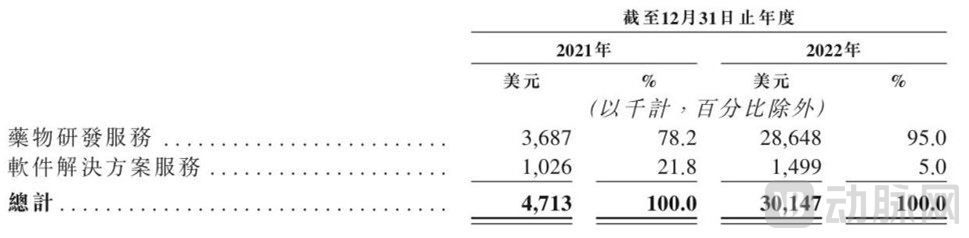
Revenue Structure from 2021 to 2022 Data Source: Prospectus
According to Ren Feng’s plan, InSilico Medicine initially marketed its software platform externally, allowing partners to experience and engage with the AI platform’s enhancements to workflow efficiency, thereby facilitating project collaborations. However, the primary revenue streams derive from the development of its internal pipeline, including milestone payments and downstream sales royalties generated through partnerships with pharmaceutical companies, as well as licensing-out revenues achieved after advancing self-developed pipelines to specified stages.
In terms of pharmaceutical partnerships, in addition to Fosun Pharma and Sanofi, InSilico Medicine has established collaborations with Pfizer, Janssen Pharmaceuticals, Taisho Pharmaceutical, Teva, and others. Its self-developed pipeline is represented by the core product ISM001-055, and also includes 31 diverse, fully internally generated programs covering 29 drug targets that have been previously established, laying the foundation for future revenue growth.
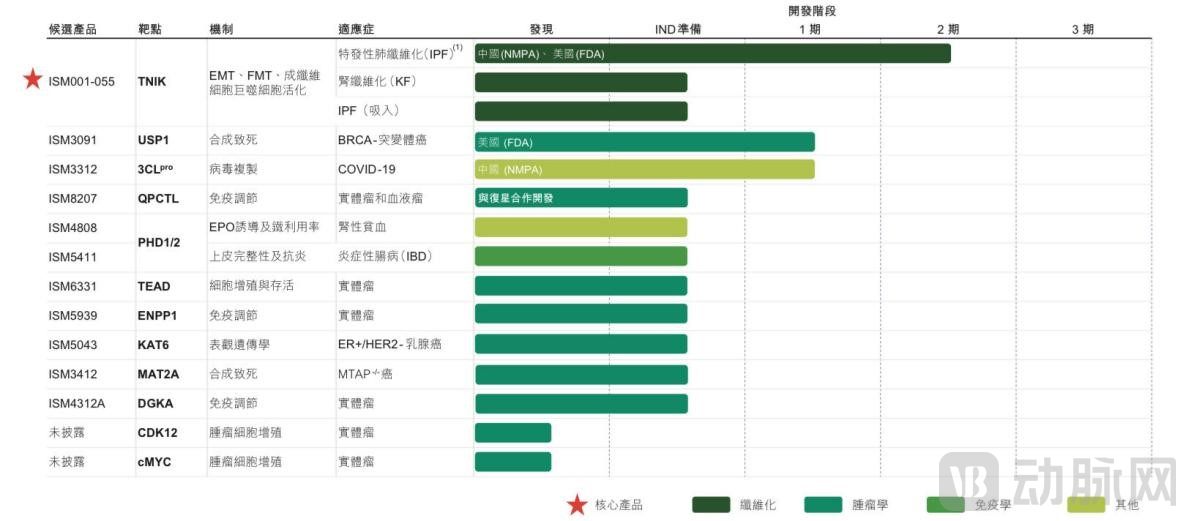
InSilico Medicine’s Pipeline Under Development Data Source: Prospectus
According to the prospectus, ISM001-055 is a small-molecule candidate drug primarily intended for the treatment of idiopathic pulmonary fibrosis (IPF)-related indications by inhibiting TNIK, a novel anti-IPF target identified through InSilico Medicine’s Pharma.AI platform. In April 2023, InSilico Medicine initiated Phase IIa clinical trials for ISM001-055 and planned to launch Phase IIa clinical trials in the United States in the second half of 2023. Additionally, ISM001-055 received orphan drug designation from the U.S. Food and Drug Administration (FDA) in February 2023, qualifying InSilico Medicine for incentives including potential seven-year market exclusivity upon approval.
InSilico Medicine believes that ISM001-055 may be a first-in-class candidate drug, with the potential to deliver better treatment outcomes for patients with idiopathic pulmonary fibrosis.
In addition, InSilico Medicine has developed a series of investigational pipelines with significant clinical potential by integrating unmet medical needs with patient omics data. As a chronic disease, idiopathic pulmonary fibrosis causes scarring in the lungs, leading to progressively difficult breathing as lung elasticity diminishes. This condition most commonly affects individuals over the age of 65, with a median overall survival of only 2–3 years from diagnosis.
According to Frost & Sullivan, from 2017 to 2021, the global prevalence of idiopathic pulmonary fibrosis increased from 534 million to 575 million, representing a compound annual growth rate (CAGR) of 1.9%. Meanwhile, the market size for idiopathic pulmonary fibrosis drugs grew from $1.7 billion to $3.3 billion, with a CAGR of 17.4%. The market size is projected to further increase to $5.0 billion by 2025 and $7.1 billion by 2030, with CAGRs of 11.1% and 7.3%, respectively.
Currently, only two drugs have been approved worldwide for the treatment of idiopathic pulmonary fibrosis (IPF): pirfenidone and nintedanib, both of which received their initial approval in 2014. Compared with conventional therapies, ISM001-055 has demonstrated superior efficacy and safety in previous studies and clinical trials.
ISM3091 is another AI-driven novel drug in InSilico Medicine’s pipeline that has advanced rapidly. According to the prospectus, ISM3091 is a small-molecule inhibitor of ubiquitin-specific protease 1 (USP1) with good oral bioavailability, developed for the potential treatment of cancers associated with homologous recombination deficiency (HRD), particularly BRCA mutation-related cancers such as breast, ovarian, and prostate cancer. ISM3091 can be used as a monotherapy or in combination with platinum-based agents or PARP inhibitors to reverse cancer cell resistance to these treatments. InSilico Medicine stated that ISM3091 received Investigational New Drug (IND) approval from the U.S. Food and Drug Administration (FDA) in April 2023, and Phase I clinical trials were expected to commence in July 2023.
Furthermore, InSilico Medicine has developed AI-driven novel drug candidates for various diseases, including solid tumors, hematologic malignancies, renal anemia, and inflammatory bowel disease, all of which are poised to enter the Investigational New Drug (IND) stage. This undoubtedly lays the foundation for InSilico Medicine’s sustained growth. As the company prepares for its upcoming listing on the Hong Kong Stock Exchange, it will embark on a new phase of operations, and we look forward to the AI technology platform yielding more clinical-stage novel drugs.