

Dozens of VCs Rush Into Digital Transformation of Dentistry, Unlocking Massive Investment Opportunities

MEI WEI DENTAL GROUP
Oral Health Service Provider
Looking at the domestic dental market in China over the past three years, it is not an exaggeration to describe it as booming.
On the one hand, in the secondary market, star enterprises such as Angelalign Technology, Ruier Group, and Dengkang Oral Care have successively gone public, while Zhengya and Meihao Medical are initiating and sprinting toward their IPOs.
On the other hand, in the primary market, dozens of venture capital firms have rushed to invest with substantial capital. According to data from the VCBeat Orange Database, a total of 121 financing events occurred in the oral care industry from January 2021 to June 2023, with total financing amounting to nearly RMB 20 billion. Top-tier investment institutions, including Legend Capital, Matrix Partners China, Fortune Capital (Fortune Smart Investment), Qiming Venture Partners, FountainVest Partners, Chende Capital, and Yuanyi Capital, have all made investments. Companies such as MEI WEI DENTAL GROUP, Dentalfy, Xunshi Technology, Yunjia Technology, Sailuo Medical, and Beikangmei have secured funding.
Behind the industry’s fervor, a central theme is emerging: digital transformation.
For instance, whether it is the already-listed Arrail Group and Dengkang Oral Care, or Angelalign, all have released their new digital solutions this year: In January, Angelalign officially launched its Digital Remote Solution for Oral Care; in February, at the South China International Dental Exhibition, Arrail Group unveiled its FRIDAY Digital Intelligence Platform for Dental Healthcare; meanwhile, Dengkang Oral Care has been continuously accelerating its transformation toward digital R&D, intelligent production, and informatized management.
Moreover, among dental projects that secured financing in recent years, over 98% were enterprises with business operations related to digitalization.Undoubtedly, betting on digitalization has become the theme for development and investment in the dental industry in the coming period.
What exactly can digitalization solve? What pain points and challenges remain to be clarified? And what investment opportunities lie ahead? To address these questions, VCBeat interviewed several seasoned industry investors to gain insights into the answers.
Change is underway.
“China’s demand for dental treatment is entering a period of rapid growth, with demand-side expansion driving digital transformation among clinics and dental laboratories,” said Zuo Lingye, Partner at Matrix Partners China.
According to VCBeat, “digitalization” has become a key strategic initiative and priority for many companies in responding to market changes, serving as a powerful tool for securing financing, while industry development continues to thrive.Moreover, digitalization is advancing into the core domains of dentistry.
“In the early stages, digital technologies were primarily applied in clinical dentistry, such as chairside fabrication of simple restorations. In recent years, digital technologies have been extensively adopted across prosthodontics, orthodontics, implantology, outpatient practice management and marketing, and supply chain operations,” a senior industry investor told VCBeat.
Broadly speaking, the digitalization of the dental industry can be categorized into three types: first, equipment digitalization; second, management and marketing digitalization; and third, supply chain digitalization.
The digitalization of medical devices has advanced rapidly in recent years, with the emergence and adoption of intraoral 3D scanners and cone-beam computed tomography (CBCT) marking a significant watershed in this transformation.The reason is that both have significantly streamlined the previously cumbersome processes of dental diagnosis and treatment, thereby accelerating improvements in the industry’s quality and efficiency.
Taking CBCT as an example, under conditions of low radiation, isotropy, and high spatial resolution,CBCT-generated 3D images can visually display the full structure of teeth and pathological tissues, assisting physicians in surgical procedures or medication management.
Taking digital implantology as an example, this approach is based on patient CT imaging and utilizes specialized implant design software for preoperative diagnosis and simulated implant planning. By employing surgical guides, the preoperatively formulated implant plan is applied throughout the entire process of implant surgery and restoration, thereby achieving restoratively driven dental implant technology.Compared with traditional implantation, digital implantation features shorter procedure time and less trauma, offering patients greater psychological and physical ease and comfort.
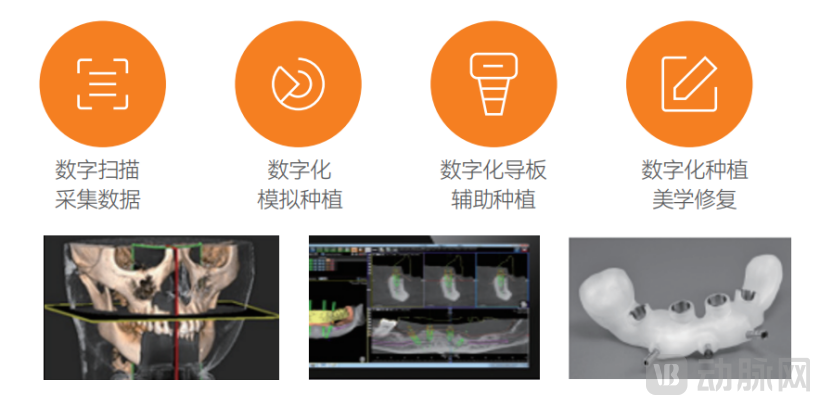 (Digital Implant Workflow; Source: VCBeat, “2023 Insight Report on Oral Healthcare Services”)
The digitalization of management and marketing is gaining momentum, with many dental institutions and IT vendors accelerating their strategic deployments.According to a 2022 survey by VBInsight of 1,000 dental healthcare service providers, approximately 30% of these institutions plan to initiate digital upgrades within the next year, such as establishing operational management data platforms and medical quality control platforms.
The core reason is that digital solutions can help dental healthcare institutions address longstanding issues such as high marketing costs, non-standardized operations, and information opacity. This enables institutions to focus more on enhancing clinical quality and operational capabilities, thereby achieving standardization and normalization, which in turn creates greater potential for scalable growth.
Digitalization of the supply chain is in its early stages.The dental supply chain has long been highly fragmented, with over 5,000 distributors handling “last-mile” logistics. Upstream, the hundreds of thousands of SKUs for consumables and medical devices pose significant challenges for healthcare institutions in product selection and price negotiation. Downstream, in actual hospital or clinic settings, inventory staff often purchase nearly a hundred different types of consumables at once, requiring manual data entry. This process not only demands careful management of stock levels but also close monitoring of expiration dates, resulting in low operational efficiency. In response, multiple companies within the industry are helping dental hospitals and clinics establish a complete closed-loop system for procurement, warehousing, clinician requisition, sales, and expiration date management.
However, while the prospects for digital dentistry are promising, the challenges are also significant.
On the one hand, China lags slightly behind foreign countries in foundational technologies and academic research, and domestically produced equipment still has a long way to go in terms of integration and all-in-one design. This has resulted in a slower pace of localization and adoption of digital dental equipment.
On the other hand, most oral healthcare service providers place excessive emphasis on digital marketing while neglecting digital management, resulting in weak quality control of medical services. Furthermore, data interoperability remains limited; even digital devices within the same institution often fail to share data seamlessly. This has posed significant challenges to physicians’ diagnostic and treatment efficiency, patient referral processes, and supply chain management, leading to the widespread phenomenon of “data silos.”
It is against this backdrop that the digital transformation of the oral healthcare industry urgently needs to find new avenues.
How to Achieve a Digital Breakthrough? Multiple Investors Interviewed Agree That Addressing Current Challenges Presents Opportunities.
To this end,In response to the industry challenges mentioned above, innovative companies are offering their respective solutions.
UpstreamDentifyFor example, the company has strategically focused on two major product lines: dental digital equipment, including CBCT and 3D dental microscopes, and cloud-based system applications. To address the challenges of low domestic production rates and slow adoption, Dentifi has fully benchmarked its strategy against Tesla. By leveraging technological R&D, it has reduced the cost of core components (such as X-ray sources and flat-panel detectors) to 70% of that of imported equipment. Subsequently, with capacity expansion and hardware-driven market share gains, the company aims to use its equipment as an entry point to develop software and cloud computing services, ultimately establishing a comprehensive dental digital ecosystem.
For example,BeikangmeiThe company integrates multidisciplinary applications of 3D printing, software, cloud computing, dentistry, and technology to combine services, software, and hardware, providing doctors and patients with fixed orthodontic treatment systems, digital chairside solutions, and the Suzhimei Digital Implant Solution.
Turning to the server side, which has been focusing on digitalization since early 2016MEI WEI DENTALIt has also explored a new path. As the first dental chain enterprise in the industry to possess a self-developed digital system, MEI WEI DENTAL GROUP has created the “Wei Xiaomei Medical Cloud Intelligent Platform,” an information system centered on enhancing management and operational efficiency. It integrates systems such as HIS, finance, supply chain, human resources, and OA, thereby not only meeting the needs for refined enterprise management but also comprehensively supporting business coordination and data sharing across multiple organizations.
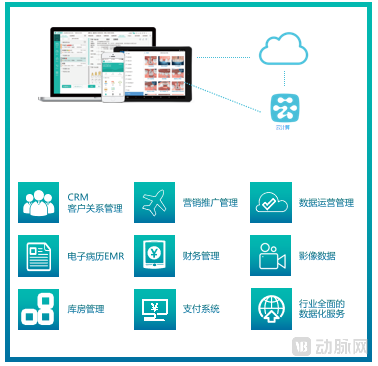
(Image source: MEI WEI SaaS Management Platform, from the company's official website)
Notably, MEI WEI DENTAL GROUP differentiates itself from the industry in its digital strategy by centering on “patient-centricity” and “care-centricity,” thereby constructing a digital framework tailored to its distinctive DSO model.
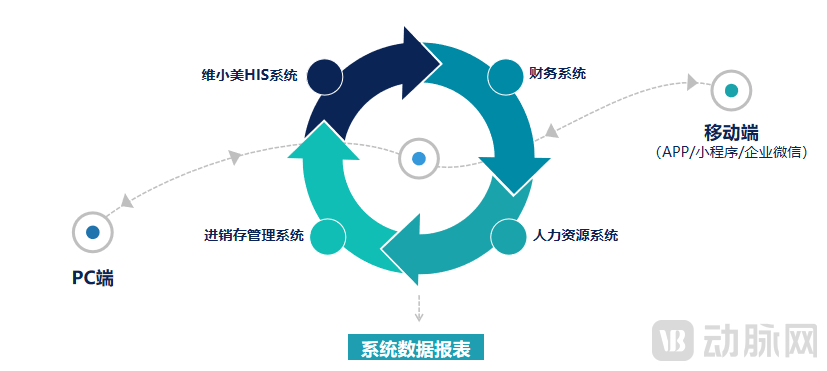 (MEI WEI Informatization Management System)
For instance, MEI WEI DENTAL GROUP’s AI-powered technology conducts multiple intelligent assessments tailored to each patient’s oral condition. By leveraging AI analysis, it rapidly assists dentists in identifying oral health issues and generates customized reports for patients. This not only helps raise patients’ awareness of oral healthcare but also enhances the accuracy and efficiency of dental diagnosis and treatment.
For another example, by leveraging big data technology, MEI WEI DENTAL GROUP can rapidly categorize customers and conduct patient follow-ups and tracking, thereby improving efficiency and maximizing the management of existing patient resources.
In VCBeat’s observation,One of the most challenging aspects for service providers in their digitalization efforts is implementation and execution.To this end, MEI WEI DENTAL GROUP’s solution is to translate the technical jargon of IT staff and the operational language of frontline personnel into a common language that both parties can understand. This enables the IT team to clarify development requirements while ensuring that frontline staff understand how the resulting products are implemented in practice.
To achieve this, MEI WEI DENTAL GROUP has established a robust support system to ensure that every employee, manager, city general manager, and clinic director understands how to leverage IT systems to deepen management practices, transition to paperless operations, and enhance efficiency.
“In fact, there is no such thing as an IT system that escapes criticism. Fortunately, we have consistently received full support from both our shareholders and partners. In the early stages, Meiwai Dental’s information systems were not yet fully developed, leading to frequent issues. However, frontline users actively provided feedback to help optimize the system,” Zhu Liya, Founding Partner and CEO of Meiwai Dental, previously told VCBeat.
To date, on its fully shared digital-intelligence platform, MEI WEI DENTAL GROUP has achieved high-level integration of data across personnel, finance, and resources, forming a robust ecological closed loop. This approach minimizes manual intervention, enhances operational efficiency, and reduces operating costs and management risks, enabling professional dentists pursuing independent practices to focus on clinical work with greater peace of mind. It also allows founding business partners to acquire more entrepreneurial knowledge and provides them with broader opportunities for development.
Driven by continuous digital innovation and replicable standardization capabilities, MEI WEI DENTAL GROUP boasts strong growth momentum. It currently operates 16 brands and nearly 200 dental medical institutions, maintaining steady expansion.
In terms of breaking down “data silos,” there have been few industry attempts due to the current broader healthcare landscape. Industry investors believe that thisRelying on the industry to provide data sharing and standardization mechanisms to promote data flow.
“Accelerating digital transformation typically begins with data standardization, an area where the industry has made limited progress and which requires the continuous participation and promotion of various stakeholders. Under the overarching premise of regulatory compliance, data sharing serves as a critical enabler for accelerating personalized dental services and also demands breakthroughs within the industry.” The aforementioned senior investor stated that if this aspect is well executed, investment opportunities will be extensive.
It is evident from the above that China’s dental industry has identified new possibilities for digitalization. However, as the sector is still in its nascent stage, there is a long and arduous journey ahead, requiring sustained innovation and continuous accumulation of expertise from all stakeholders across the industry.
Amidst the sweeping wave of digitalization, the dental industry is in a significant window of opportunity:Over the coming extended period, the refinement of digital infrastructure will drive a series of revolutionary changes in the dental industry.
Drawing on the development of the U.S. dental industry, digitalization is poised to bring significant growth opportunities. For instance, on the service provider side, Heartland Dental and Aspen Dental have achieved further scale expansion and broken through development bottlenecks by leveraging their sustained investments in digitalization.
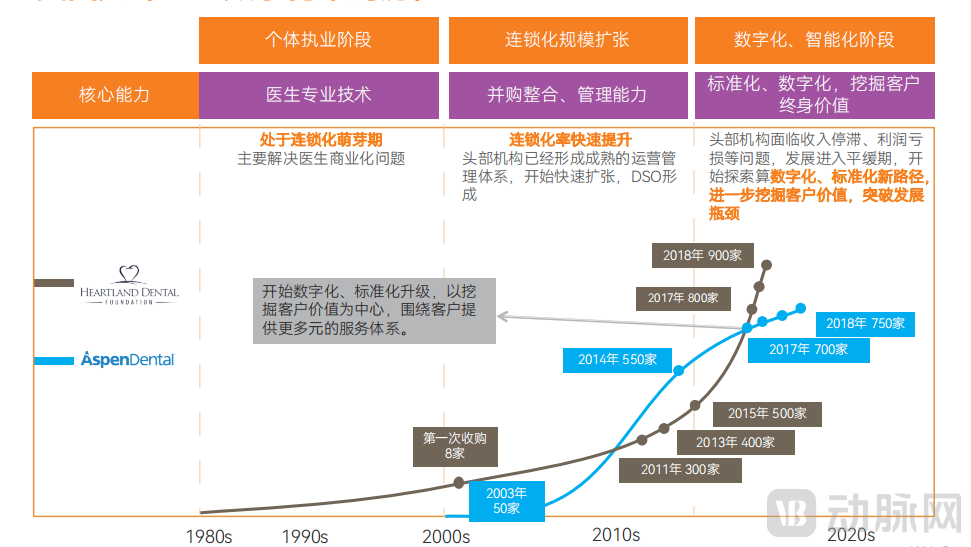 (Source: VCBeat, “2023 Dental Care Services Insight Report”)
How to Seize the First-Mover Advantage in the Digitalization of the Oral Care Industry: VCBeat, drawing on insights from interviewed investors, identifies three noteworthy trends and investment opportunities across the upstream, midstream, and downstream segments of the industry.
First, on the upstream side, as the digital infrastructure continues to be strengthened, there are increasing product opportunities focused on cost reduction and efficiency improvement.
Whether it is intraoral scanning, CBCT, dental 3D printing, clear aligner therapy, or dental implants, there is considerable room for growth; the key lies in identifying differentiated combinations and competitive advantages in the market.
For instance, in the intraoral scanning segment, integrating an intelligent AI prompt system directly into the software to simplify operations and reduce the learning curve for dentists could open up a new market pathway, provided that high precision is maintained and costs remain controllable.
Second, in the midstream sector, digitalization helps the dental distribution industry reduce costs and create service opportunities.
First, cost reduction: for instance, combining centralized online procurement of consumables with offline after-sales training can enhance efficiency and reduce costs in the procurement and utilization processes of dental medical service institutions.
Next come service opportunities, such as providing one-stop solutions to address the challenges faced by dental healthcare institutions in areas like marketing, financing, and patient acquisition.
Third, at the downstream level, digitalization should help dental service providers improve personnel efficiency or create new marketing growth drivers.
Currently, the overall customer acquisition cost in the dental industry is rising, and management pressure is increasing during the process of chain expansion. In light of this, it is essential to leverage digital technologies to enhance operational efficiency and workforce productivity in dental institutions, such as by standardizing business processes, professionalizing clinical care, and regulating inventory management. Although many companies have already entered this space, opportunities still remain.
At this stage, dental service providers may choose to either develop their own digital systems or adopt third-party solutions, with minimal difference between the two approaches. However, the underlying logic must be sound, centering on “patient-centricity” and “medical excellence,” thereby creating long-term service value, delivering lifelong oral health management for patients, and establishing a positive and sustainable operational cycle.
It should be noted that,In the process of digital innovation in dentistry, industrial collaboration and capital empowerment are also extremely important.Multiple investors have stated that innovative enterprises can refine products and operations across all stages of their digital workflows through in-house R&D, financing, mergers and acquisitions, IPOs, and other means, thereby strengthening product synergies and building a premium service brand.
The future is already here. We look forward to digitalization bringing more stunning and exciting developments to the dental industry.