

Moderna Co-Founder and MIT Institute Professor Robert Langer Unveils Vision for Next-Gen Biotech in Exclusive Interview Amid New Filing
Editor’s Note: This article was written by Mia Wang Jinghan and is republished with permission from VCBeat.
>>>>
Introduction
At 3:30 a.m. Beijing time on May 31 (3:30 p.m. Eastern Time on May 30), World Science Hill conducted an exclusive interview with Professor Robert Langer, a renowned American chemist, entrepreneur, and inventor.
Guest Introduction for This Issue
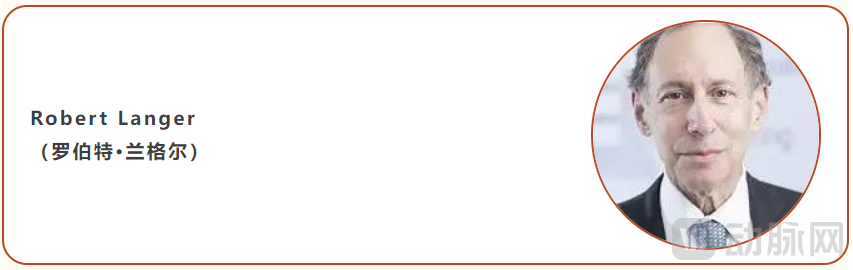
Professor Robert Langer is one of the most distinguished professors at the Massachusetts Institute of Technology (MIT). Holding over 1,400 patents, he is among the most highly cited scientists in the world and has achieved remarkable accomplishments in drug development and tissue engineering within the biotechnology sector. He has also co-founded more than 40 biopharmaceutical companies, including Moderna. In 2021, with a net worth of $4.9 billion, he ranked 222nd on the Forbes 400 list of wealthiest Americans and is hailed as the contemporary “Edison of Medicine.”
Previous Summary
In this exclusive interview with World Science Hill, Professor Robert Langer briefly shared his insights on biomedicine and drug development, offered his outlook on the advancement of biotechnology in the post-artificial intelligence era, and provided valuable experience and advice to students currently pursuing studies in the life sciences.
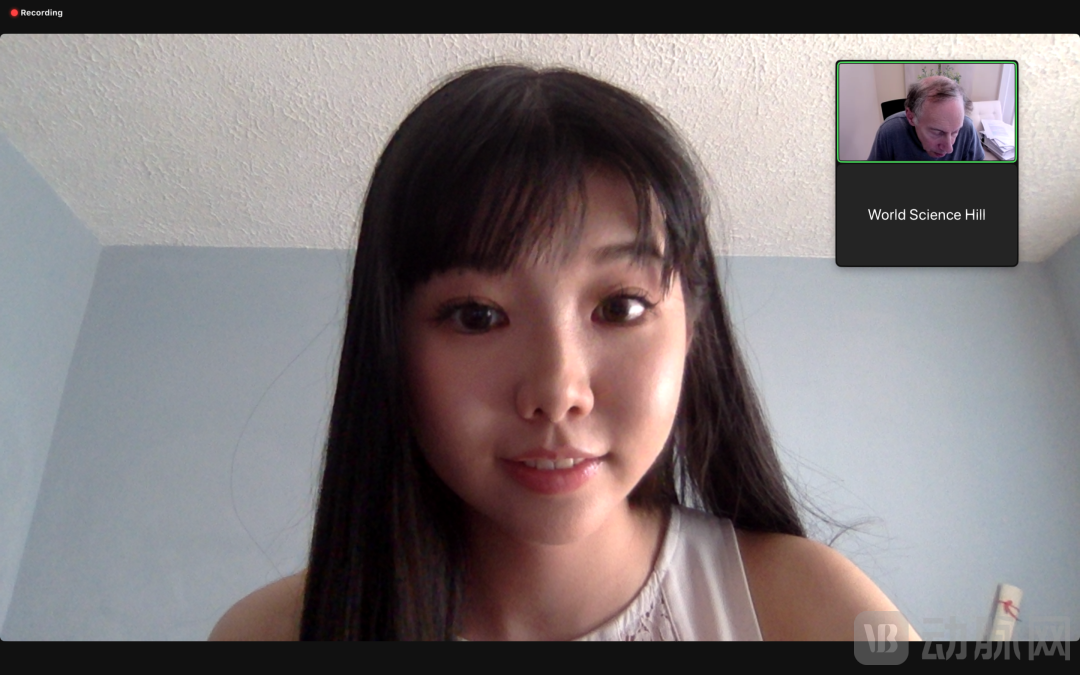
△(Screenshot of World Science Hill founder Mia Wang Jinghan’s exclusive video interview with Robert Langer)
@Mia Wang Jinghan
Can you use a short sentence to describe your main research interest?
Can you describe your primary research focus in a brief sentence?
@Robert Langer
My research interest is biomedical engineering, particularly in drug delivery systems and tissue engineering.
My research interests primarily lie in biomedical engineering, with a particular focus on drug delivery systems and tissue engineering.
@Mia Wang Jinghan
For your field, what is the ultimate goal?
What is the ultimate goal in your field?
@Robert Langer
The ultimate goal is to get a basic understanding of the phenomenon that affects both of these, drug delivery and tissue engineering, and to develop technologies that will enable them to solve and address different problems and applications.
The ultimate goal is to gain a fundamental understanding of the phenomena affecting both drug delivery and tissue engineering, and to develop technologies capable of addressing and resolving various challenges in their applications.
@Mia Wang Jinghan
What is the relation between bioinformatics and biotechnology? How did you utilize bioinformatics tools and databases in your research or industrial experiences?
What is the relationship between bioinformatics and biotechnology? In your research or industrial experience, how have you utilized bioinformatics tools and databases?
@Robert Langer
Bioinformatics is developing methods for understanding biologic data, in particular when data are large and complex. Biotechnology involves using biologic and engineering principles to create new biologic entities and medical entities. Their relation is that in some cases, like deciphering the genome, bioinformatics is critical to making advances in biotechnology.
Bioinformatics is a methodology used to interpret biological data, particularly when such data are vast and complex. Biotechnology involves the application of biological and engineering principles to create novel biological and medical entities. The relationship between the two lies in the fact that, in specific areas such as genome decoding, bioinformatics serves as a key driver of progress.
@Mia Wang Jinghan
For drug design, many people are trying to use AI for assistance. Do you think AI will improve the efficiency of drug design? And how?
In drug design, many people are attempting to leverage artificial intelligence for assistance. Do you believe AI will enhance the efficiency of drug design? If so, how?
@Robert Langer
I do think that AI will improve the efficiency of drug design. I think you can use AI to analyze chemical structures for example and use that information about structures as a guide to design the next-generation structures and then test them.
I do believe that artificial intelligence will enhance the efficiency of drug design. I think you can use AI to analyze, for example, chemical structures and other information about structural features that appear to influence different regions, using this as a guide for designing next-generation structures, which can then be tested.
@Mia Wang Jinghan
Can you explain the concept of gene editing and its potential applications in biotechnology? Will it be the next game changer for the world?
Can you explain the concept of gene editing and its potential applications in biotechnology? Will it become the next major global transformation?
@Robert Langer
Gene editing, which involves what it says, means that you can cut and paste things out of the genome, so that you can perhaps get rid of gene sequences you don’t want or add sequences you do want, to cure the disease for example. Will it be a game changer? I think it will be one of the game changers, but there will be other game changers too.
Gene editing, as its name suggests, means that you can cut and paste certain fragments into genes. Therefore, you may be able to remove unwanted fragments or add desired ones through gene editing, such as genes that can cure diseases or gene segments that do not cause specific diseases. Will this be a world-changing new technology? I believe it will, but more precisely, it will be just one of the new technologies changing the world, as there will undoubtedly be other emerging technologies having a similar global impact.
@Mia Wang Jinghan
For new students trying to gain a degree in biology or related subjects, do you have any suggestions or advice for them?
Do you have any advice or suggestions for freshmen majoring in biology or related disciplines?
@Robert Langer
From the educational point of view, my advice to students, especially undergraduate students, is to learn fundamentals. Take the most basic courses like molecular biology and cell biology. I also think it’s good to do research.
From an educational perspective, my advice to students, especially undergraduates, is to focus on mastering foundational knowledge. I recommend studying core courses such as molecular biology and cell biology, and I also believe that engaging in scientific research at an early stage is highly beneficial.