

Ruijian Tech Files for IPO Amid the Surge of Large Models in InsurTech: Building Core Competitiveness Through Industry-Specific AI Solutions
At the turn of the year, large language models have become a fiercely contested battleground across various industries, and the healthcare sector is no exception.
Following Baidu’s launch of “Ernie Bot” and SenseTime’s introduction of “SenseChat,” Medlinker has released its self-developed AI-powered product, “MedGPT.” The application scenarios have gradually expanded beyond intelligent triage, medical report generation, medical imaging recognition, and assisted diagnosis.
Technology has not only sparked imagination for the development of a single industry, but also prompted people to consider—how many industries can it truly empower? The entertainment industry, the serious medical care industry, the chronic disease management industry... Among the answers, the insurtech industry is certainly included.
This is an industry intrinsically linked to technology. In January 2022, the China Banking and Insurance Regulatory Commission (CBIRC) issued the “Guiding Opinions on Promoting Digital Transformation in the Banking and Insurance Sectors,” signaling a comprehensive push for digital transformation across these industries. Alongside policy-driven initiatives, technologies such as big data and blockchain are gradually being adopted and maturing within the insurance sector.
"In the process of integrating the insurance industry with the technology sector, certain transformations have occurred. One such shift is the move from mature products to the exploration of underlying architectural models," said Wang Xu, founder of Ruijian Technology.
“In fact, a few years ago, the insurance industry lacked a clear understanding of model concepts, even failing to distinguish between large models and intelligent models. However, as ties with the technology sector have grown closer, some leading insurers have now begun to gain a detailed understanding of what large models are and what problems they can solve, moving away from the previous expectation that insurtech companies would provide ‘off-the-shelf’ technological products,” said Wang Xu. He added that the surge in popularity of ChatGPT can be seen as excellent market education for the entire industry, sparking greater interest in large models among more professionals in the insurance sector.
Yet, amid the intense spotlight, a more pressing question for insurtech companies seeking to enter the large language model (LLM) space is: How can they build their own core competitiveness? After all, “if we are talking solely about LLM development capabilities, ask yourself honestly: Can you compete with tech giants like Alibaba and Baidu?”
Perhaps it is precisely by continually grappling with such questions that Ruijian Technology has gradually built its differentiated capabilities.
Similar to many insurtech companies, Ruijian Technology currently focuses on a key niche: providing knowledge support for intelligent operations (referring to underwriting, claims processing, and intelligent marketing). However, unlike most competitors, Ruijian Technology not only offers direct products but also provides industry-specific versions of large language models.
What may warrant further explanation is that a product can be viewed as an assembly of multiple models, with the models serving as the “components” of the product. In other words, Ruijian Technology possesses both in-house capabilities for building large language models and mature capabilities for developing product solutions.
When discussing the shift from offering only products to providing both products and models, in addition to evolving industry insights, there has also been continuous refinement of collaboration models with customers.
“While offering mature products directly to clients is certainly convenient, this collaboration model presents numerous inconveniences for some medium-to-large insurance enterprises,” said Wang Xu.
The reason is that large insurance enterprises already have complete and mature IT departments with the capability to develop digital products. They only need insurtech companies to provide the necessary “components,” which can then be “assembled” into digital products that better reflect their own unique characteristics.
In this context, Ruijian Technology shifted its strategy to provide large language models, enabling it to maintain collaborations with major insurance enterprises while avoiding “conflicts” with their IT departments’ business operations.
Moreover, large insurance companies have extensive business scopes. If services are provided through product-based collaboration, the effort required to uncover their business needs would be enormous, leading to a substantial workload in product development. In contrast, with model-based collaboration, Ruijian Technology only needs to provide models tailored to the specific requirements of large insurance companies (some models may be identical for certain business scenarios). The insurance companies can then “assemble” and “adjust” these models according to the subtle characteristics of different business scenarios, ultimately forming products suited to each scenario.
For Ruijian Technology, this collaborative model is more convenient and faster. For insurance companies, it offers greater efficiency compared to negotiating individual product requirements across different business scenarios, while also making it easier to integrate their own unique features.
However, for small and medium-sized insurance enterprises with less mature internal IT departments, their product development capabilities may be relatively weak. Therefore, for such insurance companies, Ruijian Technology continues to focus on providing mature products along with comprehensive solutions.
Overall, for insurance enterprises, Ruijian Technology provides dual support in the form of products and models. Regardless of whether they are large-scale insurers or small and medium-sized enterprises, Ruijian Technology’s service pathway remains consistent: it offers digital consulting to identify areas within their operations that can be intelligentized, then provides product or model support, with subsequent iterative upgrades carried out by either the insurance enterprise or Ruijian Technology.
As previously mentioned, Ruijian Technology primarily targets business scenarios underpinned by specialized expertise, transforming knowledge into automated service capabilities. By integrating decision-making or generative models tailored to specific scenarios, it has established comprehensive intelligent service capabilities across multiple modalities, including image, speech, text, and knowledge reasoning.
Among these, in decision-making solutions, image recognition combined with knowledge reasoning and medical model solutions are applicable to underwriting and claims adjudication scenarios. These solutions enable insurance companies to process underwriting and claims operations at scale, with standardization and automation. This approach not only enhances operational efficiency and data-driven capabilities through intelligent technologies but also incorporates cross-industry medical models to professionalize business processes, thereby reducing reliance on human expertise inherent in traditional workflows.
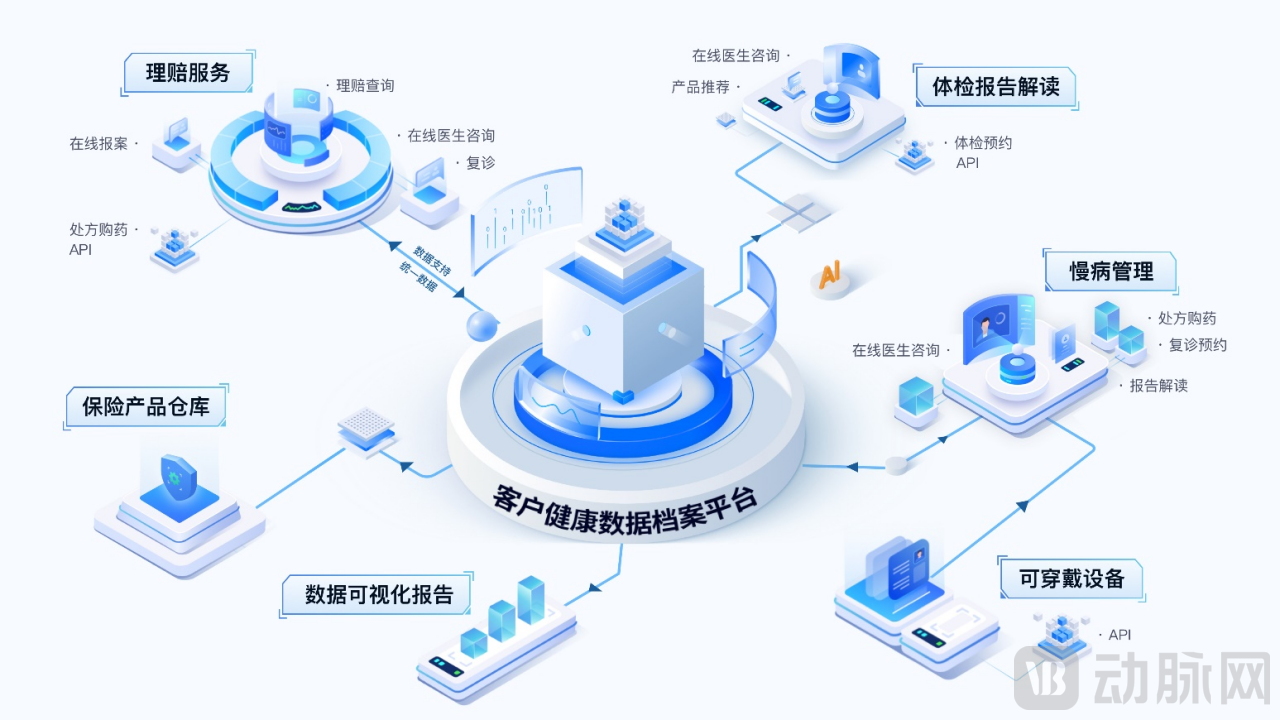
Moreover, the Tianshu Intelligent Health Record Platform provided by Ruijian Technology for insurance companies leverages medical reasoning models to analyze all health risk data of prospective policyholders. Using the four major healthcare systems—public health service system, medical service system, medical security system, and pharmaceutical supply guarantee system—as a framework, the platform automatically extracts medical element data from various types of structured and unstructured data throughout the medical analysis process. This data is then transformed into intelligent analytical capabilities for diverse scenarios, including business risk prediction, actuarial analysis, medical behavior analysis, and sales recommendations.
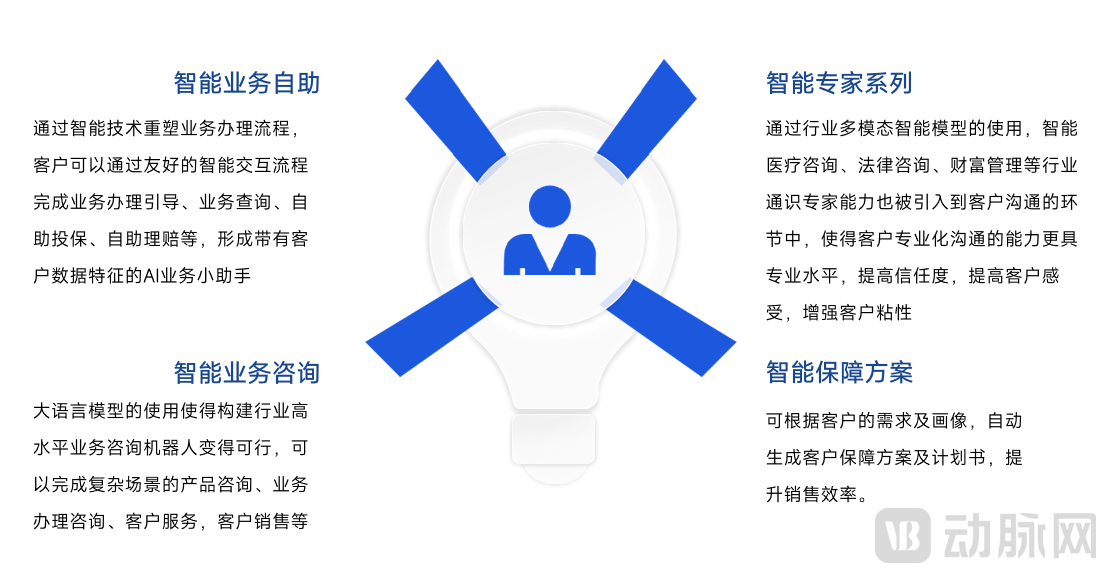
Furthermore, Ruijian Technology can build a rapid intelligent avatar video generation platform by integrating its self-developed generative models, such as video generation technology, rapid digital human creation technology, and industry-specific copywriting generation. This platform can facilitate the rapid, large-scale production of differentiated videos for promotion, education, and marketing scenarios in the healthcare and insurance sectors, and can also be applied to market promotion contexts such as internet-based intelligent marketing and support for insurance agents.
Specifically, from the perspective of driving mechanisms, Ruijian Technology’s intelligent human solutions can be categorized into “human-driven virtual digital humans” and “AI-driven virtual digital humans.” The former is primarily based on real-human voice and behavioral motions, presented to end-users through audio and video synthesis; the latter consists entirely of technologically synthesized speech and animation.
From the perspective of application scenarios, Ruijian Technology’s intelligent avatars can serve as virtual customer service representatives for insurance products. They not only provide 24/7 uninterrupted product introductions and explanations but also more effectively address user inquiries, thereby delivering an enhanced user experience.
Furthermore, in insurance agent sales scenarios, Ruijian Technology’s AI avatars can also boost sales performance. This is mainly reflected in two aspects: first, new insurance agents often lack knowledge of customers’ existing policies and are unable to address related inquiries; second, during the insurance sales process, agents may be constrained by their educational background and cognitive scope, leading to either an inability to answer customer questions or responses that appear unprofessional. In contrast, Ruijian Technology’s AI avatars can generate personalized interactive content tailored to different customer profiles, thereby more effectively supporting sales efforts.
In the realm of intelligent language models, leveraging its proprietary medical knowledge model, Ruijian Technology has also developed a medical consultation model tailored for shallow medical scenarios. This model is capable of handling various medical tasks, including report interpretation, medical risk alerts, automated triage, chronic disease management, and medication counseling. Furthermore, it holds the potential to expand into deeper medical scenarios, such as prognosis assessment for cardiovascular and cerebrovascular diseases and cancer. In the field of insurance technology, Ruijian Technology’s business consultation chatbot has been widely applied in multi-turn consultation scenarios, including product inquiries, business process support, and interpretation of insurance policy terms.
Behind Ruijian Technology’s diversified solutions lies its years of technological accumulation.
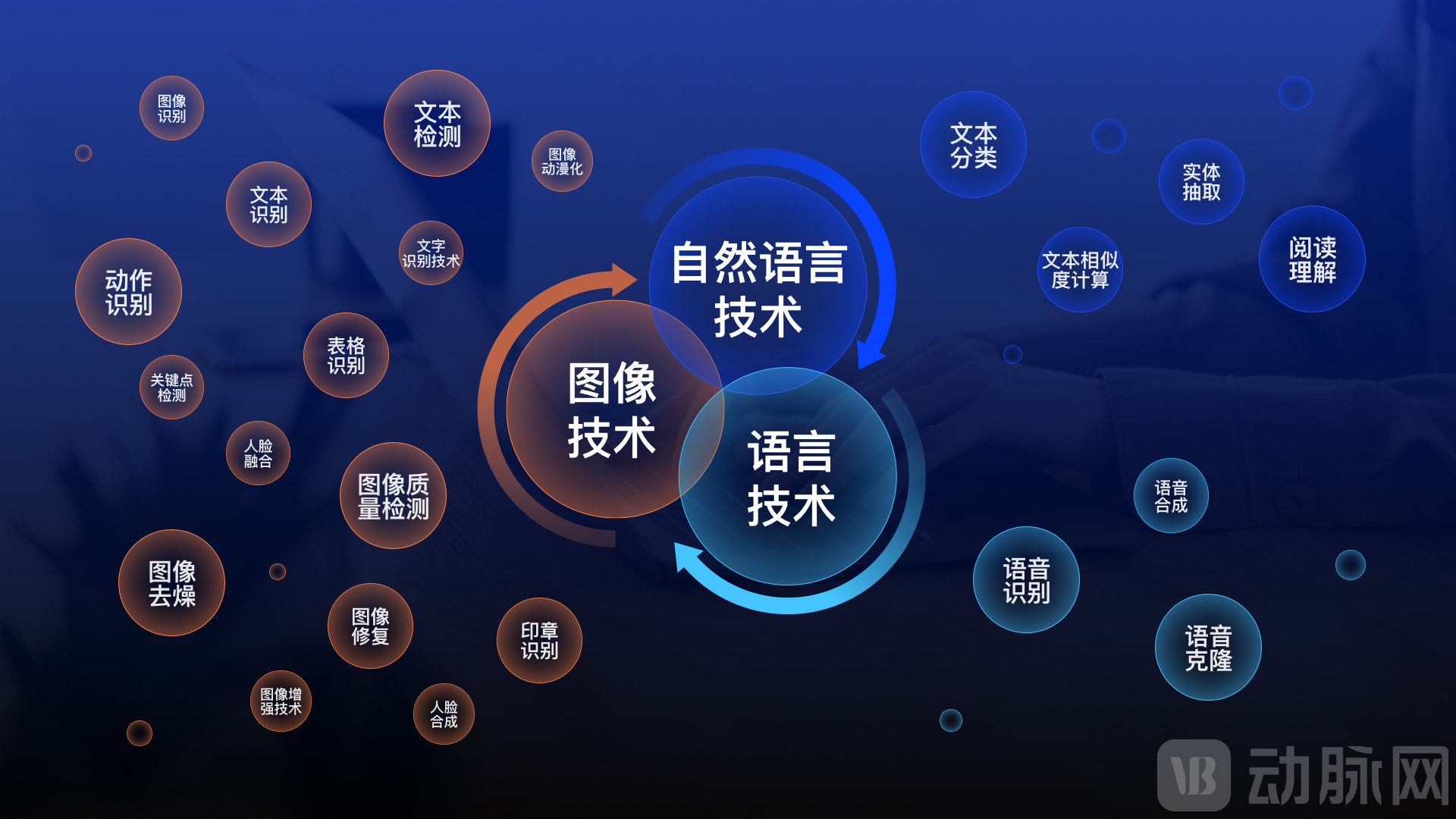
From a purely technical perspective, Ruijian Technology has already accumulated substantial expertise in image technology, natural language processing, and speech technology.
Among these, image technologies encompass text detection, text recognition, optical character recognition (OCR), action recognition, table recognition, image quality assessment, seal/stamp recognition, keypoint detection, general image recognition, image denoising, image inpainting, image enhancement, as well as image generation techniques such as image anime-style conversion, face synthesis, and face fusion.
Natural language processing technologies encompass text classification, entity extraction, text similarity computation, and machine reading comprehension; speech technologies include automatic speech recognition, text-to-speech synthesis, and voice cloning. Leveraging these foundational technologies, Ruijian Technology has begun to build its own technological capabilities and model expertise.
During the interview, VCBeat posed the following question to Wang Xu: “If model capabilities are of paramount importance, how should enterprises like ours build such capabilities?”
“In fact, it can be understood in this way: First, you need to select a technical pathway based on the characteristics of the industry; then determine the model size according to the volume of data required by the industry; and finally, define the content that the model needs to output based on the specific business application scenarios, and conduct corresponding training,” said Wang Xu.
We can distill two key terms from Wang Xu’s response—industry characteristics and data volume. In the following sections, we will analyze how Ruijian Technology’s solution addresses these two critical elements.
From a technical perspective, the aforementioned image recognition and knowledge reasoning solution is an integration of image technology and natural language processing technology. This does not appear to be unique to Ruijian Technology.
However, this solution features a comprehensive text classification system capable of accommodating over 500 document categories tailored to the specific requirements of all insurance companies, such as claims application forms, outpatient and inpatient records across various provinces, medical records, and imaging reports. In contrast, most insurtech companies typically support only a few to a dozen types of insurance-related documents, which fails to meet the diverse needs of insurance operations.
Meanwhile, Ruijian Technology has been continuously investing research resources into its proprietary medical knowledge graph. The graph’s data sources include the National Higher Education Textbooks used by medical schools, clinical practice guidelines and expert consensus statements issued by the Chinese Medical Association, normative documents released by the National Health Commission, clinical pathways and diagnosis and treatment protocols, as well as health insurance industry data, thereby ensuring that the knowledge system of the graph aligns with clinical medicine in both breadth and depth.
In addition to data nodes such as diseases, drugs, surgeries, symptoms, laboratory tests, and examinations, Ruijian Technology’s knowledge graph also encompasses systems, organ characteristics, features of space-occupying lesions, diagnostic criteria, treatment plans, and condition assessments, offering a comprehensive data structure. Building on this foundation, the knowledge graph features strong scalability, simplified data operations, and the ability to model complex real-world relationships.
Indeed, Ruijian Technology’s knowledge graph is not only applied in solutions for underwriting and claims assessment scenarios but also integrated into intelligent avatar and intelligent language solutions designed for smart marketing scenarios. This explains the aforementioned statement that “compared to human agents, intelligent avatars are more professional and possess a greater reserve of specialized knowledge.”
Among the aforementioned AI avatar and intelligent language solutions, the multi-turn dialogue system’s features, such as content controllability, are primarily attributed to Ruijian Technology’s optimized GPT model. Its rotary positional encoding enhances comprehension of long texts, while learning and training on high-quality corpora in the medical insurance domain make it better suited for this vertical sector.
According to Wang Xu, the generative large language models currently employed by Ruijian Technology are all trained on high-quality corpora. “If we must summarize our competitive advantages, the first is our capability to leverage various deep learning network architectures and build industry-specific multimodal models based on industry characteristics and proprietary data; the second is our access to a vast volume of high-quality, multi-format industry-specific corpora; and the third is our automated processing tool platform for constructing high-quality corpora,” said Wang Xu. “Although other companies may eventually develop capabilities in these two areas over time, it will clearly take them a considerable amount of time.”