

Yaoxin Bio Breaks Through the 'Ceiling' of Poorly Soluble Drug Development with Dual-Engine Strategy of 505(b)(2) Drugs and Proprietary Formulation Platforms
Pharmacin
Innovative Drug Developer
According to statistics,70%—90%Newly developed small-molecule drugs are poorly soluble, posing significant challenges to their druggability.40%Marketed small-molecule drugs are often poorly soluble, leaving room for improvement. The poor solubility of these drugs is mainly attributed to two factors: high molecular melting point and strong hydrophobicity. Drugs with a high melting point resemble a pile of sand grains, while those with strong hydrophobicity are akin to oil on the water surface. Both exhibit low solubility in most media, resulting in poor oral absorption.
If a poorly soluble drug has only one underlying cause, many companies currently have established solutions; for example, solid dispersion technology is employed to address the challenge of high molecular melting points, while self-emulsifying technology is utilized to overcome strong molecular hydrophobicity.
However, this only solves the "one-dimensional" problem.In fact, many new chemical entities (NCEs), and even PROTAC molecules, currently exhibit the “dual-high” characteristic of high melting point combined with strong hydrophobicity or high LogP. Current mainstream formulation technologies are unable to simultaneously address both issues., the bioavailability of relevant drugs is extremely low. Poor bioavailability may not be the greatest challenge in drug development, but it is likely the most prevalent one, playing a crucial role in determining a drug’s developability.
Faced with this ubiquitous challenge, for which no effective solutions currently exist,PharmacinThe answer is provided.
Directly Addressing the Pain Point in Drug Development Caused by Poor Compound Solubility
Pharmacin was founded by Dr. Wang Zeren, an internationally renowned expert in pharmaceutical formulations.Shenzhen Pharmacin Co., Ltd. is a biotechnology company centered on its high-end formulation technology platform, specializing in the R&D and industrialization of new drugs and improved new drugs. With advanced patented technologies and a mature development system, it provides partners with high-value-added pharmaceutical product development and supports dual regulatory submissions in both China and the United States.
Before entering the workforce,Wang Ze studied under one of the founders of modern pharmaceutics and physical pharmacy.Professor William Higuchi.William Higuchi The professor infused rational scientific thinking and design into the field of pharmaceutical research, which was once dominated by empiricism, and participated in proposing and laying the foundation for The Fundamental Role of the Higuchi Equation in Pharmaceutical Formulations and Drug Diffusion.
Prior to founding Pharmacin, Wang Zeren, Chairman and CSO of Pharmacin, had worked atNovartis, Eisai, Boehringer Ingelheimand other well-known multinational pharmaceutical companies, has been engaged in the development of innovative drugs and formulations, and has gradually grown into an expert in the field of formulations and a senior executive in the company's formulation development department. Before returning to China,Zeren Wang was formerly the Head of Formulation R&D for Boehringer Ingelheim's North America region., responsible for the North America Formulation Development Department, participated in the planning of the company's R&D strategy, and previously ledEmpagliflozinblockbuster drug development (global sales of $8.2 billion in 2022).
With his profound academic foundation and extensive industry experience, Wang Zeren later established one of the earliest physical pharmacy departments in China for pharmaceutical research.Benefiting from his prior work experience, Wang Ze has established a global perspective in drug development and engaged in in-depth reflection and practice regarding corporate development strategies and planning.
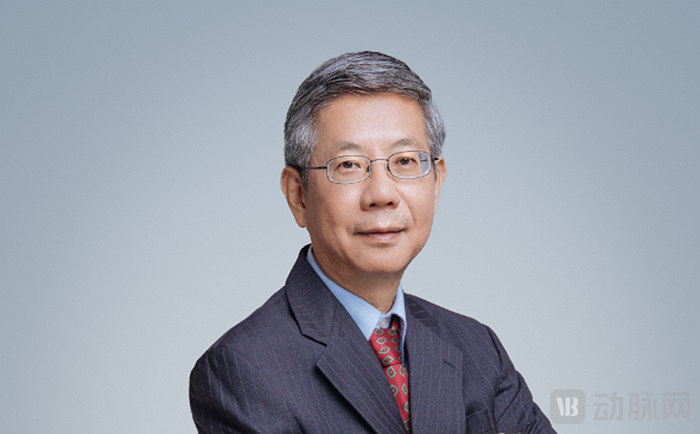
Wang Zeren, Chairman and CSO of Pharmacin. Image source: Pharmacin
In 2016, Pharmacin was established with its headquarters in Shenzhen.“At that time, we observed that China’s pharmaceutical formulation industry focused on ‘industrial pharmaceutics,’ relying on empirical development while lacking theoretical and systematic in-depth research from the perspective of ‘physical pharmaceutics.’ Consequently, many products struggled to achieve scalability, industrialization, and internationalization, resulting in a shortage of independently developed, high-end formulated drug products with global influence.”Wang Zeren recalls.
Driven by market growth stemming from improvements to drugs with clinical usage limitations, there is a consensus on the value of advanced drug formulations in enhancing the success rate of new drug development, extending the lifecycle of marketed products, and increasing product added value. The field of advanced drug formulations has gained significant traction, while pain points in industry development have become increasingly prominent:
During early-stage screening, if some promising lead compounds exhibit only low solubility and poor oral absorption, should their development be continued?This is a choice that companies often need to face.Continued development implies potentially low bioavailability, posing significant challenges along the R&D pathway: effective plasma concentrations may not be achieved in preclinical efficacy studies; alternatively, poor absorption may lead to a plateau in plasma concentration at high doses, preventing further increases. Consequently, plasma levels sufficient to elicit toxicological effects cannot be reached, thereby precluding the determination of the true therapeutic window.
Compromised entry into the clinical development stage is characterized by: the need to increase dosage to achieve therapeutic goals; increased API costs; excessive use of solubilizers and excipients; variable side effects due to individual differences; poor patient compliance; inadequate plasma drug concentrations; inability to evaluate efficacy and safety windows; uncertainty in establishing dose-response relationships; and significant fluctuations in bioavailability between fed and fasting states.
Only in the early stagesInterventionPoorly Soluble Drug Technology: Synchronous Development and Optimization with PK, Toxicology, and API Small-Scale Studies to Rescue Candidate Compounds and Reduce Development Risks and Costs
Currently, many drugs on the market suffer from various issues related to oral absorption, resulting in high dosage requirements and significant interpatient variability in drug absorption. Furthermore, factors such as food and antacids can interfere with drug absorption, leading to various clinical limitations, including the risk of serious adverse reactions.
“In my view, the pain points in drug development caused by poor compound solubility are long-standing and unresolved. The market potential is substantial, and no specific technology in any niche segment has yet provided a comprehensive solution. While challenging, this area is also full of opportunities.”“Wang Zeren told VCBeat New Medicine.”
Addressing bottlenecks in drug development, Pharmacin has established advanced formulation technologies and platforms, creating a unique product portfolio in the development of new drugs and formulation improvements.To date,Pharmacin has established a pilot production base for high-end specialized formulations in Suzhou and set up an office in Connecticut, USA, to facilitate clinical registration and business development (BD) activities in the United States.
SpraySol™, a new generation of spray-dried solid dispersion technology,
Breaking Through the “Ceiling” in Poorly Soluble Drug Development
Like most industry experts returning to China, Wang Zeren’s team also faced the challenge of corporate positioning in the early stages of the company’s establishment: should they be content with developing a few outstanding drugs, or should they build up strength over time and invest substantial time and capital in creating an application platform with global competitiveness?
“My original intention in returning to China was to develop our own products by leveraging the supportive macro environment, addressing the unmet clinical needs we identified, and combining them with our technological advantages. ‘Patients first’ is our founding principle, and ‘leading the industry’ is our modest ambition. If my sole focus had been on making money, I probably would not have resigned and returned to China,” Wang Zeren told VCBeat New Medicine.
However, pharmaceutical companies require substantial capital investment prior to commercialization. After solidifying its strategic objectives, Pharmacin conducted assessments and struck a balance by securing partial funding through collaborative development projects. It was not until 2016, when external capital was injected into Pharmacin, that the contradiction between the company’s business model and its survival crisis was resolved.. Currently, Pharmacin hasContinued to attract significant interest from numerous investors,Secured multiple rounds of financing, each amounting to hundreds of millions of yuan., with investors including Guoxin Qidi, Huatai Zijin, and Kaitai Capital.
With financial support,Pharmacin has begun to deploy across multiple formulation areas that present pain points in both innovative drug development and improved new drug development, focusing on technological and product development in the field of poorly soluble drugs., Pharmacin has conducted detailed research and a series of innovations in areas such as solid-state characterization, key excipients, formulation, and process development.
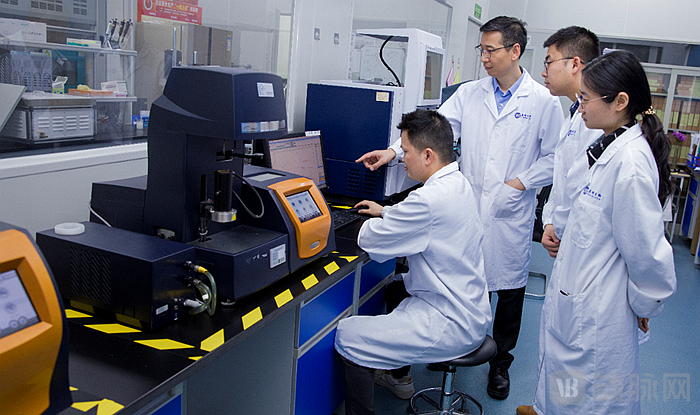
Image source: Pharmacin
“The core of scaling up and translating pharmaceutical R&D achievements lies in the design of dosage forms and routes of administration. Many technologies perform well in the laboratory but encounter various challenges during later-stage process scale-up.. Leveraging my academic background and industry experience, Pharmacin’s formulation development strategy is theory-driven,Based on the Principles of Physical Pharmacy“, we study the various physicochemical, mechanical, and biological properties of active pharmaceutical ingredients (APIs), excipients, and formulated drug products to advance formulation development and optimize manufacturing processes. The formulated products we develop are designed for commercial scalability, with an emphasis on robust manufacturing processes and product stability and reliability,” Wang Zeren told VCBeat News.
To address the critical challenge of poorly soluble drugs, which often suffer from low bioavailability and are difficult or impossible to develop into viable drug products, spray drying for the preparation of solid dispersions has emerged as one of the most prevalent solution technologies. However, this approach has its limitations, such as challenges posed by “gritty” molecules. Consequently, numerous companies worldwide are continuously striving to improve spray drying technology.
Pharmacin’s accumulated expertise and continuous exploration in the field of poorly soluble drug development have broken through the limitations of existing technologies, successfully expanding the depth and breadth of spray drying technology applications to an internationally leading level.
It is based on the theory of physical pharmaceutics, through an optimized multi-component formulation, combined with special processesNext-generation spray drying solubilization technology (SpraySol™ technology),It not only addresses poorly soluble molecules with sandy and oily characteristics,Development of oral formulations for poorly soluble small-molecule chemical drugs exhibiting dual characteristics, for which no mature industry solutions currently exist, as well as “dual-high” innovative drugs such as PROTACs and molecular glues, and high-end pediatric formulations, still applicable。There is strong demand and broad prospects for this class of molecules. In Pharmacin’s product pipeline, multiple such molecules with high technical barriers and large market sizes are currently under development.
Compared with traditional spray-dried amorphous solid dispersions, formulations developed using the SpraySol™ technology platform demonstrate significantly enhanced absorption in rats, beagle dogs, and humans, as well as a markedly reduced food effect. The SpraySol™ technology can address the bottlenecks of low in vivo absorption and poor pharmacokinetic (PK) profiles associated with conventional formulation technologies, thereby improving the druggability of new chemical entity (NCE) molecules.
Expand the application of the high-end formulation platform,
Accelerate Product Time-to-Market
In addition to the SpraySol™ technology platform,Pharmacin has also established advanced formulation technology platforms, including a topical dermal delivery platform, sublingual rapid-release and orally disintegrating tablet (ODT) platforms, and a small nucleic acid formulation development platform.
Leveraging its technology platform, Pharmacin has established a series of patent moats. To date, the company has filed 10 PCT patent applications, entered national phases in 62 jurisdictions, and obtained 23 granted patents. Similarly, this achievement is attributable to the continuous refinement and optimization of its technology platform over the past several years.Pharmacin’s pipeline typically takes only 1 to 1.5 years from project initiation to clinical entry, enabling rapid market access in the future.
Currently, Pharmacin has two major strategies in product development:Development of New Drugs with Novel Dosage Forms, leveraging advanced formulation technology platforms and patented formulation technologies to develop specialized, high-difficulty modified new drugs, thereby enhancing the bioavailability and safety of target drugs and improving patient medication adherence;New Drug Development for New Indications (Drug Repurposing), leveraging Pharmacin’s international scientific advisory and business development teams, and capitalizing on the company’s strengths in its scientific translation project evaluation system, to develop pharmaceuticals that address unmet clinical needs.
In terms of pipeline development, Pharmacin is led by international pharmaceutical executives and scientists, with an outstanding track record in CMC and clinical development. The company has products in clinical stages in both China and the United States, with three products currently in U.S. clinical trials and one in domestic clinical trials. It is expected that two product candidates with significant market potential will enter the NDA submission stage in the next two years.
In the field of translational medicine, Pharmacin has established a scientific translation team in China led by Dr. Wang Lian, along with several overseas scientific and clinical advisors. Dr. Wang previously served as an executive and project leader at Abbott and Boehringer Ingelheim, bringing extensive industry experience in translational medicine. “The risks associated with improved new drugs persist, necessitating professional screening and pipeline reservation by our translation team at early stages. Relevant assessments and challenges will accompany the entire R&D and production process of the project. Sometimes, timely loss mitigation is more important than blind advancement.”
In terms of platform construction and application expansion, Pharmacin has established a high-end formulation R&D and pilot production platform centered on SpraySol™, its proprietary spray drying technology with high technical barriers, to support the R&D and industrialization of its pipeline. This platform offers a systematic solution tailored for various poorly soluble compounds, integrating a comprehensive development process that spans compound identification, laboratory-scale studies, pilot-scale production, preclinical evaluation, clinical evaluation, and commercial manufacturing. Pharmacin is well-positioned to provide a mature, integrated platform for the development of small-molecule poorly soluble drug formulations for biopharmaceutical companies both in China and abroad, thereby facilitating and enhancing its strategic entry into the high-end formulation sector.
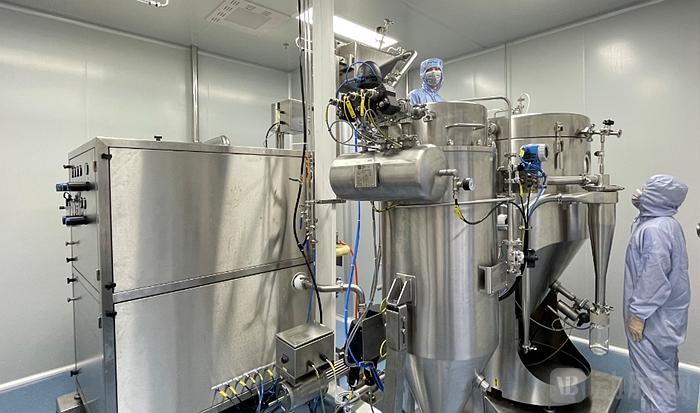
Image source: Pharmacin
“We are not simply helping other pharmaceutical companies expand production; rather, leveraging our technology platform, we collaborate with other pharmaceutical R&D enterprises to improve their formulation technologies, enhance product bioavailability, and address druggability challenges. To this end, we have appointed Dr. Deepak Hegde, who brings 27 years of R&D, management, and consulting experience in the field of pharmaceutical formulations, as Senior Vice President. He will be fully responsible for the company’s late-stage product technology development, commercial manufacturing, and the strategic coordination of external project development and collaborations,” introduced Wang Zeren.
Looking ahead to the next 3–5 years, Dr. Wang Zeren stated that Pharmacin will accelerate the development of highly promising pipeline candidates with significant market potential and clinical improvement value, such as HLK-1001 and HLK-1004, to deliver superior improved novel drugs to patients with breast cancer, leukemia, and other conditions.
Currently, HLK-1001 has completed pilot clinical studies and scale-up process validation. The HLK-1004 project received FDA IND clearance in the first quarter of this year and has also completed pilot clinical studies, with data meeting expectations. Both projects are expected to submit marketing applications to the FDA in 2024 via abbreviated clinical pathways. Additionally, IND applications have been filed for two to three other candidates.
On the other hand, the company will further expand its pipeline, with the development of products for new indications proceeding at full steam. In addition to HLK-6002, which is already in clinical trials for the treatment of psoriasis,Focusing on skin conditions such as melasma, and inflammatory bowel disease (IBD)The data on our distinctive pipeline is also exciting, offering even greater room for imagination.
Regarding Pharmacin’s core technology platform, SpraySol™, in addition to leveraging it for the development of its proprietary product pipeline and accelerating the completion of its spray-drying pilot production facility to achieve a closed loop from R&D to high-end manufacturing, Pharmacin will also actively establish external collaborations with partners across the upstream and downstream segments of the industry chain.Jointly Promote the Application and Development of Spray Drying-Based Technologies for Poorly Soluble Drugs. Currently, external collaboration and licensing for the company’s second SpraySol™ technology platform may be achievedIn Negotiation。
Meanwhile, Pharmacin will further upgrade and iterate its platform technologies. A key focus is applying AI to simulate molecular force field parameters and model the dissolution and solubilization processes of drugs with various excipients, thereby enhancing the efficiency of formulation screening and process optimization while significantly reducing costs.
To accelerate the industrialization process, Pharmacin is currently actively preparing for its next round of financing.