

Jingzhun Medical and Targeting One Forge Strategic Alliance to Advance Digital PCR for Sensitive, Efficient, and Convenient Precision Diagnosis in Hematologic Malignancies

TARGETING ONE
In Vitro Diagnostics Product Developer
Digital PCR technology is considered one of the most critical technical platforms for the future of molecular diagnostics. In recent years, digital PCR has been rapidly applied in the field of hematologic malignancies, demonstrating unique advantages and broad application prospects.
Hematologic malignancies are complex lesions resulting from the accumulation of multi-stage, multi-gene variations. MRD (minimal residual disease) serves as a powerful independent prognostic indicator for hematologic tumors, with sensitivity and specificity being critical factors to consider in MRD monitoring methods.
Digital PCR technology stands out in MRD detection methods due to its core advantages, including absolute quantification, high sensitivity, the ability to detect low-abundance targets against a high-abundance background, and strong resistance to interference. This forms the backdrop for the strategic partnership between Jingzhun Medical and TargetingOne.
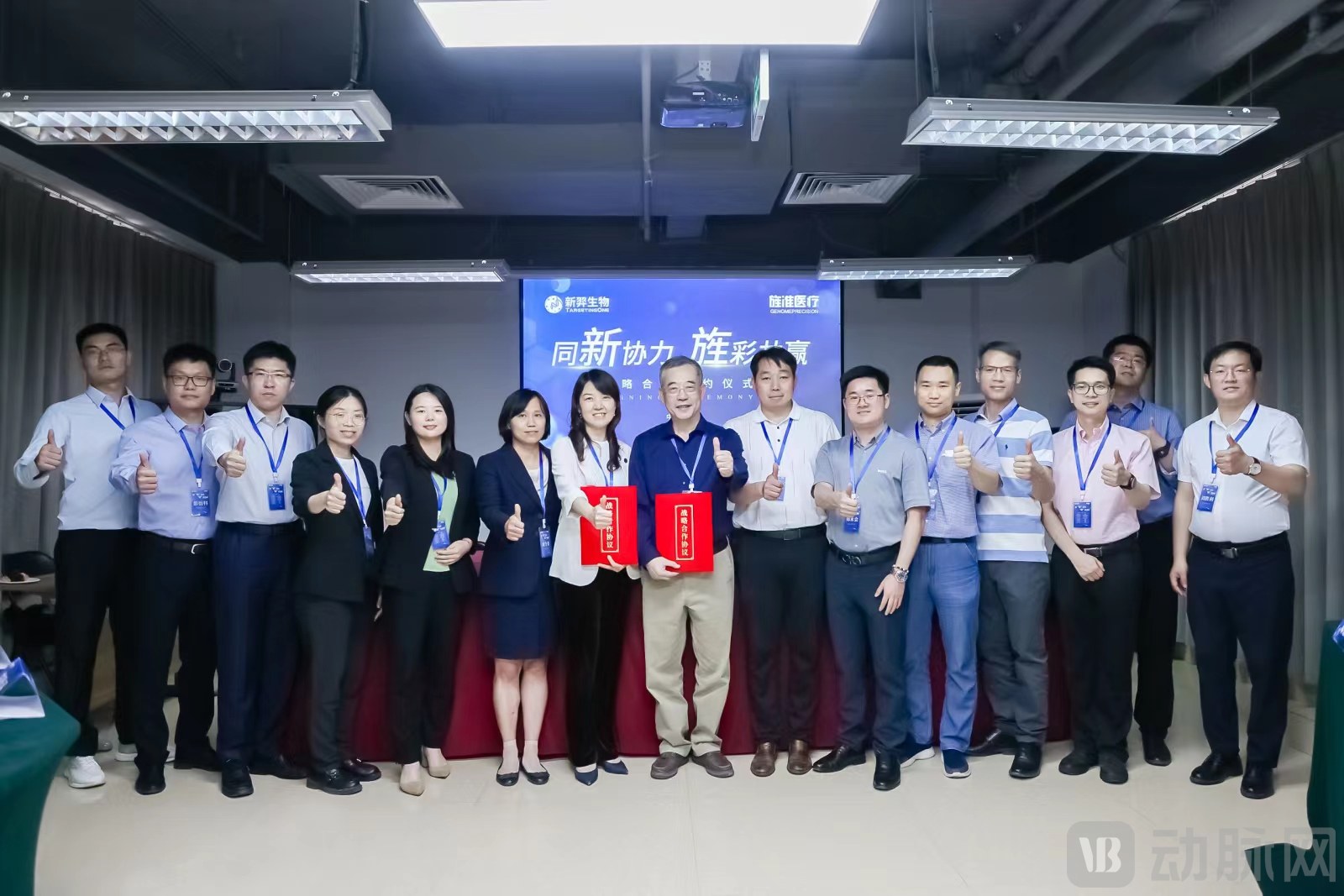
Recently,Beijing Jingzhun Medical Technology Co., Ltd. Signs Strategic Cooperation Agreement with TargetingOne Corporation, Ltd., centering onDigital PCR technology has launched comprehensive strategic collaborations in fields such as hematologic malignancies and transplantation, driving significant advancements in the application of digital PCR molecular testing within the cancer companion diagnostics industry.This marks the first time the two parties have established a comprehensive, multi-tiered, and wide-ranging model of cooperation. What are the drivers behind this partnership? What signals does it send to the industry? And what value will it create? VCBeat provides an analysis of this collaboration.
High Sensitivity, Stability, and Accuracy: Digital PCR Demonstrates Significant Advantages in Hematologic Malignancies and Transplantation
Hematologic malignancies are among the most common types of cancer. In recent years, significant breakthroughs have been made in hematologic disease research, particularly in understanding pathogenesis, identifying molecular markers, and developing targeted therapies. Hematologic malignancies are no longer considered “incurable.” With personalized and precision medicine, the majority of patients can achieve long-term disease-free survival or even cure, enabling them to return to normal work and daily life.
“There are currently many therapeutic agents available for hematologic malignancies, allowing patients to achieve significant remission. However, in practice, continuous monitoring following remission is also critically important, and digital PCR can play a vital role in this regard.”Professor Ye Feng, Chairman and General Manager of Jingzhun Medicalindicated.
According to Professor Ye Feng, hematologic malignancies are highly heterogeneous, encompassing more than 40 subtypes of leukemia and over 50 subtypes of lymphoma. These conditions differ substantially in terms of treatment modalities, therapeutic approaches, key management principles, and strategies for monitoring recurrence. Early subtype-specific classification and targeted intervention, along with continuous follow-up, are critical for patients with hematologic malignancies.
Dynamic monitoring of minimal residual disease (MRD) provides critical guidance for evaluating treatment efficacy, predicting disease recurrence, and implementing personalized therapy. MRD detection methods must meet the requirements of quantifiability, standardization, and convenience.Digital PCR technology reduces complex background interference and enriches signals from low-abundance target genes through its single-molecule detection capability, thereby enhancing the sensitivity of MRD testing.
“In the field of transplantation, achieving a balance between immunosuppression and infection control presents a major clinical challenge, as organ transplant recipients require high-dose immunosuppressive therapy at the time of transplantation. ‘Early detection of certain opportunistic infections is critical; the earlier the intervention, the less likely this balance will be disrupted,’ said Professor Ye Feng.”
Based on this, hematologic malignancies and transplantation are application areas where digital PCR technology holds significant advantages.Yang Wenjun, Vice President of TARGETING ONEIt was stated that, first, in the field of hematologic malignancy treatment, minimal residual disease (MRD) is significantly associated with clinical prognosis. Hematologic malignancies have an inherent demand for highly sensitive technologies, and digital PCR is currently the most sensitive technique available. Second, samples from hematologic disorders are relatively homogeneous, creating a need for accurate quantification. Finally, the treatment of hematologic malignancies often involves organ transplantation, where the success of the transplant must be assessed by monitoring changes in chimerism ratios. In this regard,Digital PCR offers significant advantages as a detection method in the field of hematologic malignancies.
Professor Ye Feng also stated that, from a certain perspective, digital PCR is a form of point-of-care testing (POCT). Its simple operation makes it highly suitable as a molecular diagnostic assay in the fields of hematologic malignancies and transplantation. Furthermore, digital PCR does not require the preparation of standards, which helps reduce costs.
Complementary Advantages and Strategic Alliance to Accelerate the Market Launch of Digital PCR Products
The collaboration between TARGETING ONE and Jingzhun Medical integrates the former’s strengths in digital PCR technology platforms with the latter’s expertise in hematologic malignancies and transplantation, achieving complementary advantages through a powerful alliance.
TARGETING ONE has built a complete digital PCR system with independent intellectual property rights, covering raw materials, reagents, consumables, chips, instruments, and software, based on its self-developed microdroplet digital PCR technology., having filed nearly 200 domestic and international patent applications, with over 100 patents granted. Currently, the company has obtained the first NMPA Class III medical device registration certificate for a COVID-19 test kit based on digital PCR technology. It has been awarded the Gold Award for Outstanding Innovative IVD Products in China for two consecutive years, won the Grand Prize at the Zhongguancun International Frontier Science and Technology Innovation Competition, and received the Second Prize of the Beijing Municipal Science and Technology Award.
At the end of 2022, TARGETING ONE launched its new-generation D-series fully automated digital PCR system. This system features full automation, high sensitivity, high precision, high throughput, and high flexibility. It offers multiple advantages, including a high droplet count, flexible and adjustable sample loading volumes, adaptable sample capacity, ease of operation, capability for 96-sample amplification, contamination prevention through fully enclosed chip detection, compatibility with automated workflow lines, and low cost.
Digital PCR applications currently span multiple fields: first, early and rapid diagnosis of infectious diseases; second, tumor genetic testing, providing reliable diagnostic products for early warning, companion diagnostics, therapeutic monitoring, and prognosis assessment of cancers such as lung cancer, breast cancer, and thyroid cancer; and third, birth defect screening, enabling faster, more cost-effective, and more accurate screening for chromosomal disorders such as Down syndrome and hereditary diseases such as spinal muscular atrophy (SMA).
This collaboration, TARGETING ONEExtend the application of digital PCR systems to the field of hematologic malignancies, further expanding the use cases of the technology platform.
For Jingzhun Medical, the integration of digital PCR into its molecular diagnostics platform for hematologic malignancies has established a more comprehensive and competitively advantageous product portfolio. Jingzhun Medical focuses on basic research and the development of diagnostic products in the fields of molecular diagnostics for hematologic malignancies, organ and bone marrow transplantation, novel molecular pathology, and tumor immunotherapy. Its solutions support the full spectrum of in-hospital testing needs at healthcare institutions of all levels, including detection, diagnosis, treatment efficacy evaluation, and prognostic monitoring of blood diseases.
“TARGETING ONE holds significant advantages in instrument design and manufacturing, while Jingzhun Medical excels in the exploration of clinical applications; there is strong synergy between the two parties..” Professor Ye Feng stated, “TARGETING ONE can specifically manufacture digital PCR systems tailored for hematologic tumor detection, based on our specific design requirements in fields such as hematology and transplantation. Jingzhun Medical can leverage this platform to expand into testing applications that were previously difficult or inconvenient to implement.”
Professor Ye Feng cited an example, noting that in the past, minimal residual disease (MRD) detection in hematologic malignancies primarily relied on flow cytometry or next-generation sequencing (NGS). However, flow cytometry requires fresh samples, posing significant challenges for sample preservation, and the analysis of flow cytometry results is highly complex. The cost associated with NGS also presents a major challenge. Meanwhile, certain hematologic malignancies do not require multi-target panels; MRD can be assessed using a single or a few targets. In such cases, digital PCR (dPCR) can maximize its advantages.
Jingzhun Medical has been deeply engaged in the field of precision diagnostics for hematologic malignancies for many years. “We highly value TARGETING ONE’s advantages in the R&D, design, production, and manufacturing of instruments. In the future, we can further collaborate with TARGETING ONE in areas such as automated processing across the upstream and downstream segments of molecular diagnostics and various cell separation techniques.”
Digital PCR Demonstrates Critical Technical Value; Collaboration Is the Future Trend in Molecular Diagnostics
This collaboration also reflects the significant demand and future trends in precision oncology testing.
Molecular diagnostics has emerged as a hot sector in recent years, with applications in rapidly growing markets such as cancer detection, pathogen diagnosis, and birth defect screening. Among these, cancer detection represents a field with significant growth potential over the next 5–10 years, driven by population aging and shifts in disease patterns, which have led to a surge in the potential user base for cancer testing. CIC estimates that by 2030, the potential market size for early-stage cancer detection alone in China will reach $28.9 billion.
Currently, the advanced nature and significant value of digital PCR technology have become an industry consensus. With the continuous growth of the testing market and increasingly stringent testing requirements, digital PCR is poised to become a key technological platform for clinical molecular diagnostics, ushering in a period of rapid growth.
Intensifying market competition is inevitable, and high-quality products remain a scarce resource in the market.Comprehensive capabilities—including technological leadership, cost control, proprietary intellectual property, NMPA certification, clinical collaborations, and commercial partnerships—will become the key to corporate success.
The technological platforms and clinical application strengths of TARGETING ONE and Jingzhun Medical are complementary, enabling joint product development, resource sharing, and mutual empowerment. From an industry perspective, this collaboration will accelerate the adoption of digital PCR in hematologic malignancies, transplantation, and other fields.
This collaboration marks a significant beginning. In the future, both parties will further strengthen their cooperation in areas such as IVD product registration and market channels, providing the industry with more and better solutions.