

CarThera Secures €37.5M to Advance SonoCloud, an Implantable Ultrasound Device for Blood-Brain Barrier Opening in Brain Tumor and Alzheimer’s Therapy

CarThera
Ultrasound Medical Device Developer
Gliomas are the most common primary malignant brain tumors. Glioblastoma (GBM) is the highest-grade and most aggressive type of glioma, accounting for 45% of primary intracranial malignant tumors. It has a high propensity for postoperative recurrence, with a five-year survival rate of less than 5%. GBM is one of the most challenging refractory tumors in neurosurgical treatment.
A major obstacle in the treatment of gliomas is the blood-brain barrier (BBB). The BBB is a microstructure that protects the brain from the vast majority of circulating drugs; however, it also blocks the penetration of more than 95% of small-molecule drugs and 100% of large-molecule drugs into the brain. Even the most effective chemotherapeutic agents fail to cross the blood-brain barrier to reach brain tumors. Therefore, overcoming the blood-brain barrier to deliver diagnostic or therapeutic compounds to the brain remains a primary technical challenge in the treatment of neurological diseases.
CarThera, founded in 2010, is an innovative medical device company based in France that specializes in the research and development of ultrasound-based medical devices for the treatment of brain tumors. The company’s flagship product, SonoCloud, is an intracranially implanted ultrasound device indicated, in principle, for the treatment of primary brain tumors (such as gliomas, glioblastomas, and astrocytomas) as well as secondary brain tumors.
VCBeat learned that on June 27, 2023, CarThera completed a €37.5 million Series B financing round. The new funds will be used to launch a multicenter trial for its implantable device, SonoCloud. Previously, CarThera had undergone six rounds of financing, with the total amount exceeding €66.8 million.
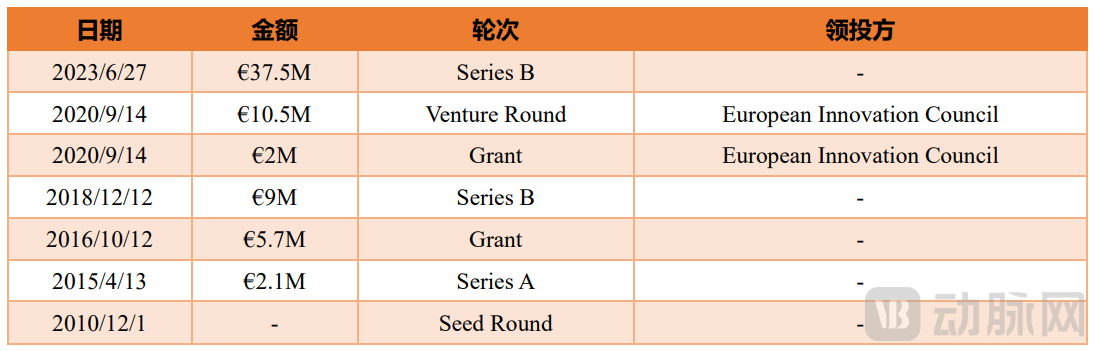
CarThera’s Funding History | Data Source: Crunchbase
In 2015, scientists from the Sunnybrook Research Institute in Toronto, Canada, announced that they had successfully opened the blood-brain barrier in a brain cancer patient using gas-filled microbubbles and ultrasound. After the patient received medication and an injection of microbubbles, the microbubbles vibrated under the action of a focused ultrasound device, forcing the endothelial cells comprising the blood-brain barrier to separate. This allowed chemotherapy drugs in the bloodstream to pass through the gaps and reach the vicinity of the tumor cells.
The research conducted by the CarThera team is based on a similar principle, utilizing low-intensity pulsed ultrasound combined with intravenous microbubbles (LIPU-MB) to open the blood-brain barrier; however, their study represents a novel breakthrough compared to that of the Sunnybrook Research Institute.
1. CarThera used the newly developed 1 MHz implantable intracranial ultrasound device, SonoCloud;
II. A total of 15 patients participated in the study, yielding more comprehensive experimental data;
III. The blood-brain barrier was repeatedly opened during each treatment cycle for brain tumors without causing harm to the human body, demonstrating the safety of this technique;
4. In contrast to Sunnybrook Research Institute’s precise targeting of non-disseminated tumors, the ultrasound used in CarThera’s study is more divergent, making it more effective against tumors such as glioblastoma multiforme (GBM) that invade surrounding tissues.
In CarThera’s study, patients first received chemotherapy drugs. Physicians then injected gas-filled microbubbles into the patients’ bloodstream and implanted the SonoCloud device through a cranial window in the brain region, which had been created during surgical resection of recurrent glioblastoma multiforme (GBM).
Then, during each treatment cycle, the implant is connected to the pulse generator via a percutaneous pathway using disposable sterile transdermal needles and cables.SonoCloud is activated to emit low-intensity ultrasound, inducing microbubble vibration and thereby increasing vascular permeability in the brain, which allows drugs to reach the brain at higher and more effective concentrations.。
On June 22, 2022, SonoCloud received Breakthrough Device Designation from the U.S. FDA。
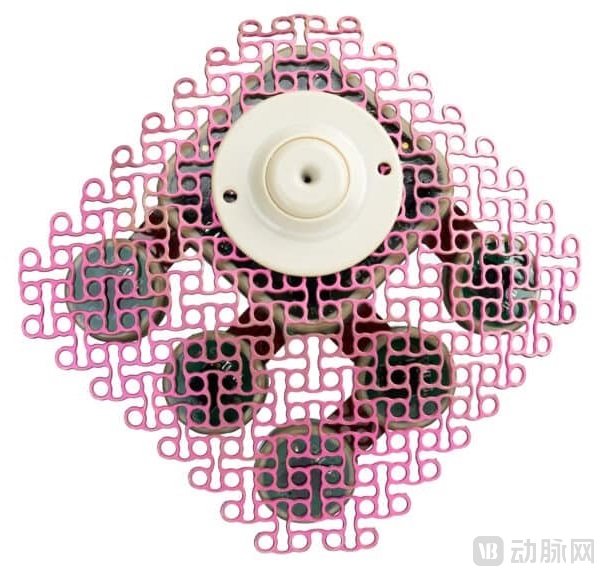
SonoCloud. Image source: CarThera official website
For the treatment of recurrent GBM, increase drug concentration by 4–6 times
Paclitaxel is a “miracle anti-cancer drug” widely used in the treatment of malignant tumors such as breast cancer, ovarian cancer, non-small cell lung cancer, pancreatic cancer, esophageal cancer, and gastric cancer. However, paclitaxel cannot cross the blood-brain barrier to reach brain tumors, and it has not demonstrated efficacy in Phase I/II trials of systemic administration for the treatment of malignant gliomas. SonoCloud can facilitate the delivery of paclitaxel to brain tumors.
In 2020, to further validate the safety and efficacy of SonoCloud-assisted paclitaxel therapy for recurrent glioblastoma (GBM), CarThera collaborated with Northwestern University to conduct a Phase I/II clinical trial in patients with recurrent GBM.
On May 2, 2023, researchers from Northwestern University published results from the first human clinical trial in The Lancet Oncology, showing thatSonoCloud releases low-intensity pulsed ultrasound for 4 minutes, enabling the blood-brain barrier to open for 1 hour and increasing the concentration of chemotherapy drugs such as paclitaxel and carboplatin in the human brain by approximately 4–6 times.。
Reducing β-amyloid levels, with indications expanded to Alzheimer's disease (AD)
According to the World Alzheimer Report 2021, the number of people with Alzheimer’s disease (AD) worldwide exceeds 55 million. With the accelerating onset of an aging society, the number of AD patients is expected to rise sharply, reaching 139 million by 2050.
AD is generally characterized by two features: first, the abnormal extracellular deposition produced by cells forms senile plaques (resulting from β-amyloid accumulation); second, neuronal fibers in the brains of AD patients form tangles that impair brain function. Consequently, β-amyloid has increasingly been regarded as one of the primary culprits triggering AD.
During the treatment of brain tumors using the Sonocloud device, the CarThera team observed a reduction in beta-amyloid and Tau proteins in patients without any drug administration. Consequently, CarThera decided to expand the indications for Sonocloud to include Alzheimer’s disease (AD) and began preparing for clinical trials targeting AD patients.
Under local anesthesia, the Sonocloud device was implanted onto the left lateral aspect of the brain in patients with mild Alzheimer’s disease (AD). These patients underwent ultrasound treatment twice monthly, with each session lasting approximately 10 minutes, to temporarily disrupt the blood-brain barrier. During this process, positron emission tomography (PET) was used to monitor cerebral metabolism and β-amyloid levels after 4 and 8 months of treatment.
Clinical study results demonstrate that, despite the short treatment and observation periods, opening the blood-brain barrier with SonocloudBeta-amyloid levels decreased in most patients, and symptoms in Alzheimer’s disease (AD) patients were effectively delayed or improved.。
CarThera has completed Phase I/II clinical trials for the treatment of Alzheimer’s disease (AD), validating the efficacy and safety of Sonocloud. Moving forward, CarThera will collaborate with pharmaceutical companies to explore how Sonocloud can be combined with novel drug therapies to achieve improved therapeutic outcomes.
Meanwhile, CarThera has validated that SonoCloud technology can enhance the efficacy of CAR-T immunotherapy in treating brain tumors. The company is also investigating the effectiveness of SonoCloud, either as a monotherapy or in combination with other chemotherapeutic agents, for treating brain diseases such as brain metastases and early-stage glioblastoma (GBM).
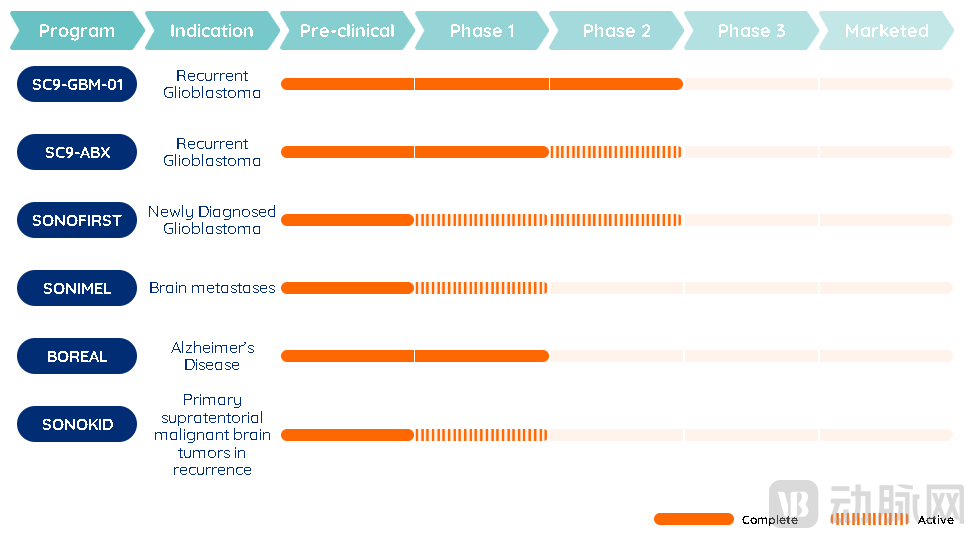
Clinical Trial Progress. Image source: CarThera official website
In recent years, continuous scientific research has established immunotherapy as the third revolution in cancer treatment, following conventional radiotherapy, chemotherapy, and targeted therapy. Meanwhile, emerging modalities such as tumor treating fields and ultrasound therapy have introduced new options for the management of brain tumors.
Due to the low therapeutic index and severe side effects of conventional chemotherapy, scientists have been seeking therapeutic approaches that can specifically kill tumor cells without affecting normal cells. Targeted therapy is the first alternative to chemotherapy they have identified, operating on the principle of precisely targeting genetic mutations in tumor cells. However, once mutations occur in the target genes, targeted drugs lose their efficacy; additionally, some cancer patients develop drug resistance after several years of targeted therapy.
Tumor immunotherapy originated in the late 19th century but has only experienced rapid development in the past three decades. Its mechanism of action involves activating the human immune system and mobilizing the activity of immune cells, thereby reinvigorating dormant immune cells to indirectly eliminate tumor cells; this process is often protracted.CAR-T Therapy and PD-1/PD-L1 Antibody Drugs Are Representative Breakthroughs in Immunotherapy。
Tumor Treating Fields (TTFields) is a novel cancer therapy that utilizes non-invasive sensor electrode arrays applied to the scalp to generate intermediate- and low-frequency tumor treatment fields, exerting antitumor effects by inhibiting mitosis in tumor cells.In 2011 and 2015, TTFields were successively approved by the U.S. FDA for the treatment of recurrent and newly diagnosed GBM, and have since entered clinical application in the United States, China, Europe, and Japan.。
As an economical, effective, non-invasive, real-time, and safe therapeutic modality, ultrasound is not only used for molecular-level diagnosis and monitoring of pathological processes but can also target tissues and cells deep within the body through mechanical and thermal effects, gradually enabling its application in the targeted delivery of drugs and genes. Research on using low-intensity pulsed ultrasound (LIPUS) to open the blood-brain barrier has been ongoing for over two decades; however, no product has yet achieved true clinical application.