

China Pharmaceutical University Quietly Nurtures a $50 Billion Pharma IPO Powerhouse with Six Listings in Three Years

Sunho Pharmaceutical
Pharmaceutical R&D and Manufacturer

Hengrui Pharma
Innovative and High-Quality Pharmaceutical Developer

Efung Capital
Biomedical Professional Investment Institutions

MINOVA PHARMA
Developer of New Drugs for Mental Illnesses and Disfiguring Diseases
On June 1, 2023, China Pharmaceutical University (hereinafter referred to as “CPU”) sent a congratulatory message, celebrating the establishment by Ms. Yin Lan, a member of the Class of 1991 alumni, ofSunho Pharmaceutical Officially Lists on the Beijing Stock ExchangeHowever, the connection between Sunho Pharmaceutical and China Pharmaceutical University (CPU) goes even further. Wellman Pharmaceuticals, a company in Sunho’s investment portfolio, also traces its roots to CPU; its founder, Sun Mingjie, is an alumnus of the Class of 1976. Currently, Wellman Pharmaceuticals is pursuing an initial public offering (IPO).
In fact, Wellman is not the only pharmaceutical company from the China Pharmaceutical University system queuing for an IPO; according to publicly available data,Lianya Pharma、Shenghe PharmaceuticalandBainuo PharmaAll have submitted listing applications within the past six months. Among them, Lianya Pharma, founded by Zhang Guohua, a Ph.D. in Pharmaceutics from China Pharmaceutical University, has recently responded to the first round of inquiries from the Shanghai Stock Exchange, with its initial public offering imminent.
In addition to those awaiting market launch, there are also many listed pharmaceutical companies like Sunho Pharmaceutical. According to incomplete statistics from VCBeat, as of press time,"CPU has already harvested 15 listed companies in the biopharmaceutical sector", including Hengrui Pharma, known as the “King of A-Share Pharmaceuticals,” which was founded by Sun Piaoyang, a member of the Class of 1978 at China Pharmaceutical University, and Hansoh Pharma, founded by his wife, Zhong Huijuan. Notably,For a long period of time,Hengrui Pharma and Hansoh Pharma rank first in market capitalization among pharmaceutical companies listed on the A-share and H-share markets, respectively.。
In addition, behind the companies that have already launched or are awaiting launch, there is a cohort of pharmaceutical-affiliated enterprises that have rapidly raised funds in the primary market in recent years. According to incomplete statistics from the VCBeat Orange Database,Over the past three years, a total of 14 pharmaceutical companies directly founded by China Pharmaceutical University alumni have completed financing rounds, with half of them reaching Series B or later.。
Does this mean that China Pharmaceutical University, always known for its low profile, is quietly building an IPO powerhouse in the pharmaceutical sector? And where did it all begin?
Where Does the Reputation of “Tsinghua University of the Pharmaceutical Industry” Come From?
In China’s pharmaceutical sector, there has long been a saying about the “Northern and Southern Pharmaceutical Universities,” with the “Southern Pharmaceutical University” referring to China Pharmaceutical University. However, this is not its only renowned title; given its prominent industry status, the university is also hailed as the “Tsinghua University of the Pharmaceutical World.”
Of course, like Tsinghua University, China Pharmaceutical University was not its original name either; its predecessor was the National College of Pharmacy, established in 1936. This isThe First National Higher Institution of Pharmacy in Chinese History, but due to various reasons, the university subsequently relocated to Hankou, Chongqing, and other places, only returning to Nanjing in 1946. In addition to these geographical relocations, China Pharmaceutical University underwent several name changes: it was renamed East China College of Pharmacy in 1950, then Nanjing College of Pharmacy in 1956. In 1986, it merged with the preparatory Nanjing College of Traditional Chinese Medicine to officially establish China Pharmaceutical University, a name that has been retained ever since.
Fast-forwarding to the past decade, with the rapid development of the market economy and the comprehensive rise of China’s pharmaceutical industry, China Pharmaceutical University has entered a new stage of development, officially joining the “Double First-Class” initiative in 2017 and becomingChina’s First and Only “Double First-Class” Pharmaceutical University。
Beneath this identity lies the continuous breakthroughs achieved by China Pharmaceutical University (CPU) in the pharmaceutical field. In the series of special reports titled “A Decade of CPU,” released at the end of 2022, the university disclosed several key metrics. VCBeat has selected some of these data points to demonstrate the true value and transformation of the institution known as the “Tsinghua University of the Pharmaceutical World.”
First, TalentOver the past decade, China Pharmaceutical University has added 45 national-level talents and established 11 innovative teams. The number of full-time faculty members increased from 832 to 1,117, representing a growth rate of 34.5%. The proportion of faculty members holding doctoral degrees rose from 43.4% to 79.1%, while the percentage of faculty with overseas study or work experience increased from 4.8% to 39.3%.The number of postdoctoral researchers on station increased by 215.7%.。
Secondly, in terms of innovation translationOver the past decade, China Pharmaceutical University has published 11,407 high-level research papers in top international academic journals; it has led and undertaken a total of 982 projects funded by the National Natural Science Foundation of China; completed technical services for over 2,100 new drugs and novel formulations; facilitated the approval of new drug certificates for 32 new drug varieties, and obtained clinical trial approvals for 54 varieties.Achieved economic benefits exceeding RMB 200 billion。
Finally, in terms of infrastructure. Over the past decade,CPU Adds 110 New Technical Service Platforms, Including Joint Laboratories; It has established five public platforms, including those for cell and molecular biology, 26 university-level platforms, and 22 newly added provincial- and ministerial-level platforms. In addition, China Pharmaceutical University is actively building the “CPU Knowledge Economy Circle” and renovating its research buildings, while simultaneously advancing cooperation with local governments. Local research institutes have currently been established in Hangzhou, Chongqing, Shenzhen, and Lianyungang.
Beyond these achievements, China Pharmaceutical University (CPU) serves as a cradle for biomedical talent in China. It has not only cultivated a large number of experts and scholars in the pharmaceutical field but also seen a significant proportion of its alumni rise to executive positions in pharmaceutical companies or become partners in investment firms. For instance, Liu Ming, the newly appointed Vice President of AstraZeneca China, and Wang Kaifeng, a Partner at Efung Capital, are both graduates of CPU’s School of Pharmacy. Notably, Efung Capital is among the earliest investment institutions in China to focus exclusively on biomedicine. Additionally, there are numerous founders of listed pharmaceutical companies who are CPU alumni, with Sun Piaoyang being a prominent representative.
Secured 15 Pharmaceutical IPOs, with Total Market Capitalization Approaching RMB 500 Billion
In 2000, Hengrui Pharma, founded by Sun Piaoyang, an alumnus of the Class of 1978 at China Pharmaceutical University, was officially listed on the Shanghai Stock Exchange.This is not onlyThe first listed company in China with innovative drugs as its core business, and the first IPO achieved by China Pharmaceutical University in the innovative drug sector。
Since then, China Pharmaceutical University has remained active in the secondary market, with companies frequently filing for listings or going public. According to publicly available data, in 2017 alone, China Pharmaceutical University saw four IPOs in the pharmaceutical sector, namelyPuli Pharmaceutical、Haichen Pharma、Zhejiang MedicineandXintian Pharmaceutical. Over the past three years, six additional companies have joined the pharmaceutical listing landscape of China Pharmaceutical University, in addition to the newly listedSunho Pharmaceutical, and alsoHarbour BioMed、Aide Pharmaceutical、Frontier Biologics、Guobang PharmaandBiocytogen, among which Biocytogen Pharmaceuticals, the “first gene-editing stock” listed on the Hong Kong Stock Exchange in 2022, has recently announced its shift to the STAR Market and is planning a return to the A-share market.
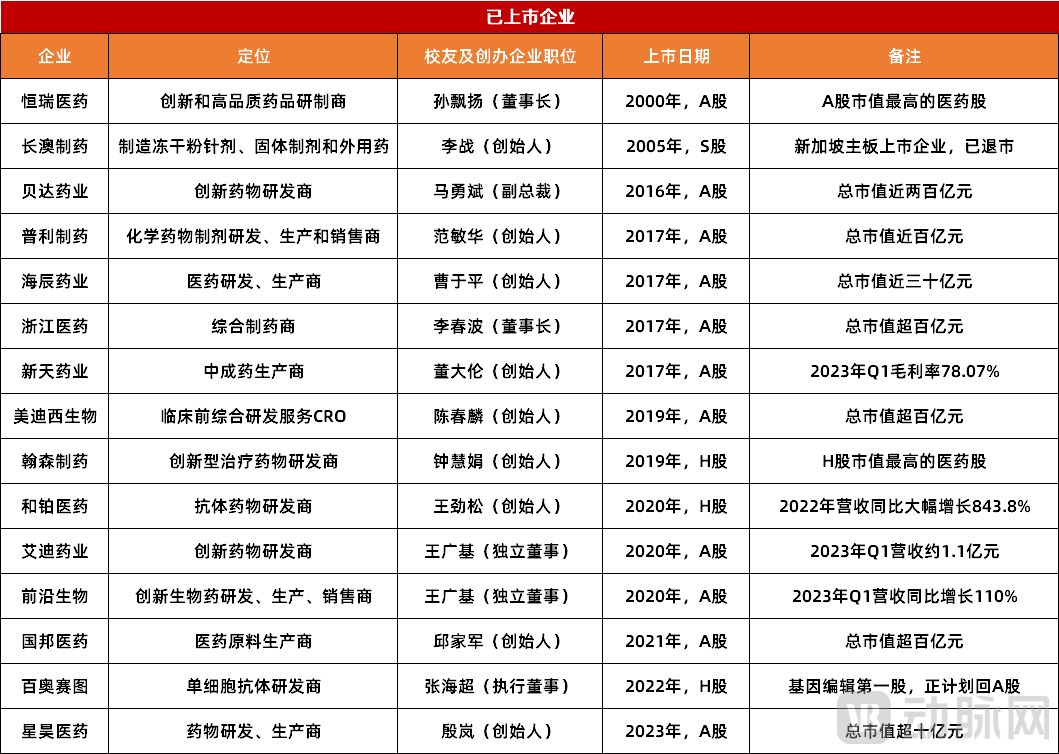 Figure 1. Fifteen pharmaceutical companies affiliated with China Pharmaceutical University that have successfully gone public
According to incomplete statistics, as of press time, China Pharmaceutical University has fostered 15 listed companies in the biopharmaceutical sector, a feat rarely seen among domestic universities. So, what does this reveal about China Pharmaceutical University behind these listed enterprises?
The first area of focus. Unlike other domestic universities that focus on a specific niche industry, although China Pharmaceutical University is vertically specialized in the pharmaceutical field, it has not prioritized any particular direction, maintaining a relatively balanced overall approach. This is well reflected in its discipline construction; it is reported that,China Pharmaceutical University is the university in China with the most comprehensive pharmaceutical discipline structure, currently comprising 16 schools and departments, primarily focused on pharmacy, traditional Chinese medicine, biology, and pharmaceutics.。
It is precisely for this reason that among listed pharmaceutical companies, most are primarily engaged in the research, development, and production of traditional drugs, with few covering current “hotspot areas.”Dr. Liu Fei, Founder of MINOVA PHARMAWe happened to touch upon this point, which revealed an intriguing phenomenon at China Pharmaceutical University (CPU): “I studied at CPU from my undergraduate years through to my doctorate, then went on to work at Simcere Pharmaceutical, before eventually leaving to start my own business. Throughout this journey, I discovered thatDr. Yao is quite “steady” when it comes to entrepreneurship, or rather, he is relatively down-to-earth., nor do they deliberately chase after hot trends. In terms of business operations, they gradually seek out opportunities and then achieve profitability, without expecting explosive growth. Therefore, among the listed companies associated with China Pharmaceutical University, many chose to go public only after years of profitability.”
Although not particularly aggressive in chasing entrepreneurial trends, China Pharmaceutical University has made significant strides in pursuing hotspots in technological research, essentially keeping pace with every frontier area in biology in recent years.Currently, China Pharmaceutical University is collaborating with Nanjing Drum Tower Hospital on early-stage clinical development in clinical pharmacokinetics and the emerging field of regenerative medicine.。
In addition, in recent years, China Pharmaceutical University has successively established the College of Engineering, the School of Basic Medicine and Clinical Pharmacy, and the School of Biopharmaceuticals. It has proposed a new interdisciplinary model of “Pharmacy + X,” seeking organic integration between pharmaceutical sciences and various other fields. Precisely because of this, among the many enterprises affiliated with China Pharmaceutical University, one can observe both the conservative traits typical of traditional pharmaceutical companies and the innovative spirit characteristic of modern biotech firms.
The second area of focus is the current operational status of 15 listed companies affiliated with China Pharmaceutical University. Based on 2022 annual financial report data, VCBeat has extracted and compiled some key information:1. Only four companies experienced a decline in revenue, namely Hengrui Pharma, Haichen Pharmaceutical, Zhejiang Medicine, and Hansoh Pharma, with decline rates of approximately 10%;Second, only three companies incurred losses., namely Harbour BioMed, Aidea Pharmaceutical, and Frontier Biotechnologies, which have gone public in recent years; however, both Harbour BioMed and Frontier Biotechnologies achieved significant revenue growth in 2022;Third, its losses are largely attributable to increased R&D investment or the expansion of new products and business lines., taking Frontier Biologics as an example, its R&D investment reached 274 million yuan in 2022, accounting for over 300% of its revenue.
The third focus is people.During interviews and research, VCBeat found that both Sun Piaoyang of the older generation and Yin Lan, founder of the newly listed Sunho Pharmaceutical, had prior work experience at major pharmaceutical companies before starting their own ventures. After graduation, Sun was assigned to Lianyungang Pharmaceutical Factory, while Yin served as a division manager at Livzon Group prior to her entrepreneurial endeavor. In other words, these founders had already accumulated extensive industry experience before formally launching their startups. Coupled with their deep expertise in innovation and R&D, this background has enabled them to drive their companies forward more effectively.
Beyond this, entrepreneurs from China Pharmaceutical University share another trait: a steadfast commitment to pharmaceutical development. Take Zhou Jiarang, a distinguished alumnus of the university, as an example. After his founded company, Dianhong Pharmaceutical, was acquired by Bayer,In 2016, at the advanced age of 83, he founded Qunyou Bio, which secured Pre-A round financing from Shanghai Pandi Capital a year later.. In addition, Sun Mingjie is awaiting his company's market debut; Wellman Pharmaceuticals, which he founded, has restarted its IPO process for the fifth time.
Liu Bo, founder of MINOVA PHARMA, stated in an interview, “China Pharmaceutical University is not a comprehensive university; it focuses more on specialized technical research. Therefore, many CPU alumni regard drug development as a lifelong pursuit—pure and simple.”
Multiple Companies Have Reached Series B: How Much Room for Imagination Remains for Pharmaceutical Universities?
Although pharmaceutical universities have been "buzzing" in the secondary market in recent years, the primary market has remained active as well. On the very day Sunho Pharmaceutical went public, a first-in-class/best-in-class (FIC/BIC) small-molecule drug developerLinko Pharma Announces Completion of CNY 200 Million Series C Financing, whose co-founder and COO, Chen Yan, is an alumnus of China Pharmaceutical University.
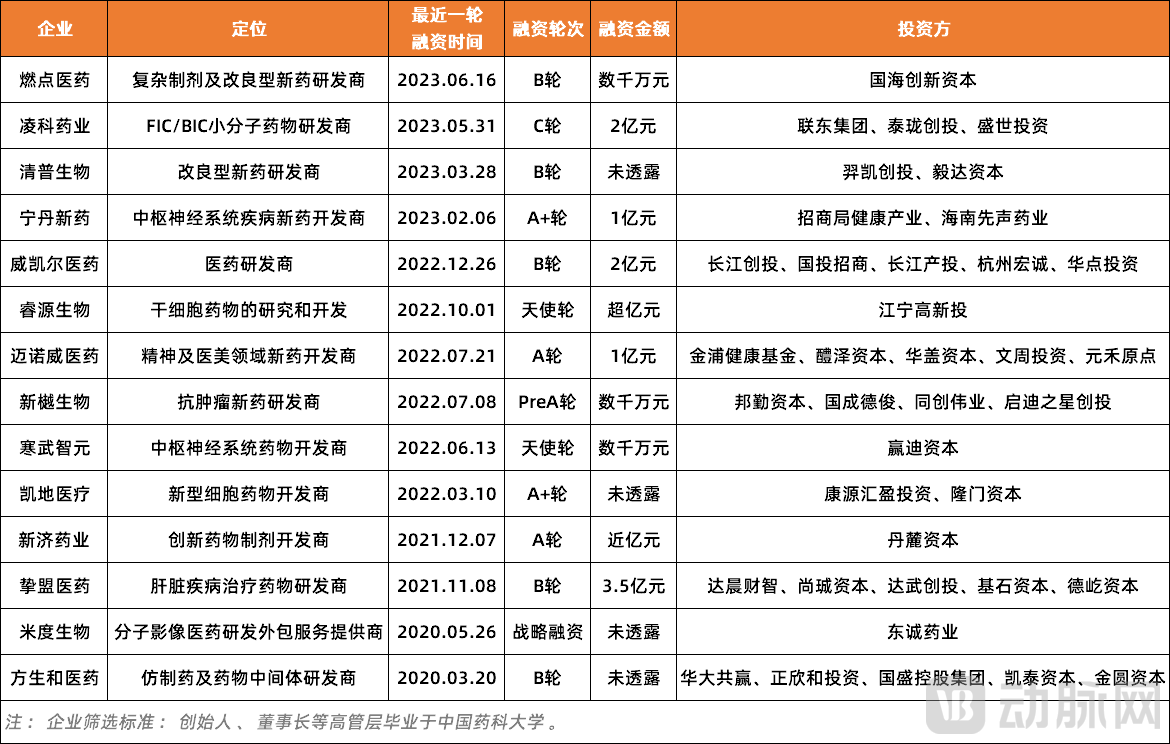 Figure 2. Pharmaceutical Companies Affiliated with China Pharmaceutical University That Completed Financing in the Primary Market Over the Past Three Years
Compiled from public sources,Over the past three years, a total of 14 pharmaceutical companies affiliated with China Pharmaceutical University have completed financing in the primary market, with the total amount exceeding RMB 2 billion., and behind these startups, we see another side of China Pharmaceutical University.
In the post-pandemic era, as China’s pharmaceutical industry continues to deepen its development, there has been a growing emphasis on original innovative technologies across the sector. Consequently, an increasing number of universities have begun to prioritize the commercialization of research achievements and are gradually aligning more closely with the industrial sector, with China Pharmaceutical University serving as a typical representative.
According to insiders, in recent years, China Pharmaceutical University has not only been exploring new frontiers in the pharmaceutical industry but also continuously recruiting top global technical talent. Furthermore, the university has implemented a series of policies and measures to facilitate the commercialization of research achievements, while simultaneously establishing corresponding laboratories, incubators, industrial parks, and clinical colleges.
But these are not the key points; in terms of pharmaceutical project incubation,The greatest strength of China Pharmaceutical University lies in the close collaboration within its alumni network, whereby alumni with extensive industry experience enable researchers and project leaders to engage directly with the real market at an earlier stage and facilitate subsequent cooperation.。
A prime example is the university-enterprise joint laboratory.. It was observed that in June 2023 alone, China Pharmaceutical University (CPU) successively established four joint laboratories with enterprises, partnering with Fuyi Technology, Congyi Pharmaceutical, Deyuan Pharmaceutical, and Fuli Instruments. Looking further back, CPU added 27 new joint laboratories with enterprises in 2022 alone. Currently,The number of university-affiliated enterprise laboratories at China Pharmaceutical University has expanded to over one hundred, with the vast majority established within the past three years.。
According to industry experts, these joint laboratories primarily serve two functions:First, conduct specialized research in a cutting-edge niche field; second, cultivate corresponding talent.. By extending these functions downstream, both researchers at China Pharmaceutical University (CPU) and enterprises within the CPU ecosystem have benefited to varying degrees. For instance, researchers can leverage this platform to conduct industrialization-oriented studies, while enterprises can continuously access innovative technologies and build their own talent pools.
However, the joint laboratory is only one of them.The CPU Alumni Network Can Do More. For instance, as mentioned at the beginning, Sunho Pharmaceutical’s investor roster includes Wellman Pharmaceuticals, a company affiliated with the China Pharmaceutical University (CPU) network. In fact, there are many similar investment cases involving CPU-affiliated entities. An investor with a CPU background disclosed to VCBeat that,Although their organization has no direct affiliation with China Pharmaceutical University, they are still keen to invest in its projects.。
In addition to direct investment,Based on the alumni networkR&D project collaborations, market expansion, upstream and downstream production coordination, and the cultivation and recruitment of key talent are all occurring on a large scale.。
In fact, nearly every university that has performed well in medical industry commercialization in recent years is backed by a vast alumni network. Within this circle, there are not only technical experts but also listed companies and corresponding investors. Leveraging their respective strengths, they provide various services at different stages: technical experts integrate research directions, companies offer platforms and market operations, and investors, of course, handle funding.
For China Pharmaceutical University (CPU), it is evident that a specialized alumni network has already taken shape, with its participant base continuously expanding and its influence and value steadily growing. Coupled with CPU’s deep expertise across various biomedical fields and its ongoing output of specialized research, the university is poised to unlock even greater possibilities within the pharmaceutical industry in the future.
Final Thoughts
Frankly speaking, in terms of influence, China Pharmaceutical University (CPU) currently lags behind Tsinghua University and Peking University, as well as Shanghai Jiao Tong University and Fudan University. Furthermore, CPU may still face certain gaps in the number of pharmaceutical enterprises, investor reserves, and infrastructure development. However, during the process of reviewing materials and engaging in discussions with members of the CPU community,VCBeat can still clearly sense their strong identification with the business of drug development, reflecting a firsthand experience of “quietly achieving great things.”。
Perhaps, given the unique nature of the biopharmaceutical industry and the current market environment facing the pharmaceutical sector, those from China Pharmaceutical University who are not adept at chasing trends but remain persistent and continuously accumulate expertise may go further in the future.